Quick answer
Gallstones are hardened deposits that form in the gallbladder and can cause pain, nausea, inflammation, or blockage of the bile ducts. Treatment depends on symptoms and stone-related complications, ranging from monitoring in symptom-free cases to medications, endoscopic procedures, or surgical removal of the gallbladder, with diagnosis and care guided by imaging and specialist evaluation at Acibadem in Turkey.
What is gallstones?
Gallstones are hardened deposits, similar to small pebbles, that form inside the gallbladder. The gallbladder is a small, pear-shaped organ that sits just under the liver on the right side of the abdomen. Its job is to store bile, a digestive fluid made by the liver that helps the body break down fats. When the substances in bile, mainly cholesterol and a pigment called bilirubin, become unbalanced, they can crystallize and gradually harden into stones. This condition is medically known as cholelithiasis, and one common form is recorded under the diagnostic code ICD-10 K80.20, which refers to gallstones without inflammation of the gallbladder and without blockage.
If you have searched for “what is gallstones,” the short answer is this: gallstones are solid lumps of hardened bile material that can range from the size of a grain of sand to the size of a golf ball. A person may develop a single stone or many stones at the same time. Gallstones are very common worldwide. Many people who have them never notice any problem, because stones that stay quietly in the gallbladder often cause no symptoms at all. Others develop pain or complications when a stone blocks one of the ducts (tubes) that carry bile.
Gallstones can affect anyone, but they occur more often in women, in people over the age of 40, in people who are overweight, and in those with a family history of the condition. They are typically managed by specialists in gastroenterology, the branch of medicine that deals with the digestive system, together with surgeons when an operation is needed.
Symptoms
Gallstones symptoms vary widely. In many cases there are no symptoms at all: these are often called “silent” gallstones and are frequently discovered by chance during imaging done for another reason. Silent stones usually do not need treatment. Symptoms typically appear when a stone temporarily or permanently blocks a bile duct.
Common gallstones symptoms include:
- Biliary colic: sudden, intense pain in the upper right or center of the abdomen, often after a fatty meal. “Colic” is somewhat misleading, because the pain is usually steady rather than cramping, and it can last from about 30 minutes to several hours.
- Pain that spreads: the pain may radiate to the right shoulder blade or the back.
- Nausea and vomiting during a pain attack.
- Bloating, indigestion, or intolerance of fatty foods, although these symptoms are less specific and can have many other causes.
Symptoms often differ depending on what stage the condition has reached:
- Silent (asymptomatic) stage: no symptoms; stones sit in the gallbladder without blocking anything.
- Uncomplicated biliary colic: episodes of pain that come and go, often triggered by meals, with symptom-free periods in between.
- Acute cholecystitis: inflammation of the gallbladder, usually caused by a stone blocking the gallbladder’s outlet. Pain lasts longer (often more than several hours), and fever and tenderness in the upper right abdomen are common.
- Bile duct blockage (choledocholithiasis): a stone lodged in the main bile duct can cause jaundice, yellowing of the skin and the whites of the eyes, along with dark urine, pale stools, and itching.
- Gallstone pancreatitis: a stone blocking the duct near the pancreas can inflame the pancreas, causing severe upper abdominal pain that may spread to the back, with nausea and vomiting. This is a medical emergency.
Because these later stages can be serious, ongoing or worsening pain, fever, or yellowing of the skin should always be evaluated promptly by a doctor.
Causes and risk factors
Gallstones causes come down to an imbalance in the chemical makeup of bile. There are two main types of stone:
- Cholesterol stones: the most common type in many parts of the world. They form when bile contains more cholesterol than it can dissolve, or when the gallbladder does not empty properly and bile sits and thickens.
- Pigment stones: smaller, darker stones made mostly of bilirubin, the yellow pigment produced when the body breaks down red blood cells. They are more likely in people with certain blood disorders, liver disease, or infections of the bile ducts.
Several factors raise the likelihood of developing gallstones:
- Being female: the hormone estrogen increases cholesterol in bile, so women, especially during their reproductive years, are affected more often than men.
- Age over 40: risk rises with age.
- Overweight and obesity: excess body weight increases cholesterol in bile.
- Rapid weight loss: losing weight very quickly, including after weight-loss surgery or very low-calorie diets, can trigger stone formation.
- Pregnancy: hormonal changes slow gallbladder emptying.
- Family history: gallstones often run in families.
- Certain medical conditions: diabetes, liver disease, Crohn’s disease, and some blood disorders that increase bilirubin.
- Certain medications: for example, some hormone therapies and cholesterol-lowering drugs may influence bile composition; your doctor can advise on your specific medicines.
- Diet and inactivity: diets high in fat and refined carbohydrates and low in fiber, combined with a sedentary lifestyle, are associated with a higher risk.
Having one or more risk factors does not mean you will definitely develop gallstones, and some people develop stones without any obvious risk factor.
Diagnosis
Gallstones diagnosis usually begins with a conversation about your symptoms and a physical examination. Because upper abdominal pain has many possible causes, including stomach ulcers, acid reflux, and heart problems, doctors rely on tests and imaging to confirm the diagnosis.
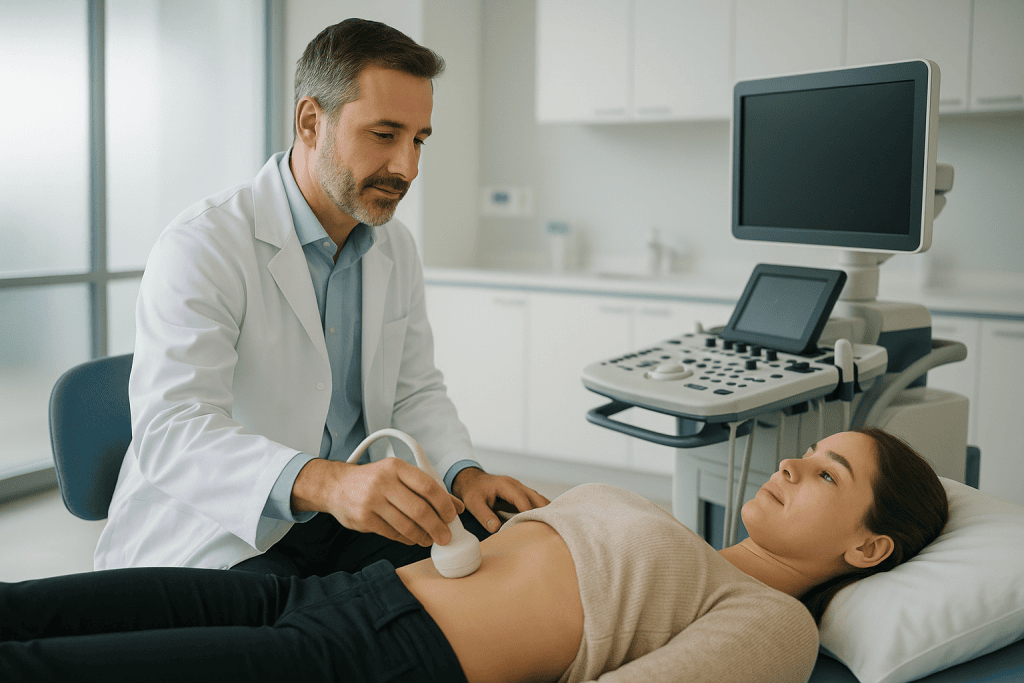
- Abdominal ultrasound: this is the standard first test. It is painless, uses sound waves rather than radiation, and detects most gallbladder stones reliably. It can also show signs of gallbladder inflammation, such as a thickened gallbladder wall.
- Blood tests: these check for signs of infection or inflammation, liver function, and levels of bilirubin. Abnormal results may suggest that a stone is blocking a bile duct or that the pancreas is involved.
- MRCP (magnetic resonance cholangiopancreatography): a special type of MRI scan that produces detailed pictures of the bile ducts. It is often used when doctors suspect a stone has moved into the main bile duct, since ordinary ultrasound can miss stones there.
- Endoscopic ultrasound (EUS): an ultrasound probe attached to a thin, flexible tube passed through the mouth into the digestive tract. It can detect small stones in the bile duct that other tests may miss.
- ERCP (endoscopic retrograde cholangiopancreatography): a procedure that combines an endoscope with X-ray imaging to view the bile ducts directly. Because ERCP can also be used to remove duct stones, it is usually reserved for cases where a duct stone is strongly suspected or confirmed, rather than as a purely diagnostic test.
- CT scan or HIDA scan: in selected situations, a computed tomography scan or a nuclear medicine scan of gallbladder function may be used, particularly when complications are suspected or the diagnosis remains unclear.
In many cases, an ultrasound plus blood tests is enough to confirm the diagnosis and guide the next steps.
Treatment options
Gallstones treatment depends on whether the stones are causing symptoms, how severe those symptoms are, and whether complications have developed. There is no single approach that suits everyone, and your medical team will weigh the options with you. An overview of the condition and its management is also available on the dedicated gallstones treatment page.
Watchful waiting
Silent gallstones found by chance usually do not need any treatment. Because many people with silent stones never develop symptoms, doctors generally recommend simply monitoring the situation and seeking care if pain or other symptoms appear. Removing a healthy gallbladder “just in case” is not usually advised, although there are exceptions for people at higher risk of complications, which your doctor can discuss with you.
Lifestyle and dietary measures
Diet changes cannot dissolve existing stones, but eating smaller, lower-fat meals may reduce the frequency of pain attacks in some people while a decision about further treatment is made. Maintaining a healthy weight through gradual, not rapid, weight loss and regular physical activity may also lower the risk of new stones forming.
Medication
In selected cases, a bile acid medicine called ursodeoxycholic acid may be prescribed to slowly dissolve small cholesterol stones. This option has important limitations: it works only for certain types of stone, it can take many months or longer, it does not work for everyone, and stones often return after the medicine is stopped. For these reasons, medication is generally considered only for people who cannot or prefer not to have surgery.
Surgery (cholecystectomy)
For people with repeated painful attacks or complications, the standard treatment is cholecystectomy, surgical removal of the gallbladder. In most cases this is done laparoscopically, meaning through several small incisions using a camera and thin instruments, which usually allows a shorter hospital stay and faster recovery than open surgery. Open surgery, through a larger incision, is sometimes needed if the anatomy is complicated, if there is severe inflammation, or if a laparoscopic operation cannot be completed safely. The body can function normally without a gallbladder: bile simply flows directly from the liver into the intestine. Some people notice looser stools or mild digestive changes after surgery, and these often improve over time.
Procedures for stones in the bile duct
If a stone has moved into the main bile duct, it usually needs to be removed even if the gallbladder itself is not operated on right away. ERCP is the most common technique: the doctor passes an endoscope to the opening of the bile duct and removes the stone, often widening the duct opening slightly in the process. In many cases, gallbladder removal is then recommended to prevent new stones from causing the same problem again.
Care for gallstones is typically coordinated by a gastroenterology department working alongside general surgeons; at institutions such as Acibadem, these specialties collaborate on evaluation, endoscopic procedures, and surgical treatment when needed.
Living with gallstones and outlook
The outlook for people with gallstones is generally good, although it varies from person to person. Many people with silent stones live their whole lives without symptoms. Among those who do develop pain, attacks tend to recur over time, which is why definitive treatment, usually gallbladder removal, is often recommended once symptoms begin.
After gallbladder removal, most people recover well and return to normal eating and activity, often within a few weeks after laparoscopic surgery, though individual recovery times differ. A small number of people experience ongoing digestive symptoms, sometimes called postcholecystectomy syndrome, and should discuss persistent problems with their doctor.
While living with known gallstones, practical steps may help reduce the chance of painful attacks and new stone formation, though none can guarantee prevention:
- Eat regular meals rather than skipping them, since long gaps between meals reduce gallbladder emptying.
- Favor a balanced diet with fiber-rich foods and moderate fat intake.
- Aim for gradual weight loss if weight reduction is advised; avoid crash diets.
- Stay physically active as your health allows.
- Keep any scheduled follow-up appointments and report new or changing symptoms.
It is honest to say that untreated symptomatic gallstones carry a risk of complications such as gallbladder inflammation, bile duct blockage, and pancreatitis. Timely evaluation and treatment substantially reduce these risks in most cases, which is why symptoms should not be ignored.
Frequently asked questions
What is gallstones disease in simple terms?
Gallstones disease means that hardened lumps of bile material have formed in the gallbladder, the small organ under the liver that stores digestive fluid. The stones themselves are not tumors and are not cancer. Many stones cause no trouble at all, but if a stone blocks a bile duct it can cause intense abdominal pain and, in some cases, complications that need urgent treatment.
Can gallstones go away on their own?
In most cases, gallstones do not dissolve or pass on their own once they have formed, although very small stones occasionally move out of the gallbladder without causing symptoms. There is no reliable home remedy that removes gallstones, and so-called “gallbladder flushes” are not supported by medical evidence. If your stones are causing symptoms, it is safer to discuss proven gallstones treatment options with a doctor.
How serious are gallstones?
Silent gallstones are usually not serious and often need no treatment. Symptomatic gallstones, however, tend to cause repeated pain attacks and carry a risk of complications such as gallbladder inflammation, bile duct blockage with jaundice, and pancreatitis, some of which can be dangerous if untreated. Seriousness therefore depends on your situation, which is why a medical evaluation matters once symptoms appear.
What do gallstones symptoms feel like?
The classic symptom is a steady, intense pain in the upper right or middle of the abdomen, often starting after a fatty meal and lasting from half an hour to several hours. The pain may spread to the back or right shoulder blade and is often accompanied by nausea. Pain that lasts many hours, or comes with fever or yellowing of the skin, may signal a complication and needs prompt medical attention.
Do all gallstones need surgery?
No. Silent stones found by chance are generally left alone and monitored. Surgery is usually recommended when stones cause repeated pain or complications, because attacks tend to come back and removal of the gallbladder is the only treatment that reliably prevents them. Medication to dissolve stones exists but works only in limited situations, so your doctor may discuss whether watchful waiting, medication, or surgery best fits your case.
How long is recovery after gallbladder surgery?
Recovery varies from person to person. After laparoscopic (keyhole) gallbladder removal, many people go home within a day or two and gradually return to normal activities over the following weeks; open surgery generally requires a longer recovery. Your surgical team will give you individual guidance on wound care, diet, and activity, and it is important to follow their advice rather than general timelines.
Can I live a normal life without a gallbladder?
Yes, in most cases. The gallbladder stores bile but does not produce it, so after removal bile flows directly from the liver into the intestine and digestion continues. Some people notice softer or more frequent stools or mild bloating for a while, especially after fatty meals, and these symptoms often settle over time. Persistent digestive problems after surgery should be discussed with a doctor.
When to see a doctor
Make an appointment with a doctor if you have recurring upper abdominal pain after meals, ongoing nausea or indigestion that does not improve, or if you have been told you have gallstones and your symptoms are changing. Diagnosis is straightforward in most cases, and early evaluation helps prevent complications.
Seek urgent or emergency medical care if you experience any of the following red-flag warning signs:
- Severe abdominal pain that lasts more than a few hours or is so intense you cannot sit still or get comfortable.
- Fever or chills together with abdominal pain, which may indicate infection or inflammation of the gallbladder or bile ducts.
- Yellowing of the skin or eyes (jaundice), dark urine, or pale, clay-colored stools, which may signal a blocked bile duct.
- Persistent vomiting or inability to keep fluids down.
- Severe pain spreading to the back with nausea, which can be a sign of pancreatitis.
- Confusion, rapid heartbeat, or feeling faint along with any of the above, which may indicate a serious infection.
These symptoms can indicate complications that need prompt treatment. Do not wait for the pain to pass on its own, timely medical care makes a real difference in how safely gallstone complications can be managed.
Patient Guides for This Condition
Medically reviewed by the Acıbadem International Medical Board September 2, 2026
See our medical review board →
Update history
- PublishedJune 14, 2026
- Medical review approvedSeptember 2, 2026
- Last content updateSeptember 2, 2026