

Pore Strips: What Patients Need to Know

Pore strips offer temporary cosmetic improvement, not long-term treatment for blackheads or acne. They work best on surface debris and may not remove deeper pore blockages.
Key Takeaways
- Pore strips offer temporary cosmetic improvement, not long-term treatment for blackheads or acne.
- They work best on surface debris and may not remove deeper pore blockages.
- Overuse can cause redness, irritation, broken capillaries, or damage to the skin barrier.
- People with sensitive skin, rosacea, eczema, or active acne should use extra caution or avoid them.
- Gentle cleansing, sun protection, and dermatologist-guided skincare are more effective for ongoing pore and blackhead concerns.
Pore strips can lift some oil, dead skin, and the top part of blackheads from the nose or other areas, so the skin may look clearer for a short time. They do not shrink pores or cure acne, and they may irritate sensitive skin if used too often or incorrectly.
Overview: What pore strips actually do
Pore strips are adhesive strips designed to stick to the skin and pull away some oil, dead skin cells, and the exposed upper part of blackheads when removed. They are most often used on the nose, where pores are more visible and sebaceous filaments are common. For many people, the immediate effect is cosmetic: the area may look smoother and less congested for a short time.
It is important to understand what pore strips cannot do. They do not change pore size, stop the skin from producing oil, or treat the underlying reasons pores become clogged. They also do not cure acne or prevent blackheads from returning. Because the skin naturally continues to make oil and shed cells, congestion often comes back after use.
Pore strips can be a reasonable occasional option for people who want a short-term improvement in visible blackheads, especially before an event. However, they are not a substitute for a consistent skincare routine or medical advice when skin concerns are persistent, painful, or inflamed.
How pore strips work and what they remove

The strip is usually applied to damp skin so the adhesive can bond to the outer material in and around the pore opening. As the strip dries, it hardens. When peeled off, it may bring up a mixture of sebum, keratin, tiny hairs, and surface debris. This material can look dramatic on the strip, but it does not mean the pore has been fully cleaned or that the blackhead is gone permanently.
Many people confuse blackheads with sebaceous filaments. Blackheads are a type of acne lesion caused by a clogged pore that has oxidized and turned dark at the surface. Sebaceous filaments are a normal part of skin structure and help move oil to the surface; they can also appear as tiny gray or tan dots, especially on the nose. Pore strips may remove both, but sebaceous filaments usually return quickly because they are normal and ongoing.
Because pore strips mainly affect what is at or near the skin surface, they are less useful for deeper congestion, inflamed acne lesions, cysts, or widespread rough texture. In those situations, a doctor may suggest a more effective long-term plan, such as acne treatment or a personalized skincare approach.
Possible benefits and limitations
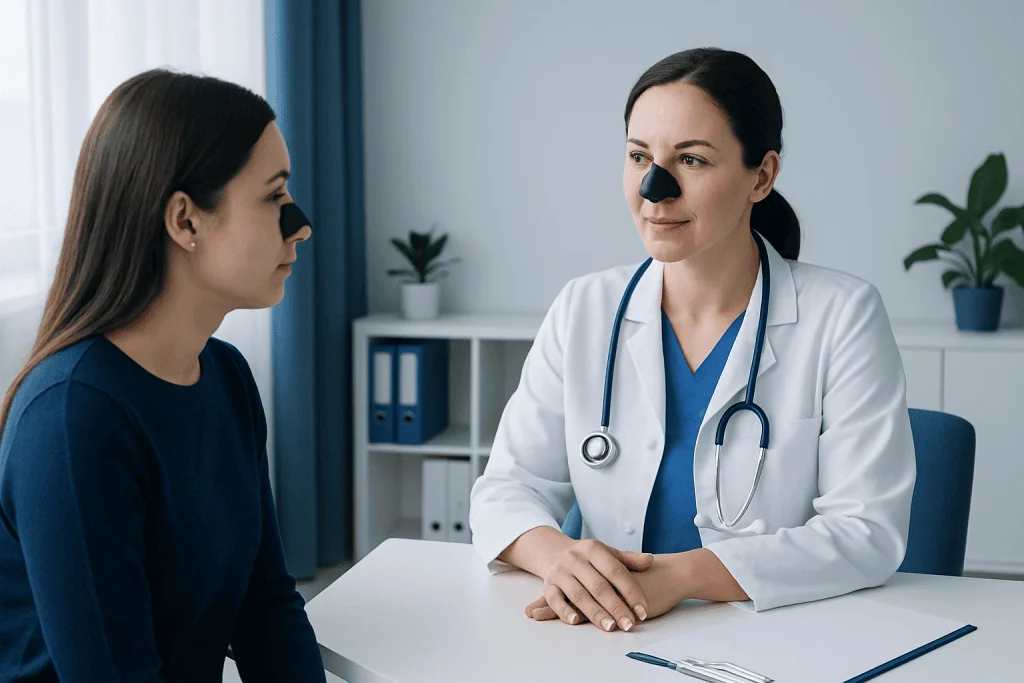
The main benefit of pore strips is temporary visible clearing. A person may notice fewer dark plugs on the nose and a cleaner-looking surface immediately after use. Some also find them satisfying because they provide a quick, simple step in a home skincare routine.
Still, the limitations are significant. Pore strips do not address excess oil production, abnormal shedding of skin cells, hormonal influences, or skin inflammation. These are key factors behind repeated clogged pores and acne. As a result, the effect is often short-lived, and repeated use may be needed to maintain the same appearance.
They can also create a false sense that strong pulling is beneficial for the skin. In reality, frequent adhesive stripping may stress the skin barrier, leading to dryness, stinging, or rebound irritation. For patients seeking sustained improvement, gentle cleansing, non-comedogenic products, and active ingredients recommended by a clinician are usually more helpful than repeated stripping.
- Best for: short-term removal of surface debris on the nose or T-zone
- Not ideal for: deep blackheads, inflamed acne, sensitive skin, or rosacea-prone skin
- Not a treatment for: enlarged pores, acne scarring, or active skin disease
Risks, side effects, and who should be cautious
Pore strips are generally safe for some people when used occasionally and as directed, but they can cause side effects. Common problems include temporary redness, tenderness, dryness, and irritation. In some cases, the pulling action may remove too much surface skin, especially if the strip is left on too long or applied to already irritated skin.
People with sensitive skin or a weakened skin barrier should be especially careful. This includes those with eczema, rosacea, psoriasis, recent sunburn, or current use of exfoliating acids, retinoids, or prescription acne products. For these patients, adhesive removal can worsen symptoms and increase discomfort. Anyone with broken skin, active rash, infected pimples, or recent facial procedures should avoid pore strips until the skin has healed.
There is also a risk of aggravating visible blood vessels or causing minor skin trauma in delicate areas. If a person frequently notices persistent redness, peeling, burning, or worsening breakouts after use, it is sensible to stop using the product and seek guidance. Some patients with chronic redness or irritation may need evaluation for rosacea or other underlying skin conditions.
Safer use: practical tips for patients
If a person chooses to use pore strips, careful technique matters. The skin should be gently cleansed first, and the strip should only be placed on intact, damp skin according to the product directions. It should not be left on longer than instructed, and it should be removed slowly rather than aggressively. Afterward, the area can be rinsed and followed with a bland, fragrance-free moisturizer.
It is usually best to avoid combining pore strips with other potentially irritating steps on the same day. This includes scrubs, strong exfoliating acids, retinoids, waxing, or other peel-off products. Keeping the rest of the routine simple helps reduce the chance of over-exfoliation and barrier damage.
Frequency matters as well. More often is not better. If the skin becomes tight, shiny, red, or stings when products are applied, these may be signs of irritation. In that case, the priority should be barrier recovery with gentle skincare rather than additional stripping. Patients uncertain about the right routine may benefit from a dermatology consultation, and in selected cases dermatology care can help tailor treatment to the skin type and the pattern of breakouts.
Better long-term options for blackheads and visible pores
For recurring blackheads or pores that look consistently congested, long-term management usually works better than adhesive removal. Gentle cleansing twice daily, especially after sweating, can help limit oil and debris buildup without excessive irritation. Using non-comedogenic moisturizers and sunscreen is also important because over-drying the skin can sometimes worsen imbalance and sensitivity.
Some over-the-counter ingredients may help reduce pore blockage over time. Salicylic acid can support exfoliation within pores, while retinoid-based products may improve cell turnover and help prevent new comedones. These ingredients should be introduced gradually, especially in sensitive skin, and they may not be suitable for everyone. A qualified doctor can advise which products are appropriate and how to use them safely.
If concerns are more significant, office-based options may be considered. Depending on the skin type and diagnosis, a clinician may discuss manual extraction, chemical peels, or other approaches aimed at acne or texture concerns. People with visible marks from prior breakouts may also ask about acne scar treatment after active acne is controlled.
When to seek medical care
Most people do not need medical attention simply because they use pore strips. However, medical advice is worthwhile if skin problems are frequent, bothersome, or not improving with gentle home care. Ongoing blackheads, painful pimples, deep cysts, scarring, or recurrent redness may point to a condition that needs proper diagnosis rather than repeated cosmetic treatment.
A doctor should also be consulted if a pore strip causes significant irritation such as swelling, persistent burning, bleeding, severe peeling, or signs of infection. These are not expected results and should not be ignored. Patients with very sensitive skin or chronic inflammatory skin disease may benefit from professional guidance before trying adhesive or exfoliating products.
Near the end of a care pathway, some patients may want specialist assessment to understand whether congestion is due to acne, rosacea, dermatitis, or another issue. Acibadem International’s multidisciplinary specialists and JCI-accredited hospitals diagnose and treat skin conditions for international patients, helping match treatment to the skin’s needs and tolerance.
Frequently asked questions
Do pore strips remove blackheads permanently?
No. Pore strips may remove the exposed top portion of some blackheads and other surface debris, so the skin can look clearer for a short time. They do not stop pores from becoming clogged again, so blackheads often return.
Can pore strips make pores smaller?
Pore strips do not shrink pores. They may make pores look less noticeable briefly by removing surface material, but natural pore size is largely influenced by genetics, oil production, and skin changes over time.
Are pore strips bad for sensitive skin?
They can be irritating for sensitive skin, especially if the skin barrier is already weakened. People with rosacea, eczema, recent sunburn, or active irritation may be more likely to develop redness, stinging, or peeling after use.
How often should pore strips be used?
They should be used sparingly and only as directed on the product label. Using them too often can increase irritation and dryness, so a gentle skincare routine is usually a better long-term approach.
What is the difference between blackheads and sebaceous filaments?
Blackheads are clogged pores that darken at the surface and are considered a form of acne. Sebaceous filaments are normal, tiny structures that help move oil through the pore, and they often reappear quickly even after removal.
What works better than pore strips for ongoing blackheads?
For repeated blackheads, regular gentle cleansing and products such as salicylic acid or retinoids may be more effective over time. If symptoms are persistent or the skin is easily irritated, a dermatologist can help choose the safest treatment plan.
References
- American Academy of Dermatology
- National Health Service
- Mayo Clinic
- National Institute of Arthritis and Musculoskeletal and Skin Diseases
This article is for general information only and is not a substitute for professional medical advice. Please consult a qualified doctor about your individual situation.
Explore treatments in Turkey — costs, top hospitals & a free quote
JCI-accredited · board-certified surgeons · reply within 24h

More from the Health Library


Related Specialists

Dr. Özlem Özbayburtlu
Radiology
Asst. Prof. Dr. Alper Özdilek
Otorhinolaryngology
Assoc. Prof. Dr. Serdar Baylançiçek
Otorhinolaryngology
Dr. Redwan Seıd Busery
Cardiology