Spinal Decompression: A Complete Medical Overview

Spinal decompression aims to relieve pressure on spinal nerves or discs. The term may describe either non-surgical therapy or surgical procedures.
Key Takeaways
- Spinal decompression aims to relieve pressure on spinal nerves or discs.
- The term may describe either non-surgical therapy or surgical procedures.
- It may be considered for symptoms linked to herniated discs, spinal stenosis, or nerve compression.
- Not every person with back or neck pain needs spinal decompression.
- Diagnosis usually includes a medical history, physical examination, and sometimes imaging tests.
- Urgent medical evaluation is needed for new bowel or bladder problems, severe weakness, or rapidly worsening symptoms.
Spinal decompression is a medical approach used to reduce pressure on the spinal cord or nerves, often to ease back or neck pain, numbness, or weakness caused by disc or joint problems. It can refer to non-surgical traction-based therapy or to surgery, so evaluation is important to determine which option, if any, is appropriate.
What spinal decompression means
Spinal decompression is a treatment approach designed to relieve pressure on the structures within the spine, especially spinal nerves, nerve roots, or the spinal cord itself. In everyday use, the term can mean two different things: non-surgical spinal decompression, which uses controlled stretching or traction, and surgical spinal decompression, which creates more space around compressed nerves. Because these are very different interventions, the first step is always to clarify what kind of decompression is being discussed and whether it matches the person’s diagnosis.
Pressure inside the spine can develop for several reasons. A disc may bulge or herniate, nearby joints may enlarge with arthritis, ligaments can thicken, or the spinal canal may narrow with age-related wear. When this pressure irritates a nerve, symptoms may include pain radiating into the arm or leg, numbness, tingling, or weakness. In many cases, symptoms improve with time and conservative care, but some people need more targeted treatment.
Spinal decompression is not a single cure for all back or neck problems. It is one option within a broader care plan that may also include activity changes, physical therapy, medication, injections, or rehabilitation. A careful assessment helps determine whether symptoms are truly due to nerve compression, because muscle strain and other common causes of back pain may not benefit from decompression-focused treatment.
Symptoms and conditions it may help
Spinal decompression may be considered when symptoms suggest that a spinal nerve is under pressure. These symptoms can vary by location. In the lower back, people may feel low back pain that travels into the buttock, thigh, calf, or foot. In the neck, pain may radiate into the shoulder, arm, or hand. Some people also notice burning, electric shock-like pain, tingling, reduced sensation, or muscle weakness.
Doctors may evaluate spinal decompression for conditions such as a herniated disc, degenerative disc disease, or spinal stenosis. It may also be relevant when bone spurs or thickened ligaments narrow the spaces where nerves exit the spine. In selected situations, decompression is used when symptoms persist despite rest, exercise-based therapy, and other non-surgical measures.
Symptoms that affect walking, balance, hand function, or endurance can provide important clues. For example, lumbar spinal stenosis may cause leg pain or heaviness when standing or walking that improves when sitting or leaning forward. Cervical nerve compression may make it harder to grip objects or perform fine hand movements. The pattern of symptoms often helps guide the diagnosis and whether decompression is likely to help.
- Radiating arm or leg pain
- Numbness or tingling
- Muscle weakness
- Pain linked to standing, walking, bending, or certain movements
- Symptoms that continue after conservative treatment
How non-surgical and surgical decompression differ
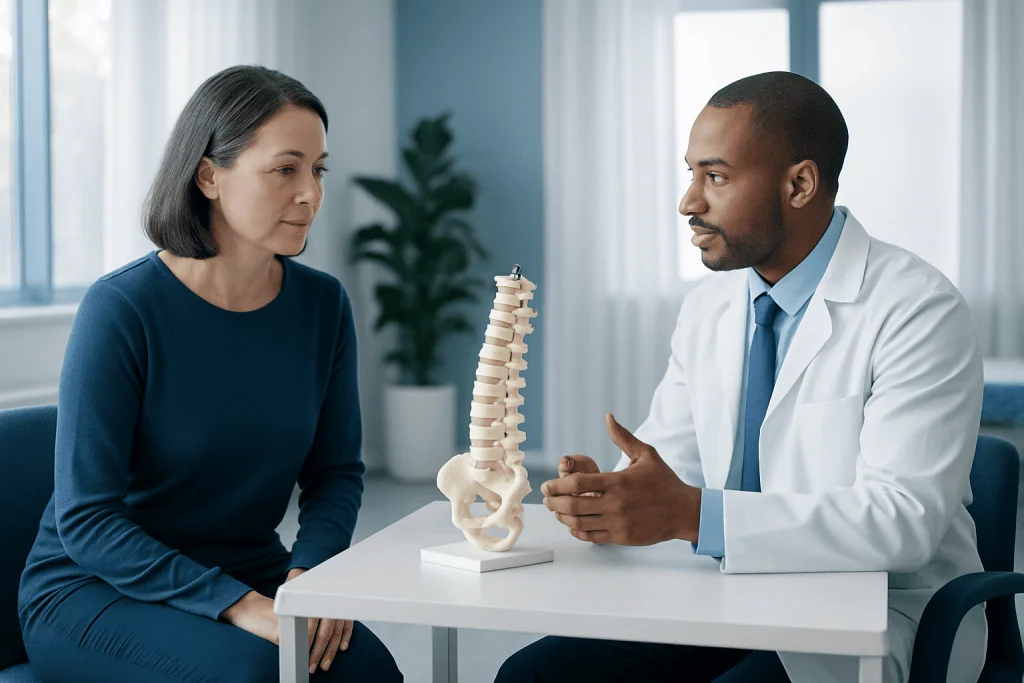
Non-surgical spinal decompression usually refers to a traction-based therapy. The spine is gently stretched using a mechanical table or similar device in a controlled way. The goal is to reduce pressure on affected discs or nerves and encourage a more comfortable position for spinal structures. This approach is typically combined with exercise, posture guidance, and rehabilitation rather than used alone.
Evidence for non-surgical decompression is mixed, and it is not appropriate for every cause of back or neck pain. Some people may feel temporary relief, especially when symptoms are related to disc irritation, but results can vary. It is generally considered after a clinician has excluded serious causes of pain and identified situations where traction may be reasonable. It should not be seen as a substitute for medical evaluation when symptoms are severe or progressive.
Surgical spinal decompression, in contrast, is an operation performed to physically remove or reshape tissue that is pressing on a nerve or the spinal cord. Procedures may include removal of part of a disc, bone, or ligament to create more space. Examples include microdiscectomy for selected disc-related nerve compression, laminectomy for some forms of stenosis, and spine surgery techniques tailored to the affected level and cause. Surgery is usually considered when symptoms remain disabling despite appropriate non-surgical care, or when there is significant weakness, spinal cord compression, or loss of function.
Causes, risk factors, and who may need evaluation
The most common reasons for spinal decompression are age-related changes in the spine and disc problems. Discs naturally lose water content over time, making them less flexible and more prone to bulging or tearing. The joints between the vertebrae can also develop arthritis, which may lead to swelling and bone spur formation. These changes can gradually reduce the space available for nerves.
Risk factors for spine-related nerve compression include older age, repeated heavy lifting, a physically demanding job, smoking, obesity, poor conditioning, and a prior spine injury. Genetics may also play a role in disc degeneration and spinal canal anatomy. However, imaging changes are common even in people without symptoms, which is why treatment decisions should be based on the whole clinical picture rather than scans alone.
A person may need evaluation for spinal decompression if pain, numbness, or weakness is interfering with daily life, work, walking, sleep, or self-care. Persistent radiating pain, worsening neurological symptoms, or recurring episodes that do not improve with basic treatment deserve medical review. In some cases, a specialist may recommend a monitored period of conservative care before deciding whether decompression is needed.
How doctors diagnose the problem
Diagnosis begins with a detailed history and physical examination. A doctor will ask where the pain starts, whether it radiates, what activities make it better or worse, and whether there are signs of numbness, weakness, balance problems, or changes in bladder or bowel function. During the exam, strength, reflexes, sensation, walking pattern, and spinal movement are checked to look for signs of nerve irritation or compression.
Imaging tests may be used when symptoms are severe, persistent, or associated with neurological findings. Magnetic resonance imaging, or MRI, is often the preferred test because it shows discs, nerves, the spinal cord, and soft tissues clearly. Computed tomography may be used in some situations, particularly when MRI is not suitable. X-rays can show alignment and bone changes, but they do not directly show nerves or discs as well as MRI.
Additional tests are sometimes needed. Nerve conduction studies or electromyography may help clarify whether symptoms come from a pinched spinal nerve or another nerve disorder. Diagnosis matters because spinal decompression is most helpful when symptoms and test findings match the same problem level. If there is a mismatch, another cause may need to be treated instead.
Treatment options and what to expect
Treatment often begins with conservative care. This may include short-term activity modification, guided physical therapy, exercises to improve flexibility and core support, and medications recommended by a doctor to help control pain and inflammation. Some people also benefit from posture changes, weight management, and gradual return to normal movement. The aim is to reduce irritation and help the body recover while maintaining function.
If symptoms continue, doctors may consider more targeted options such as image-guided injections or non-surgical spinal decompression therapy in selected cases. These options are usually part of a broader treatment plan rather than stand-alone solutions. The likely benefit depends on the underlying diagnosis, the duration of symptoms, and whether there is true nerve compression. Expectations should be realistic: treatment may reduce pain and improve function, but relief may be gradual and may not be complete.
Surgery may be advised if there is progressive weakness, severe pain that does not respond to non-surgical care, significant walking limitation from stenosis, or evidence of spinal cord compression. The recommended procedure depends on the location and cause of the pressure. Recovery varies by procedure and overall health, but rehabilitation and movement guidance are often important after treatment. Near the end of the care pathway, some patients seek evaluation at centers with multidisciplinary spine teams; Acibadem International’s specialists in JCI-accredited hospitals diagnose and treat spine conditions for international patients.
Self-care, prevention, and recovery habits
Although not every spinal problem can be prevented, healthy daily habits can reduce strain on the spine and support recovery. Regular physical activity helps maintain flexibility, muscle support, balance, and general conditioning. Exercises that strengthen the trunk and improve posture may be especially helpful for people with recurrent back or neck symptoms. A clinician or physiotherapist can suggest safe movements based on the person’s condition.
Body mechanics also matter. Lifting with the legs, keeping loads close to the body, avoiding sudden twisting, and taking breaks from prolonged sitting can lessen stress on the spine. For people who work at desks, adjusting chair height, screen position, and sitting posture may help reduce neck and lower back strain. Sleep position and mattress comfort can also influence symptoms, though there is no single best setup for everyone.
Recovery is usually supported by staying as active as symptoms allow rather than prolonged bed rest, unless a doctor advises otherwise. Smoking cessation, healthy weight management, and treatment of osteoporosis or other bone health issues may also support long-term spine health. People should speak with a qualified doctor before starting traction devices or intensive exercise if they have severe pain, weakness, fractures, cancer, infection, or other complex medical conditions.
When to seek medical care
Medical advice is appropriate if back or neck pain lasts longer than expected, keeps returning, or radiates into an arm or leg. Evaluation is also important if symptoms interfere with work, sleep, walking, balance, or normal daily activities. A doctor can determine whether symptoms may respond to conservative treatment or whether more specific testing is needed.
Urgent medical attention is needed for red-flag symptoms. These include new loss of bowel or bladder control, numbness around the groin or inner thighs, rapidly worsening weakness, fever with severe back pain, major trauma, or signs of spinal cord compression such as increasing balance problems or loss of hand coordination. These symptoms do not always mean emergency surgery is required, but they should not be ignored.
Seeking care early can help prevent prolonged pain and support safer treatment decisions. Because spinal decompression can refer to different therapies and procedures, an accurate diagnosis is the best way to choose the most appropriate next step.
Frequently asked questions
What is spinal decompression used for?
Spinal decompression is used to relieve pressure on spinal nerves or the spinal cord. It may be considered for symptoms such as radiating pain, numbness, tingling, or weakness caused by disc problems, spinal stenosis, or other forms of nerve compression.
Is spinal decompression the same as back surgery?
No. The term spinal decompression can describe non-surgical traction-based therapy or surgery that removes pressure from nerves. These are different treatments, and a doctor helps decide whether either one is appropriate.
Does non-surgical spinal decompression work?
Some people experience symptom relief with non-surgical spinal decompression, especially when it is part of a broader rehabilitation plan. However, results vary, and the evidence is not equally strong for all conditions, so it should be used selectively and under professional guidance.
Who may need surgical spinal decompression?
Surgery may be considered for people with persistent disabling symptoms, progressive weakness, significant walking limitation, or spinal cord compression that does not improve with conservative care. The decision depends on symptoms, examination findings, imaging results, and overall health.
How long does recovery take after spinal decompression?
Recovery depends on the type of decompression, the area treated, and the person’s health and activity level. Some people recover within weeks after selected procedures, while others need a longer period of rehabilitation and gradual return to activity.
When is back or neck pain an emergency?
Emergency evaluation is important if pain is accompanied by new bowel or bladder problems, numbness in the saddle area, severe or rapidly worsening weakness, high fever, or major trauma. These symptoms can signal a serious condition that needs urgent medical care.
References
- National Institute of Arthritis and Musculoskeletal and Skin Diseases
- National Institute of Neurological Disorders and Stroke
- American Academy of Orthopaedic Surgeons
- North American Spine Society
- MedlinePlus
This article is for general information only and is not a substitute for professional medical advice. Please consult a qualified doctor about your individual situation.
Joint and spine care in Turkey — expert assessment & treatment
JCI-accredited · board-certified surgeons · reply within 24h