

Raccoon Eyes: An Evidence-Based Guide for Patients

Raccoon eyes describe bruising around one or both eyes, most often after injury. This sign can appear with facial fractures or a basilar skull fracture and should not be ignored after head trauma.
Key Takeaways
- Raccoon eyes describe bruising around one or both eyes, most often after injury.
- This sign can appear with facial fractures or a basilar skull fracture and should not be ignored after head trauma.
- Less common causes include surgery, bleeding disorders, amyloidosis, and some cancers.
- Diagnosis focuses on the underlying cause and may involve an examination and imaging tests.
- Anyone with raccoon eyes plus headache, confusion, vomiting, vision changes, or fluid from the nose or ears needs urgent medical care.
Raccoon eyes are dark purple or blue bruises around both eyes, medically called periorbital ecchymosis. They can appear after facial or head trauma, but they may also be associated with certain medical conditions, so the cause should be assessed rather than assumed.
What Are Raccoon Eyes?
Raccoon eyes are dark bruises or discoloration around the eyes, usually affecting both sides. The medical term is periorbital ecchymosis. Although the appearance may resemble cosmetic dark circles caused by fatigue or genetics, raccoon eyes are different because they are caused by bleeding under the skin.
This finding is most commonly linked to trauma, especially injuries to the head or face. Blood from a fracture or deeper tissue injury can track into the soft tissues around the eyes, leading to a symmetrical bruised appearance. In some cases, the bruising may not appear immediately and can become more noticeable over the next one to three days.
Raccoon eyes are a sign rather than a disease. That distinction matters because treatment depends on the reason they developed. For some people, the cause is a relatively limited soft-tissue injury. For others, it can signal a more serious problem that needs prompt medical evaluation.
How Raccoon Eyes Look and Feel
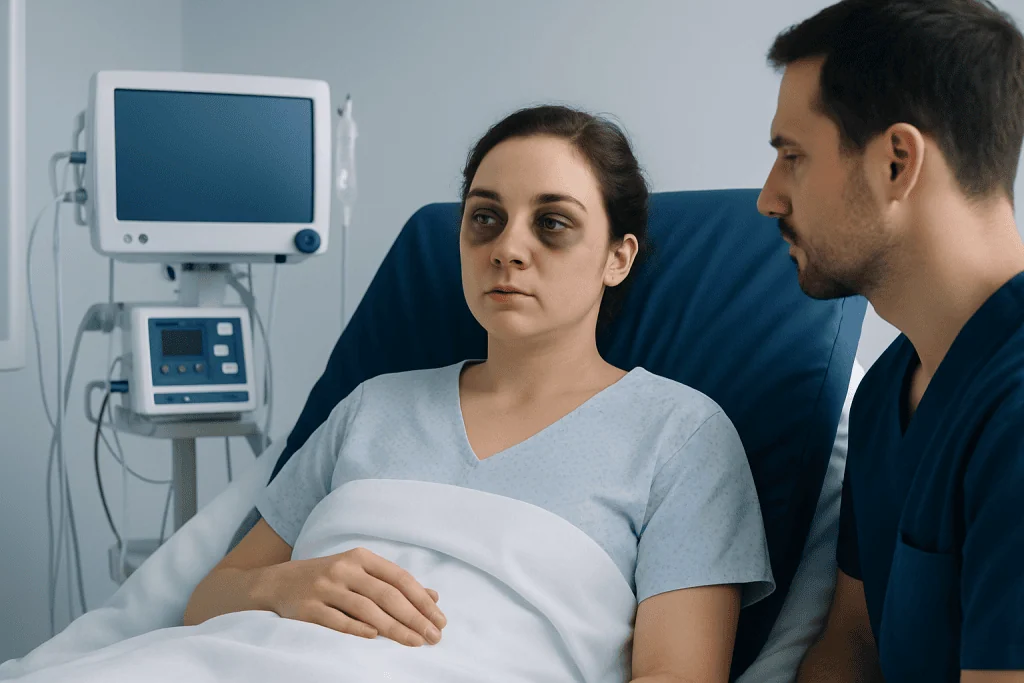
Most people notice purple, blue, or black discoloration around the eyelids and under-eye area. The bruising may involve both eyes even if the injury was not directly to the eye itself. Swelling, tenderness, and a feeling of heaviness around the eyes can occur at the same time.
Unlike ordinary dark circles, raccoon eyes usually come on suddenly and are often associated with a recent event such as a fall, vehicle accident, sports injury, or surgery. Some people also have related symptoms such as headache, facial pain, nasal congestion, or bruising behind the ears.
Associated signs help doctors understand whether the cause may be more serious. Symptoms that deserve particular attention include blurred vision, double vision, severe headache, vomiting, drowsiness, confusion, weakness, loss of consciousness, or clear fluid leaking from the nose or ears. Those features can suggest a deeper injury and should not be monitored at home without medical advice.
- Dark bruising around both eyes
- Swelling or tenderness of the eyelids or face
- Headache or facial pain after trauma
- Vision changes or eye discomfort
- Other bruising, bleeding, or unexplained fatigue in non-traumatic cases
Common Causes and Less Common Causes

The best-known cause of raccoon eyes is trauma. This includes facial fractures, nose injuries, and especially fractures involving the base of the skull, often called a basilar skull fracture. In that situation, blood from injured tissues can move into the loose skin around the eyes. Doctors may also consider related facial injuries such as skull base conditions when symptoms do not fit a typical trauma pattern.
Raccoon eyes can also occur after surgery involving the face, nose, sinuses, or skull. In those cases, bruising may be expected to some degree, but the care team should still explain what is normal recovery and what should be reported. Some people develop periorbital bruising after severe sinus or nasal injury, including some situations evaluated by ear, nose, and throat specialists.
Less common causes include bleeding or clotting disorders, amyloidosis, and certain cancers such as neuroblastoma in children or blood-related cancers in adults. These conditions are much less frequent than trauma, but they become more relevant when bruising appears without a known injury, keeps recurring, or is accompanied by symptoms such as weight loss, bone pain, easy bruising elsewhere, or ongoing fatigue.
Because raccoon eyes have more than one possible cause, context is essential. Age, recent injuries, medications such as blood thinners, recent surgery, and the presence of neurological symptoms all help determine how urgent the situation may be.
Why They Matter After a Head Injury
After head trauma, raccoon eyes can be an external clue to an internal injury. They are classically associated with a basilar skull fracture, which is a break in the bones at the bottom of the skull. Not everyone with this fracture develops raccoon eyes, and not everyone with raccoon eyes has a skull fracture, but the association is important enough that medical assessment is recommended.
A skull-base injury may happen along with a concussion, brain bleeding, facial fractures, or damage to structures around the eyes, ears, or sinuses. Doctors often evaluate these injuries together because symptoms can overlap. In some cases, specialists may use cranial computed tomography (CT) scan to look for fractures or bleeding and to guide next steps.
Children and older adults deserve especially careful attention after falls or head impacts. Symptoms may be subtle at first, and bruising can appear later. Even when a person feels relatively well, any new raccoon-eye bruising after a significant injury should be discussed with a doctor because timing alone cannot rule out a serious problem.
How Doctors Diagnose the Cause
Diagnosis begins with a history and physical examination. Doctors ask when the bruising appeared, whether there was a fall or blow to the head, what symptoms came before or after it, and whether the person takes medications that affect bleeding. They also examine the face, eyes, nose, ears, and nervous system for signs of fracture, eye injury, or neurological changes.
If trauma is suspected, imaging may be needed. A CT scan is commonly used to check the bones of the skull and face and to look for bleeding inside the head. Depending on symptoms, imaging of the facial bones or sinuses may also be considered, and some patients may be referred for MRI when soft tissues, nerves, or other deeper structures need closer evaluation.
When there is no obvious injury, doctors may order blood tests to assess clotting, platelet levels, anemia, inflammation, or other underlying conditions. In selected cases, they may also investigate eye problems, blood disorders, or rare causes such as amyloidosis. The goal is not only to confirm the bruising but to identify why it happened.
Treatment and Recovery
There is no single treatment for raccoon eyes because care depends on the cause. If the bruising is due to a mild soft-tissue injury, treatment may focus on rest, cold compresses in the early period, head elevation, and follow-up observation. Bruising usually fades gradually over days to weeks, much like bruising elsewhere on the body.
If the cause is a fracture, concussion, or internal bleeding, treatment is directed at those injuries. This may involve monitoring in hospital, pain management, activity restrictions, and sometimes surgery. Patients with complex facial or skull-base injuries may be managed by neurosurgery, emergency medicine, ENT, maxillofacial, or ophthalmology teams working together.
When an underlying medical disorder is responsible, treatment targets that condition rather than the bruise itself. For example, a bleeding disorder may require hematology assessment, while sinus or nasal problems may need specialized evaluation such as endoscopic sinus surgery in selected cases. The appearance around the eyes improves as the underlying issue is treated.
Near the end of recovery, some people benefit from specialist input if symptoms persist, vision is affected, or the diagnosis remains unclear. Acibadem International’s multidisciplinary specialists and JCI-accredited hospitals diagnose and treat complex conditions for international patients when advanced evaluation is needed.
When to Seek Medical Care
Urgent medical care is appropriate if raccoon eyes appear after a head injury, especially after a significant fall, collision, sports accident, or assault. It is also important to get prompt evaluation if the bruising is paired with loss of consciousness, severe headache, repeated vomiting, confusion, seizures, neck pain, balance problems, or changes in vision.
People should also seek care quickly if they notice blood or clear fluid coming from the nose or ears, worsening drowsiness, weakness, facial numbness, or trouble speaking. These symptoms can point to injuries that are not safe to assess at home. Immediate attention is particularly important for children, older adults, and anyone taking blood-thinning medication.
Medical review is still wise even when there was no known trauma. Unexplained or recurrent bruising around the eyes, especially if accompanied by easy bruising elsewhere, fatigue, swelling, or weight loss, deserves evaluation. A clinician can help decide whether observation is enough or whether testing is needed.
Self-Care, Prevention, and What Not to Assume
At home, self-care should be cautious and supportive rather than a substitute for diagnosis. A cold compress may reduce swelling in the first day or two after a minor injury, and rest can help overall recovery. It is usually best to avoid pressure on the area and to follow a doctor’s advice before returning to sports or other activities after any head injury.
Prevention focuses mainly on injury reduction. Seat belts, helmets for cycling and contact sports, fall-prevention steps at home, and safe work practices can lower the risk of the injuries most commonly linked to raccoon eyes. For people with bleeding disorders or those taking anticoagulants, regular medical follow-up is also important.
Perhaps the most helpful point is what not to assume. Raccoon eyes are not the same as ordinary tired-looking dark circles, but they also do not automatically mean the worst-case diagnosis. The safest approach is to treat them as a meaningful sign, pay attention to accompanying symptoms, and seek professional advice so the underlying cause can be identified correctly.
Frequently asked questions
Are raccoon eyes always a sign of a skull fracture?
No. Raccoon eyes are strongly associated with injuries such as basilar skull fracture, but they can also happen with facial trauma, surgery, bleeding disorders, and some other medical conditions. Because the causes vary, a doctor should assess the full situation rather than relying on appearance alone.
How are raccoon eyes different from ordinary dark circles?
Ordinary dark circles are usually related to skin pigmentation, thin skin, genetics, aging, allergies, or lack of sleep. Raccoon eyes are bruises caused by bleeding under the skin, so they often look more sudden, darker, and more clearly linked to an injury or medical problem.
Can raccoon eyes appear a day or two after an injury?
Yes. In some people, the bruising becomes more visible over time as blood tracks into the tissues around the eyes. That delayed appearance is one reason new bruising after a recent head or facial injury should still be taken seriously.
What tests might be needed for raccoon eyes?
The exact tests depend on the suspected cause. After trauma, doctors often consider CT imaging to look for fractures or bleeding, while non-traumatic cases may lead to blood tests or referral to a specialist. The aim is to find the underlying reason for the bruising.
Should someone go to the emergency department for raccoon eyes?
Emergency care is appropriate when raccoon eyes occur after a head injury or appear with symptoms such as severe headache, vomiting, confusion, vision changes, or clear fluid from the nose or ears. If there was no injury and the person otherwise feels well, a prompt medical appointment is still sensible.
How long does it take for raccoon eyes to go away?
Bruising often improves gradually over days to weeks, depending on the amount of bleeding and the underlying cause. Recovery may take longer if there is a fracture, surgery, a bleeding disorder, or another condition that also needs treatment.
References
- National Institutes of Health
- American Academy of Ophthalmology
- Centers for Disease Control and Prevention
- Mayo Clinic
- Merck Manual
This article is for general information only and is not a substitute for professional medical advice. Please consult a qualified doctor about your individual situation.
Joint and spine care in Turkey — expert assessment & treatment
JCI-accredited · board-certified surgeons · reply within 24h

More from the Health Library



Related Specialists

Assoc. Prof. Dr. Onur Dülgeroğlu
General Surgery
Dr. Nargiz Ibrahimli
Aesthetic Plastic & Reconstructive Surgery
Dr. Funda Kılıç
Clinical Laboratory
Assoc. Prof. Dr. Yeşim Sağlıcan
Pathology