Sciatica Pain Chiropractic: Common Causes, Related Conditions, and When to See a Doctor

Sciatica is a symptom caused by irritation or compression of the sciatic nerve, not a diagnosis by itself. Chiropractic care may reduce pain in some cases of uncomplicated, mechanical sciatica, but it should follow a proper medical assessment.
Key Takeaways
- Sciatica is a symptom caused by irritation or compression of the sciatic nerve, not a diagnosis by itself.
- Chiropractic care may reduce pain in some cases of uncomplicated, mechanical sciatica, but it should follow a proper medical assessment.
- Sudden weakness, bowel or bladder changes, fever, trauma, or severe worsening pain need urgent medical attention.
- Common causes include lumbar disc herniation, spinal stenosis, and age-related spinal changes.
- Most treatment plans combine activity modification, pain relief, physical therapy, and treatment of the underlying condition.
Sciatica pain chiropractic care can be helpful for selected patients, especially when symptoms are linked to mechanical low back problems, but it is not the right first step for everyone. The safest approach is to understand what may be irritating the sciatic nerve, recognize warning signs, and choose treatment based on the underlying cause.
Overview: Can chiropractic help sciatica pain?
Sciatica pain chiropractic care is sometimes used to ease leg pain, tingling, or numbness that travels from the lower back into the buttock and down the leg. For some people, hands-on treatment may provide short-term relief, especially when symptoms come from mechanical irritation in the lower spine. However, sciatica has several possible causes, and the best treatment depends on what is pressing on or inflaming the nerve.
Sciatica is not a disease itself. It is a pattern of symptoms caused by irritation of the sciatic nerve or the nerve roots that form it. This means that the same type of leg pain can come from different spine conditions, some mild and some requiring more targeted treatment.
Because of that, chiropractic care should be considered one part of a broader evaluation rather than an automatic answer. A clinician may first look for red flags, assess nerve function, and decide whether conservative care is reasonable or whether imaging, specialist assessment, or other treatment is needed.
What sciatica feels like
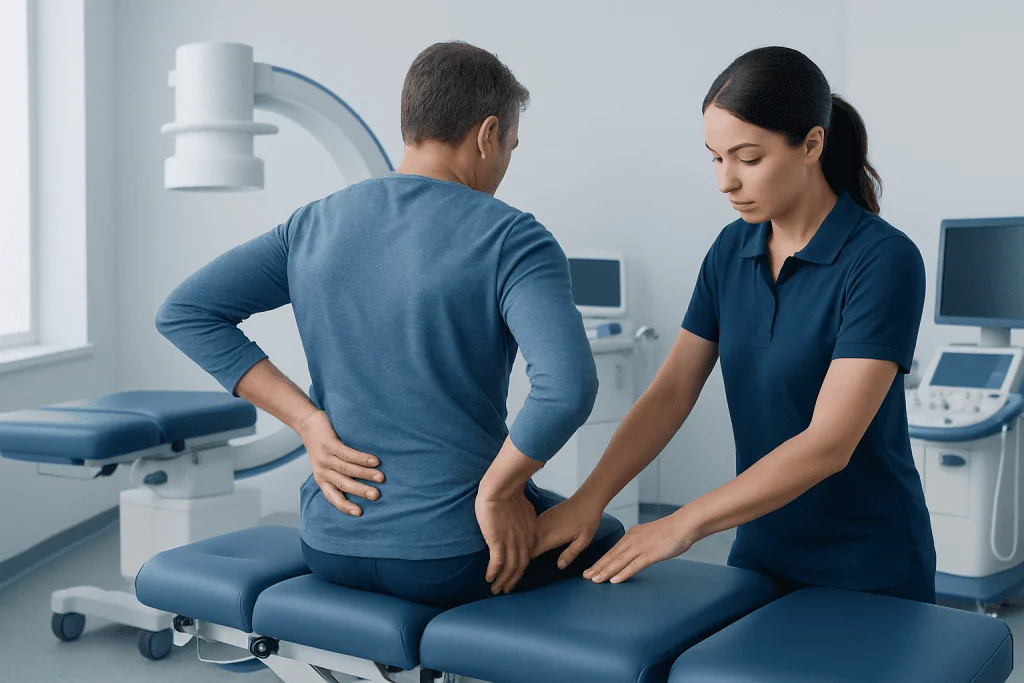
Sciatica usually causes pain that starts in the lower back or buttock and travels down the back or side of one leg. People often describe it as sharp, burning, shooting, or electric-like pain. It may be constant, or it may flare with sitting, coughing, sneezing, bending, or lifting.
Other symptoms can include numbness, pins and needles, or a feeling of weakness in part of the leg or foot. Some people notice that walking helps, while prolonged sitting makes symptoms worse. Others feel a combination of back pain and leg pain, though the leg pain is often the more troubling part.
Symptoms vary depending on which nerve root is affected. This is why one person may feel pain in the buttock and calf, while another has numbness in the foot or trouble lifting the toes. If sciatica is suspected, the pattern of symptoms helps guide the next steps in diagnosis and treatment.
- Pain radiating from the low back to the leg
- Burning, shooting, or electric-like discomfort
- Numbness or tingling in the leg or foot
- Weakness in the leg, ankle, or toes
- Worsening symptoms with sitting or straining
Common causes and related conditions
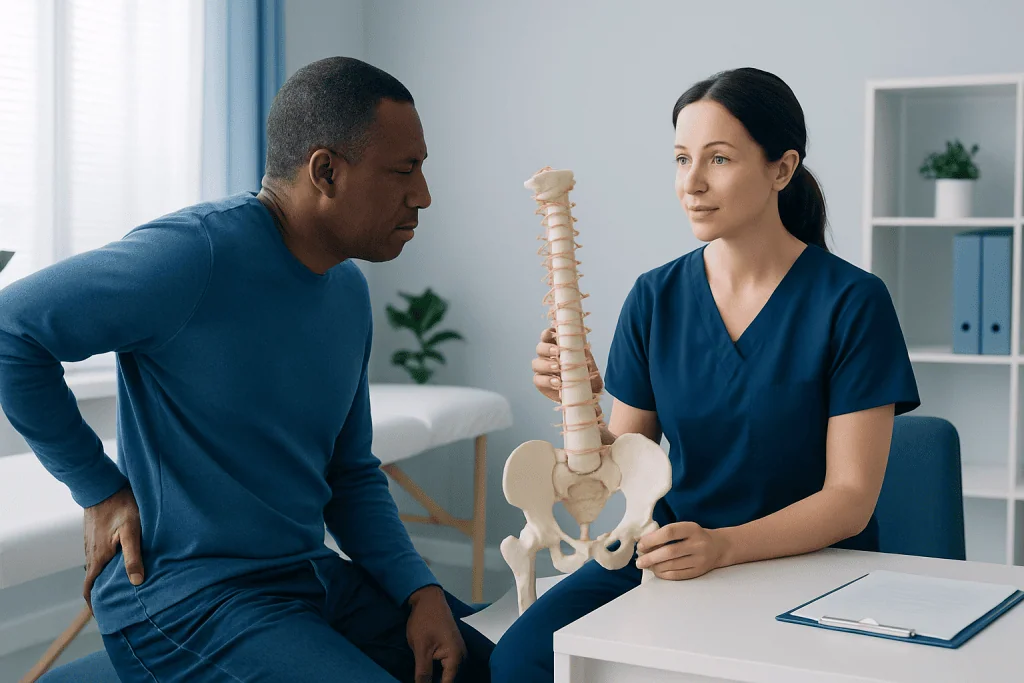
The most common cause of sciatica is a problem in the lower spine that affects a nerve root. A herniated lumbar disc can press on a nearby nerve and trigger pain that travels down the leg. Age-related wear in the spine can also narrow the spaces where nerves pass, a condition called spinal stenosis, which may cause sciatica-like symptoms.
Another common contributor is degeneration in the spinal discs and joints. These changes can alter posture, movement, and spinal stability, increasing pressure on sensitive tissues. In some patients, sciatica is associated with a herniated disc or other lower back conditions that need targeted rehabilitation or specialist care.
Less often, symptoms can be related to spondylolisthesis, trauma, inflammation, pregnancy-related changes, or tight muscles around the pelvis such as piriformis syndrome. Rarely, infection, fracture, tumor, or severe nerve compression may be responsible. This is one reason persistent or severe sciatica should not be self-diagnosed for long periods.
Chiropractic care may be more suitable when symptoms are linked to uncomplicated mechanical low back pain with referred nerve irritation and there are no signs of major weakness, spinal instability, or serious underlying disease. It is less appropriate when there is progressive neurological loss, significant structural disease, or a cause that requires different treatment.
How doctors diagnose the cause
Diagnosis begins with a careful history and physical examination. A doctor will ask where the pain travels, what movements trigger it, how long it has lasted, and whether there are warning signs such as weakness, fever, recent injury, cancer history, or bladder and bowel changes. They may also test muscle strength, reflexes, sensation, walking, and straight-leg raise responses.
Many people with recent, uncomplicated sciatica do not need imaging right away. If symptoms are mild to moderate and there are no red flags, a period of conservative treatment is often reasonable. Imaging becomes more important when pain is severe, symptoms persist, weakness appears, or surgery or injections are being considered.
When needed, MRI scanning can show discs, nerves, and soft tissues in detail. In selected cases, X-rays or CT scans may also be used, particularly if there is concern about bone problems or trauma. The main goal of testing is not simply to confirm sciatica, but to identify the specific cause so treatment can be matched appropriately.
Where chiropractic care may fit into treatment
For some patients, chiropractic care may be part of non-surgical treatment for sciatica, especially when examination suggests a mechanical source and no urgent warning signs are present. Depending on the practitioner and the case, care may include spinal manipulation, mobilization, soft tissue techniques, stretching advice, posture guidance, and exercise recommendations. Some people report reduced pain and better movement after a short course of treatment.
Still, chiropractic treatment is not a one-size-fits-all solution. High-velocity spinal manipulation may not be appropriate for everyone, particularly when there is osteoporosis, fracture risk, severe disc pathology, progressive neurological deficit, or uncertainty about the diagnosis. A patient-friendly, evidence-based plan should weigh possible benefits against limitations and safety.
In practice, sciatica often improves best with a combined approach. Physical therapy, activity modification, pain-relieving medicines advised by a doctor, and a structured physical therapy and rehabilitation program can help restore strength, flexibility, and spinal control. If symptoms remain significant, doctors may consider pain management options such as image-guided injections, depending on the cause.
When nerve compression is severe or symptoms do not improve with conservative care, a spine specialist may discuss whether spine surgery is appropriate. The aim is always to treat the source of nerve irritation, not only the pain sensation itself.
Self-care, activity, and prevention
Many people with sciatica improve over time with sensible self-care. Gentle movement is usually better than prolonged bed rest. Short walks, changing positions regularly, and avoiding heavy lifting or twisting can help calm symptoms without causing deconditioning.
Heat or cold packs may offer temporary relief, and attention to sitting posture can reduce strain on the lower back. Supportive chairs, proper desk setup, and avoiding long uninterrupted car or desk sessions are practical steps that many patients find useful. A doctor or therapist can advise which exercises are safe, since the wrong movements may aggravate symptoms in some cases.
Prevention focuses on spine health and movement habits. Core strengthening, flexibility work, maintaining a healthy body weight, lifting with good technique, and staying physically active can lower the chance of recurring episodes. For people with repeated flare-ups, a personalized rehabilitation plan is often more helpful than relying only on passive treatments.
When to seek medical care
Medical assessment is important if sciatica pain is severe, keeps returning, or lasts longer than expected despite rest and self-care. Evaluation is also wise if pain interferes with sleep, walking, work, or daily activities, or if there is uncertainty about whether the symptoms are truly from the sciatic nerve.
Urgent care is needed if there is new or worsening leg weakness, loss of bladder or bowel control, numbness around the groin or saddle area, fever, unexplained weight loss, or pain after a significant fall or accident. These symptoms can point to conditions that need prompt treatment.
Near the end of the care pathway, some patients benefit from multidisciplinary assessment by spine, neurology, rehabilitation, and pain specialists. Acibadem International’s multidisciplinary teams at JCI-accredited hospitals evaluate and treat spinal and nerve-related conditions for international patients when further diagnosis or treatment is needed.
Frequently asked questions
Is chiropractic good for sciatica pain?
It may help some people with uncomplicated, mechanically related sciatica, especially when symptoms are mild to moderate and there are no warning signs. However, it is not the best option for every cause of sciatica, so proper medical assessment is important first.
What causes sciatica in most people?
A lumbar disc problem is one of the most common causes, especially a herniated disc pressing on a nerve root. Age-related narrowing of the spinal canal or openings for the nerves can also cause sciatica symptoms.
When should sciatica not be treated with chiropractic care alone?
Chiropractic care alone is not appropriate if there is significant or progressive weakness, bowel or bladder changes, fever, trauma, or suspicion of fracture, infection, or another serious condition. In these situations, prompt medical evaluation is more important than manual treatment.
How long does sciatica usually last?
Many episodes improve within days to weeks, though recovery time varies depending on the cause and the severity of nerve irritation. If symptoms persist, worsen, or keep returning, further evaluation is recommended.
Do all people with sciatica need an MRI?
No. Imaging is not always needed early on if symptoms are typical and there are no red flags. MRI is more commonly used when pain is severe, weakness develops, symptoms persist, or a procedure is being considered.
What can a person do at home for mild sciatica?
Gentle activity, avoiding prolonged bed rest, changing positions often, and using heat or cold may help ease symptoms. A doctor or physical therapist can also suggest safe stretching and strengthening exercises based on the likely cause.
References
- National Institute of Neurological Disorders and Stroke
- National Institute for Health and Care Excellence
- American Academy of Orthopaedic Surgeons
- American Association of Neurological Surgeons
- Mayo Clinic
This article is for general information only and is not a substitute for professional medical advice. Please consult a qualified doctor about your individual situation.
Joint and spine care in Turkey — expert assessment & treatment
JCI-accredited · board-certified surgeons · reply within 24h