Cyst Inside the Stomach: A Complete Medical Overview

A cyst inside the stomach is not a single disease but a description of a growth that may have several causes. Some stomach cysts cause no symptoms and are found incidentally during imaging or endoscopy.
Key Takeaways
- A cyst inside the stomach is not a single disease but a description of a growth that may have several causes.
- Some stomach cysts cause no symptoms and are found incidentally during imaging or endoscopy.
- Diagnosis often relies on endoscopy, imaging, and sometimes tissue sampling to confirm the type of lesion.
- Treatment depends on the cyst's size, location, symptoms, and whether there are concerning features.
- New or persistent abdominal pain, vomiting, bleeding, weight loss, or trouble eating should be assessed by a doctor.
A cyst inside the stomach usually refers to an uncommon fluid-filled or sac-like growth found in or near the stomach wall. Many are benign, but proper medical evaluation is important to identify the exact type, rule out more serious conditions, and decide whether monitoring or treatment is needed.
Overview: What a Cyst Inside the Stomach Means
A cyst inside the stomach usually means a sac-like lesion that appears within the stomach wall or projects into the stomach from nearby tissue. It is a descriptive term rather than a final diagnosis. In practice, doctors use tests to determine whether the finding is a true cyst, a duplication cyst, a benign submucosal lesion, an inflammatory collection, or another type of growth.
Many of these lesions are uncommon and may be discovered during an endoscopy or scan done for unrelated symptoms. Some remain harmless and stable for years, while others need closer evaluation because they can mimic tumors or interfere with digestion. The most important next step is identifying exactly what the lesion is.
The stomach can also be affected by other growths that are not true cysts, including gastric cancer or noncancerous polyps and masses. Because symptoms can overlap, patient-friendly information should emphasize that a diagnosis cannot be made from the term alone. A specialist assessment helps clarify whether observation, follow-up, or treatment is the safest plan.
Types of Stomach Cysts and Related Lesions
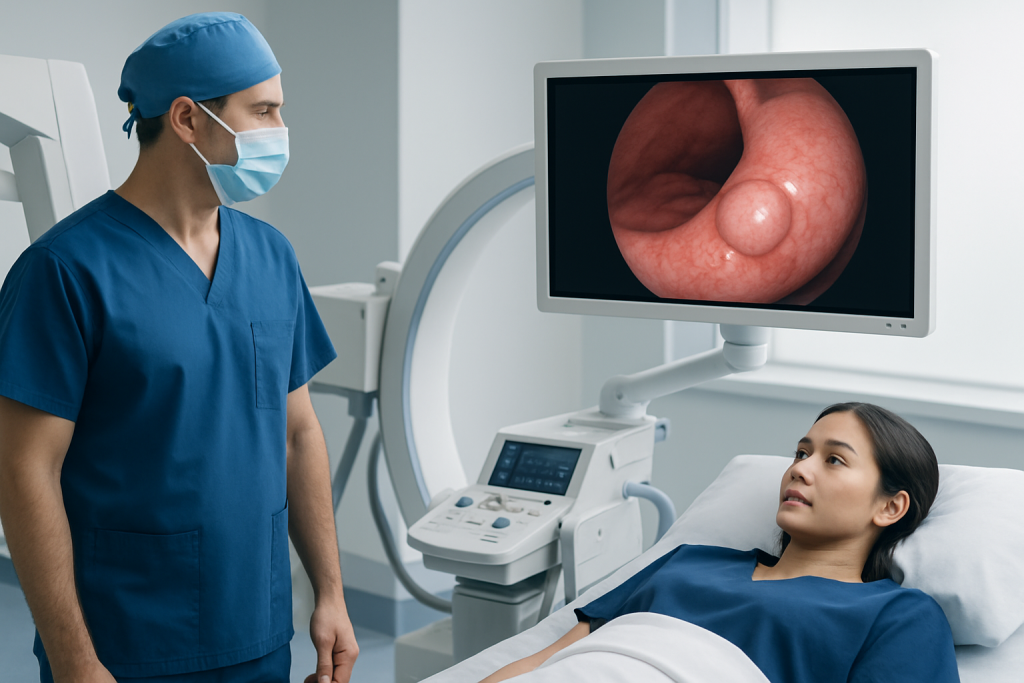
Several different conditions may be described as a cyst inside the stomach. One example is a gastric duplication cyst, a rare congenital lesion that forms during development before birth. It may remain unnoticed until adulthood or be found because it causes pain, fullness, or other digestive symptoms.
Other lesions can look cystic on imaging even if they are not simple cysts. These include cystic degeneration within a submucosal tumor, pancreatic cysts pressing on the stomach, collections related to inflammation, or gland-related cystic changes in the stomach lining. In some cases, a lesion may arise from the stomach wall but resemble a nearby pancreatic or liver abnormality.
Doctors also consider whether the finding could represent another condition such as gastrointestinal stromal tumor (GIST), which is not usually a true cyst but can sometimes have a cyst-like appearance. Distinguishing among these possibilities is essential because management differs widely. Some lesions are simply monitored, while others require removal or biopsy.
Symptoms and Possible Complications
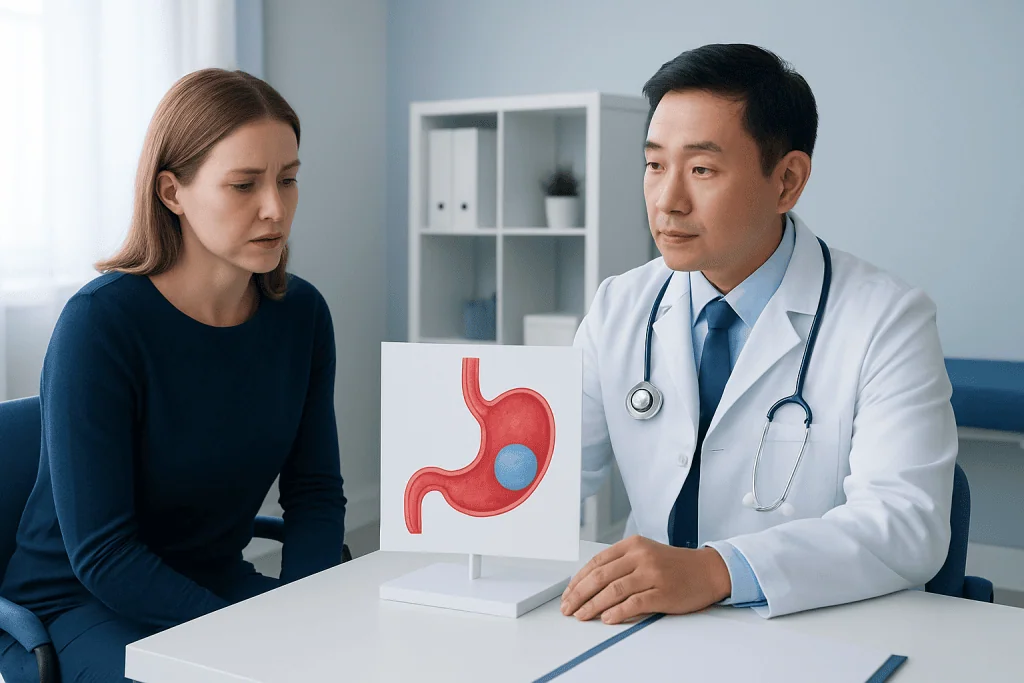
A small cyst inside the stomach may cause no symptoms at all. When symptoms occur, they are often nonspecific and can include upper abdominal discomfort, bloating, early fullness after eating, nausea, or indigestion. Because these symptoms are common in many digestive conditions, testing is usually needed to identify the cause.
Larger lesions or those in a sensitive location may lead to more noticeable problems. A person may develop vomiting, difficulty tolerating meals, poor appetite, or pain after eating if the cyst affects how food moves through the stomach. Occasionally, a cyst may bleed, become infected, ulcerate the lining, or contribute to partial blockage.
Rarely, alarm features can appear, such as unintentional weight loss, vomiting blood, black stools, persistent anemia, or severe pain. These symptoms do not automatically mean cancer, but they do require prompt medical review. Doctors also look for signs that the lesion could be compressing nearby structures or associated with another digestive disorder such as stomach ulcer.
Causes and Risk Factors
The cause of a cyst inside the stomach depends on the specific type. Some are congenital, meaning they form during fetal development and are present from birth even if they are only discovered later in life. Gastric duplication cysts fall into this category and are among the better-known true cystic lesions of the stomach.
Other cyst-like lesions may develop because of inflammation, obstruction of glandular structures, tissue degeneration within another growth, or pressure from a neighboring organ. A lesion seen near the stomach may not actually originate in the stomach at all, which is why careful imaging matters. The final diagnosis often depends more on the lesion’s structure and location than on symptoms alone.
There are no universal lifestyle risk factors for all stomach cysts. However, age, a history of digestive disease, prior imaging findings, and family history of gastrointestinal disorders may help guide evaluation. Clinicians also consider whether the person has symptoms or test results suggesting a different underlying condition, including infection, benign tumors, or less commonly malignancy.
How Doctors Diagnose a Cyst Inside the Stomach
Diagnosis usually begins with a medical history and physical examination, followed by tests that show the shape and location of the lesion. Upper endoscopy allows a doctor to look inside the stomach and identify whether the lesion is in the lining or appears to push inward from deeper layers. Endoscopy can also detect bleeding, ulcers, or other abnormalities that may be contributing to symptoms.
Imaging studies such as abdominal ultrasound, CT, or MRI help determine whether the lesion is truly cystic and whether it arises from the stomach or a nearby organ. In many cases, endoscopic ultrasound is especially useful because it can show the layers of the stomach wall and the internal features of the lesion in greater detail. When appropriate, doctors may recommend endoscopic ultrasound to better characterize a submucosal or cystic-looking stomach lesion.
Sometimes a sample of fluid or tissue is needed, but not every cyst should be punctured or biopsied. The decision depends on the appearance of the lesion and the potential risks. If the finding appears suspicious or symptoms are persistent, a specialist may recommend further evaluation with upper endoscopy and, in selected cases, surgery or pathology review to confirm the diagnosis.
Treatment Options and Follow-Up
Treatment for a cyst inside the stomach depends on what the lesion is, whether it is causing symptoms, and whether it has any concerning features. A small, clearly benign, asymptomatic cyst may only need periodic monitoring. Follow-up can include repeat endoscopy or imaging to make sure it is not changing over time.
If the lesion causes pain, bleeding, obstruction, recurrent symptoms, or diagnostic uncertainty, removal may be considered. Some lesions can be treated endoscopically, while others need an operation, especially if they arise from deeper layers of the stomach wall or cannot be safely assessed another way. For patients who need a procedural approach, options may include specialist gastroenterology care and, when indicated, gastric surgery.
If testing suggests a different type of mass rather than a simple cyst, treatment follows the specific diagnosis. This may involve surgical removal, pathology review, and tailored follow-up. Near the end of the care pathway, a multidisciplinary team can help coordinate decisions; Acibadem International’s multidisciplinary specialists and JCI-accredited hospitals diagnose and treat digestive conditions for international patients.
Prevention, Self-Care, and Living With a Stomach Cyst
There is no single proven way to prevent all stomach cysts because many are congenital or related to structural changes that cannot be influenced by lifestyle alone. Still, general digestive health habits may help reduce irritation and support overall well-being. These include eating regular balanced meals, limiting alcohol if it worsens symptoms, avoiding tobacco, and discussing frequent use of stomach-irritating medicines with a doctor.
Self-care should focus on symptom monitoring rather than self-diagnosis. It can be helpful to note when pain, nausea, fullness, vomiting, or black stools occur and whether symptoms relate to meals. This record may help a gastroenterologist judge whether the lesion is likely causing symptoms or whether another digestive issue should be investigated.
People who have been advised to monitor a stomach cyst should keep follow-up appointments even if they feel well. Most monitored lesions remain manageable, but repeat testing is important because subtle changes may not cause immediate symptoms. Patients should also ask which warning signs would justify contacting their doctor sooner than planned.
When to Seek Medical Care
A person should seek medical care if they have ongoing upper abdominal pain, persistent nausea, repeated vomiting, unexplained loss of appetite, or a sense of fullness after small meals. These symptoms are not specific to a cyst inside the stomach, but they deserve evaluation, especially if they last more than a short time or interfere with daily life.
Prompt medical attention is important if there is vomiting blood, black or tarry stools, faintness, difficulty swallowing, severe abdominal pain, or unintentional weight loss. These signs can occur with several digestive conditions and should not be ignored. A qualified doctor can decide whether urgent testing is needed.
Even when symptoms are mild, a newly discovered stomach lesion should be reviewed by a gastroenterologist or surgeon familiar with upper digestive disorders. Early clarification often reduces uncertainty and helps avoid both undertreatment and unnecessary procedures. Reassurance is appropriate in many cases, but reassurance should come from a proper diagnosis.
Frequently asked questions
Is a cyst inside the stomach usually cancer?
Not usually. Many cystic stomach lesions are benign or turn out to be something other than cancer, but they still need proper evaluation because some masses can look similar on scans or endoscopy. A doctor uses imaging, endoscopy, and sometimes tissue testing to confirm the diagnosis.
What symptoms can a stomach cyst cause?
Some stomach cysts cause no symptoms at all. When symptoms occur, they may include upper abdominal discomfort, bloating, nausea, early fullness, vomiting, or poor appetite. Larger or complicated lesions are more likely to cause noticeable digestive problems.
How is a cyst inside the stomach diagnosed?
Doctors often use upper endoscopy and imaging such as CT, MRI, or endoscopic ultrasound. These tests help show whether the lesion is truly cystic, where it comes from, and whether it involves deeper layers of the stomach wall. In selected cases, a biopsy or fluid sample may be recommended.
Does every stomach cyst need surgery?
No. Some small, harmless-looking, symptom-free lesions can be monitored over time. Surgery or endoscopic removal is usually considered when the lesion causes symptoms, has uncertain features, grows, bleeds, or could represent another type of tumor.
Can a stomach cyst go away on its own?
That depends on the type of lesion. Congenital or structural cysts usually do not simply disappear, while some inflammatory or adjacent fluid collections may change over time. Because the term covers several possibilities, follow-up should be guided by a doctor rather than assumptions.
When should someone worry about a cyst inside the stomach?
Medical review is especially important if there is persistent pain, repeated vomiting, bleeding, black stools, difficulty eating, anemia, or unexplained weight loss. These features do not confirm a serious disease, but they are reasons to seek prompt care. Any newly discovered stomach lesion should be assessed by a qualified clinician.
References
- National Institute of Diabetes and Digestive and Kidney Diseases
- American College of Gastroenterology
- National Cancer Institute
- World Gastroenterology Organisation
- Merck Manual Professional Edition
This article is for general information only and is not a substitute for professional medical advice. Please consult a qualified doctor about your individual situation.
Persistent digestive symptoms? Get evaluated in Turkey
JCI-accredited · board-certified surgeons · reply within 24h