Chondrosis: Diagnosis, Outlook, and Modern Treatment Approaches

Chondrosis means degeneration or wear of cartilage, most commonly in joints or spinal discs. Symptoms vary by location but often include pain with movement, stiffness, and reduced range of motion.
Key Takeaways
- Chondrosis means degeneration or wear of cartilage, most commonly in joints or spinal discs.
- Symptoms vary by location but often include pain with movement, stiffness, and reduced range of motion.
- Diagnosis usually combines a medical history, physical examination, and imaging such as X-rays or MRI.
- Treatment often begins with exercise therapy, weight management, pain relief, and activity modification.
- Surgery is not needed for everyone, but it may help when symptoms are severe or function is significantly affected.
Chondrosis is a term used for cartilage degeneration, often affecting a joint surface or an intervertebral disc in the spine. It can cause pain, stiffness, and reduced function, but many people improve with a tailored plan that may include exercise, physical therapy, medicines, and sometimes procedures or surgery.
What chondrosis means
Chondrosis is a general medical term for degeneration of cartilage. Cartilage is the smooth, supportive tissue that cushions joints and helps movement stay comfortable. In the spine, the term may also be used for changes affecting the cartilage-related structures of the intervertebral discs and nearby joint surfaces.
People often search for chondrosis when they want to understand why a joint or part of the spine is painful, stiff, or less flexible. The term itself does not always describe a single disease. Instead, it points to a structural change that can range from mild wear to more advanced degeneration.
Chondrosis can occur in the knees, hips, shoulders, ankles, and other joints. It is also commonly discussed in the neck and lower back, where age-related disc and joint changes may lead to symptoms. Some people have imaging signs of chondrosis without much discomfort, while others have clear symptoms that affect work, exercise, or sleep.
How chondrosis affects the body and outlook
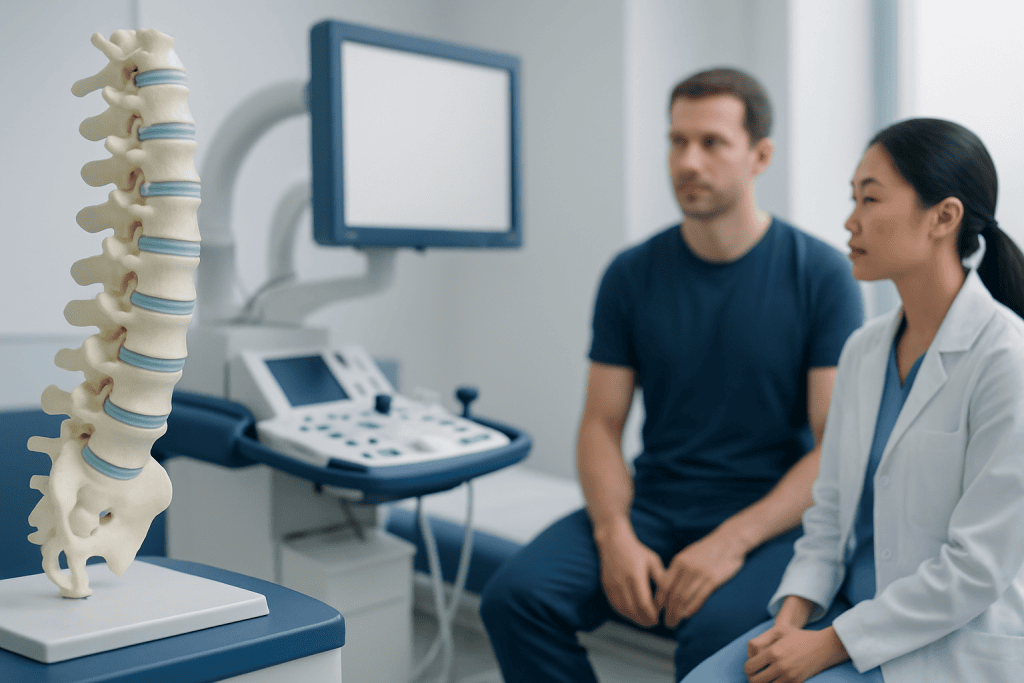
Healthy cartilage reduces friction and helps absorb force. When cartilage becomes thinner, rougher, or less resilient, movement may place more stress on the underlying bone and surrounding tissues. This can contribute to pain, inflammation, muscle guarding, and a feeling that the joint or spine is not moving normally.
The outlook for chondrosis depends on where it occurs, how advanced the changes are, and how much the symptoms interfere with daily life. In many cases, symptoms can be managed well with conservative care. Even when cartilage changes cannot be fully reversed, pain control, strength training, posture support, and activity adjustments can improve function and quality of life.
Chondrosis is related to other wear-and-tear conditions but is not identical to every diagnosis. For example, joint cartilage degeneration may overlap with knee osteoarthritis or other forms of osteoarthritis, while spinal chondrosis may be part of broader degenerative spine disease. A clinician helps place the finding into the right clinical context.
Symptoms of chondrosis

Symptoms depend on the location and severity of cartilage degeneration. Joint chondrosis often causes pain during or after activity, stiffness after rest, reduced range of motion, and occasional swelling or grinding sensations. In the spine, people may notice neck pain, back pain, stiffness, and discomfort that worsens with certain positions or prolonged sitting.
Some people describe weakness or a sense that the joint is less reliable, especially when going up stairs, standing from a chair, or lifting objects. If chondrosis involves the spine and nearby nerves become irritated, symptoms may include pain radiating into an arm or leg, tingling, or numbness. These nerve-related symptoms suggest a need for careful medical assessment.
Common symptoms may include:
- Pain with movement or weight-bearing
- Morning stiffness or stiffness after inactivity
- Clicking, grinding, or catching sensations
- Reduced flexibility or range of motion
- Swelling around a joint
- Neck or back pain with posture-related worsening
Symptoms do not always match imaging findings. Mild changes on a scan may still be painful, while more visible degeneration can sometimes cause few symptoms. This is one reason doctors evaluate the whole person, not only the scan result.
Causes and risk factors
Chondrosis usually develops over time through a mix of age-related tissue change, mechanical stress, and individual risk factors. Cartilage has a limited ability to repair itself. Repeated loading, prior injuries, alignment problems, and joint instability can gradually increase wear.
Common risk factors include older age, excess body weight, previous sports injuries, physically demanding work, repetitive impact activities, and family history of joint degeneration. Muscle weakness and poor movement mechanics can also increase strain on the affected area. In the spine, prolonged sitting, posture strain, prior disc injury, and natural disc dehydration may contribute.
Not every case is caused by aging alone. Cartilage can also be affected after trauma, such as a meniscus injury in the knee or a shoulder instability episode. In some people, underlying inflammatory or metabolic conditions may worsen degeneration. A personalized evaluation helps identify what may be driving symptoms and which changes are most useful to make.
How chondrosis is diagnosed
Diagnosis begins with a detailed history and physical examination. A doctor asks where the pain is felt, when it started, what movements make it worse, and whether there are symptoms such as locking, instability, numbness, or weakness. The physical examination looks at posture, alignment, swelling, tenderness, strength, flexibility, and how the person moves.
Imaging may help confirm the location and extent of degeneration. X-rays can show joint-space narrowing, bone changes, and alignment problems. MRI is often more helpful when cartilage, discs, ligaments, or nerves need closer assessment. Ultrasound may be useful in selected joints, especially when soft-tissue inflammation is suspected.
Doctors also consider other causes of pain. Joint pain may arise from tendon problems, bursitis, meniscal injury, or inflammatory arthritis. Spinal symptoms can overlap with herniated disc or spinal stenosis. Because treatment differs by cause, accurate diagnosis is important before deciding on the best plan.
Sometimes imaging findings are reported with grading terms that describe severity. These grades can be useful, but they are only one part of the picture. The person’s symptoms, activity goals, and response to early treatment are often just as important in guiding decisions.
Modern treatment approaches for chondrosis
Treatment for chondrosis is usually stepwise. For many people, the first line is conservative care aimed at reducing pain, improving movement, and strengthening the muscles that support the affected area. This may include physical therapy, home exercises, short-term pain-relief medicines recommended by a doctor, heat or cold therapy, and adjustments to activity or ergonomics.
Exercise is one of the most important parts of treatment. Well-chosen movement can reduce joint stress, improve circulation to surrounding tissues, and support long-term function. Weight management may also help in load-bearing joints by lowering mechanical strain. In some cases, braces, orthotics, or supportive footwear can improve alignment and comfort.
If symptoms continue, a doctor may discuss targeted interventions. Depending on the joint or spinal level involved, options can include image-guided injections, rehabilitation programs, or procedures to address damaged structures. For knee-related cartilage wear and mechanical symptoms, evaluation by specialists in knee surgery may be appropriate. For persistent spinal symptoms linked to structural degeneration, some patients may need assessment for spine surgery.
Surgery is generally reserved for selected situations, such as severe pain that does not improve, major loss of function, instability, or clear structural problems causing ongoing symptoms. The exact procedure depends on the location and cause, and may range from minimally invasive techniques to joint-preserving procedures or, in advanced cases, reconstructive surgery. Treatment decisions are individualized and usually follow a trial of non-surgical care when safe to do so.
Self-care and prevention strategies
While chondrosis cannot always be prevented completely, daily habits can reduce symptom flare-ups and help protect joint and spinal health. Regular low-impact exercise, gradual warm-ups, and attention to posture and technique during sport or work can all be helpful. Strengthening the muscles around the affected area often improves support and control.
Joint-friendly activities such as walking, swimming, cycling, and guided mobility work may be easier to tolerate than high-impact exercise during painful periods. It also helps to pace activity, avoid sudden increases in training load, and take breaks from prolonged sitting or repetitive motions. When body weight is above a healthy range, even modest weight loss may reduce pressure on weight-bearing joints.
Helpful self-care measures may include:
- Following a consistent exercise plan designed for the affected area
- Using proper lifting and movement mechanics
- Choosing supportive shoes and ergonomic seating when needed
- Stopping smoking, which may affect tissue healing and disc health
- Seeking early care after joint or spine injuries
For people whose symptoms persist despite self-care, medical guidance can help refine the diagnosis and treatment plan. In complex cases, multidisciplinary assessment may be useful. Acibadem International’s multidisciplinary specialists and JCI-accredited hospitals diagnose and treat musculoskeletal conditions for international patients, including advanced evaluation and options such as physical therapy and rehabilitation when appropriate.
When to seek medical care
Medical care is advisable if pain lasts more than a few weeks, keeps returning, limits daily activities, or makes it difficult to work, exercise, or sleep. A doctor should also assess symptoms that are getting worse rather than improving with rest and basic self-care.
Prompt evaluation is especially important when there is significant swelling, joint locking, repeated giving way, or an inability to bear weight. For spinal chondrosis, urgent assessment is needed if pain is accompanied by progressive weakness, numbness, balance problems, or changes in bladder or bowel control.
These warning signs do not always mean a serious condition, but they do need timely medical review. Early diagnosis can help identify treatable causes, reduce unnecessary pain, and support better long-term function.
Frequently asked questions
Is chondrosis the same as osteoarthritis?
Not exactly. Chondrosis refers to cartilage degeneration, while osteoarthritis is a broader joint condition that can include cartilage loss, bone changes, inflammation, and symptoms. In practice, the two may overlap, especially in weight-bearing joints.
Can chondrosis heal on its own?
Cartilage has limited healing ability, so structural changes may not fully reverse. However, symptoms often improve with the right combination of exercise, activity changes, and medical treatment. Many people live well with chondrosis by focusing on function and symptom control.
What is the best exercise for chondrosis?
There is no single best exercise for everyone because the location and severity of chondrosis vary. Low-impact aerobic activity, stretching, and strength training tailored to the affected area are commonly helpful. A physical therapist or doctor can help choose exercises that are safe and effective.
Does chondrosis always require surgery?
No. Most people start with non-surgical treatment, such as physical therapy, pain management, weight support, and activity modification. Surgery is usually considered only when symptoms remain significant or when there is a structural problem that is unlikely to improve without an operation.
How is spinal chondrosis different from a herniated disc?
Spinal chondrosis usually describes degenerative wear in cartilage-related spinal structures over time. A herniated disc involves disc material bulging or leaking and may directly irritate nearby nerves. Both can cause back or neck pain, but they are different findings and may need different treatment approaches.
Can lifestyle changes really help chondrosis?
Yes, lifestyle measures can make a meaningful difference. Regular exercise, maintaining a healthy weight, protecting joints during work or sports, and stopping smoking may reduce strain and support better function. These steps are often an important part of long-term symptom management.
References
- American Academy of Orthopaedic Surgeons
- National Institute of Arthritis and Musculoskeletal and Skin Diseases
- National Institute of Neurological Disorders and Stroke
- Mayo Clinic
- National Health Service
This article is for general information only and is not a substitute for professional medical advice. Please consult a qualified doctor about your individual situation.
Joint and spine care in Turkey — expert assessment & treatment
JCI-accredited · board-certified surgeons · reply within 24h