Endometrial Stripe: What Patients Need to Know

The endometrial stripe is the uterine lining measured on ultrasound, usually with transvaginal ultrasound. A normal thickness varies widely before menopause because the lining changes during the menstrual cycle.
Key Takeaways
- The endometrial stripe is the uterine lining measured on ultrasound, usually with transvaginal ultrasound.
- A normal thickness varies widely before menopause because the lining changes during the menstrual cycle.
- After menopause, especially with bleeding, a thicker lining may need further evaluation.
- Symptoms matter as much as the measurement; bleeding after menopause should always be assessed by a doctor.
- Follow-up may include repeat imaging, office sampling of the lining, or hysteroscopy depending on the situation.
Endometrial stripe is the ultrasound term for the lining of the uterus, also called the endometrium. Its appearance and thickness can be completely normal, but the meaning depends on a person’s age, menstrual status, symptoms, and the reason the scan was done.
Overview: what the endometrial stripe means
The endometrial stripe is the layer of tissue lining the inside of the uterus as seen on ultrasound. Doctors use this term most often when describing a pelvic or transvaginal ultrasound report. In simple terms, it refers to how the uterine lining looks and how thick it appears at the time of the scan.
This finding is not a diagnosis by itself. The same measurement can be normal in one person and need follow-up in another, depending on whether they still have menstrual periods, are pregnant, have gone through menopause, or are having symptoms such as abnormal bleeding. For that reason, the report is always interpreted together with age, medical history, hormone use, and symptoms.
The endometrium changes naturally under the influence of hormones. It becomes thinner just after a period, thickens before ovulation, and can become more developed later in the cycle to prepare for a possible pregnancy. Because of these expected changes, a single measurement is only one piece of information rather than a standalone answer.
What is considered normal
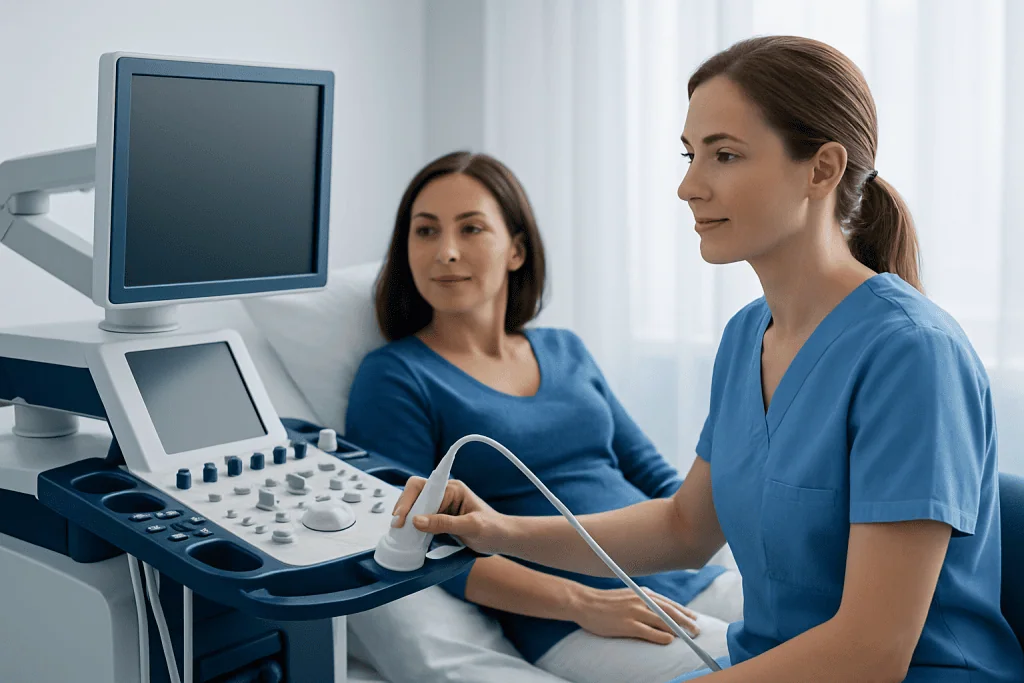
There is no single “perfect” endometrial stripe thickness for everyone. In people who have not reached menopause, the lining normally changes throughout the menstrual cycle, so the timing of the ultrasound matters. A thicker lining can be entirely expected at certain points in the month, while a thinner lining may be seen just after menstruation.
After menopause, the lining is usually thinner because estrogen levels are lower. If a person is not having any bleeding, a mildly thicker measurement may still be explained by medications, hormone therapy, or individual variation. If postmenopausal bleeding is present, however, the stripe often deserves closer attention because the goal is to rule out causes that need treatment.
Ultrasound reports may also describe the lining as uniform, irregular, cystic, or difficult to measure. These descriptive details can be as important as the number itself. A smooth, regular appearance may be more reassuring, while an uneven lining or visible focal area may prompt additional testing.
Symptoms and situations that may lead to testing

Many people learn about their endometrial stripe only because they had an ultrasound for another reason, such as pelvic pain, infertility evaluation, or a routine gynecologic work-up. In those cases, the finding may not cause any symptoms at all. It simply becomes part of the overall assessment of uterine health.
When symptoms are present, abnormal bleeding is the most common reason this measurement matters. This may include bleeding after menopause, periods that are heavier than usual, bleeding between periods, spotting after sex, or cycles that become unexpectedly irregular. Pain is less specific, but pelvic discomfort can sometimes occur alongside other uterine conditions.
Doctors may also pay closer attention to the endometrial stripe in people with a history of polyps, fibroids, fertility concerns, hormone treatment, or conditions that affect ovulation. In some cases, the lining can provide clues about why implantation may be difficult or why bleeding patterns have changed.
- Bleeding after menopause
- Heavy or prolonged menstrual bleeding
- Bleeding between periods
- Irregular cycles or absent ovulation
- Pelvic ultrasound performed for fertility or pelvic pain
Possible causes of a thick or unusual endometrial stripe
A thicker or unusual-looking endometrial stripe does not automatically mean cancer. In many cases, it is related to normal hormonal changes, especially before menopause. It may also be associated with benign growths such as endometrial polyps or with diffuse overgrowth of the lining called endometrial hyperplasia.
Other possible explanations include hormone replacement therapy, tamoxifen use, obesity, polycystic ovary syndrome, and cycles where ovulation does not happen regularly. Pregnancy-related changes can also affect the lining, as can retained tissue after miscarriage or childbirth. Inflammatory changes and less commonly infections may alter the appearance as well.
In postmenopausal patients with bleeding, doctors also consider precancerous changes and endometrial cancer. Most evaluations are done to exclude these more serious possibilities, not because they are the most likely explanation in every case. The clinical context helps determine how concerned a doctor should be and which next step is most appropriate.
How doctors evaluate the finding
The first step is usually to review symptoms, menstrual status, medications, and the exact ultrasound result. A transvaginal ultrasound is often the best imaging test for measuring the endometrial stripe because it provides a clearer view of the uterus than an abdominal scan. The radiology report may note both thickness and pattern, which together help guide decisions.
If the lining appears thicker than expected, or if there is concerning bleeding, the doctor may recommend further testing. This can include an office endometrial biopsy, where a small sample of the uterine lining is taken for laboratory analysis. Another option is hysteroscopy, which allows the doctor to look inside the uterus directly and sometimes remove a polyp or take a targeted sample at the same time.
In some cases, saline infusion sonography may be used to better outline the inside of the uterus and look for polyps or other focal changes. Blood tests can also be helpful when abnormal bleeding may be related to hormonal issues, anemia, pregnancy, or other medical conditions. The exact work-up depends on symptoms and on whether the patient is premenopausal or postmenopausal.
Treatment options and what happens next
Treatment depends on the cause rather than the ultrasound measurement alone. If the finding reflects normal cycle-related changes, no treatment may be needed. In other situations, the plan may involve monitoring, repeating the ultrasound at a different point in the cycle, or treating an underlying hormonal imbalance.
When abnormal bleeding is linked to benign conditions such as polyps, fibroids, or hyperplasia, treatment may range from medication to a minor procedure. Hormonal therapies may help regulate bleeding in some patients, while targeted removal of a lesion may be more helpful in others. If a biopsy shows atypical hyperplasia or cancer, management is planned with gynecology or gynecologic oncology specialists.
People trying to conceive may need a different approach because the quality and timing of the uterine lining can affect implantation. Evaluation is then tailored to fertility goals as well as to bleeding symptoms or structural findings. At experienced centers, care may involve imaging specialists, gynecologists, pathologists, and minimally invasive surgeons working together. Acibadem International’s multidisciplinary specialists and JCI-accredited hospitals diagnose and treat gynecologic conditions for international patients, including evaluation with gynecological check-up when this finding needs expert review.
Self-care, prevention, and when to seek medical care
There is no guaranteed way to prevent every change in the endometrial stripe because many causes are hormone-related and part of natural reproductive biology. Still, keeping regular gynecologic appointments, reporting new bleeding patterns promptly, and reviewing medications such as hormone therapy with a doctor can support early evaluation when needed. Maintaining a healthy weight and managing conditions such as diabetes or irregular ovulation may also be helpful for overall uterine health.
It can also help to track menstrual cycles, spotting, and pelvic symptoms. Noting when bleeding occurs, how heavy it is, and whether it relates to sex, exercise, or menopause gives the doctor important context. Patients should bring any ultrasound reports or prior biopsy results to follow-up visits when possible.
Medical care should be sought promptly for bleeding after menopause, very heavy bleeding, bleeding that causes weakness or dizziness, or persistent bleeding between periods. A person should also contact a doctor if pelvic pain is ongoing, if an ultrasound report mentions a markedly abnormal lining, or if there is a personal history of endometrial hyperplasia or uterine cancer. Urgent care is needed if bleeding is severe enough to cause fainting, chest symptoms, or signs of significant blood loss.
Frequently asked questions
Is endometrial stripe the same as endometrial thickness?
They are closely related terms. Endometrial stripe refers to the uterine lining as seen on ultrasound, while endometrial thickness is the measurement of that lining. Doctors usually interpret both the thickness and the appearance together.
What is a normal endometrial stripe measurement?
Normal depends on age, menstrual status, and symptoms. Before menopause, the lining naturally changes during the cycle, so a range of measurements can be normal. After menopause, the lining is usually thinner, especially in people who are not taking hormone therapy.
Does a thickened endometrial stripe mean cancer?
No, not necessarily. A thickened lining can happen for many benign reasons, including hormonal changes, polyps, or endometrial hyperplasia. However, in a person with postmenopausal bleeding, it usually needs proper evaluation to rule out more serious causes.
Why would a doctor order an endometrial biopsy?
A biopsy may be recommended if there is abnormal bleeding, a concerning ultrasound result, or risk factors for precancerous or cancerous changes. The test takes a small sample of the uterine lining so it can be examined under a microscope. This helps identify the exact cause and guide treatment.
Can the endometrial stripe change from month to month?
Yes. In people who menstruate, the lining normally becomes thinner and thicker at different points in the cycle. That is why the timing of the ultrasound can affect the measurement and why doctors interpret the result in context.
Should someone worry about endometrial stripe after menopause?
Not every finding is dangerous, but bleeding after menopause should always be discussed with a doctor. A thin lining can be reassuring in many cases, while a thicker or irregular lining may need follow-up testing. The presence or absence of bleeding is very important.
References
- American College of Obstetricians and Gynecologists
- National Cancer Institute
- NHS
- Merck Manual
- Radiological Society of North America
This article is for general information only and is not a substitute for professional medical advice. Please consult a qualified doctor about your individual situation.
Explore treatments in Turkey — costs, top hospitals & a free quote
JCI-accredited · board-certified surgeons · reply within 24h
Check your numbers in seconds
BMI, calories, due date, blood pressure and 30+ more clinical calculators — free, instant, doctor-reviewed ranges.