Psoriasis Vulgaris: What Patients Need to Know

Psoriasis vulgaris is the most common type of psoriasis and often appears as raised, scaly plaques on the skin. It is not contagious and does not spread from person to person through touch.
Key Takeaways
- Psoriasis vulgaris is the most common type of psoriasis and often appears as raised, scaly plaques on the skin.
- It is not contagious and does not spread from person to person through touch.
- Symptoms may come and go, with triggers such as stress, infections, skin injury, and some medicines worsening flares.
- Diagnosis is usually clinical, but a skin biopsy may be needed in unclear cases.
- Treatment may include moisturizers, medicated creams, light therapy, and systemic medicines depending on severity.
- Medical review is important if symptoms are widespread, painful, infected, or affecting nails, joints, sleep, or quality of life.
Psoriasis vulgaris is the most common form of psoriasis, a long-term inflammatory skin condition that typically causes well-defined red plaques covered with silvery scales. While it cannot usually be cured, many people control symptoms well with proper diagnosis, treatment, and daily skin care.
Overview: what psoriasis vulgaris means
Psoriasis vulgaris is the most common type of psoriasis, often also called plaque psoriasis. It is a chronic inflammatory condition in which the immune system becomes overactive and speeds up the skin’s renewal process. As a result, skin cells build up faster than normal and form thick, clearly bordered patches called plaques.
These plaques are usually red or pink with a dry, silvery-white scale on top. They often develop on the elbows, knees, scalp, and lower back, but they can appear almost anywhere on the body. In skin of color, plaques may look violet, brown, or darker than the surrounding skin rather than bright red.
Psoriasis vulgaris is not an infection, and it is not contagious. A person cannot catch it from someone else by touching the skin, sharing towels, or being in close contact. The condition tends to run a relapsing course, which means symptoms may improve for a time and then flare again.
For many people, psoriasis affects more than the skin alone. It can also influence sleep, confidence, work, and social comfort, and some patients may develop nail changes or joint symptoms linked to psoriasis. Recognizing psoriasis early can help people access treatment before symptoms become more disruptive.
Common symptoms and where plaques appear
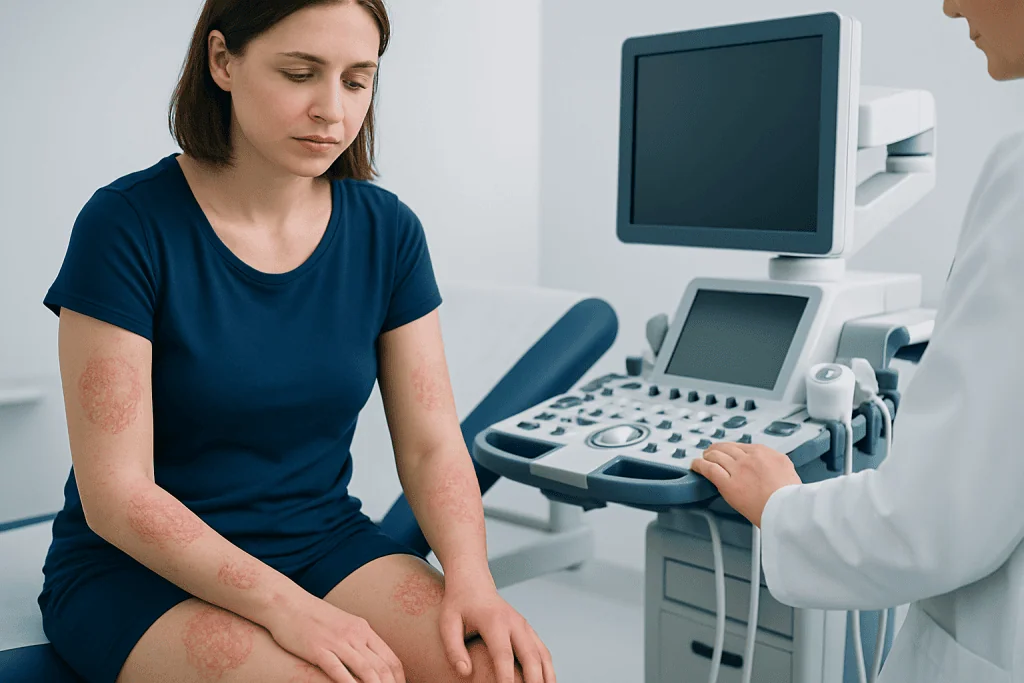
The main symptom of psoriasis vulgaris is a plaque: a raised, inflamed area of skin with a clear edge and flaky scale. Plaques may itch, sting, crack, or feel sore. Some are small and localized, while others merge into larger areas.
Typical locations include the scalp, elbows, knees, lower back, and around the belly button. Psoriasis can also affect the ears, hands, feet, skin folds, and nails. Nail involvement may cause pitting, thickening, discoloration, or separation of the nail from the nail bed.
Symptoms vary from person to person and may change over time. Some people mainly notice dryness and scaling, while others have significant redness, irritation, or skin cracking that can bleed. During flares, plaques often become thicker and more widespread.
- Well-defined red, pink, violet, or brown plaques depending on skin tone
- Silvery or white scales on the skin surface
- Itching, burning, tenderness, or tightness
- Dry skin that may crack or bleed
- Scalp flaking that can resemble severe dandruff
- Nail pitting, thickening, or loosening
Why it happens: causes, immune activity, and triggers
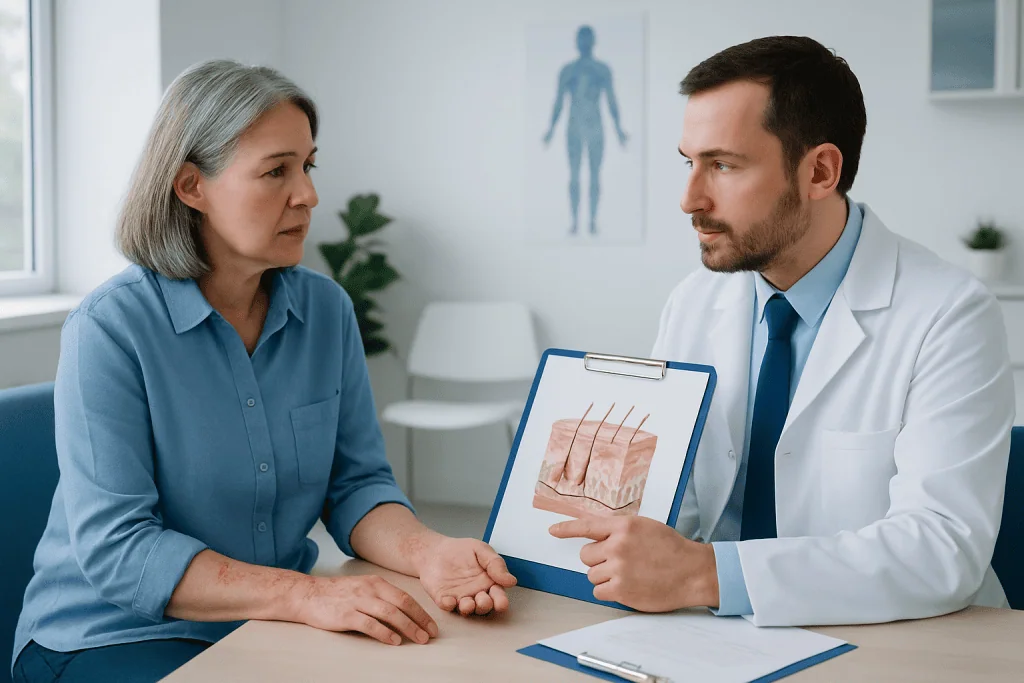
Psoriasis vulgaris develops through a combination of genetic tendency and immune system dysregulation. People with psoriasis have an inflammatory response that causes skin cells to multiply more quickly than normal. Instead of shedding gradually, these cells accumulate at the skin surface and form plaques.
The exact reason this process begins is not fully understood, but family history is common. A person may inherit a higher risk of psoriasis without developing it immediately. Flares can start or worsen when environmental or health-related triggers activate inflammation.
Common triggers include emotional stress, skin injury, sore throat or other infections, smoking, heavy alcohol use, and certain medicines such as some beta-blockers, lithium, and antimalarial drugs. Cold, dry weather may also make symptoms worse in some people. Not every trigger affects every patient, so patterns can be individual.
Psoriasis is also associated with broader health concerns in some patients, including obesity, metabolic syndrome, cardiovascular risk factors, and inflammatory joint disease. If a person has joint pain, morning stiffness, or swollen fingers or toes, evaluation for related inflammatory joint conditions may be helpful.
How psoriasis vulgaris is diagnosed
Diagnosis is often made by a dermatologist or another qualified doctor through medical history and physical examination. The appearance and distribution of plaques are frequently distinctive enough to identify psoriasis vulgaris without extensive testing.
The doctor may ask when the rash started, whether symptoms come and go, what makes them worse, and whether there is a family history of psoriasis. They may also examine the scalp, nails, and skin folds and ask about joint pain, stiffness, or swelling. This helps determine whether the disease involves more than the skin.
Sometimes psoriasis resembles eczema, fungal infection, seborrheic dermatitis, or other inflammatory skin conditions. When the diagnosis is uncertain, a small skin biopsy may be recommended. This test examines a tiny sample of skin under a microscope and can help confirm the cause of the rash.
In patients with significant symptoms or possible complications, the doctor may also assess overall health, medicines, and related risk factors. If joint symptoms are present, referral for evaluation of psoriatic arthritis may be needed so treatment can begin early.
Treatment options: from moisturizers to advanced therapies
Treatment depends on how severe the psoriasis is, where it appears, how much of the body is involved, and how strongly it affects daily life. Many people need a combination approach rather than one single treatment. The aim is to reduce inflammation, slow excess skin cell growth, relieve discomfort, and improve quality of life.
For mild psoriasis, treatment often begins with regular moisturizers and topical medicines. These may include corticosteroid creams or ointments, vitamin D analogs, keratolytic agents that help soften scale, or other prescription anti-inflammatory products. Careful, consistent use is important because even effective creams may not work well if applied irregularly.
When psoriasis is more widespread, difficult to control, or located on sensitive areas such as the scalp, hands, feet, or nails, a dermatologist may suggest specialist dermatology care. Phototherapy, also called light therapy, is another option for some patients. In moderate to severe disease, oral medicines, injectable biologic therapies, or other systemic treatments may be considered, sometimes alongside phototherapy for better control.
If joint symptoms are present, coordinated care may be needed to protect mobility and reduce inflammation. In selected patients, doctors may involve rheumatology care as part of a broader treatment plan. Near the end of the care pathway, patients seeking cross-border evaluation may wish to know that Acibadem International’s multidisciplinary specialists and JCI-accredited hospitals diagnose and treat psoriasis for international patients.
Daily skin care, prevention, and self-care during flares
Although psoriasis vulgaris cannot always be prevented, certain habits can lower irritation and help reduce flares. Gentle skin care is an important foundation. Daily use of fragrance-free moisturizers can soften scale, reduce dryness, and support the skin barrier.
Patients are usually advised to avoid harsh soaps, vigorous scrubbing, and picking at scales, which can injure the skin and sometimes trigger new plaques. Short, lukewarm showers are often more comfortable than long, hot baths. If scalp psoriasis is present, medicated shampoos may help when recommended by a doctor.
Lifestyle measures may also make a difference. Managing stress, maintaining a healthy weight, stopping smoking, limiting alcohol, and promptly treating infections can all support better disease control. Sun exposure may help some people in small, careful amounts, but sunburn can worsen psoriasis, so advice should be individualized.
Keeping a flare diary can be useful. Recording infections, stress, skin injuries, new medicines, weather changes, and treatment response may help identify patterns over time. Self-care is valuable, but it works best alongside professional guidance when symptoms are persistent or severe.
When to seek medical care
A medical review is appropriate whenever a new persistent scaly rash appears and does not improve, especially if it is spreading or causing significant itching, pain, or sleep disturbance. Professional diagnosis matters because psoriasis can resemble other skin conditions, and the right treatment depends on confirming the cause.
People with known psoriasis should seek care if plaques suddenly worsen, cover a large area, crack and bleed, or show signs of infection such as warmth, pus, or increasing tenderness. Medical advice is also important if symptoms affect the face, genitals, palms, soles, or nails, where treatment often needs extra care.
Joint symptoms deserve prompt attention. Pain, swelling, stiffness in the morning, or difficulty moving fingers, toes, knees, or other joints may point to psoriatic arthritis, which benefits from early management. A doctor should also review any concerns during pregnancy planning, medication changes, or if current treatment is no longer controlling symptoms.
Frequently asked questions
Is psoriasis vulgaris the same as plaque psoriasis?
Yes. Psoriasis vulgaris is the medical term most commonly used for plaque psoriasis, the most frequent form of psoriasis. It typically causes raised, well-defined plaques with scaling on the skin.
Can psoriasis vulgaris be cured permanently?
Psoriasis vulgaris usually cannot be cured permanently, but it can often be managed effectively. Many patients have long periods of improvement when they use the right treatment plan and skin care routine.
Is psoriasis vulgaris contagious?
No. Psoriasis vulgaris is not contagious and does not spread through touch, close contact, or shared items. It is an inflammatory immune-mediated condition, not an infection.
What can trigger a psoriasis flare?
Common triggers include stress, infections, cold dry weather, skin injury, smoking, heavy alcohol use, and some medicines. Triggers vary from person to person, so tracking flares can help identify individual patterns.
When should joint pain be checked in someone with psoriasis?
Joint pain should be assessed if it is persistent, comes with morning stiffness, or causes swelling or reduced movement. Psoriasis can be linked with psoriatic arthritis, and early treatment may help protect joint function.
Do all people with psoriasis need strong medicines?
No. Treatment is tailored to severity, body area involved, and impact on daily life. Some people do well with moisturizers and topical medicines, while others benefit from light therapy or systemic treatments.
References
- American Academy of Dermatology
- National Institute of Arthritis and Musculoskeletal and Skin Diseases
- National Health Service
- Mayo Clinic
- World Health Organization
This article is for general information only and is not a substitute for professional medical advice. Please consult a qualified doctor about your individual situation.
Explore treatments in Turkey — costs, top hospitals & a free quote
JCI-accredited · board-certified surgeons · reply within 24h