Enthesitis: Early Signs, Risk Factors, and How It Is Treated

Enthesitis affects the enthesis, the attachment point between soft tissue and bone. Common symptoms include localized pain, tenderness, stiffness, and discomfort with movement or pressure.
Key Takeaways
- Enthesitis affects the enthesis, the attachment point between soft tissue and bone.
- Common symptoms include localized pain, tenderness, stiffness, and discomfort with movement or pressure.
- It can occur after mechanical strain, but it is also strongly associated with inflammatory arthritis, especially spondyloarthritis.
- Diagnosis is based on symptoms, physical examination, and sometimes imaging such as ultrasound or MRI.
- Treatment may include rest, physical therapy, anti-inflammatory medicines, and treatment of any underlying inflammatory disease.
- Persistent heel pain, swelling, morning stiffness, or symptoms in several sites should be assessed by a doctor.
Enthesitis is inflammation at the point where a tendon, ligament, or joint capsule attaches to bone. It often causes focused pain, tenderness, and stiffness, and it may be linked to overuse, injury, or inflammatory conditions such as spondyloarthritis.
Overview: what enthesitis is and why it matters
Enthesitis is inflammation of an enthesis, the place where a tendon, ligament, or joint capsule attaches to bone. This area helps transfer force from muscle to bone during movement, so it is exposed to repeated stress in daily life, work, and sport. When inflamed, it can become painful, tender, and stiff, especially when the affected area is used.
Unlike general muscle soreness, enthesitis usually causes pain at a very specific attachment point. Common sites include the heel, the bottom of the foot, around the kneecap, the elbow, the hip, and parts of the spine or pelvis. Some people develop enthesitis after strain or overuse, while others have it as part of an inflammatory condition such as rheumatic disease or a type of arthritis known as spondyloarthritis.
Recognizing enthesitis early can be helpful because treatment depends on the cause. A short-term mechanical problem may improve with activity changes and rehabilitation, while enthesitis linked to an inflammatory disease may need broader medical treatment to control the underlying inflammation and protect long-term joint function.
Early signs and symptoms
The most common early sign of enthesitis is localized pain where a tendon or ligament meets the bone. People often describe this as a sore, sharp, or aching spot that hurts more when starting to move after rest, pressing on the area, or using the nearby joint repeatedly. Morning stiffness may also occur, especially when enthesitis is part of an inflammatory arthritis pattern.
Symptoms can vary by location. Heel enthesitis may cause pain at the back of the heel near the Achilles tendon or under the heel where the plantar fascia attaches. Around the knee, symptoms may appear near the kneecap or just below it. At the elbow, discomfort may resemble a strain but remain focused at the bony attachment point.
Other possible features include mild swelling, warmth, reduced flexibility, and pain that limits walking, climbing stairs, gripping, or exercise. In inflammatory conditions, enthesitis may happen in more than one area at the same time and may occur alongside back pain, joint swelling, fatigue, or skin and bowel symptoms.
- Point tenderness at a bone attachment site
- Pain with movement, stretching, or pressure
- Stiffness after rest or in the morning
- Reduced activity tolerance
- Symptoms in several sites if an inflammatory disease is present
Causes and risk factors

Enthesitis can develop for more than one reason. One common pathway is mechanical stress. Repetitive loading, sudden increases in activity, poor footwear, prolonged standing, or sports that involve jumping and running can irritate an enthesis over time. In these cases, the condition may overlap with tendon-related pain and improve when the stress is addressed.
Another important cause is immune-driven inflammation. Enthesitis is a hallmark feature of the spondyloarthritis family, which includes ankylosing spondylitis, psoriatic arthritis, reactive arthritis, and arthritis related to inflammatory bowel disease. In these conditions, the immune system contributes to inflammation at attachment points, and enthesitis can be one of the earliest clues that symptoms are not simply due to overuse.
Certain factors can raise risk. These include a personal or family history of inflammatory arthritis, psoriasis, inflammatory bowel disease, or chronic inflammatory back pain. Obesity may increase load on entheses in the lower limbs, while jobs or activities with repetitive strain may contribute to mechanical irritation. Previous injury, reduced flexibility, and biomechanical issues such as altered gait can also play a role.
Because the causes are varied, the pattern of symptoms matters. Pain in one isolated area after a training change is different from recurring pain in multiple sites with morning stiffness or other inflammatory symptoms. This distinction helps guide the next steps in evaluation and treatment.
How doctors diagnose enthesitis
Diagnosis begins with a clinical history and physical examination. A doctor will ask where the pain is located, what makes it worse or better, whether stiffness is worse in the morning, and whether there are symptoms such as back pain, swollen joints, psoriasis, bowel problems, or eye inflammation. On examination, the doctor checks for tenderness at specific attachment points, swelling, range of motion, and signs of related joint or spine disease.
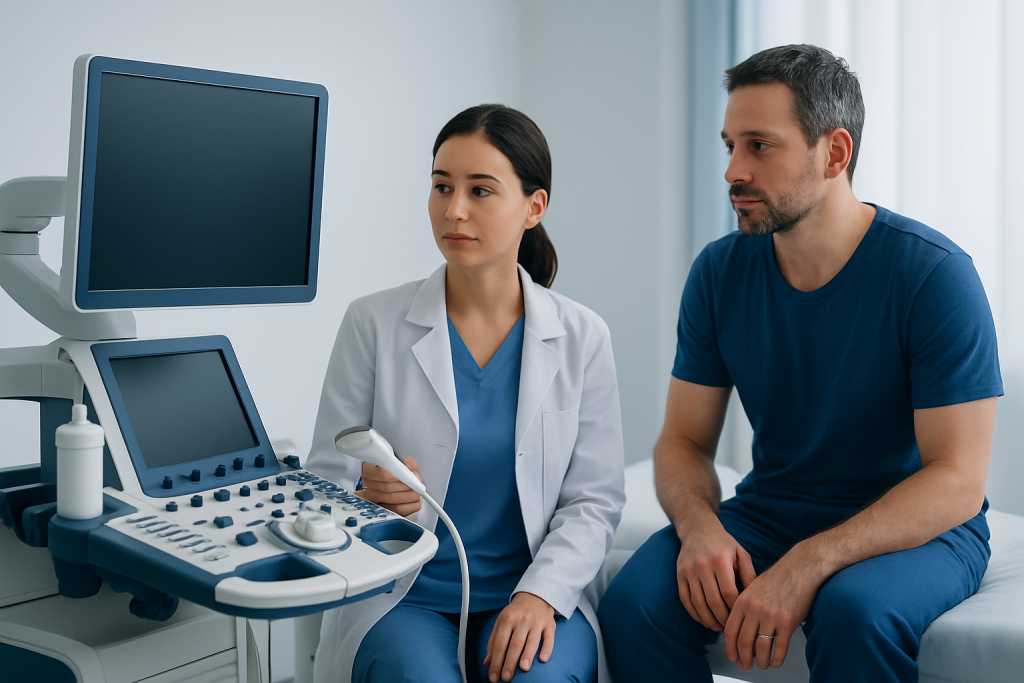
Imaging is sometimes useful, especially when symptoms are persistent or the diagnosis is uncertain. Ultrasound can show thickening, inflammation, calcification, or small tears near the enthesis, and it can sometimes detect increased blood flow that suggests active inflammation. MRI may be used when deeper structures are involved or when doctors need a clearer view of inflammation in soft tissue and nearby bone.
Blood tests do not diagnose enthesitis on their own, but they may help look for inflammation or an underlying condition. Depending on the overall picture, a doctor may order inflammatory markers or tests that support assessment for a rheumatologic disease. Imaging and tests are interpreted together with symptoms, since pain at an enthesis can overlap with tendon injury, bursitis, or other musculoskeletal problems.
When inflammatory arthritis is suspected, referral to a rheumatologist is often appropriate. If the main issue seems mechanical, an orthopedic or sports medicine evaluation may also be helpful. In some cases, a combination of rehabilitation and specialist assessment gives the clearest path forward.
Treatment options and recovery
Treatment for enthesitis is tailored to the cause, severity, and location of symptoms. For mechanically triggered enthesitis, the first steps often include reducing the activities that provoke pain, using ice as advised, improving footwear, and starting a structured rehabilitation plan. Gentle stretching and strengthening can reduce load on the affected attachment point and support recovery over time.
Doctors may recommend anti-inflammatory medicines for short-term symptom relief when appropriate. Some people benefit from braces, heel lifts, orthotics, or temporary changes in training or work activities. Physical therapy is often central to care because it addresses movement patterns, flexibility, muscle balance, and gradual return to activity. In selected cases, physical therapy and rehabilitation can help reduce pain and improve function while protecting the affected area from further strain.
When enthesitis is related to inflammatory arthritis, treatment usually focuses on controlling the underlying disease as well as easing local symptoms. This may involve care through rheumatology services, where treatment plans can include anti-inflammatory medication and disease-targeted therapies chosen by a specialist. If diagnosis is unclear or symptoms involve nearby structures, assessment through orthopedics and traumatology may also be useful.
Recovery time varies. A mild mechanical problem may improve over weeks with rest and rehabilitation, while inflammatory enthesitis may fluctuate and need longer-term treatment and monitoring. It is generally best to return to exercise gradually rather than pushing through persistent pain, since ongoing overload can prolong recovery.
Self-care, activity changes, and prevention
Self-care can support recovery, but it works best when matched to the cause of symptoms. Rest does not usually mean complete immobility. Instead, it often means modifying activity so the painful attachment point is not repeatedly overloaded. Low-impact exercise may help maintain mobility and general fitness while a person recovers.
Helpful prevention strategies include a gradual increase in training intensity, proper warm-up, good footwear, and attention to flexibility and strength. For people with lower-limb symptoms, reducing repetitive impact and correcting biomechanical issues can be important. Weight management may also reduce stress on the heels, knees, and other load-bearing entheses.
For those with known inflammatory arthritis, regular follow-up and adherence to the treatment plan are part of prevention. Controlling the underlying disease can reduce flares of enthesitis and lower the risk of long-term discomfort or functional limitation. A doctor or physical therapist can help adapt work, sport, or exercise routines safely.
Self-treatment has limits. Repeated use of pain relievers without understanding the cause may delay diagnosis, especially if symptoms suggest an inflammatory condition. If pain is recurring, affects several areas, or is paired with morning stiffness or back pain, a medical review is sensible.
When to seek medical care
Medical assessment is recommended if pain at a tendon or ligament attachment lasts more than a few weeks, keeps returning, or interferes with walking, exercise, work, or sleep. It is also important to seek care if the area is swollen, if movement becomes limited, or if symptoms affect more than one site.
Earlier evaluation is especially helpful when enthesitis may be part of a wider inflammatory condition. Warning patterns include significant morning stiffness, chronic low back pain that improves with movement, psoriasis, bowel inflammation, unexplained fatigue, or a family history of inflammatory arthritis. These features do not confirm a diagnosis on their own, but they can help doctors decide whether specialist input is needed.
Prompt care is also important after an injury if there is sudden severe pain, inability to bear weight, marked swelling, or concern for a tear or fracture. In these situations, doctors may use MRI or other imaging to clarify the cause.
For international patients who need coordinated assessment, Acibadem International’s multidisciplinary specialists and JCI-accredited hospitals diagnose and treat musculoskeletal and inflammatory conditions with individualized care plans.
Frequently asked questions
Is enthesitis the same as tendonitis?
No. Tendonitis refers to inflammation or irritation within a tendon, while enthesitis affects the attachment point where the tendon or ligament meets the bone. The two can feel similar, but the location and underlying cause may differ.
Where does enthesitis usually occur?
Common sites include the heel, the sole of the foot, the knee, the elbow, the hip, and areas around the pelvis or spine. The exact location depends on which enthesis is inflamed and whether the cause is mechanical or inflammatory.
Can enthesitis be a sign of arthritis?
Yes. Enthesitis is strongly associated with several forms of inflammatory arthritis, especially spondyloarthritis and psoriatic arthritis. If it occurs with morning stiffness, back pain, psoriasis, or symptoms in multiple areas, doctors may look for an underlying rheumatic condition.
How long does enthesitis take to heal?
Recovery depends on the cause and how much the affected area continues to be stressed. Mechanical enthesitis may improve over a period of weeks with activity changes and rehabilitation, while inflammatory enthesitis may need longer-term treatment and follow-up.
Can exercise help enthesitis?
Yes, but the type and timing matter. Gentle, guided exercise can help maintain strength and flexibility, while high-impact or repetitive loading may worsen symptoms. A doctor or physical therapist can help choose a safer program.
Does enthesitis show up on imaging?
Sometimes. Ultrasound and MRI can detect changes such as inflammation, thickening, nearby swelling, or stress-related damage at the enthesis. Imaging is usually used to support the diagnosis when symptoms persist or the cause is not clear.
References
- National Institute of Arthritis and Musculoskeletal and Skin Diseases
- American College of Rheumatology
- National Health Service
- Arthritis Foundation
- European Alliance of Associations for Rheumatology
This article is for general information only and is not a substitute for professional medical advice. Please consult a qualified doctor about your individual situation.
Joint and spine care in Turkey — expert assessment & treatment
JCI-accredited · board-certified surgeons · reply within 24h