Olfactory Hallucinations: What Patients Need to Know

Olfactory hallucinations mean a person smells an odor that others cannot detect and that has no clear source. Common descriptions include smoke, burning, chemicals, rotten odors, or a metallic smell.
Key Takeaways
- Olfactory hallucinations mean a person smells an odor that others cannot detect and that has no clear source.
- Common descriptions include smoke, burning, chemicals, rotten odors, or a metallic smell.
- Causes range from sinus and nasal problems to migraine, seizures, head injury, infections, or mental health conditions.
- Diagnosis often involves a medical history, examination of the nose and nervous system, and sometimes imaging or smell testing.
- Treatment focuses on the underlying cause rather than the smell sensation alone.
- New, persistent, or sudden olfactory hallucinations should be assessed by a qualified doctor.
Olfactory hallucinations are the sensation of smelling something when no external odor is present. Also called phantosmia or phantom smells, they may arise from the nose, the brain, or certain medical conditions, so proper evaluation helps identify the cause and guide treatment.
Overview: what olfactory hallucinations mean
Olfactory hallucinations are smells perceived without a matching odor in the environment. A person may notice smoke, burning, gas, sewage, perfume, or a chemical smell even though nothing around them is producing it. In medical terms, this is often called phantosmia or a phantom smell.
This symptom can be brief and isolated, or it can recur over days, weeks, or longer. It may affect one nostril or seem to come from both sides, and it may be constant or come in episodes. For some people it is only mildly distracting; for others it can affect appetite, sleep, mood, or daily comfort.
Olfactory hallucinations are not a diagnosis by themselves. They are a clue that may point to irritation in the nose or sinuses, changes in the smell pathways, neurological conditions, medication effects, or less commonly mental health causes. Because the possible reasons are varied, evaluation usually starts with a careful history and physical examination rather than assumptions.
How phantom smells may feel in daily life
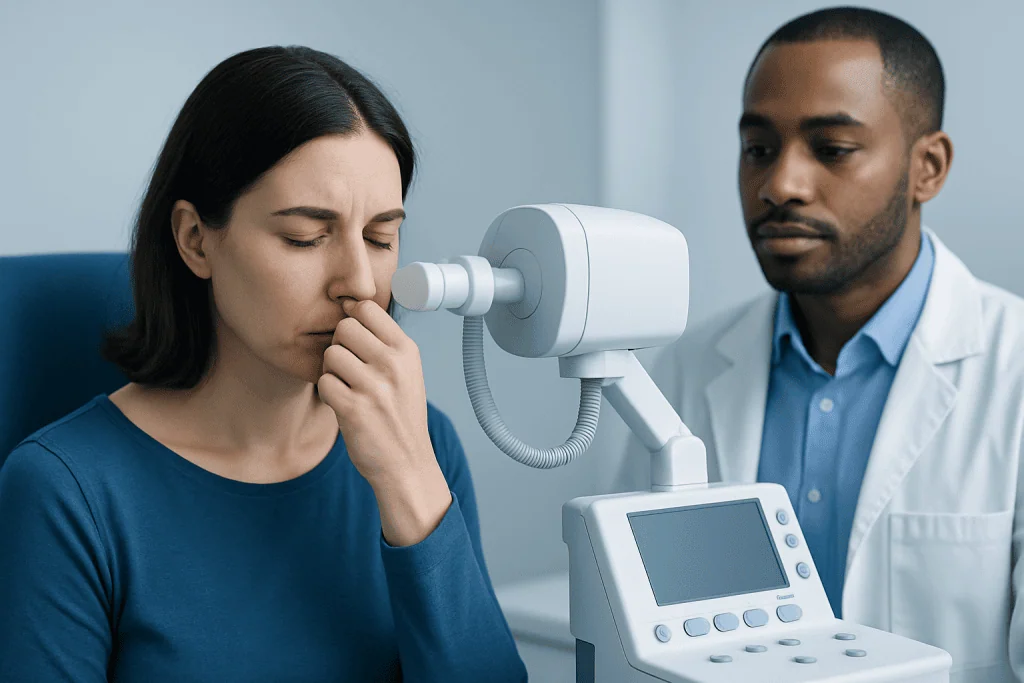
People describe olfactory hallucinations in different ways. Many report unpleasant odors such as smoke, burning rubber, spoiled food, mold, or chemicals. Others notice sweeter smells, perfume-like scents, or a metallic odor. The sensation may be strong and obvious or faint and hard to describe.
The experience can happen on its own or alongside other symptoms. Some people also notice a reduced sense of smell, altered taste, nasal congestion, headache, dizziness, nausea, or anxiety because the odor feels intrusive. In some cases the smell appears before a migraine or during a seizure-related event; in others it follows a cold, sinus infection, or head injury.
It can help to note the pattern. Useful details include when the smell starts, how long it lasts, whether one nostril seems more involved, whether eating changes it, and whether headaches, nasal symptoms, or neurological symptoms happen at the same time. This information can help a doctor narrow down the cause.
- Common odor descriptions: smoke, burning, gas, rotten, moldy, metallic, chemical, or perfume-like
- Possible associated symptoms: blocked nose, facial pressure, headache, taste changes, nausea, or confusion
- Pattern clues: sudden or gradual onset, constant or episodic, one-sided or both sides, linked to infection or migraine
Causes and risk factors

Many cases start in the nose or sinuses. Upper respiratory infections, chronic sinusitis, nasal polyps, allergies, or irritation after a viral illness can disrupt how odor signals are processed. After a significant cold or other infection, some people develop smell distortions or phantom smells while the olfactory system is recovering. Problems affecting the nose and sinuses may overlap with sinusitis and other ENT conditions.
Neurological causes are also important. Migraine, temporal lobe seizures, traumatic brain injury, stroke, and neurodegenerative conditions can affect the pathways involved in smell. A smell sensation can occasionally be an aura before a seizure or migraine. Less commonly, tumors or other structural brain conditions may be involved, which is why new or unexplained symptoms merit assessment.
Other possible contributors include medication side effects, exposure to certain chemicals, dental or oral infections, smoking, and mental health conditions. In psychiatry, olfactory hallucinations are much less common than hearing voices, but they can occur. Risk may be higher in people with recent viral illness, chronic nasal disease, a history of seizures or migraine, head injury, or reduced smell function.
How doctors diagnose olfactory hallucinations
Diagnosis begins with a detailed conversation. A doctor will ask what the smell is like, when it started, whether it is constant or comes in episodes, and whether there are triggers such as illness, head trauma, migraine, or medication changes. Questions about nasal symptoms, seizures, fainting, memory changes, mood symptoms, and smell loss are also common because they help identify which body system may be involved.
The physical examination may include the nose, mouth, ears, and throat as well as a neurological exam. Depending on the situation, an ENT specialist may perform nasal endoscopy to look for inflammation, polyps, or structural problems. Smell testing can be useful when a person also has a reduced or distorted sense of smell.
Further tests are selected based on the suspected cause. Imaging such as MRI or CT scan may be recommended if there are neurological symptoms, persistent unexplained symptoms, or concern for sinus disease or structural problems. If episodes suggest seizures, a neurologist may order tests such as an EEG. The goal is not simply to confirm phantom smells, but to identify and treat the condition behind them.
Treatment options and what recovery depends on
There is no single treatment for all olfactory hallucinations because the best approach depends on the cause. If the problem comes from nasal inflammation, chronic sinus disease, or a post-infectious change in smell, treatment may focus on managing inflammation, infection, or blockage. If migraine or seizures are responsible, treatment is aimed at those conditions. Medication-related symptoms may improve after a doctor reviews and adjusts the treatment plan.
When symptoms appear to come from the nose or sinuses, an ENT specialist may use medications to reduce inflammation or address infection when appropriate. In selected cases, treatment may involve procedures to improve nasal airflow or remove polyps. If the work-up points to a neurological issue, a neurologist may guide further testing and condition-specific care, especially when symptoms resemble epilepsy or migraine aura.
Recovery varies. Some people improve quickly after a sinus infection settles, while others recover gradually over weeks or months, especially after viral illness or head injury. If ongoing evaluation is needed, multidisciplinary care can be helpful. Near the end of the care pathway, international patients may also seek assessment at centers such as Acibadem International, where multidisciplinary specialists in JCI-accredited hospitals evaluate ENT and neurological causes and plan treatment when appropriate.
Self-care and practical steps at home
Self-care does not replace medical evaluation, but it can reduce discomfort while the cause is being investigated. Good nasal hygiene, avoiding cigarette smoke, and reducing exposure to strong fumes or chemical irritants may help some people. Staying hydrated and managing allergies according to a doctor’s advice can also support overall nasal health.
Keeping a symptom diary is often useful. Writing down the time, duration, description of the smell, recent foods, stress level, headaches, infections, and medications may reveal patterns. This is especially helpful if the smell episodes are brief or unpredictable, since it gives the clinician better information at the visit.
If smell loss or distortion followed a viral illness, a doctor may discuss smell training, which uses repeated exposure to a set of familiar scents over time. This approach is not right for every case, but it is sometimes considered in people with smell dysfunction. Patients should avoid self-medicating with decongestants, supplements, or alternative remedies for long periods without professional guidance.
- Avoid smoking and strong environmental irritants
- Track symptoms, triggers, and associated headaches or neurological changes
- Follow treatment plans for allergies, sinus disease, migraine, or seizures
- Seek medical advice before starting or stopping prescription medicines
When to seek medical care
Olfactory hallucinations should be discussed with a doctor if they are new, persistent, recurrent, or bothersome. An appointment is especially important when the symptom follows head injury, comes with a reduced sense of smell, or appears alongside frequent headaches, nasal blockage, or signs of infection. Even when the cause is benign, evaluation helps rule out more serious explanations.
Urgent medical care is needed if phantom smells occur with seizures, loss of consciousness, weakness, trouble speaking, severe sudden headache, confusion, chest pain, or other sudden neurological symptoms. These features can suggest a condition that needs immediate attention. A person should also seek prompt care if they suspect gas exposure, smoke inhalation, or poisoning in the environment, since a real hazard must be excluded first.
Referral may be to an ENT specialist, neurologist, or another clinician depending on the pattern of symptoms. In some cases, evaluation includes advanced imaging or neurological rehabilitation after head injury or neurological illness. Early assessment is the safest way to identify the cause and choose appropriate care.
Frequently asked questions
Are olfactory hallucinations the same as phantosmia?
Yes. Phantosmia is the medical term for smelling an odor that is not actually present. People may also call this a phantom smell or smelling odors that are not there.
What smells are most common with olfactory hallucinations?
Many people describe unpleasant odors such as smoke, burning, chemicals, gas, sewage, or rotten food. Others notice perfume-like or metallic smells. The exact smell does not by itself determine the cause.
Can sinus problems cause olfactory hallucinations?
Yes. Inflammation in the nose or sinuses, infections, allergies, and nasal polyps can interfere with normal smell signaling and sometimes lead to phantom smells. This is one reason ENT evaluation can be helpful when nasal symptoms are present.
Do olfactory hallucinations always mean a neurological disease?
No. Although neurological conditions such as migraine, seizures, or head injury can cause them, many cases are related to nasal or sinus problems. A proper history and examination help determine which cause is more likely.
How are olfactory hallucinations tested?
Doctors usually start with a medical history and physical examination, often including the nose and nervous system. Depending on the case, tests may include nasal endoscopy, smell testing, brain imaging, or an EEG if seizures are suspected.
Can olfactory hallucinations go away on their own?
Sometimes they do, especially if they are linked to a short-term infection or temporary irritation. In other cases they persist until the underlying cause is treated. If the symptom is new, frequent, or concerning, it is best to seek medical advice rather than wait.
References
- National Institute on Deafness and Other Communication Disorders
- American Academy of Otolaryngology–Head and Neck Surgery
- National Institute of Neurological Disorders and Stroke
- Mayo Clinic
- Cleveland Clinic
This article is for general information only and is not a substitute for professional medical advice. Please consult a qualified doctor about your individual situation.
Persistent digestive symptoms? Get evaluated in Turkey
JCI-accredited · board-certified surgeons · reply within 24h

More from the Health Library



Related Specialists

Prof. Dr. Ayhan Çevik
Pediatric Cardiology
Prof. Dr. Mustafa Seyhan
Orthopedic Surgery & Traumatology
Dyt. Bensu Enyüksek
Nutrition & Diet
Dr. Tahir Aslan
Gynecology & Obstetrics