Brown Spots on Teeth — Explained by Medical Evidence, Not Myths

Brown spots on teeth may be harmless surface stains or a sign of enamel damage or decay. Common causes include tobacco, coffee or tea, poor oral hygiene, tartar, some medicines, and excessive fluoride during tooth development.
Key Takeaways
- Brown spots on teeth may be harmless surface stains or a sign of enamel damage or decay.
- Common causes include tobacco, coffee or tea, poor oral hygiene, tartar, some medicines, and excessive fluoride during tooth development.
- A dental exam can usually tell whether the spot is external staining, a structural enamel issue, or a cavity.
- Treatment ranges from professional cleaning and whitening to fillings or other restorative care if decay is present.
- Regular brushing with fluoride toothpaste, flossing, and dental checkups help prevent many brown spots.
Brown spots on teeth are not always cavities. They can result from surface stains, tartar buildup, enamel changes, certain medicines, or tooth decay, so the meaning depends on the spot’s appearance and a dentist’s examination.
Overview: What Brown Spots on Teeth Usually Mean
Brown spots on teeth usually mean one of three things: a stain sitting on the outer surface, a change in the tooth’s enamel, or an early or more advanced area of decay. In many people, the cause is something routine such as coffee, tea, tobacco, plaque, or tartar. In others, the spot reflects a structural issue in the enamel or dentin, the layers that make up the tooth.
The key point is that color alone does not confirm a cavity. Some harmless stains look dark and obvious, while some cavities begin as subtle dull or chalky areas before turning brown. This is why a visual check at home can be useful, but it cannot fully replace a professional dental examination.
Brown spots can affect baby teeth or adult teeth, and they may appear as tiny dots, lines near the gumline, broad patches, or discoloration in the grooves of molars. Their location, texture, and whether they can be partly brushed away often give clues about the underlying cause.
How Brown Spots Can Look and Feel

The appearance of a brown spot often helps narrow down the explanation. Surface stains tend to look flat and sit on the outer enamel. They may develop gradually and are often more noticeable on the front teeth, between teeth, or near the gumline. Tartar-related discoloration may look yellow-brown and feel rough.
By contrast, a spot linked to enamel defects may be part of the tooth itself. It can look patchy, speckled, or band-like and may have been present for a long time. Some people notice similar marks on several teeth, especially if the cause happened during tooth development.
When decay is involved, the area may appear dull, dark, or shadowed and can be associated with sensitivity or a rough or softened surface. Signs that deserve more attention include pain with sweets, hot or cold foods, food trapping in one area, a visible pit, or a spot that seems to enlarge over time.
- Flat, wipe-resistant stain: often external discoloration
- Rough deposit near the gumline: may be tartar
- Patchy or speckled mark on several teeth: may reflect enamel changes
- Dark spot with sensitivity or a hole: more concerning for decay
Common Causes and Risk Factors
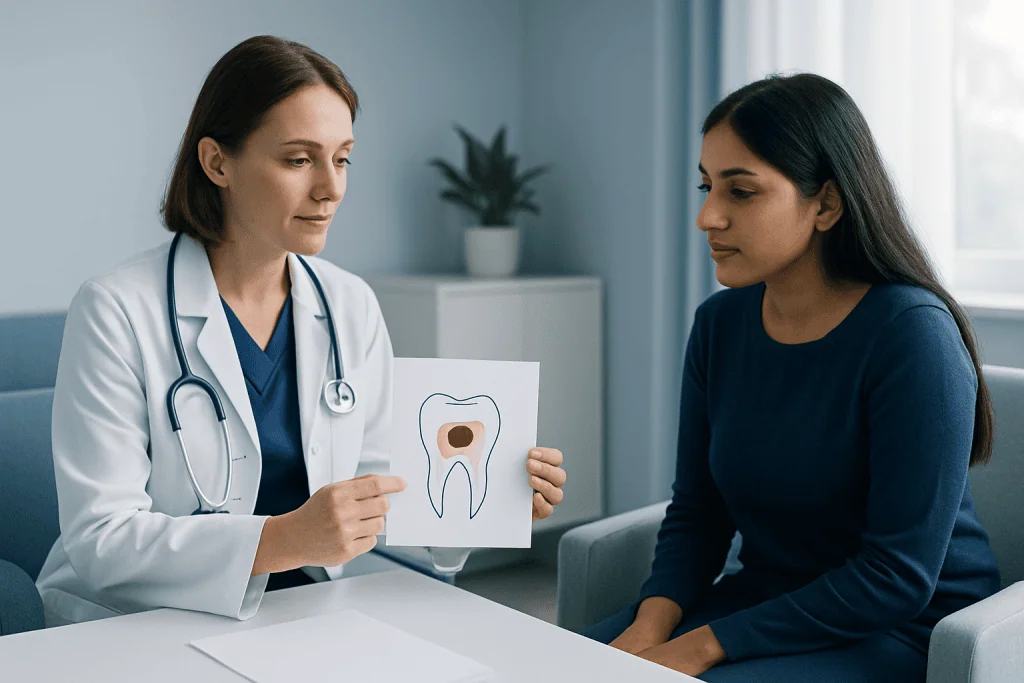
Everyday staining is one of the most common reasons for brown spots on teeth. Dark beverages such as coffee, tea, and cola, along with red wine, tobacco, and some highly pigmented foods, can gradually stain enamel. Plaque that is not removed well can harden into tartar, which may trap more pigments and make discoloration more noticeable.
Another group of causes involves the tooth structure itself. Enamel defects can develop during childhood if teeth are forming under certain conditions, including excess fluoride exposure, some illnesses, or developmental disturbances. These changes can lead to persistent white, yellow, or brown mottling. Some medications can also affect tooth color, especially when exposure occurs during tooth development.
Tooth decay is also an important cause. Cavities develop when bacteria in plaque feed on sugars and produce acids that weaken enamel. Early decay may not hurt, but as it progresses, the color can change and symptoms may appear. People may also see brown discoloration after trauma to a tooth or, less commonly, from wear and erosion that expose the darker dentin underneath.
Risk tends to be higher in people who have frequent sugary snacks or drinks, dry mouth, irregular brushing or flossing, tobacco use, limited dental visits, orthodontic appliances that make cleaning harder, or a history of tooth decay. Children and teens may be more affected by enamel-development issues, while adults often develop stain-related discoloration and tartar buildup.
How Dentists Tell Stains from Decay
A dentist usually begins by looking closely at the color, shape, and location of the spot. They may gently check the area, assess whether it is hard or softened, and look for surrounding plaque, tartar, gum irritation, or signs of enamel wear. The pattern across several teeth can also offer clues, especially when developmental enamel changes are suspected.
If there is concern for a cavity between teeth or under the surface, dental X-rays may be recommended. X-rays help show decay that cannot be seen directly and can guide the decision between monitoring, preventive treatment, or a filling. In some cases, the spot is clearly only a stain and no further tests are needed.
Because not all dark marks are harmful, professional diagnosis helps avoid both under-treating and over-treating the problem. A person may think a stain is a cavity and worry unnecessarily, or assume a cavity is harmless discoloration and delay care. When the cause is uncertain, a dentist may review oral hygiene habits, diet, fluoride exposure history, and any relevant medicines.
Treatment Options Based on the Cause
Treatment depends on what the brown spot actually is. If the discoloration is caused by plaque, tartar, or everyday staining, professional cleaning is often the first step. Scaling and polishing can remove deposits and improve appearance. If the enamel is otherwise healthy, some people may also benefit from professionally supervised teeth whitening after the dentist confirms it is appropriate.
If the spot reflects a structural enamel issue rather than a removable stain, whitening may not fully correct it and in some cases can make contrast more noticeable. Dentists may instead suggest approaches that mask or restore the appearance, such as bonding or other cosmetic-restorative options. The best choice depends on how deep the discoloration is and whether the tooth is healthy.
When a cavity is present, the goal is to stop disease progression and restore the tooth. Early lesions may sometimes be managed with remineralizing strategies and closer follow-up, while established cavities often need a dental filling. More extensive damage may require other restorative dentistry treatments.
For people with persistent stains or recurrent decay, the dentist may also address contributing factors such as dry mouth, acidic drinks, high sugar intake, or difficulty cleaning around crowded teeth or dental work. Good treatment is not only about removing the spot; it also aims to lower the chance that the problem will return.
Prevention and Self-Care at Home
Many brown spots on teeth can be reduced or prevented with steady daily care. Brushing twice a day with fluoride toothpaste and cleaning between the teeth once a day help remove plaque before it hardens into tartar or contributes to decay. A soft-bristled toothbrush and consistent technique matter more than brushing aggressively, which can wear enamel and irritate gums.
Limiting frequent exposure to staining and sugary drinks can also help. It is often useful to drink coffee, tea, or soda in a shorter sitting rather than sipping for long periods, then rinse with water afterward. Tobacco cessation is especially important because smoking and smokeless tobacco both increase staining and harm oral health.
Home whitening products may help some surface discoloration, but they do not treat cavities or tartar, and they may not improve brown spots caused by enamel defects. If a spot is new, localized, painful, or rough, it is safer to have it checked before trying cosmetic products. Regular dental visits remain important because professional cleaning and early detection can prevent small problems from becoming larger ones.
- Brush twice daily with fluoride toothpaste
- Floss or use another interdental cleaner every day
- Rinse with water after coffee, tea, or colored drinks
- Reduce frequent sugary snacks and drinks
- Avoid tobacco products
- Keep routine dental checkups and cleanings
When to Seek Medical Care
A dental appointment is a good idea if a brown spot does not brush away, is getting larger, or appears together with sensitivity, pain, bad breath, bleeding gums, or a visible hole in the tooth. Prompt assessment is also wise if the discoloration is limited to one tooth after an injury, because trauma can affect the tooth from within.
Children should also be evaluated when parents notice unusual spots on newly erupted teeth, widespread mottling, or discoloration linked with pain or difficulty eating. Early advice can help protect developing teeth and prevent avoidable damage. It is better to ask early than to wait for symptoms to become more obvious.
If there is facial swelling, fever, severe toothache, or trouble swallowing, urgent dental or medical evaluation is needed because these may suggest infection. For planned assessment and treatment, multidisciplinary dental specialists at Acibadem International and its JCI-accredited hospitals care for international patients with cosmetic and functional tooth concerns, including evaluation of discoloration and dental caries.
Frequently asked questions
Are brown spots on teeth always cavities?
No. Brown spots can be caused by surface stains, tartar, enamel defects, or tooth decay. A dentist can usually tell the difference by examining the tooth and, if needed, taking X-rays.
Can brown spots on teeth be removed by brushing?
Some mild surface staining may improve with good brushing, but tartar cannot be removed at home once it hardens. If the discoloration is inside the enamel or due to decay, brushing alone will not remove it.
Do brown spots on children's teeth mean poor brushing?
Not always. Children can develop discoloration from plaque and diet, but also from enamel changes that happened while the teeth were forming. A pediatric or general dentist can identify the cause and advise on next steps.
Will whitening toothpaste fix brown spots?
Whitening toothpastes may help with some external stains, but they do not treat cavities, tartar, or deeper enamel discoloration. If the spot is new, painful, or rough, professional evaluation is the safer first step.
How can someone tell if a brown spot is serious?
Warning signs include pain, sensitivity, a rough or soft area, a visible pit, food getting stuck, or a spot that grows over time. Even without symptoms, a persistent spot should be checked if it does not improve with routine oral hygiene.
Can diet cause brown spots on teeth?
Yes. Coffee, tea, cola, red wine, and some highly pigmented foods can stain teeth, and frequent sugar intake raises the risk of decay-related discoloration. Rinsing with water after these drinks and reducing repeated sugar exposure can help.
References
- American Dental Association
- Centers for Disease Control and Prevention
- National Institute of Dental and Craniofacial Research
- World Health Organization
- Mayo Clinic
This article is for general information only and is not a substitute for professional medical advice. Please consult a qualified doctor about your individual situation.
Explore treatments in Turkey — costs, top hospitals & a free quote
JCI-accredited · board-certified surgeons · reply within 24h