Syringomas: An Evidence-Based Guide for Patients

Syringomas are benign growths linked to sweat ducts and commonly appear around the eyes. They usually cause cosmetic concerns rather than pain or serious health problems.
Key Takeaways
- Syringomas are benign growths linked to sweat ducts and commonly appear around the eyes.
- They usually cause cosmetic concerns rather than pain or serious health problems.
- Diagnosis is often clinical, but a biopsy may be used if the appearance is atypical.
- Treatment can improve appearance, but recurrence is possible because the growths extend into the skin.
- A dermatologist should assess new, changing, bleeding, or irritated bumps to confirm the diagnosis.
Syringomas are small, benign growths that develop from sweat ducts, most often on the lower eyelids and upper cheeks. They are not cancer, but they can resemble other skin conditions, so a medical assessment may be helpful when the diagnosis is uncertain or the bumps are bothersome.
Overview: What syringomas are
Syringomas are small, harmless skin growths that arise from the eccrine sweat ducts. They most often appear as firm, flesh-colored, yellowish, or slightly translucent bumps measuring only a few millimeters. The lower eyelids are the classic location, but syringomas can also occur on the upper cheeks, neck, chest, abdomen, armpits, or genital area.
For most people, syringomas are a cosmetic issue rather than a medical danger. They are benign, which means they are not cancer and do not spread through the body. Even so, they can be frustrating because they may be numerous, persistent, and difficult to distinguish from other causes of small facial bumps.
Syringomas often develop gradually over time and may become more noticeable during adolescence or early adulthood, although they can occur at other ages as well. A careful skin examination can usually identify them, but it is important not to assume every eyelid bump is a syringoma. Other conditions, including milia, xanthelasma, and some forms of skin cancer, may look similar in some cases.
How syringomas look and feel
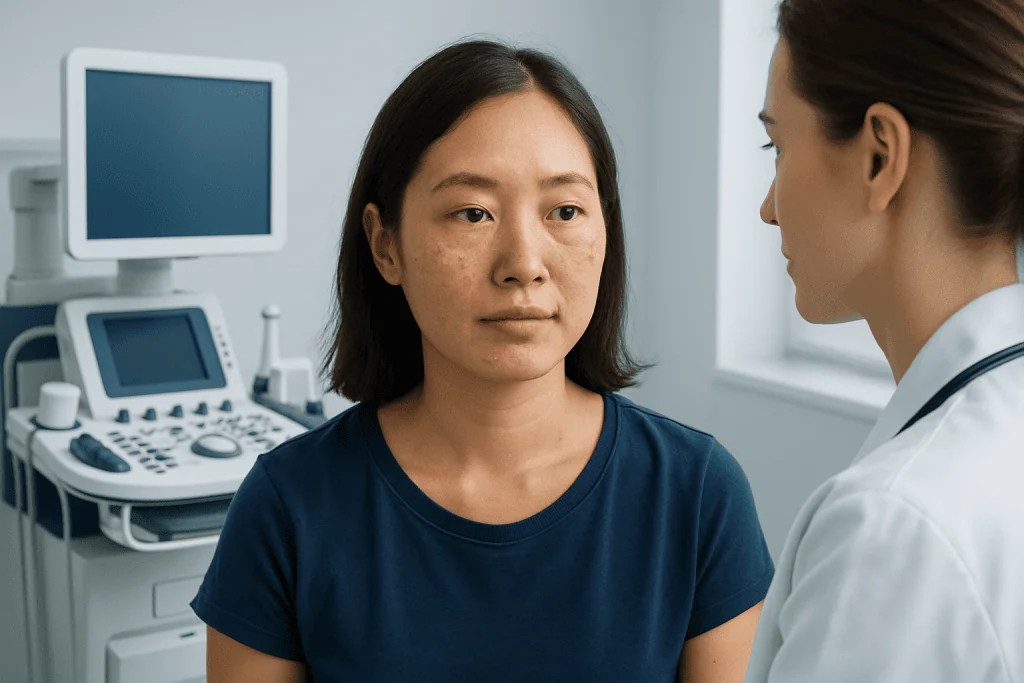
The typical syringoma appears as a cluster of tiny, smooth, dome-shaped papules. They are usually symmetrical, especially when they occur around both eyes. Many people notice that the bumps remain stable for years, while others feel they slowly increase in number.
Syringomas do not usually hurt. Most are not itchy, tender, or inflamed, although mild irritation can occasionally happen, especially if the area is rubbed, scratched, or exposed to certain cosmetic products. Because the skin around the eyes is thin and delicate, these bumps may seem more prominent than similarly sized lesions elsewhere on the body.
Features that are commonly reported include:
- Small bumps, usually 1 to 3 millimeters in size
- Skin-colored, white, yellowish, or light brown appearance
- Clusters on the lower eyelids or upper cheeks
- Long-lasting lesions that grow slowly or stay unchanged
- Little or no discomfort
If a bump is darkly pigmented, ulcerated, crusted, rapidly growing, or bleeding, it may not be a syringoma. In that situation, a prompt medical evaluation is important to rule out other skin conditions.
Causes and risk factors

Syringomas develop from the cells of the eccrine sweat ducts, but the exact reason they form is not always clear. They are not caused by poor hygiene, and they are not contagious. In many people, there is no obvious trigger.
These growths are seen more often in females and frequently begin around puberty or in young adulthood. Some people appear to have a genetic tendency, and family history may play a role. Certain forms, sometimes called eruptive syringomas, can appear in crops on the chest, neck, or abdomen.
Syringomas have also been reported more often in association with some medical conditions, including Down syndrome and diabetes in selected patients, but this does not mean everyone with syringomas has an underlying disorder. Most cases occur on their own. A clinician can help decide whether any broader health evaluation is needed based on the person’s symptoms, medical history, and skin findings.
How doctors diagnose syringomas
Diagnosis usually starts with a history and physical examination by a dermatologist or another qualified doctor. The location, color, size, and pattern of the bumps often provide strong clues. When syringomas appear in the typical area under the eyes and have a classic look, an experienced clinician may diagnose them without invasive testing.
However, not every small facial papule is a syringoma. Doctors may consider other possibilities such as milia, sebaceous hyperplasia, xanthelasma, flat warts, lichen planus, hidrocystomas, or other benign lesions. In less typical cases, a small skin biopsy may be recommended to confirm the diagnosis under a microscope.
A biopsy can be especially useful if the lesions are solitary, growing quickly, unusually colored, painful, or otherwise atypical. Microscopic examination helps distinguish syringomas from other adnexal tumors and from skin cancers. If the bumps are near the eyes or there is concern about a broader eyelid issue, further assessment may also be appropriate.
When the diagnosis is uncertain, specialists may use dermatology evaluation and, if needed, pathology assessment to guide next steps. The goal is to confirm that the lesions are benign before any cosmetic treatment is planned.
Treatment options and what to expect
Because syringomas are benign, treatment is not medically required in many cases. Some people choose to leave them alone once they understand the diagnosis. Others seek treatment because the bumps are noticeable, affect confidence, or interfere with makeup, shaving, or skin-care routines.
Treatment can be challenging because syringomas sit within the skin and often occur in clusters on delicate areas such as the eyelids. Removal aims to reduce their visibility, but complete clearance may not always be possible, and recurrence can happen. Any procedure near the eyes should be planned carefully to lower the risk of scarring, pigment change, or irritation.
Options that a dermatologist may discuss include:
- Laser treatment to target superficial lesions with precision
- Electrosurgery or cautery to destroy visible bumps
- Minor surgical removal in selected cases
- Chemical peeling or other resurfacing techniques in carefully chosen patients
- Topical or oral medicines in limited situations, although results may vary
The best approach depends on the number of lesions, skin tone, lesion depth, and location. A doctor may talk through the benefits and drawbacks of laser treatment or other procedural options, especially for eyelid syringomas. If a lesion appears unusual rather than typically benign, assessment through skin biopsy may come before treatment to make sure the diagnosis is correct.
Self-care, skin habits, and realistic expectations
There is no proven home remedy that reliably removes syringomas. Picking, squeezing, scrubbing, or using harsh over-the-counter acids can injure the skin, particularly around the eyes. This may lead to irritation, infection, post-inflammatory pigmentation, or scarring without removing the growths.
Gentle skin care is usually the safest approach. People who are bothered by the appearance of syringomas may benefit from using non-irritating cleansers, moisturizers, and sun protection to support overall skin health. Makeup can help camouflage the bumps, but products should be chosen carefully to avoid stinging or rubbing the delicate eyelid area.
It also helps to have realistic expectations before pursuing treatment. Even when therapy improves the skin’s appearance, tiny residual lesions can remain, and repeat sessions may sometimes be needed. A clinician can explain what level of improvement is reasonable and what side effects are most relevant for an individual’s skin type and lesion pattern.
When to seek medical care
A medical review is a good idea when new bumps appear around the eyes and the diagnosis is not certain. Many skin conditions can look similar at first glance, and some need different treatment. Seeing a qualified doctor is especially important if the bumps are changing, symptomatic, or appearing in an unusual pattern.
Medical attention should be sought sooner if a lesion bleeds, crusts, grows rapidly, changes color, becomes painful, or causes significant irritation. These features are not typical of syringomas and may need a closer look. A clinician can decide whether observation is enough or whether biopsy or treatment is appropriate.
People may also wish to seek care when the bumps affect confidence or day-to-day comfort. Treatment is often elective, but discussing options with a specialist can help balance cosmetic goals with the need to protect delicate skin. Near the end of the care pathway, patients looking for coordinated evaluation may consider centers such as Acibadem International, where multidisciplinary specialists in JCI-accredited hospitals diagnose and treat skin conditions for international patients.
Frequently asked questions
Are syringomas dangerous?
Syringomas are benign, which means they are not cancerous. They usually do not cause health problems, but they can resemble other skin lesions, so a doctor may need to confirm the diagnosis.
Do syringomas go away on their own?
Syringomas usually persist rather than disappearing spontaneously. They may stay the same for years or slowly increase in number, especially around the eyes.
What causes syringomas around the eyes?
Syringomas form from eccrine sweat ducts and commonly appear around the eyelids because this is a typical site for these benign growths. The exact cause is often unclear, but genetics, age, and individual skin tendencies may contribute.
Can syringomas be removed permanently?
Treatment can reduce or remove visible lesions, but recurrence is possible. Because syringomas extend within the skin and may appear in clusters, complete and permanent clearance is not always guaranteed.
Is it safe to treat syringomas at home?
Home removal is not recommended, especially near the eyes. Picking or using strong acids can damage delicate skin and may cause scarring, pigment changes, or infection.
How do doctors tell syringomas apart from milia or other bumps?
Doctors usually diagnose syringomas by their appearance, location, and pattern on skin examination. If the lesion is unusual or the diagnosis is uncertain, a biopsy may be used to confirm it under a microscope.
References
- American Academy of Dermatology
- National Library of Medicine
- DermNet
- Mayo Clinic
- MedlinePlus
This article is for general information only and is not a substitute for professional medical advice. Please consult a qualified doctor about your individual situation.
Oncology care in Turkey — second opinion and treatment plan
JCI-accredited · board-certified surgeons · reply within 24h