What Is Prion Disease? Here Is What the Evidence Says

Prion disease is rare and affects the brain by causing abnormal protein folding. Typical warning signs include rapidly progressive memory, behavior, movement, or coordination changes.
Key Takeaways
- Prion disease is rare and affects the brain by causing abnormal protein folding.
- Typical warning signs include rapidly progressive memory, behavior, movement, or coordination changes.
- Doctors diagnose prion disease using symptoms, neurological examination, MRI, EEG, spinal fluid tests, and sometimes genetic testing.
- There is currently no cure, but supportive care can help manage symptoms and improve comfort.
- Not all prion diseases are inherited or contagious; different forms have different causes.
- Prompt medical review is important if symptoms are progressing quickly.
Prion disease is a rare group of brain disorders caused by abnormal prion proteins that build up in the brain and damage nerve cells. Most everyday memory lapses, dizziness, or clumsiness are not caused by prion disease, but rapidly worsening neurological symptoms should be assessed by a doctor.
Overview: what is prion disease?
What is prion disease? Prion disease is a rare group of progressive brain disorders caused by an abnormal form of a naturally occurring protein called a prion protein. When this protein misfolds, it can trigger other proteins to misfold as well. Over time, these abnormal proteins collect in brain tissue and damage nerve cells.
Many common symptoms people worry about—such as occasional forgetfulness, brief dizziness, poor sleep, or feeling mentally “off” during stress—are much more often linked to harmless or treatable causes than to prion disease. The concern becomes greater when symptoms are new, clearly worsening, and affecting thinking, balance, movement, vision, or behavior over a short period of time.
Prion diseases are part of a broader group of conditions that affect the nervous system and can overlap in symptoms with Alzheimer’s disease or Parkinson’s disease, especially early on. However, prion disease usually progresses more quickly than these more common disorders, which is one reason doctors consider it in the right clinical context.
Signs and symptoms to know
Symptoms can vary depending on which part of the brain is most affected, but the overall pattern is often one of rapid change. A person may develop memory problems, confusion, personality or mood changes, difficulty concentrating, or trouble carrying out familiar tasks. Family members are often the first to notice that something is changing more quickly than expected.
Movement and coordination symptoms are also common. These may include unsteady walking, poor balance, jerking movements, stiffness, slurred speech, tremor, or difficulty with fine motor tasks. Some people develop visual symptoms such as blurred vision, double vision, or problems interpreting what they see.
As the condition advances, symptoms may become more severe and include marked cognitive decline, sleep disturbance, swallowing problems, severe mobility limitation, or reduced awareness. Not every person has the same pattern, and symptoms can resemble those of other neurological conditions at first, which is why careful medical evaluation is important.
- Rapidly worsening memory or confusion
- Changes in mood, personality, or behavior
- Poor coordination or unsteady walking
- Involuntary muscle jerks or stiffness
- Vision or speech changes
- Increasing difficulty with daily activities
Causes and types of prion disease

Prion diseases are caused by misfolding of the prion protein, but the reason this happens differs by type. The most common human prion disease is sporadic Creutzfeldt-Jakob disease, often called CJD. In sporadic disease, the abnormal protein appears without a clear outside trigger, and the exact reason is usually not known.
Some prion diseases are inherited. In these cases, a change in the PRNP gene increases the chance that the prion protein will misfold. A family history of certain rapidly progressive neurological illnesses may prompt doctors to consider genetic counseling or testing.
A very small number of cases are acquired, meaning the abnormal prion protein enters the body from an external source. These include variant CJD, which has been linked to exposure to infected cattle products in the past, and extremely rare iatrogenic cases related to contaminated medical materials or tissue exposure. Importantly, prion disease is not spread through ordinary social contact, breathing the same air, or routine caregiving.
How doctors evaluate and diagnose it
Because prion disease is rare and symptoms can overlap with many other conditions, diagnosis begins by ruling out more common and potentially treatable causes. Doctors take a detailed history, including when symptoms began, how quickly they have changed, whether there is a family history, and whether there have been any unusual exposures. A neurological examination looks at memory, speech, vision, strength, reflexes, sensation, balance, and coordination.
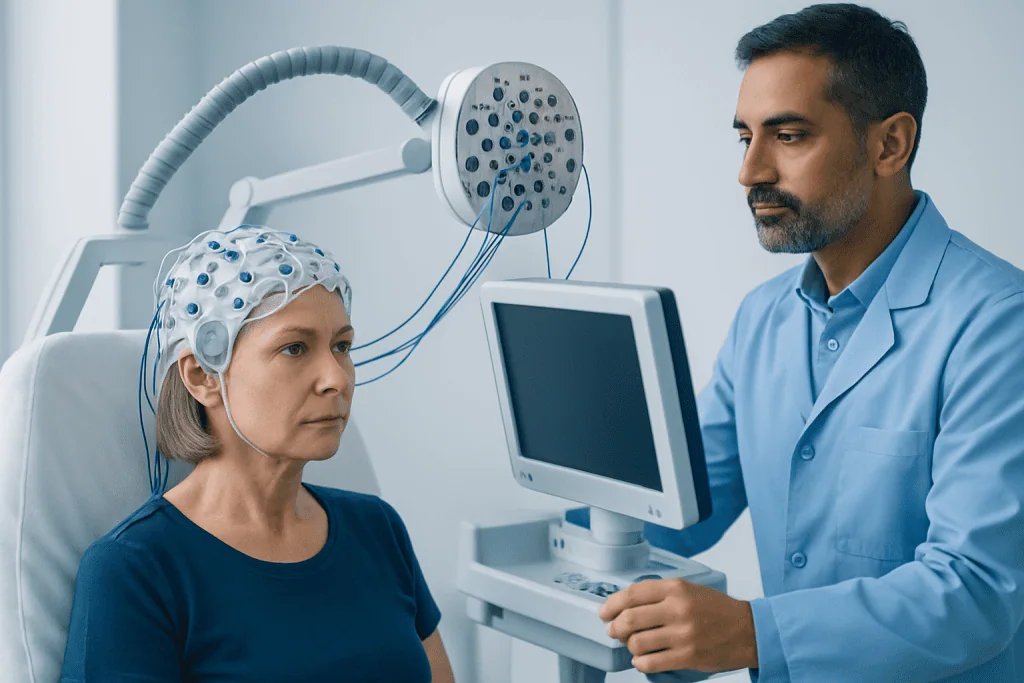
Brain imaging is usually a key next step. MRI can show patterns in the brain that support the diagnosis in some forms of prion disease. Other tests may include an EEG to look for characteristic electrical activity and a lumbar puncture to analyze spinal fluid for markers that suggest rapid nerve cell injury or prion-related disease.
Blood tests are also important, not because they confirm prion disease, but because they help exclude infections, autoimmune conditions, vitamin deficiencies, thyroid disorders, or metabolic problems. In selected cases, doctors may recommend MRI scanning, EEG testing, and genetic testing. Many patients with rapidly progressive symptoms are assessed in a specialized neurology evaluation pathway so diagnosis and supportive planning can begin promptly.
Treatment and supportive care
At present, there is no treatment that can stop or reverse prion disease. Care therefore focuses on symptom relief, safety, comfort, and support for both the patient and family. Treatment plans are individualized and may involve neurologists, rehabilitation specialists, palliative care clinicians, nutrition experts, speech and swallowing therapists, and mental health professionals.
Supportive care may help reduce distressing symptoms such as anxiety, sleep problems, agitation, pain, muscle stiffness, or involuntary movements. Therapy can also address mobility, communication, and swallowing difficulties. When walking or balance is impaired, practical changes at home and mobility aids may lower the risk of falls.
As needs change, discussions about future care preferences can be helpful. These conversations are not about giving up; they are about making sure care matches the person’s goals and values. Near the end of the care journey, some families seek specialist support from multidisciplinary centers. Acibadem International’s multidisciplinary specialists in JCI-accredited hospitals evaluate and treat neurological conditions for international patients when appropriate.
When to seek medical care
Most brief episodes of forgetfulness, fatigue, or dizziness do not mean prion disease. Medical attention becomes more important when symptoms are progressing quickly over days to weeks, especially if they affect memory, personality, speech, vision, balance, or movement. Rapid change is one of the clearest reasons to seek review.
A person should seek prompt medical care if there is sudden confusion, repeated falls, new seizure-like activity, severe coordination problems, trouble swallowing, marked personality change, or a fast decline in the ability to manage daily tasks. Urgent assessment is also important if symptoms interfere with safety at home, including driving, cooking, or taking medicines correctly.
Even when prion disease is not the cause, these red flags may point to another serious neurological problem that needs timely treatment. Evaluation can help identify treatable alternatives such as infection, inflammation, stroke-related conditions, medication effects, or other forms of dementia.
Living with uncertainty, prevention, and family questions
Waiting for answers about a rapidly changing neurological illness can be emotionally exhausting. Families often cope better when information is given step by step and when practical support is arranged early. Keeping a written timeline of symptoms, bringing a medication list to appointments, and noting changes in sleep, mood, balance, or speech can help the medical team.
There is no known way to prevent sporadic prion disease. For inherited forms, families may be offered genetic counseling to discuss risk, testing, and future planning. Public health measures and strict sterilization protocols in healthcare settings are used to reduce the already very low risk of acquired prion disease.
It can also help to remember that a suspected diagnosis is not the same as a confirmed one. Several treatable disorders can mimic prion disease, particularly early in the evaluation. Clear communication with the care team, attention to safety, and emotional support for caregivers are all important parts of care.
Frequently asked questions
Is prion disease the same as Creutzfeldt-Jakob disease?
Creutzfeldt-Jakob disease, or CJD, is one type of prion disease and the most well-known one in humans. Prion disease is the broader term that includes sporadic, inherited, and acquired forms.
Is prion disease contagious in everyday life?
No. Prion disease is not spread by casual contact, touching, hugging, coughing, or being in the same room. Very rare acquired cases involve specific medical or food-related exposures, not normal day-to-day contact.
How quickly does prion disease progress?
Prion disease often progresses more quickly than many other neurological conditions, but the exact pace varies by type and by person. This is why doctors pay close attention to symptoms that worsen over days, weeks, or a few months.
Can prion disease be cured?
There is currently no cure that stops the disease process. Treatment focuses on supportive care, symptom management, safety, and maintaining comfort and quality of life as much as possible.
Can a blood test confirm prion disease?
No single routine blood test confirms prion disease. Blood tests are mainly used to look for other conditions that can cause similar symptoms, while diagnosis usually relies on clinical assessment, MRI, EEG, spinal fluid testing, and sometimes genetic testing.
Should family members be tested if one person has prion disease?
Not always. Testing may be considered if doctors suspect an inherited prion disease or if there is a relevant family history. Genetic counseling is usually recommended first so relatives can understand the benefits, limits, and possible emotional impact of testing.
References
- World Health Organization
- Centers for Disease Control and Prevention
- National Institute of Neurological Disorders and Stroke
- NHS
- Mayo Clinic
This article is for general information only and is not a substitute for professional medical advice. Please consult a qualified doctor about your individual situation.
Explore treatments in Turkey — costs, top hospitals & a free quote
JCI-accredited · board-certified surgeons · reply within 24h