Dermatitis Neglecta: Symptoms, Causes, and Treatment Options

Dermatitis neglecta happens when normal skin debris builds up because an area is not cleaned sufficiently. It often affects skin that is painful, sensitive, injured, or hard to reach rather than reflecting poor overall hygiene.
Key Takeaways
- Dermatitis neglecta happens when normal skin debris builds up because an area is not cleaned sufficiently.
- It often affects skin that is painful, sensitive, injured, or hard to reach rather than reflecting poor overall hygiene.
- Doctors diagnose it mainly by examining the skin and checking whether gentle cleaning removes the buildup.
- Treatment usually involves careful cleansing, skin-softening products, and addressing the reason the area was neglected.
- Medical review is important if the lesion does not clear, spreads, bleeds, or could be another skin condition.
Dermatitis neglecta is a skin condition caused by the gradual buildup of sweat, oil, keratin, and dirt on an area that has not been cleaned well enough, often because touching or washing the area is painful or difficult. It typically appears as brown, gray, or dark plaques with a rough or “stuck-on” look and often clears with careful cleansing once the diagnosis is confirmed.
Overview
Dermatitis neglecta is a harmless but often misunderstood skin condition in which layers of sebum, sweat, dead skin cells, keratin, and outside debris collect on the skin over time. This buildup can form a thickened patch or plaque that looks brown, gray, black, or dirty, sometimes with a rough, warty, or stuck-on surface. Although the appearance can be worrying, the problem is usually reversible with the right diagnosis and gentle skin care.
The condition does not necessarily mean a person has poor hygiene overall. More often, a specific area is cleaned less thoroughly because it is painful, tender, recently operated on, immobilized, or difficult to reach. People may avoid scrubbing the area after injury, surgery, burns, nerve pain, or skin sensitivity, allowing debris to accumulate gradually.
Dermatitis neglecta is important to recognize because it can resemble other skin disorders, including eczema, fungal infections, psoriasis, or even pigmented lesions. A careful clinical assessment helps confirm the cause and prevents unnecessary worry or treatment. In many cases, the diagnosis becomes clear when the plaque softens or lifts away with appropriate cleansing.
What Dermatitis Neglecta Looks and Feels Like
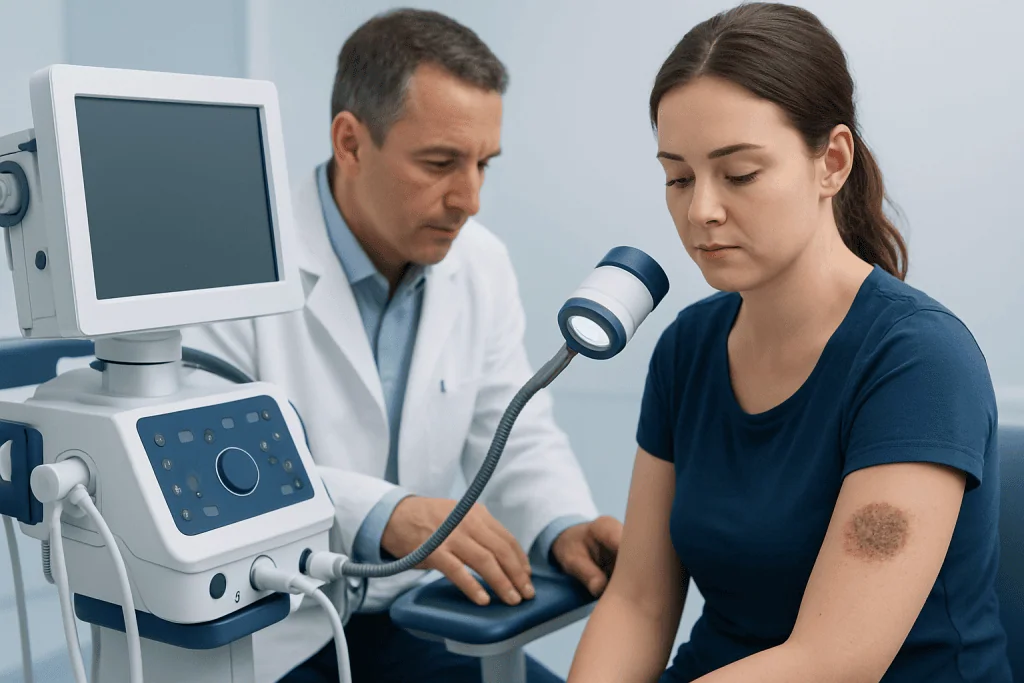
The most common sign is a localized patch or plaque that looks dirty and does not wash off with a quick rinse. The area may appear hyperpigmented, scaly, crusted, or verrucous, meaning it has a roughened, uneven surface. The lesion can develop on the face, neck, trunk, behind the ears, around scars, near casts or braces, or on body parts that are hard to clean comfortably.
Symptoms are often mild. Many people notice the change in appearance more than physical discomfort. Some plaques feel slightly itchy, sensitive, or greasy, while others have no symptoms at all. There may also be an odor if sweat and debris have built up for a long period.
Features that may be seen include:
- Brown, gray, or dark plaques with a dirty or neglected appearance
- Scale, crust, or a waxy surface
- A lesion limited to one area rather than widespread rash
- Skin changes near a painful joint, scar, wound, or surgical site
- Improvement when gently rubbed with soap and water or alcohol-based swabs under medical guidance
Because dermatitis neglecta can look similar to other skin problems, it should not be self-diagnosed if the appearance is uncertain. A dermatologist can help distinguish it from eczema and other inflammatory skin conditions or from infections that need different care.
Causes and Risk Factors

Dermatitis neglecta develops when routine friction and cleansing are reduced in a particular area. Normally, washing and gentle rubbing remove dead skin, oils, sweat, and environmental particles. When this process is interrupted, these materials can compact into an adherent plaque over days to weeks or longer.
The reason for reduced cleaning is often practical or medical rather than simple neglect. A person may avoid touching the area because of pain, fear of disturbing a healing wound, limited mobility, recent surgery, sensory changes, or skin tenderness. Children, older adults, and people who need help with bathing may be more likely to develop it if a certain body area is missed repeatedly.
Factors that can increase the chance of dermatitis neglecta include:
- Recent surgery, injury, or scarring
- Painful skin or joint conditions that make washing uncomfortable
- Immobilization, casts, braces, or reduced range of motion
- Neurologic problems, altered sensation, or chronic pain syndromes
- Physical disability or difficulty with self-care
- Anxiety about touching a healing area
Doctors may also think about related but different conditions when evaluating buildup on the skin. One example is dermatosis neglecta’s overlap in appearance with retained scale from chronic inflammation or with pigment changes after irritation. If another disease is suspected, the clinician may assess for problems such as psoriasis or skin infection before confirming the diagnosis.
How Doctors Diagnose It
Diagnosis is usually clinical, meaning it is based on the appearance of the skin, the person’s history, and the response to cleaning. A doctor will ask when the patch appeared, whether the area is painful or hard to wash, whether there has been surgery or injury, and what skin products have already been tried. This context is often the key to identifying dermatitis neglecta.
During the examination, the clinician looks at the color, texture, borders, and distribution of the plaque. A limited, localized lesion in an area that has been avoided during washing strongly suggests the diagnosis. In many cases, gentle rubbing with soap and water or an alcohol swab can remove or reduce the lesion, which helps confirm that the buildup is superficial rather than a true growth in the skin.
Testing is not always needed. If the plaque does not lift, is inflamed, bleeds, or has an unusual pattern, the doctor may consider fungal infection, acanthosis nigricans, confluent and reticulated papillomatosis, seborrheic keratosis, eczema, or other skin disorders. In uncertain cases, referral for dermatology evaluation may be helpful, and occasionally a skin scraping or biopsy is used to rule out another diagnosis.
Treatment Options
The main treatment for dermatitis neglecta is careful removal of the accumulated material. This is usually done with gentle washing using warm water, mild cleanser, and soft friction rather than aggressive scrubbing. In some cases, a clinician may recommend alcohol swabs or a keratolytic moisturizer to loosen compacted debris, but this should be guided by a professional if the skin is fragile, inflamed, or healing from a procedure.
Once the buildup is removed, the skin underneath may look normal or slightly irritated. A bland moisturizer can help restore comfort, especially if the area has become dry from cleansing. If there is tenderness, redness, or an underlying rash, treatment is directed at that problem as well. Managing the cause of reduced washing is an important part of preventing recurrence.
Treatment may include:
- Gentle cleansing with soap and water
- Softening agents such as emollients or keratolytic creams when appropriate
- Avoiding harsh rubbing that can injure the skin
- Pain control or wound-care advice if discomfort has limited hygiene
- Help with mobility or bathing techniques for hard-to-reach areas
If another condition is present, treatment depends on the diagnosis. For example, if a persistent rash under the buildup suggests a chronic inflammatory disorder, the doctor may evaluate for eczema treatment or another skin-specific plan rather than relying on cleansing alone.
Prevention and Self-care
Prevention focuses on regular but gentle skin care, especially after surgery, injury, or during periods of limited movement. The goal is not vigorous scrubbing. Instead, it is consistent cleansing of all skin folds and sensitive areas with a mild cleanser, followed by careful drying and moisturizing when needed.
People who are avoiding an area because they fear hurting it may benefit from clear instructions from a healthcare professional about how to clean the skin safely. If a dressing, brace, cast edge, or scar makes washing difficult, a doctor or nurse can explain which parts of the area can be cleaned and what products are least irritating. This can reduce anxiety and help prevent buildup from returning.
Helpful self-care steps include:
- Use warm water and a gentle, fragrance-light cleanser
- Clean healing or painful areas as advised by a doctor
- Moisturize dry skin to reduce sensitivity and scaling
- Ask for assistance if mobility or reach is limited
- Monitor for changes such as spreading, pain, or persistent discoloration
When skin changes continue despite good hygiene, self-treatment should stop and medical advice should be sought. Persistent plaques may need professional assessment to exclude infection, inflammatory disease, or another form of dermatitis that requires different care.
When to Seek Medical Care
Medical care is appropriate if a dark or crusted patch does not improve with gentle washing, keeps coming back, or is difficult to identify. A clinician can confirm whether it is dermatitis neglecta or another skin condition. This is especially important when the lesion is on the face, around a surgical site, or in a child or older adult who may not be able to describe symptoms clearly.
A person should seek prompt medical review if the area becomes painful, swollen, warm, bleeds, drains fluid, develops a bad odor, or is accompanied by fever or rapidly spreading redness. These signs may suggest infection or another problem that needs treatment. New skin lesions in people with diabetes, reduced immunity, or poor wound healing also deserve early assessment.
If specialized evaluation is needed, dermatology care can help clarify the diagnosis and guide treatment. Near the end of a patient’s care journey, some may also seek coordinated support from centers experienced in skin disorders; Acibadem International’s multidisciplinary specialists and JCI-accredited hospitals evaluate and treat dermatologic conditions for international patients.
Frequently asked questions
Is dermatitis neglecta caused by poor hygiene?
Not always. Dermatitis neglecta usually affects a specific area that has not been cleaned well enough because it is painful, healing, hard to reach, or sensitive to touch. Many people with this condition otherwise have normal hygiene habits.
Can dermatitis neglecta go away with washing?
Yes, in many cases it improves or clears with gentle cleansing and soft friction. However, harsh scrubbing can irritate the skin, so persistent or uncertain lesions should be assessed by a doctor. If the patch does not improve, another diagnosis may need to be considered.
Is dermatitis neglecta dangerous?
Dermatitis neglecta itself is usually not dangerous. The main concern is that it can resemble other skin diseases, including infections or inflammatory conditions that need different treatment. A medical review is helpful if the appearance is unusual or does not respond to simple care.
How is dermatitis neglecta different from eczema?
Dermatitis neglecta is mainly a buildup of external and skin-derived material on the surface, while eczema is an inflammatory skin condition. Eczema often causes itching, dryness, and recurrent rash, whereas dermatitis neglecta often improves significantly when the buildup is removed. Sometimes both can be present at the same time.
Who is more likely to develop dermatitis neglecta?
People recovering from surgery or injury, those with chronic pain, limited mobility, neurologic problems, or difficulty with bathing may be more likely to develop it. Children and older adults can also be affected if a body area is repeatedly missed during washing. The condition tends to appear where cleansing has become difficult rather than across the whole body.
Should alcohol wipes be used to remove it?
Sometimes clinicians use alcohol swabs to help confirm the diagnosis or remove compacted debris, but this is not right for every person. Alcohol can sting or dry the skin, especially near wounds, sensitive areas, or inflamed skin. It is safest to ask a healthcare professional before trying this approach.
References
- American Academy of Dermatology
- National Institutes of Health
- MedlinePlus
- Mayo Clinic
- DermNet
This article is for general information only and is not a substitute for professional medical advice. Please consult a qualified doctor about your individual situation.
Explore treatments in Turkey — costs, top hospitals & a free quote
JCI-accredited · board-certified surgeons · reply within 24h

More from the Health Library



Related Specialists

Alperen Mustafa Oğuz
Physical Medicine & Rehabilitation
Dr. Abdurrahman Gölbaşı
Radiology
Prof. Dr. Denizhan Dizdar
Otorhinolaryngology
Prof. Dr. M. Nadir Şener
Orthopedic Surgery & Traumatology