Spider Veins on Face: An Evidence-Based Guide for Patients

Spider veins on face are usually benign enlarged superficial blood vessels. Common triggers include sun damage, rosacea, genetics, aging, and skin irritation.
Key Takeaways
- Spider veins on face are usually benign enlarged superficial blood vessels.
- Common triggers include sun damage, rosacea, genetics, aging, and skin irritation.
- A doctor can often diagnose them with a skin exam and decide whether treatment is needed.
- Treatment options may include vascular laser therapy, intense pulsed light, or addressing an underlying skin condition.
- Sun protection and gentle skin care may help reduce new facial spider veins.
- Medical review is important if facial veins appear suddenly, bleed, change quickly, or occur with other symptoms.
Spider veins on face are tiny widened blood vessels visible through the skin, often appearing as fine red, blue, or purple lines. They are usually harmless, but they can be linked to sun exposure, rosacea, aging, or irritation, and several medical treatments can reduce their appearance.
Overview: what spider veins on face are
Spider veins on face are tiny, widened blood vessels close to the surface of the skin. Doctors may also call them facial telangiectasias. They often look like thin red, blue, or purple lines, small branching patterns, or a web-like network on the cheeks, nose, or chin.
In many people, these visible vessels are a cosmetic concern rather than a dangerous health problem. Still, they can be a sign that the skin has been repeatedly exposed to triggers such as sun, heat, irritation, or inflammation. In some cases, they occur alongside chronic skin conditions such as rosacea.
Because facial skin is thin and highly exposed to the environment, small blood vessels there can become more noticeable over time. A professional assessment helps confirm that the marks are truly spider veins and not another skin or vascular condition.
How facial spider veins look and feel
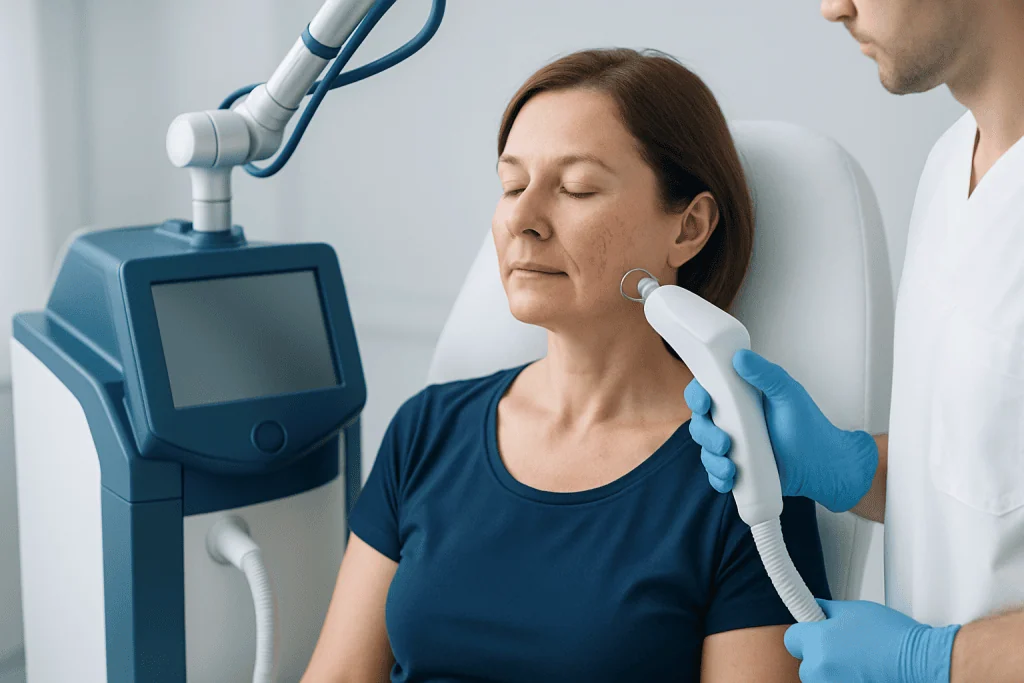
Facial spider veins vary in size and color. Some people notice a single fine line near the nose, while others develop clusters across the cheeks or around the chin. They may become more visible after exercise, hot showers, alcohol, spicy foods, or sun exposure because these triggers can temporarily widen blood vessels.
Most spider veins on face do not cause pain. However, some people report flushing, warmth, mild burning, or skin sensitivity in the same area, especially if rosacea or irritation is also present. These associated symptoms may offer clues about the underlying cause.
Features commonly described include:
- Thin red, pink, blue, or purple lines under the skin
- Small branching or web-like patterns
- Persistent redness around the nose or cheeks
- Flushing that makes the vessels easier to see
- Sensitive or easily irritated skin nearby
If visible vessels are accompanied by frequent redness, bumps, stinging, or eye irritation, a skin condition rather than isolated spider veins may be contributing.
Why spider veins develop on the face

Spider veins form when very small blood vessels remain widened instead of narrowing back to their usual size. This can happen gradually as the skin ages or after repeated exposure to factors that strain or inflame the vessels. The face is especially prone because it is exposed to sunlight, temperature changes, and topical products every day.
Several causes and risk factors are well recognized. Sun exposure can weaken skin support structures and make vessels more visible. Genetics also matter, as some people naturally have more delicate capillaries or fair, thin skin. Aging, hormonal changes, and long-term use of topical or oral steroids may also play a role.
Other common contributors include:
- Rosacea and chronic facial flushing
- Frequent sun exposure or tanning
- Harsh skin care products or over-exfoliation
- Heat exposure, including saunas and very hot showers
- Alcohol, spicy foods, and other flushing triggers
- Wind, cold weather, and repeated skin irritation
- Smoking, which can affect skin and blood vessels
Less commonly, facial telangiectasias may be linked to liver disease, autoimmune disease, certain inherited conditions, or medication effects. That is one reason a medical evaluation can be useful if the veins are widespread, unusual, or accompanied by other symptoms.
How doctors diagnose facial spider veins
Diagnosis usually begins with a medical history and close examination of the skin. A doctor will ask when the vessels first appeared, whether they are changing, and whether there are triggers such as heat, exercise, alcohol, sun exposure, or skin care products. They may also ask about redness, flushing, acne-like bumps, easy bruising, or a family history of similar skin findings.
In many cases, no testing is needed because spider veins on face can be identified visually. The main goal is to confirm the diagnosis and look for related conditions such as rosacea, sun damage, or steroid-related skin thinning. Sometimes the doctor may use magnification or dermoscopy to examine the vessels more closely.
Additional tests are only needed in selected situations. If the pattern is unusual or if other symptoms suggest a broader medical issue, the clinician may recommend blood tests or referral to a dermatologist or vascular specialist. This helps rule out causes such as connective tissue disease, hormone-related changes, or systemic illness.
Treatment options for spider veins on face
Treatment depends on how noticeable the veins are, whether they cause distress, and whether an underlying condition needs attention. If the vessels are mild and not bothersome, careful skin protection and trigger control may be enough. When treatment is desired, the most effective options are usually office-based procedures that target superficial blood vessels.
Vascular laser treatment is a common choice for facial spider veins. These lasers direct energy toward the blood vessel, helping it collapse and fade while limiting injury to nearby skin. In some people, laser treatment is recommended for precise treatment of individual vessels, especially around the nose and cheeks.
Another option is light-based therapy such as intense pulsed light (IPL) for diffuse redness and small visible vessels. If facial spider veins occur as part of an inflammatory skin disorder, doctors may also treat the underlying condition first. For example, managing rosacea can reduce flushing and help prevent new vessels from becoming prominent.
Results often improve over more than one session, and some vessels may return over time if triggers continue. A doctor will discuss likely benefits, skin type considerations, and possible temporary effects such as redness, swelling, or changes in skin color. Self-treatment methods advertised online are often less effective and may irritate the face.
Prevention and self-care that support skin health
Not all facial spider veins can be prevented, especially when genetics and aging are involved. Still, daily habits can lower the chance of new vessels appearing and can help protect treatment results. The most important step is regular sun protection, because ultraviolet exposure can worsen visible blood vessels and accelerate skin aging.
Gentle skin care is also important. Products that sting, over-dry, or over-exfoliate may increase irritation and flushing. People with sensitive skin often benefit from fragrance-free cleansers, moisturizers that support the skin barrier, and careful introduction of active ingredients.
Helpful self-care measures include:
- Using broad-spectrum sunscreen every day
- Wearing hats and seeking shade outdoors
- Avoiding harsh scrubs and aggressive exfoliation
- Limiting known flushing triggers when possible
- Protecting the face from extreme heat, wind, and cold
- Discussing long-term steroid cream use with a doctor
If redness and flushing are frequent, keeping a symptom diary may help identify patterns. A doctor or dermatologist can then tailor advice to the person’s skin type, routine, and possible underlying diagnosis.
When to seek medical care
Spider veins on face are often harmless, but medical advice is a good idea if they appear suddenly, spread quickly, or are associated with other symptoms. Professional evaluation is also helpful when the diagnosis is uncertain or when visible vessels are affecting quality of life or confidence.
A person should consider seeing a doctor if facial veins are accompanied by persistent flushing, acne-like bumps, skin thickening, easy bleeding, pain, or eye irritation. Care is also important if there are signs of broader illness, such as unusual bruising, fatigue, jaundice, or new skin changes elsewhere on the body.
People seeking cosmetic improvement may benefit from evaluation by a dermatologist or vascular specialist experienced in facial vessel treatment. Near the end of the care pathway, it may be reassuring to know that Acibadem International’s multidisciplinary specialists and JCI-accredited hospitals evaluate visible facial vessels and related skin conditions for international patients.
Frequently asked questions
Are spider veins on face dangerous?
Spider veins on face are usually not dangerous and are often mainly a cosmetic issue. However, if they appear suddenly, change quickly, or occur with other symptoms such as persistent flushing, bleeding, or skin thickening, a medical review is sensible.
What causes broken capillaries or spider veins on the face?
Common causes include sun exposure, rosacea, aging, genetics, skin irritation, and repeated flushing from heat, alcohol, or spicy foods. Sometimes long-term steroid use or less common medical conditions may contribute.
Can spider veins on face go away on their own?
Some mild redness may lessen when triggers are avoided, but established visible vessels often do not disappear completely on their own. Medical treatments such as laser or IPL are usually needed if a person wants clearer improvement.
What is the best treatment for spider veins on face?
The best treatment depends on the size of the vessels, skin type, and whether rosacea or another condition is present. Vascular laser therapy and intense pulsed light are commonly used, and a specialist can advise which approach is most suitable.
Can skin care products make facial spider veins worse?
Yes, harsh products can worsen irritation and flushing, which may make facial vessels more noticeable over time. Over-exfoliation, strong scrubs, and products that sting or burn can be especially problematic for sensitive skin.
Is rosacea the same as spider veins on face?
Not exactly. Rosacea is a chronic inflammatory skin condition that may include persistent redness, flushing, bumps, and visible vessels, while spider veins can also occur on their own without rosacea.
References
- American Academy of Dermatology
- National Institute of Arthritis and Musculoskeletal and Skin Diseases
- National Health Service
- Mayo Clinic
- British Association of Dermatologists
This article is for general information only and is not a substitute for professional medical advice. Please consult a qualified doctor about your individual situation.
Explore treatments in Turkey — costs, top hospitals & a free quote
JCI-accredited · board-certified surgeons · reply within 24h

More from the Health Library



Related Specialists

Dr. Ceyhun Başıoğlu
Physical Medicine & Rehabilitation
Assoc. Prof. Dr. Murat Tümüklü
Cardiology
Dr. Ahmet Varolan
Gynecology & Obstetrics
Dr. Seval Eren
Inpatient Clinic Physicians Clinical Service