

Signs of Acl Explained: Common Triggers and Red Flags

Common signs of ACL injury include a popping sensation, swelling within hours, pain, and knee instability. ACL injuries often occur during pivoting, sudden stops, awkward landings, or direct contact to the knee.
Key Takeaways
- Common signs of ACL injury include a popping sensation, swelling within hours, pain, and knee instability.
- ACL injuries often occur during pivoting, sudden stops, awkward landings, or direct contact to the knee.
- Not every ACL injury causes severe pain, so instability and swelling can be important clues.
- Diagnosis usually combines a physical exam with imaging such as MRI when needed.
- Treatment depends on the severity of injury, the person's activity level, and whether other knee structures are damaged.
- Prompt medical assessment is important if the knee feels unstable, swollen, or difficult to bear weight on.
Signs of ACL injury commonly include a sudden pop in the knee, rapid swelling, pain, and a feeling that the knee may give way. These symptoms often happen after twisting, pivoting, landing awkwardly, or a direct blow during sports or daily activity.
Overview: What the signs of ACL injury usually look like
The signs of ACL injury usually appear suddenly after a knee twisting event, awkward landing, sudden change of direction, or direct impact. Many people notice a pop or snapping sensation at the moment of injury, followed by swelling that develops within the first few hours. The knee may feel unstable, as though it could buckle when standing or turning.
ACL stands for anterior cruciate ligament, one of the main ligaments that helps stabilize the knee. It connects the thigh bone to the shin bone and helps control forward movement and rotation of the knee. When this ligament is stretched or torn, the joint can become painful and less reliable, especially during walking, pivoting, or sports.
Not every person experiences the same symptoms. Some have immediate severe pain, while others mainly notice swelling and a loss of confidence in the knee. Because other injuries such as meniscus tears, collateral ligament injuries, or bone bruises can happen at the same time, the overall symptom pattern can vary from mild to significant.
Common signs and symptoms to watch for

The most recognized signs of ACL injury include a popping sound or sensation, rapid swelling, pain, and difficulty continuing activity. Many people stop the activity right away because the knee feels weak or unstable. Swelling may start quickly because ligament injuries can cause bleeding inside the joint.
Another important clue is instability. A person may describe the knee as giving way, shifting, or not supporting body weight properly. This symptom can be more noticeable during turning, going down stairs, or trying to change direction. Reduced range of motion is also common, especially if swelling is significant.
Symptoms can include:
- A pop heard or felt during injury
- Swelling within a few hours
- Pain, especially with movement or weight-bearing
- A feeling that the knee may buckle or give way
- Difficulty fully bending or straightening the knee
- Tenderness around the joint
These symptoms do not always mean the ACL is torn. Similar complaints can happen with a meniscus tear or other knee problems. Even so, sudden swelling and instability after a twisting injury should be evaluated by a qualified clinician.
Common triggers and how ACL injuries happen
ACL injuries are often linked to non-contact movements rather than a direct blow. A person may plant one foot and suddenly pivot, stop, or cut to the side. This can place strong rotational forces through the knee, especially if the body keeps moving while the foot stays fixed on the ground.
Landing awkwardly from a jump is another common trigger. If the knee collapses inward or the person lands off balance, the ligament may be strained or torn. Sports such as football, basketball, skiing, tennis, and soccer often involve these high-risk movements, but ACL injuries can also happen during exercise classes, running, or a simple fall.
Direct contact can also cause injury. A blow to the side of the knee, a collision, or a traffic-related accident may damage the ACL along with other structures. When more than one ligament or cartilage structure is involved, symptoms may be stronger and recovery can be more complex.
Some people may have risk factors that make injury more likely, including previous knee injury, poor landing mechanics, muscle weakness, fatigue, or participation in pivoting sports. Risk does not mean an injury is certain, but it helps explain why the same movement affects one person more than another.
How doctors tell ACL signs apart from other knee injuries
Several knee injuries can mimic the signs of ACL injury. A meniscus tear can also cause pain, swelling, locking, or catching. A sprain of the medial collateral ligament may cause tenderness more along the inner side of the knee. Patellar dislocation, fractures, and tendon injuries may also produce sudden pain and difficulty bearing weight.
One useful difference is timing and the sense of instability. Rapid swelling within hours and a clear giving-way sensation after a twisting event can strongly suggest ACL damage. Still, symptom patterns overlap, and people commonly injure more than one part of the knee at the same time.
This is why self-diagnosis can be unreliable. A person may assume the problem is a simple sprain and return to activity too soon, which can worsen instability or lead to additional injury. A medical assessment helps identify whether the issue is a partial sprain, complete tear, cartilage damage, or a combined injury pattern.
In some cases, doctors also consider related problems such as persistent knee pain or swelling from overuse, especially when there was no clear trauma. The overall history, physical exam, and imaging findings together give the most accurate picture.
Diagnosis: what happens during an evaluation
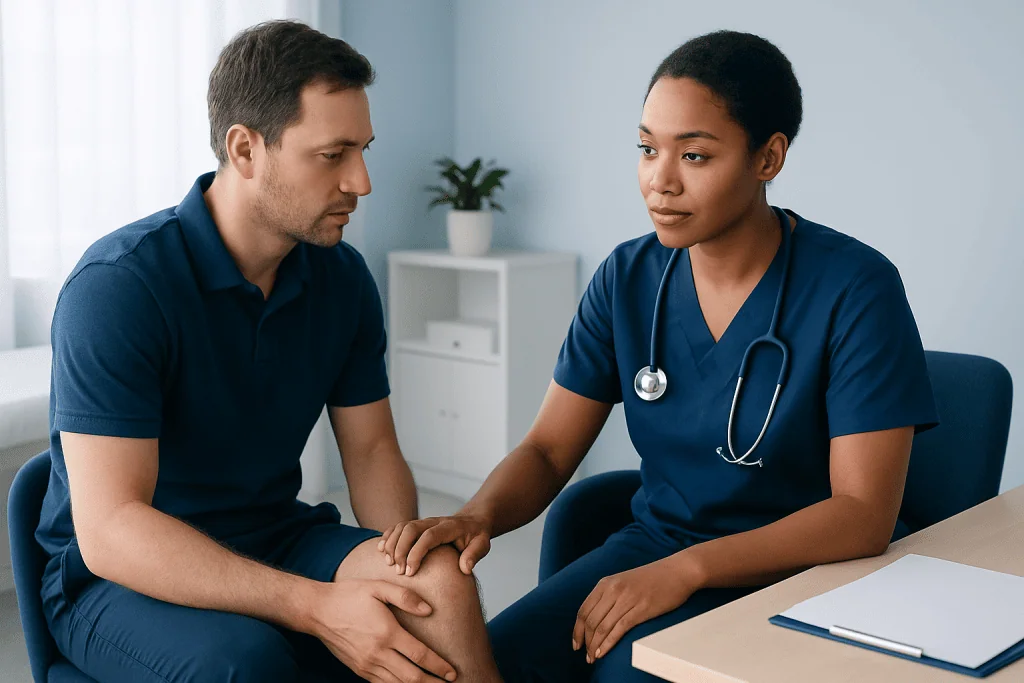
Diagnosis starts with a careful history. The clinician usually asks how the injury happened, whether there was a pop, how quickly swelling appeared, and whether the knee feels unstable. Details about current symptoms, sports participation, previous injuries, and general health also help guide the assessment.
A physical examination follows. The doctor checks swelling, range of motion, tenderness, and joint stability. Specific maneuvers, such as tests that gently assess forward movement of the shin bone, can suggest whether the ACL has been stretched or torn. Because pain and swelling may limit the exam right after the injury, the clinician may repeat parts of the assessment later.
Imaging is often used when an ACL injury is suspected. X-rays can help rule out fractures or certain bone injuries. MRI is especially useful for looking at the ACL itself and checking for associated damage to cartilage, meniscus, or other ligaments. In some cases, the findings may lead to a referral for knee arthroscopy if both diagnosis and treatment are needed.
Treatment options and recovery planning
Treatment depends on the degree of injury, symptoms, activity level, and whether other knee structures are also damaged. Early care often includes rest, ice, compression, elevation, and temporary activity restriction. A brace or crutches may be recommended if walking is painful or the knee feels unstable.
Physical therapy is a key part of treatment for many people. Rehabilitation focuses on reducing swelling, restoring motion, strengthening the muscles around the knee, and improving balance and movement control. For some partial tears or lower-demand patients, structured rehabilitation may provide enough stability for daily life and exercise. In these cases, physical therapy and rehabilitation can be central to recovery.
Surgery may be considered when the ligament is completely torn, the knee remains unstable, the person wants to return to pivoting sports, or there are combined injuries involving the meniscus or other ligaments. Doctors may discuss ACL surgery as part of a personalized plan after reviewing symptoms, exam findings, and imaging. Recovery takes time, and return to sport is based on strength, function, confidence, and medical guidance rather than the calendar alone.
Near the end of the treatment journey, some people benefit from coordinated care that includes orthopedics, imaging, sports medicine, and rehabilitation. Acibadem International’s multidisciplinary specialists and JCI-accredited hospitals diagnose and treat ACL injuries for international patients when advanced evaluation or treatment is needed.
Self-care after injury and steps that may help prevent future problems
In the first day or two after a suspected ACL injury, it is generally wise to rest the knee and avoid movements that worsen pain or instability. Ice and elevation may help with swelling, and compression can provide support if advised by a clinician. Until the knee is assessed, it is best to avoid running, pivoting, jumping, or returning to sport.
Once the diagnosis is clear, prevention of future knee problems becomes important. Strengthening the muscles around the hips, thighs, and core can improve alignment and control. Training that focuses on landing technique, cutting mechanics, and balance may reduce stress on the knee during sports and exercise.
Helpful prevention habits may include:
- Warming up before activity
- Practicing safe jumping and landing technique
- Improving leg and core strength
- Using sport-specific training for pivoting movements
- Allowing time for recovery when tired or sore
- Following a rehabilitation plan fully before returning to sport
Prevention cannot remove all risk, but it can improve knee control and confidence. Anyone with repeated episodes of the knee giving way should seek medical advice, even if pain is not severe.
When to seek medical care
Medical care should be sought promptly if a knee injury is followed by a pop, rapid swelling, difficulty bearing weight, or a strong sense that the knee is unstable. These signs can suggest a significant ligament injury or associated damage inside the joint. Early evaluation can help protect the knee and guide the next steps.
Urgent assessment is especially important if the knee looks deformed, cannot be moved, becomes very swollen quickly, or is associated with severe pain after trauma. A doctor should also evaluate symptoms such as locking, repeated buckling, or persistent swelling that does not improve.
Even if symptoms seem manageable, a person should not ignore a knee that feels unreliable during walking or turning. A qualified clinician can decide whether the injury is likely to improve with conservative care or whether imaging, specialist review, or a structured rehabilitation plan is needed.
Frequently asked questions
What are the first signs of ACL injury?
The first signs of ACL injury are often a popping sensation, sudden pain, and swelling that develops within a few hours. Many people also notice that the knee feels unstable or unable to support normal movement.
Can someone walk with a torn ACL?
Yes, some people can still walk with a torn ACL, especially after the initial pain settles. However, the knee may feel weak or give way during turning, uneven ground, or more demanding activity.
Does an ACL tear always cause severe pain?
No, pain levels vary. Some people have marked pain right away, while others mainly notice swelling, reduced motion, and instability rather than intense pain.
How quickly does swelling happen after an ACL injury?
Swelling often develops within the first few hours after injury. Rapid swelling after a twisting event is one reason doctors consider an ACL tear or another internal knee injury.
How is an ACL injury confirmed?
Doctors usually confirm an ACL injury through a combination of medical history, physical examination, and imaging when needed. MRI is commonly used because it can show the ligament and identify related meniscus or cartilage injuries.
Can ACL injuries heal without surgery?
Some ACL injuries, especially partial tears or cases with lower activity demands, may be managed without surgery using rehabilitation and activity modification. The best approach depends on symptoms, knee stability, lifestyle, and whether other structures are also injured.
References
- American Academy of Orthopaedic Surgeons
- National Institute of Arthritis and Musculoskeletal and Skin Diseases
- American Orthopaedic Society for Sports Medicine
- Mayo Clinic
- National Health Service
This article is for general information only and is not a substitute for professional medical advice. Please consult a qualified doctor about your individual situation.
Joint and spine care in Turkey — expert assessment & treatment
JCI-accredited · board-certified surgeons · reply within 24h

More from the Health Library



Related Specialists

Prof. Dr. Ayhan Aşkın
Physical Medicine and Rehabilitation
Prof. Dr. Cemal Üstün
Clinical Laboratory
Assoc. Prof. Dr. Arzu Yurci
Gynecology & Obstetrics
Dt. Ayça Aydın Kilavuz
Oral & Dental Health