Shingles on Scalp: An Evidence-Based Guide for Patients

Shingles on scalp is caused by reactivation of the varicella-zoster virus, the same virus that causes chickenpox. Scalp pain, burning, tingling, and a one-sided blistering rash are common signs.
Key Takeaways
- Shingles on scalp is caused by reactivation of the varicella-zoster virus, the same virus that causes chickenpox.
- Scalp pain, burning, tingling, and a one-sided blistering rash are common signs.
- Starting antiviral treatment early is important and may reduce complications.
- Urgent medical assessment is needed if the rash involves the eye, vision changes, severe weakness, or intense pain.
- Vaccination helps prevent shingles and its complications in eligible adults.
Shingles on scalp is a form of herpes zoster that causes pain, tingling, and a blistering rash on the scalp, forehead, or around the ear when the chickenpox virus becomes active again. Early treatment can reduce symptoms, shorten the illness, and lower the chance of long-lasting nerve pain.
Overview: What shingles on scalp means
Shingles on scalp is a localized outbreak of herpes zoster that affects the skin and nerves of the scalp. It happens when the varicella-zoster virus, which remains inactive in the body after a previous chickenpox infection, becomes active again years later. On the scalp, shingles can be especially uncomfortable because even light touch, combing, or washing the hair may trigger pain.
The condition usually affects one side of the head rather than crossing the midline. Some people notice pain, itching, or tingling before any rash appears. Within a few days, clusters of small fluid-filled blisters may develop on the scalp, forehead, or around the ear, then crust over as they heal.
Although many cases improve with timely treatment, scalp shingles deserves attention because nearby nerves can be involved. In some situations, the virus may affect the face, ear, or eye region, which can increase the risk of complications. This is why an early medical assessment is helpful, even if the rash seems mild at first.
How it feels: common symptoms and the typical course
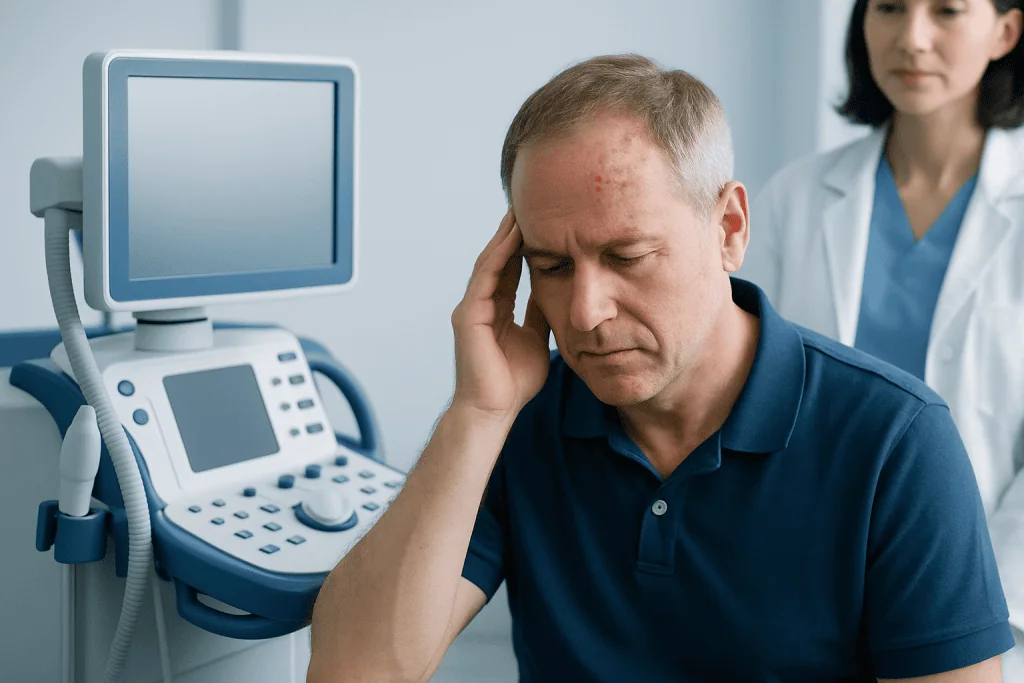
Symptoms often begin before the rash is visible. A person may feel burning, stabbing, or throbbing pain on one side of the scalp. Tingling, sensitivity to touch, itching, headache, or a general unwell feeling can also appear. Some people develop mild fever or fatigue.
After this early phase, a red rash usually appears in the same painful area, followed by groups of blisters. On the scalp, the rash may be partly hidden by hair, so pain can seem stronger than the visible skin changes suggest. The blisters typically dry and crust within 7 to 10 days, while the skin continues to heal over the next few weeks.
Shingles can also involve nearby areas supplied by the same nerve. For that reason, scalp shingles may extend to the forehead, temple, eyelid, or ear. In some cases, swollen lymph nodes, temporary hair shedding in the inflamed area, or changes in skin sensitivity may occur.
- One-sided scalp pain or tenderness
- Burning, tingling, or itching before the rash
- Clusters of blisters that later crust over
- Headache, fatigue, or low-grade fever
- Pain that can persist after the rash heals
Why it happens: causes, triggers, and risk factors

Shingles on scalp is caused by reactivation of the varicella-zoster virus. After someone recovers from chickenpox, the virus does not leave the body completely. Instead, it stays inactive in nerve tissue and can reactivate later, traveling along a nerve to the skin where it causes pain and rash.
The exact reason for reactivation is not always clear, but age-related changes in immune function play an important role. The risk tends to rise with advancing age and in people whose immune system is weakened by illness, cancer treatment, organ transplantation, or immune-suppressing medicines. Physical stress or other illnesses may also be contributing factors in some people, although shingles can occur without an obvious trigger.
It is important to know that a person with shingles does not “catch” shingles from someone else. However, the fluid from shingles blisters can spread varicella-zoster virus to someone who has never had chickenpox or has not been vaccinated, causing chickenpox rather than shingles. Keeping the rash covered when possible and avoiding direct contact with vulnerable individuals helps reduce this risk.
Diagnosis and possible complications
Doctors usually diagnose shingles on scalp by listening to the symptom history and examining the skin. The combination of one-sided nerve pain and a blistering rash is often characteristic. If the rash is hard to see because of hair, or if the skin changes are atypical, the doctor may part the hair carefully and inspect the scalp in detail. In uncertain cases, a sample from a blister may be tested to confirm the virus.
One of the main complications is postherpetic neuralgia, a form of nerve pain that continues after the rash has healed. This pain may feel burning, stabbing, or extremely sensitive to touch and can last for weeks or longer. Older adults are at higher risk, which is one reason prompt treatment matters. More general information about this condition can be found in postherpetic neuralgia.
Complications depend partly on which nerves are affected. If shingles reaches the eye region, it may threaten eye health and vision. If it affects the ear and facial nerve, symptoms such as ear pain, hearing changes, dizziness, or facial weakness can occur. Bacterial skin infection is another possible complication if blisters are scratched or become secondarily infected.
Treatment options and symptom relief
Treatment is most effective when started early, ideally within the first 72 hours after the rash appears, though treatment may still help later in selected cases. Antiviral medicines are commonly used to shorten the course of the infection and may lower the risk of complications. These treatments should be prescribed by a qualified doctor after an individual assessment.
Pain control is also an important part of care. Depending on symptom severity, a doctor may recommend pain-relieving medicines, soothing skin care, and strategies to reduce scalp irritation. If pain becomes ongoing or severe, evaluation by specialists may be helpful. For broader information on pain management, patients may discuss options with their care team.
Skin care should be gentle. The scalp should be kept clean and dry, but scrubbing, harsh shampoos, and picking at blisters should be avoided. Cool compresses may help some people feel more comfortable. If sleep is affected because the scalp is very tender, using a soft pillowcase and avoiding pressure on the affected side may reduce discomfort.
When shingles involves the face, ear, or eye area, treatment may need to be more coordinated. In some cases, clinicians may involve specialists in neurology, dermatology, ENT, or eye care depending on the affected nerves and symptoms. If facial nerve symptoms suggest a related disorder such as Ramsay Hunt syndrome, more targeted assessment is important.
Self-care, prevention, and reducing spread
Self-care during recovery focuses on comfort and protecting the skin. Loose-fitting head coverings, if any are used, are often more comfortable than tight hats or scarves. Hair coloring, strong styling products, and close shaving of the scalp should be postponed until the skin has healed. Good hydration, rest, and balanced meals support overall recovery, though they do not replace medical treatment.
To reduce the chance of spreading varicella-zoster virus, direct contact with blister fluid should be avoided. Hands should be washed after touching the affected area, and personal items such as towels, pillowcases, or hairbrushes should not be shared until healing is complete. Contact should be limited with pregnant people who are not immune to chickenpox, newborns, and immunocompromised individuals.
The most effective preventive step for many adults is vaccination against shingles, according to national age and risk-based recommendations. Vaccination does not treat an active outbreak, but it can lower the risk of future episodes and complications. A doctor can advise whether vaccination is appropriate after recovery and when it should be given.
When to seek medical care
Medical care should be sought promptly if shingles on scalp is suspected, because early treatment can make a meaningful difference. A new one-sided painful scalp rash, especially with burning or tingling, is a good reason to contact a doctor quickly. This is particularly important for older adults and anyone with a weakened immune system.
Urgent assessment is needed if symptoms involve the eye or vision, such as a rash on the forehead or eyelid, eye redness, light sensitivity, or blurred vision. Immediate medical attention is also important for facial weakness, severe ear pain, new hearing changes, confusion, widespread rash, high fever, or rapidly worsening symptoms.
If pain continues after the skin looks healed, follow-up is still worthwhile because ongoing nerve pain can often be managed. In multidisciplinary centers, specialists may coordinate care when shingles affects the skin, nerves, ear, or eyes. Acibadem International’s multidisciplinary specialists and JCI-accredited hospitals diagnose and treat shingles-related conditions for international patients, with access to services such as neurology and dermatology when clinically needed.
Frequently asked questions
Can shingles occur only on the scalp?
Yes. Shingles can be limited mainly to the scalp if the affected nerve supplies that area. It may also extend to the forehead, ear, or face on the same side.
Is shingles on scalp contagious?
Shingles itself is not passed from person to person. However, the virus in the blisters can cause chickenpox in someone who has never had chickenpox or has not been vaccinated, so direct contact with the rash should be avoided.
How is scalp shingles different from dandruff or a simple rash?
Scalp shingles usually causes pain, burning, tingling, or marked tenderness before and during the rash. It is also typically one-sided and forms grouped blisters that crust over, which is different from common dandruff or many routine scalp irritations.
Can shingles on scalp cause hair loss?
Temporary hair shedding can happen in the inflamed area, especially if the rash is severe or the skin is irritated. Hair often regrows, but persistent scarring changes are more likely if there is deep inflammation or secondary infection.
What happens if the pain stays after the rash is gone?
Persistent pain after the rash heals may be postherpetic neuralgia, a known complication of shingles. A doctor can assess the symptoms and recommend ways to manage nerve pain and improve daily comfort.
Should a person wash their hair during a shingles outbreak on the scalp?
Hair can usually be washed gently unless a doctor advises otherwise. Mild products, lukewarm water, and avoiding scrubbing or scratching are generally the safest approach while the skin is healing.
References
- Centers for Disease Control and Prevention
- National Institute of Neurological Disorders and Stroke
- American Academy of Dermatology
- Mayo Clinic
- World Health Organization
This article is for general information only and is not a substitute for professional medical advice. Please consult a qualified doctor about your individual situation.
Shingles in Turkey — costs, top hospitals & a free quote
JCI-accredited · board-certified surgeons · reply within 24h