Forearm Tendonitis: Symptoms, Causes, and Treatment Options

Forearm tendonitis commonly develops from repetitive wrist, hand, or gripping movements. Typical symptoms include aching, tenderness, pain with use, and sometimes mild swelling or weakness.
Key Takeaways
- Forearm tendonitis commonly develops from repetitive wrist, hand, or gripping movements.
- Typical symptoms include aching, tenderness, pain with use, and sometimes mild swelling or weakness.
- Most cases improve with rest, activity modification, and physical therapy-based exercises.
- Persistent pain, numbness, marked weakness, or symptoms after an injury should be assessed by a doctor.
- Early treatment can help prevent long-lasting irritation and support a safer return to work, sports, and daily tasks.
Forearm tendonitis is irritation or inflammation of the tendons that move the wrist, hand, or fingers. It usually causes pain during gripping, lifting, typing, sports, or repetitive work, and treatment often includes activity changes, pain relief, and guided rehabilitation.
Overview
Forearm tendonitis is a broad term for irritation or inflammation in the tendons of the forearm. These tendons connect the forearm muscles to the wrist, hand, and fingers, helping with gripping, lifting, typing, twisting, and many fine hand movements. When they are overloaded or repeatedly strained, they can become painful and less able to tolerate normal activity.
People often describe forearm tendonitis as an aching or burning pain along the inner or outer forearm, especially during repeated hand use. The discomfort may begin gradually rather than after one clear injury. In many cases, symptoms are linked to sports, manual work, computer use, or hobbies that require frequent wrist and finger motion.
Although the term “tendonitis” suggests inflammation, some long-standing tendon problems involve more tendon wear and failed healing than active inflammation. This matters because treatment usually focuses not only on short-term pain relief, but also on reducing overload and restoring tendon strength. Related conditions can overlap with elbow tendon problems such as tennis elbow.
Symptoms and how it feels
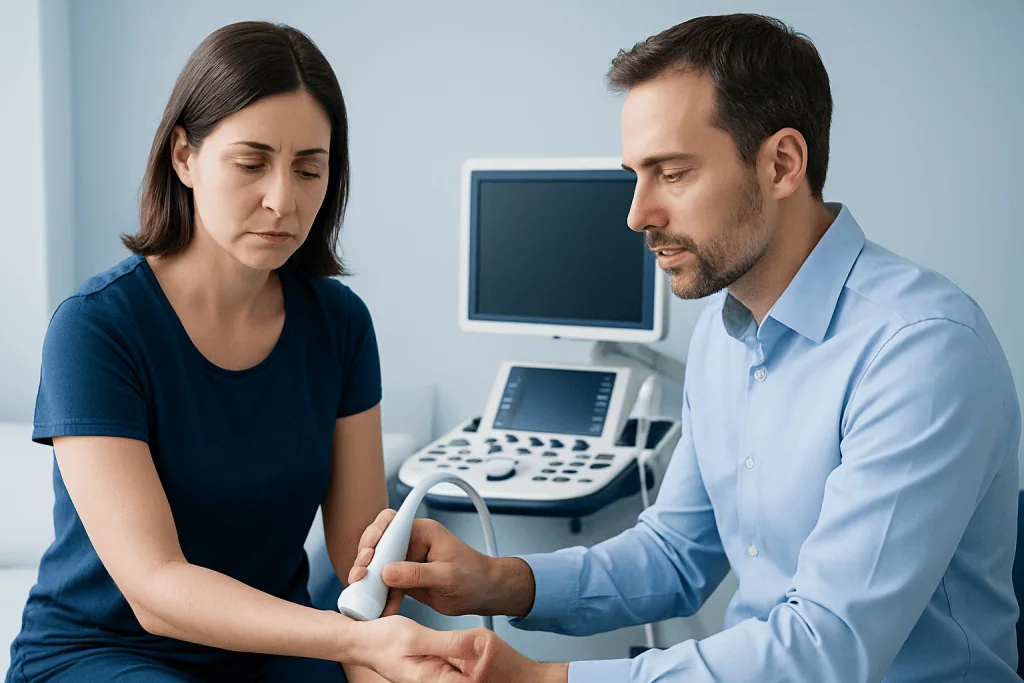
Forearm tendonitis can feel different depending on which tendon group is involved. Pain may be felt on the palm side or back of the forearm, near the wrist, or closer to the elbow. The discomfort often becomes more noticeable during gripping, carrying bags, opening jars, using tools, typing, racquet sports, climbing, rowing, or weight training.
Common symptoms include:
- Aching, soreness, or burning in the forearm
- Tenderness when pressing on the affected area
- Pain that worsens with wrist bending, twisting, or finger movement
- Weak grip or a sense of fatigue in the hand and forearm
- Mild swelling or stiffness, especially after repeated activity
- Discomfort that improves with rest but returns with use
Some people also notice morning stiffness or pain that appears later in the day after repeated tasks. A tendon problem usually causes movement-related pain rather than constant pain at rest. If symptoms include numbness, tingling, neck pain, or pain radiating into the fingers, another cause such as nerve compression may need to be considered.
Why forearm tendonitis happens

The most common cause of forearm tendonitis is repetitive load that exceeds what the tendon can comfortably handle. This may happen at work, during sports, or through a sudden increase in exercise intensity. Repeated gripping, wrist extension, wrist flexion, forearm rotation, and lifting can all strain the tendon over time.
Risk factors include poor movement technique, weak forearm or shoulder muscles, inadequate recovery between activities, and using tools or equipment that place the wrist in an awkward position. Office-based repetitive strain can also contribute, especially if the workstation setup encourages sustained tension in the hand, wrist, and forearm.
Less often, symptoms develop after a direct strain, a forceful pull, or compensation for another problem in the arm or neck. Conditions such as arthritis, diabetes, or inflammatory disorders may affect tendon health in some people. Tendon pain around the forearm may also be linked to nearby structures, including the wrist or elbow, so a careful assessment is important when symptoms do not improve.
Diagnosis and what doctors look for
Diagnosis usually begins with a medical history and physical examination. A doctor will ask when the pain started, which movements trigger it, whether there was a recent change in activity, and whether there are symptoms like numbness, swelling, or weakness. They will also examine the forearm, elbow, wrist, and hand to identify tender areas and test movement against resistance.
In many cases, forearm tendonitis can be diagnosed clinically without extensive testing. The goal is also to rule out other causes of forearm pain, such as muscle strain, stress injury, arthritis, tendon tear, nerve compression, or referred pain from the neck. Sometimes the pattern overlaps with conditions involving the wrist or elbow, including carpal tunnel syndrome.
Imaging may be recommended if symptoms are severe, do not improve, or the diagnosis is uncertain. Ultrasound can help assess tendon thickening or tearing, while MRI may be used in selected cases to evaluate soft tissues in more detail. If numbness or persistent weakness is present, nerve testing may sometimes be considered.
Treatment options
Treatment for forearm tendonitis usually starts with reducing the load that triggered the pain. This does not always mean complete rest, but rather changing or temporarily limiting painful activities so the tendon has time to recover. Ice, simple pain-relieving measures, and short-term use of a brace or support may be helpful for some people, especially during flare-ups.
A structured rehabilitation plan is often the most important part of recovery. Gentle range-of-motion work is usually followed by progressive strengthening of the wrist, forearm, hand, and sometimes the shoulder. Physical therapy can help correct technique, improve posture and movement patterns, and guide a safe return to activity. In some cases, evaluation by specialists in physical therapy and rehabilitation is useful to tailor exercises and reduce re-injury risk.
If symptoms continue despite conservative care, a doctor may consider other options based on the cause and severity. These can include more targeted rehabilitation, temporary immobilization, or evaluation by orthopedics and traumatology when a tendon tear or another structural problem is suspected. Imaging through MRI or ultrasound may help guide decisions in persistent cases.
Self-care, recovery, and prevention
Recovery is usually gradual. Many people feel better once they reduce aggravating tasks and start a guided strengthening program, but returning too quickly to full activity may cause symptoms to flare again. Tendons generally respond well to steady, progressive loading rather than long periods of complete inactivity.
Helpful self-care strategies include:
- Taking short breaks during repetitive tasks
- Adjusting workstation height, keyboard position, or tool grip
- Warming up before sports or exercise
- Increasing training intensity slowly instead of suddenly
- Using proper lifting and gripping technique
- Following home exercises as advised by a clinician
Prevention focuses on balancing activity and recovery. Strengthening the forearm, hand, shoulder, and upper back may reduce strain on the wrist and elbow during repeated tasks. People who perform the same motions every day often benefit from ergonomic changes, better pacing, and early attention to mild warning signs rather than pushing through pain.
When to seek medical care
Medical advice is appropriate if forearm pain lasts more than a few weeks, keeps returning, or interferes with work, sleep, exercise, or daily tasks. A doctor should also assess symptoms that began after a fall, sudden pull, or sports injury, since these may indicate a more significant tendon or muscle injury.
Prompt evaluation is especially important if there is visible deformity, marked swelling, significant bruising, loss of grip strength, or inability to move the wrist or fingers normally. Numbness, tingling, hand clumsiness, fever, or pain that spreads from the neck or shoulder may point to another condition that needs different treatment.
For international patients needing assessment, Acibadem International’s multidisciplinary specialists in JCI-accredited hospitals evaluate musculoskeletal conditions and plan treatment based on the underlying cause. This can be helpful when symptoms are persistent, activity-limiting, or difficult to distinguish from other arm, wrist, or elbow problems.
Frequently asked questions
How long does forearm tendonitis take to heal?
Recovery time varies depending on how irritated the tendon is and whether the aggravating activity can be modified. Mild cases may improve within a few weeks, while longer-standing symptoms can take several weeks to months. A gradual rehabilitation plan often helps recovery more than rest alone.
Is forearm tendonitis the same as a muscle strain?
No. A muscle strain affects muscle fibers, often after a more sudden overload, while tendonitis involves the tendon that connects muscle to bone. The two can feel similar, so an examination may be needed if pain is severe or does not improve.
Can typing cause forearm tendonitis?
Yes, repeated typing, mouse use, and poor workstation setup can contribute in some people, especially when combined with other repetitive tasks. The risk may be higher if the wrist stays tense or bent for long periods. Breaks, ergonomic adjustments, and strengthening exercises can help reduce strain.
Should exercise be avoided completely?
Not usually. Painful or high-load activities often need to be reduced temporarily, but complete inactivity is not always helpful for tendon recovery. A doctor or physical therapist can suggest safer movements and a gradual return-to-activity plan.
What is the difference between forearm tendonitis and tennis elbow?
Tennis elbow is a specific tendon problem that usually affects the tendons on the outer side of the elbow. Forearm tendonitis is a broader term that can involve different tendons along the forearm, wrist, or near the elbow. Because symptoms can overlap, the exact location of pain helps guide diagnosis.
When should forearm pain be checked urgently?
Urgent medical assessment is important after a significant injury or if there is sudden weakness, major swelling, bruising, deformity, or inability to move the hand or wrist. Numbness, tingling, fever, or severe pain at rest also deserve prompt evaluation. These features may suggest a condition other than simple tendon irritation.
References
- American Academy of Orthopaedic Surgeons
- National Institute of Arthritis and Musculoskeletal and Skin Diseases
- American Society for Surgery of the Hand
- National Health Service
- Mayo Clinic
This article is for general information only and is not a substitute for professional medical advice. Please consult a qualified doctor about your individual situation.
Joint and spine care in Turkey — expert assessment & treatment
JCI-accredited · board-certified surgeons · reply within 24h