Post Labour Pads: What Patients Need to Know

Post labour pads are made for postpartum bleeding, which is usually heavier than a regular period in the first days after birth. They are typically larger, softer, and more absorbent than standard sanitary pads.
Key Takeaways
- Post labour pads are made for postpartum bleeding, which is usually heavier than a regular period in the first days after birth.
- They are typically larger, softer, and more absorbent than standard sanitary pads.
- Postpartum bleeding, called lochia, usually changes from bright red to pink or brown and then lighter discharge over several weeks.
- Pads should be changed regularly to support hygiene, comfort, and healing.
- Very heavy bleeding, large clots, fever, or a bad odor should be assessed by a doctor promptly.
Post labour pads are large, soft, highly absorbent pads designed for the heavy bleeding that commonly happens after childbirth. They help protect healing tissues, support comfort, and make it easier to monitor what is normal during postpartum recovery.
Overview: what post labour pads are and why they matter
Post labour pads are specially designed absorbent pads used after vaginal birth or cesarean birth to manage postpartum bleeding. In the first days after delivery, bleeding is often heavier than a normal menstrual period, so regular period pads may not provide enough protection or comfort. These pads are usually longer, thicker, and softer to suit the needs of the body during early recovery.
After childbirth, the uterus sheds blood, mucus, and tissue as it returns to its pre-pregnancy state. This discharge is called lochia. Post labour pads help collect lochia while reducing friction against tender tissues, stitches, swelling, or a healing incision area. They also make it easier to notice changes in the amount, color, and smell of bleeding, which can be clinically useful.
Choosing the right pad is not only about convenience. It is also about protecting healing skin, avoiding unnecessary irritation, and recognizing signs that recovery is progressing normally. For many patients, post labour pads are one of the most important supplies for the first days and weeks after giving birth.
What postpartum bleeding is like
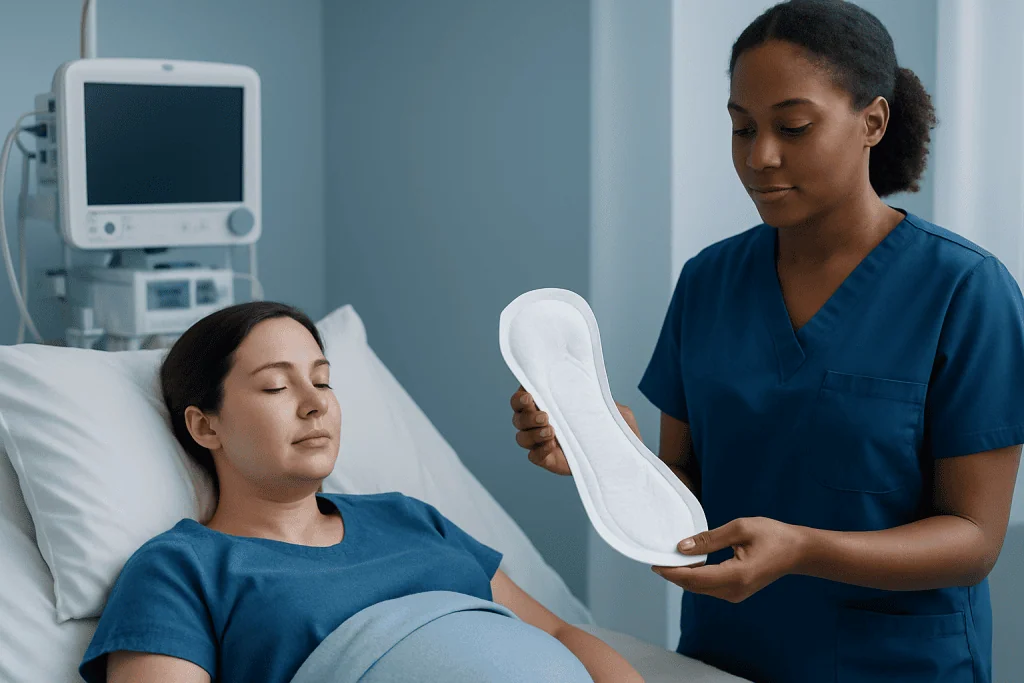
Postpartum bleeding is a normal part of recovery after birth. It begins as lochia rubra, which is usually bright red and heaviest in the first few days. Over time, it often becomes lighter in flow and changes color to pink or brown, then to a pale yellow or creamy discharge before it stops. This process can continue for several weeks.
The amount of bleeding varies from person to person. It may be heavier after standing up, breastfeeding, or increased activity, because the uterus contracts and pooled blood may be released. Small clots can occur, especially in the early days, but the bleeding should gradually lessen rather than become steadily heavier.
Because this pattern changes over time, many people move from very absorbent maternity pads to thinner pads later in recovery. Using pads rather than tampons or menstrual cups in the early postpartum period is generally advised, since internal products may increase irritation and are not usually recommended until a doctor says healing is adequate.
How post labour pads differ from regular pads
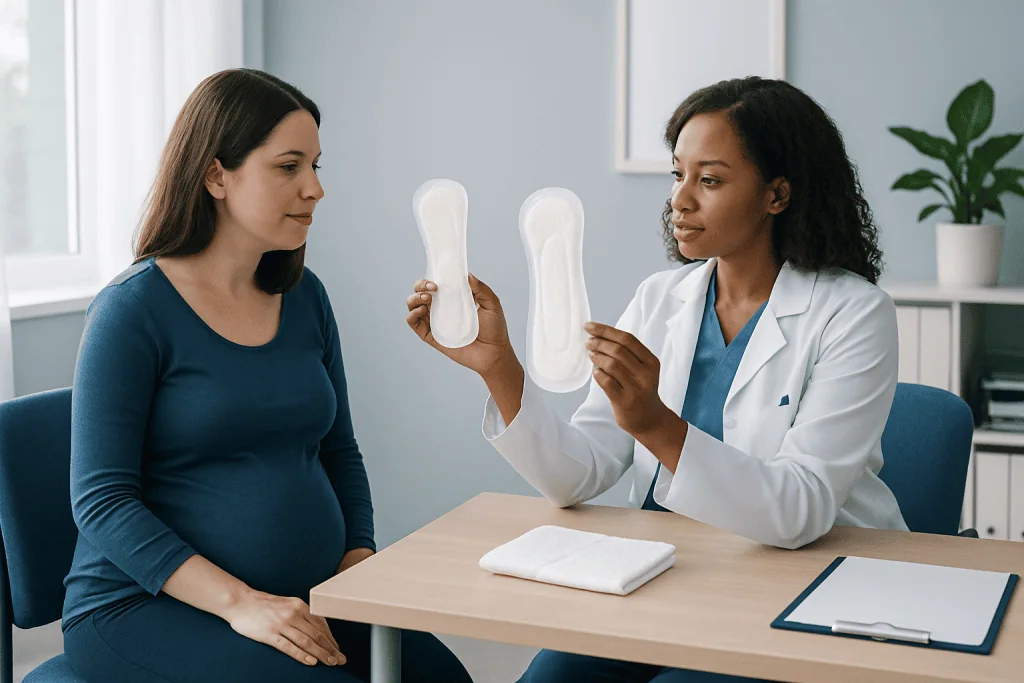
Post labour pads are designed for a different purpose than ordinary menstrual pads. They tend to be wider at the back, longer overall, and more absorbent, which helps prevent leaks during lying down, resting, or moving around with a newborn. Many are made without heavy fragrance and with softer materials to reduce discomfort around sensitive skin.
For patients recovering from a vaginal birth, especially if there is tearing, swelling, or stitches, softness can matter as much as absorbency. For patients recovering after a cesarean birth, a pad that sits comfortably below or away from the incision line may feel better. The right fit may depend on underwear style, body shape, mobility, and the amount of bleeding.
Some products are marketed as maternity pads, while others are described as postpartum or postnatal pads. In practical terms, the most helpful features include:
- High absorbency for the first days after delivery
- A soft, breathable surface
- Good length and width for overnight use
- Secure fit without excessive rubbing
- Unscented materials to reduce irritation
Disposable options are most common, but some patients later switch to washable reusable pads once bleeding becomes lighter. The best choice is the one that keeps the patient comfortable, dry, and able to monitor bleeding clearly.
How to use them safely and comfortably
Good postpartum pad use is simple but important. Pads should be changed regularly, even if they are not completely soaked, to help keep the area clean and reduce moisture against healing tissue. Handwashing before and after changing a pad is a sensible routine, especially in the first days after birth.
Frequent changing can also help a patient notice whether bleeding is becoming lighter as expected or whether it is suddenly increasing. During the hospital stay, clinicians often ask about pad saturation because it helps them assess recovery. At home, many patients find it useful to note if a pad is filling unusually fast, especially when combined with dizziness, weakness, or increasing pain.
Comfort measures can also help. Breathable underwear, gentle cleansing with warm water, and careful drying of the area may reduce irritation. If there is perineal soreness, some people also use cooling pads or doctor-recommended postpartum care products. Recovery needs vary, and patients with tears, episiotomy, or pelvic floor discomfort may benefit from tailored aftercare and physical therapy and rehabilitation when advised by their clinician.
What is normal, and what may need attention
In most cases, postpartum bleeding follows a gradual pattern of improvement. Heavy bleeding in the first days can be normal, but the overall trend should move toward lighter flow. A temporary increase may happen after activity, but persistent heavy bleeding is not expected and should be discussed with a doctor.
Warning signs include soaking through pads very quickly, passing large clots repeatedly, feeling faint, developing fever, or noticing a foul smell from the discharge. Severe or worsening abdominal pain also deserves medical assessment. These symptoms can suggest complications such as infection or postpartum hemorrhage, which require prompt care.
Some postpartum concerns can overlap. Ongoing pelvic pain, heavy bleeding that does not settle, or symptoms suggesting a retained placental fragment may need examination and imaging. If recovery is more difficult than expected, doctors may evaluate for infection, healing problems, or related gynecologic conditions. In selected cases, gynecology care may be helpful for a full postpartum assessment.
Practical tips for choosing the right post labour pads
Many patients benefit from planning in stages. For the first few days, very absorbent maternity pads are usually most useful. As the bleeding becomes lighter, medium-absorbency and then regular pads may be enough. Buying a small range rather than one single type can make the transition easier.
Comfort should guide the choice. Unscented pads are often preferred, since fragrance can irritate sensitive postpartum skin. A smooth top layer may feel gentler if there are stitches or swelling. Some patients like pads with wings for security, while others prefer simpler styles that are easier to adjust.
It can also help to prepare for recovery before delivery by packing a few supplies in a hospital bag and setting up extras at home. Useful postpartum items may include:
- High-absorbency post labour pads
- Several pairs of comfortable, supportive underwear
- Gentle cleansing supplies
- A change of lighter pads for later recovery
- A simple way to track symptoms or questions for follow-up visits
Patients with heavy bleeding disorders, fibroids, or prior postpartum complications may be advised to watch symptoms more closely. If there is a history of anemia or abnormal uterine bleeding, clinicians may also discuss broader evaluation, including conditions such as uterine fibroids when relevant to the patient’s history.
When to seek medical care
Medical advice should be sought promptly if postpartum bleeding is very heavy, suddenly increases, or is accompanied by weakness, shortness of breath, chest pain, severe headache, or fainting. Patients should also contact a doctor if they develop fever, chills, worsening pelvic pain, or discharge with a strong unpleasant odor. These symptoms are not always serious, but they should not be ignored.
Urgent assessment is especially important if a pad becomes soaked in a short time or if large clots are passed repeatedly. New calf pain, one-sided leg swelling, or breathing symptoms after birth also need urgent care because postpartum recovery can carry risks beyond vaginal bleeding alone.
Routine follow-up remains important even when recovery seems normal. A postpartum visit gives patients the chance to discuss bleeding, pain, pelvic floor symptoms, mood changes, feeding challenges, and contraception. Near the end of recovery planning, some international patients may also seek coordinated postpartum evaluation through Acibadem International, where multidisciplinary specialists in JCI-accredited hospitals care for a range of women’s health needs.
Frequently asked questions
How long are post labour pads usually needed?
Many patients need high-absorbency post labour pads for the first several days after birth, when bleeding is heaviest. After that, they often switch to lighter pads as lochia decreases over the following weeks.
Are post labour pads necessary after a cesarean birth?
Yes. Even after a cesarean birth, postpartum bleeding still occurs because the uterus sheds blood and tissue as it heals. The amount may vary, but pads are still commonly needed.
Can tampons or menstrual cups be used instead of post labour pads?
They are usually not recommended in the early postpartum period unless a doctor specifically says they are safe. Internal products can irritate healing tissues and may increase infection risk while recovery is still underway.
What kind of pad is best after giving birth?
A good postpartum pad is highly absorbent, soft, breathable, and unscented. The best choice also depends on the amount of bleeding, the patient's comfort, and whether there is soreness, stitches, or a healing incision.
Is it normal for bleeding to become heavier at times?
A temporary increase can happen after activity, standing up, or breastfeeding. However, the overall pattern should gradually improve, so persistent heavy bleeding or soaking pads quickly should be assessed by a doctor.
When should someone worry about postpartum bleeding?
Medical care is important if there is very heavy bleeding, repeated large clots, fever, foul-smelling discharge, severe pain, or symptoms such as dizziness or fainting. These may point to a complication that needs prompt evaluation.
References
- American College of Obstetricians and Gynecologists
- World Health Organization
- National Health Service
- Centers for Disease Control and Prevention
This article is for general information only and is not a substitute for professional medical advice. Please consult a qualified doctor about your individual situation.
Explore treatments in Turkey — costs, top hospitals & a free quote
JCI-accredited · board-certified surgeons · reply within 24h