Baroreceptors: An Evidence-Based Guide for Patients

Baroreceptors are stretch-sensitive nerve endings located mainly in the carotid sinus and aortic arch. They help the body respond quickly to changes in blood pressure by signaling the brainstem.
Key Takeaways
- Baroreceptors are stretch-sensitive nerve endings located mainly in the carotid sinus and aortic arch.
- They help the body respond quickly to changes in blood pressure by signaling the brainstem.
- A healthy baroreceptor reflex supports stable blood flow to the brain, especially when changing position.
- Problems with this reflex can contribute to dizziness, fainting, unstable blood pressure, or poor adaptation to standing.
- Baroreceptors do not work alone; they interact with the heart, blood vessels, kidneys, and autonomic nervous system.
Baroreceptors are specialized pressure sensors that help the body keep blood pressure within a safe range from moment to moment. They work through a fast feedback system called the baroreceptor reflex, which adjusts heart rate and blood vessel tone when a person stands, exercises, rests, or experiences stress.
Overview: what baroreceptors are
Baroreceptors are tiny pressure-sensing nerve endings that detect stretch in the walls of certain large blood vessels. In simple terms, they help the body notice whether blood pressure is rising or falling and trigger a rapid response to keep circulation steady. This is especially important for maintaining blood flow to the brain when a person stands up, bends over, exercises, or becomes stressed.
The best-known baroreceptors are found in the carotid sinus, located in the neck near the carotid arteries, and in the aortic arch, the large artery leaving the heart. When these sensors are stretched more, they send stronger signals to the brainstem. When stretch decreases, their signals become weaker. The brain then adjusts heart rate, the force of heart pumping, and the tightness of blood vessels.
This fast control system is called the baroreceptor reflex, or baroreflex. It acts within seconds and is one of the body’s main short-term defenses against sudden blood pressure changes. Although the term may sound highly specialized, the underlying idea is straightforward: baroreceptors help the body continuously balance pressure so organs receive the blood they need.
How the baroreceptor reflex works
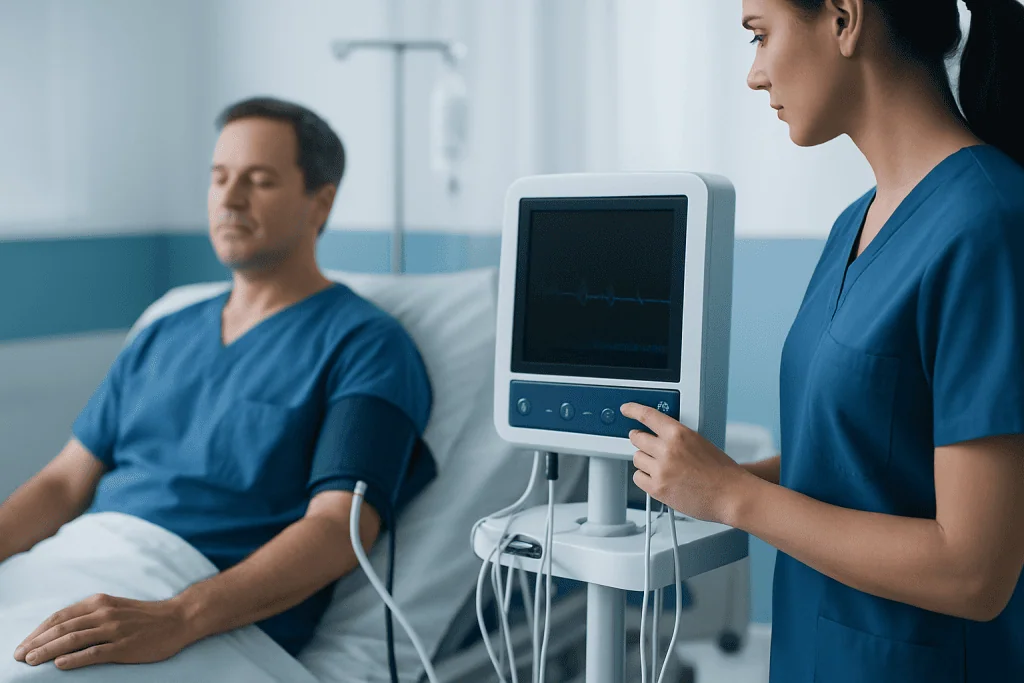
When blood pressure rises, the artery walls stretch more. Baroreceptors sense that stretch and send signals through nerves to the brainstem, particularly areas that regulate the autonomic nervous system. In response, the body usually slows the heart rate and relaxes some blood vessels. These changes help bring blood pressure back down toward its usual range.
When blood pressure falls, the opposite pattern occurs. Baroreceptor signaling decreases, and the brain responds by increasing sympathetic nervous system activity and reducing parasympathetic activity. This can make the heart beat faster and cause blood vessels to narrow, helping raise blood pressure and maintain blood flow to vital organs.
This reflex is most important for short-term control, not long-term blood pressure management by itself. Longer-term regulation also depends on the kidneys, hormones, salt and water balance, and overall cardiovascular health. Even so, without a properly functioning baroreflex, routine activities such as standing up from a chair could lead to lightheadedness or fainting.
Baroreceptors are also part of the reason blood pressure and heart rate constantly adapt during sleep, pain, emotional stress, exercise, and recovery. Their work is automatic. A person does not consciously activate them, yet they are active throughout the day and night.
Where baroreceptors are located and why location matters

The two principal baroreceptor sites are the carotid sinus and the aortic arch. The carotid sinus sits at a widening near the split of the carotid artery in the neck. Because these arteries supply the brain, pressure sensing here is especially useful for protecting steady cerebral blood flow. The aortic arch, close to the heart, helps monitor pressure as blood leaves the heart for the rest of the body.
These locations are not random. They allow the body to measure pressure at major central points in the circulation. From there, sensory information travels to the brain through specific nerves. Signals from the carotid sinus travel mainly through the glossopharyngeal nerve, while signals from the aortic arch travel mainly through the vagus nerve.
Doctors may refer to carotid sinus sensitivity in certain clinical settings, especially when evaluating unexplained fainting. This is one reason anatomy matters in medicine: where a sensor sits influences what it detects, how quickly it can respond, and how clinicians assess related symptoms.
Baroreceptors should also be distinguished from chemoreceptors, which detect changes such as oxygen, carbon dioxide, and blood acidity. Both systems help regulate circulation, but they respond to different types of information.
Why baroreceptors matter in daily life and symptoms that may suggest a problem
Most people never notice their baroreceptors working, but they rely on them constantly. A healthy baroreflex helps prevent significant blood pressure drops when standing and helps limit excessive spikes during stress or exertion. It contributes to stable balance, clearer thinking, and adequate blood flow to the brain.
When this system is less effective, symptoms may appear during position changes or periods of physical strain. Possible symptoms can include dizziness, lightheadedness, blurred vision, weakness, palpitations, near-fainting, or fainting. Some people may feel unusually unsteady when getting out of bed or standing after sitting for a long time.
These symptoms do not always mean there is a baroreceptor disorder. They can also occur with dehydration, medication effects, anemia, heart rhythm problems, nerve disorders, or conditions such as arrhythmia or hypertension. Still, the baroreflex is often part of the evaluation when blood pressure seems unstable or symptoms are linked to posture.
- Common situations that challenge the baroreflex include standing up quickly, prolonged bed rest, heavy exertion, illness with fluid loss, and emotional stress.
- Older adults may be more likely to have reduced reflex sensitivity.
- Certain neurologic or autonomic disorders can impair normal reflex function.
Causes of impaired baroreceptor function and related risk factors
Baroreceptor function can be affected at several levels: the sensors themselves, the nerves carrying signals, the brain centers processing the information, or the heart and blood vessels carrying out the response. For example, stiffened arteries may reduce how well vessel walls stretch, making pressure changes harder to detect. This is one reason aging and vascular disease can reduce baroreflex sensitivity.
Medication effects are also important. Blood pressure medicines, diuretics, sedatives, and some drugs that affect the nervous system may contribute to dizziness or low blood pressure in some people. Dehydration, blood loss, prolonged immobility, diabetes-related nerve damage, and some neurodegenerative conditions can also interfere with normal automatic blood pressure control.
In some patients, surgery or radiation involving the neck can affect structures near the carotid sinus. Rarely, injury to the pathways involved in blood pressure regulation may contribute to severe instability. On the other hand, increased carotid sinus sensitivity can sometimes be associated with episodes of fainting in older adults.
Because this system overlaps with cardiovascular and neurologic health, assessment may involve specialists in both areas. If symptoms suggest a broader problem with circulation or the autonomic nervous system, clinicians may also evaluate for conditions such as heart failure or other causes of reduced blood flow tolerance.
How doctors evaluate baroreceptor-related symptoms
There is no single routine test used for every patient who asks about baroreceptors. Instead, doctors usually begin with a careful history and physical examination. They ask when symptoms occur, whether they are linked to standing, stress, meals, heat, or exertion, and whether there is fainting, chest discomfort, shortness of breath, or medication use.
Blood pressure and pulse are often measured while lying down, sitting, and standing. This can help identify orthostatic hypotension, a drop in blood pressure after standing. Depending on the situation, clinicians may also order heart rhythm testing, blood tests, echocardiography, or autonomic function testing. In selected patients with unexplained fainting, tilt table testing may help assess how blood pressure and heart rate respond to positional stress.
Doctors are careful not to assume every episode of dizziness is due to baroreflex dysfunction. Evaluation may need to rule out heart rhythm disorders, structural heart disease, dehydration, medication side effects, inner ear problems, or neurologic conditions. In some patients, cardiology evaluation or neurology assessment can help clarify the cause.
If symptoms are severe, recurrent, or unexplained, specialist testing may be recommended to understand whether the issue lies mainly in autonomic signaling, blood vessel response, or heart function. The goal is to find the underlying cause and guide treatment safely.
Treatment, prevention, and self-care
Treatment does not target baroreceptors in isolation in most cases. Instead, care focuses on the reason the reflex seems impaired or overwhelmed. This may include adjusting medications, treating dehydration, improving blood pressure control, addressing heart rhythm problems, or managing an underlying neurologic condition. Some patients benefit from a broader check-up and screening approach when symptoms have multiple contributing factors.
Self-care can be helpful, especially for people who feel dizzy on standing. Useful measures may include rising slowly from bed or a chair, staying adequately hydrated if a doctor agrees, avoiding prolonged standing in hot environments, and discussing medication timing with a clinician. Compression garments or tailored activity advice may be recommended in some situations, but these should be individualized.
Prevention focuses on supporting overall cardiovascular and autonomic health. Regular physical activity, enough fluid intake, good sleep, and careful management of chronic conditions such as diabetes or high blood pressure can reduce strain on the body’s pressure-control systems. People should not stop or change prescribed medicines on their own, even if they suspect the medicine affects blood pressure.
For international patients who need further evaluation, Acibadem International’s multidisciplinary specialists in JCI-accredited hospitals diagnose and treat conditions affecting blood pressure regulation, heart rhythm, and neurologic function in a coordinated way.
When to seek medical care
Medical review is appropriate if dizziness, fainting, repeated near-fainting, or marked lightheadedness occurs, especially during standing or walking. A doctor should also assess symptoms that are new, worsening, or interfering with daily life. Even when baroreflex problems are suspected, other causes may need prompt attention.
Urgent care is important if symptoms occur with chest pain, shortness of breath, severe headache, confusion, weakness on one side, trouble speaking, or injury after fainting. These features may point to a more serious heart, circulation, or neurologic problem and should not be ignored.
People with known high blood pressure, heart disease, diabetes, autonomic disorders, or a history of falls may benefit from earlier assessment. Keeping a brief record of when symptoms happen, blood pressure readings if available, fluid intake, and medication timing can be helpful during the appointment.
Frequently asked questions
What are baroreceptors in simple terms?
Baroreceptors are pressure sensors in the walls of certain major blood vessels. They help the body detect changes in blood pressure and quickly signal the brain to adjust heart rate and blood vessel tightness.
Where are baroreceptors located?
The main baroreceptors are in the carotid sinus in the neck and the aortic arch near the heart. These locations allow the body to monitor central blood pressure efficiently and protect blood flow to vital organs, especially the brain.
Do baroreceptors control blood pressure all the time?
They help regulate blood pressure continuously, especially over the short term. However, long-term blood pressure control also depends on the kidneys, hormones, fluid balance, and overall heart and blood vessel health.
Can problems with baroreceptors cause dizziness?
Yes, reduced baroreflex function can contribute to dizziness or lightheadedness, especially when standing up quickly. Still, many other problems can cause similar symptoms, so a medical evaluation is often needed.
Is baroreceptor dysfunction the same as low blood pressure?
Not exactly. Baroreceptor dysfunction refers to a problem in the pressure-sensing reflex, while low blood pressure is a measurement or state that can have many causes. A person may have low blood pressure for reasons unrelated to the baroreceptors.
How do doctors test whether the baroreflex is working properly?
Doctors usually start with symptom history, medication review, and blood pressure and pulse checks in different positions. Depending on the case, they may recommend heart rhythm monitoring, tilt table testing, or autonomic function testing.
References
- American Heart Association
- National Heart, Lung, and Blood Institute
- National Institute of Neurological Disorders and Stroke
- Merck Manual Consumer Version
This article is for general information only and is not a substitute for professional medical advice. Please consult a qualified doctor about your individual situation.
Heart care in Turkey — expert evaluation and treatment
JCI-accredited · board-certified surgeons · reply within 24h
Check your numbers in seconds
BMI, calories, due date, blood pressure and 30+ more clinical calculators — free, instant, doctor-reviewed ranges.