Bumps on Areola: What Patients Need to Know

Small raised bumps on the areola are often normal Montgomery glands. Pain, redness, discharge, swelling, or rapid change may suggest irritation, infection, or a blocked gland.
Key Takeaways
- Small raised bumps on the areola are often normal Montgomery glands.
- Pain, redness, discharge, swelling, or rapid change may suggest irritation, infection, or a blocked gland.
- A doctor may diagnose the cause through an exam and, if needed, imaging or skin testing.
- Treatment depends on the cause and may range from simple skin care to medicines or minor procedures.
- Any persistent breast or nipple skin change should be checked, especially if only on one side or associated with a lump.
Bumps on areola are commonly harmless and may simply be normal oil-producing glands called Montgomery glands. However, new, painful, inflamed, or changing bumps can also result from irritation, infection, blocked glands, or less commonly an underlying breast or skin condition, so persistent changes should be assessed by a doctor.
Overview: what bumps on areola usually mean
Bumps on areola are a common concern, and in many cases they are not a sign of serious disease. The areola naturally contains small glands called Montgomery glands, which can look like tiny pale, skin-colored, or slightly raised bumps. These glands help lubricate and protect the nipple and surrounding skin.
Even so, not every bump is the same. Bumps may also appear because of friction, blocked pores, eczema, allergic reactions, infections, cysts, or hormonal changes such as puberty, pregnancy, or breastfeeding. Less often, a new or unusual change in the nipple-areola area can be linked to a more significant breast or skin condition.
What matters most is the pattern of the change. A stable bump that has looked the same for a long time is often less concerning than one that is new, painful, crusted, draining fluid, or changing quickly. Careful attention to associated symptoms can help guide when observation is reasonable and when medical review is the safer choice.
Normal vs. abnormal bumps: how to tell the difference
Normal areolar bumps are usually small, evenly scattered, and similar on both breasts. They often feel soft or only slightly firm and do not cause significant pain. These are frequently Montgomery glands, which may become more visible during hormonal shifts, including menstruation, pregnancy, and lactation.
Abnormal bumps are more likely to stand out because they are distinctly new, much larger than surrounding bumps, tender, red, warm, itchy, or filled with fluid or pus. A blocked gland may look like a white or yellow bump, while an inflamed follicle or minor skin infection may resemble a pimple. Skin conditions such as dermatitis can also cause rough, scaly, or irritated patches around the areola rather than a single isolated bump.
People should also pay attention to changes beyond the bump itself. Nipple inversion that is new, spontaneous discharge, persistent rash, skin thickening, or an underlying breast lump deserve medical assessment. In some situations, doctors may evaluate for broader breast concerns, including breast cancer, although most areolar bumps are caused by benign conditions.
Common causes of bumps on areola

Several everyday conditions can lead to bumps on areola. The most common explanation is visible Montgomery glands. These are normal sebaceous glands that protect the area and may appear more prominent during hormonal changes. Blocked pores, ingrown hairs, or friction from bras, sportswear, or rough fabrics can also create small raised spots.
Irritant or allergic contact dermatitis is another common cause. Fragranced soaps, lotions, detergents, adhesive dressings, and certain fabrics can trigger redness, itching, and bump-like skin texture. Eczema and other inflammatory skin conditions may produce dry, flaky, uncomfortable changes that involve the areola and nearby breast skin.
Infections can also occur. Folliculitis, yeast overgrowth, and bacterial skin infections may cause sore or inflamed bumps. During breastfeeding, milk blebs, clogged ducts, and mastitis can affect the nipple-areola region, sometimes along with deeper breast pain or swelling. Doctors may also consider other benign breast conditions, such as mastitis, if symptoms fit the clinical picture.
Less common causes include small cysts, benign growths, and uncommon inflammatory disorders. Rarely, a persistent scaly or irritated change of the nipple-areola area may need evaluation to rule out conditions affecting the breast skin, especially if symptoms do not improve with simple care.
Symptoms that can happen along with areola bumps
The bump itself may be the only symptom, but some people notice additional changes. These can include tenderness, itching, burning, dryness, peeling, redness, swelling, or a feeling of warmth. A blocked gland may feel slightly sore, while an inflamed or infected bump may be more painful and visibly swollen.
There may also be nipple-related symptoms. Some people report a white spot, crusting, discharge, or discomfort during breastfeeding. If a bump is linked to dermatitis or eczema, the skin may become rough, irritated, and sensitive to clothing or skincare products.
Symptoms that deserve more attention include a firm fixed lump under the skin, bloody discharge, nipple shape changes, skin dimpling, persistent one-sided rash, fever, or spreading redness. These do not automatically mean a serious disease is present, but they are reasons to seek medical advice rather than relying on home treatment alone.
- Common mild features: small stable bumps, no pain, no drainage
- Possible irritation: itching, dryness, redness after products or friction
- Possible infection or blockage: pain, swelling, pus, warmth
- More concerning signs: persistent rash, bleeding, lump, skin retraction, fever
How doctors diagnose the cause
Diagnosis usually begins with a medical history and physical examination. A doctor will ask when the bump appeared, whether it changes with the menstrual cycle, whether there is pain or discharge, and whether the person is pregnant or breastfeeding. They may also ask about new products, clothing, shaving, eczema, allergies, or recent skin irritation.
On examination, the doctor looks at the number, size, color, texture, and distribution of the bumps and checks for skin changes elsewhere on the breast. They may also examine for nipple discharge, lymph node swelling, or a deeper breast lump. In many cases, this exam is enough to identify a benign cause.
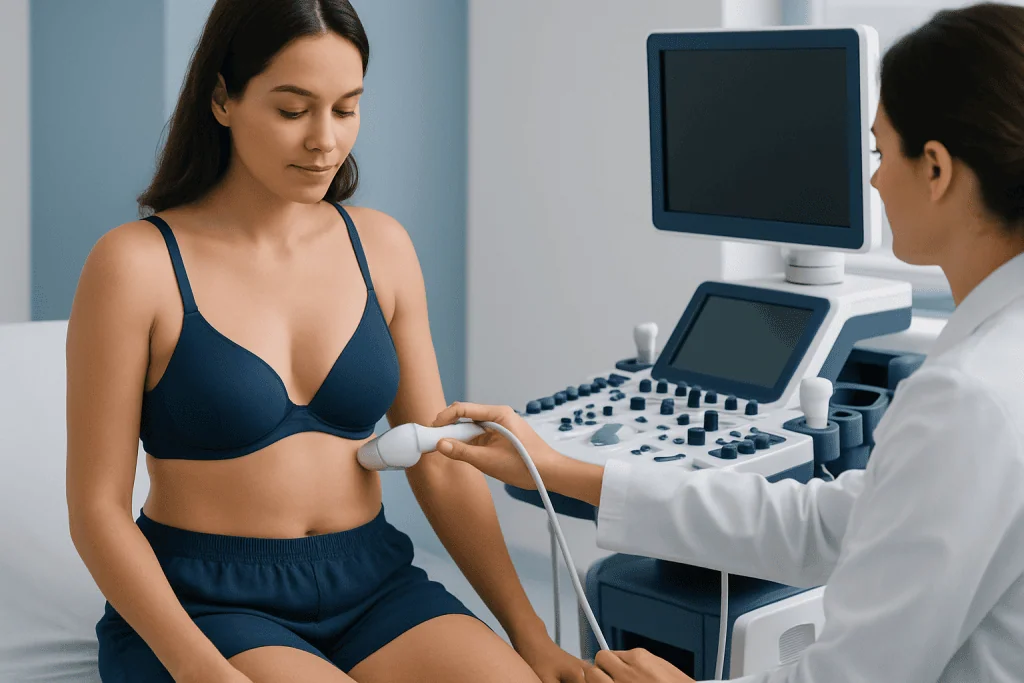
If the cause is unclear, additional testing may be recommended. This can include breast ultrasound, mammography in appropriate patients, or a skin swab if infection is suspected. In selected cases, a biopsy may be advised to clarify a persistent or unusual lesion. Imaging may be part of the workup, and some patients may be referred for mammography or breast ultrasound if the doctor needs a closer look.
Treatment options and self-care
Treatment depends entirely on the cause. Normal Montgomery glands do not need treatment. If the bumps are due to irritation, doctors often recommend gentle skin care: avoiding harsh soaps, stopping fragranced creams, choosing breathable fabrics, and reducing friction. Moisturizers suitable for sensitive skin may help if dryness or dermatitis is present.
If there is infection or inflammation, treatment may include prescription creams or other medicines, depending on whether the cause is bacterial, fungal, or inflammatory. A blocked gland or cyst may improve with warm compresses, but bumps should not be squeezed or punctured, as this can worsen irritation or introduce infection. Breastfeeding-related causes may improve with feeding support and correction of latch issues when relevant.
Persistent or suspicious lesions sometimes need a minor procedure, especially if a cyst or growth needs removal or a tissue sample is required. If a doctor is concerned about a skin lesion or persistent areolar change, they may recommend further assessment by specialists in breast care and treatment. In complex cases, Acibadem International’s multidisciplinary specialists and JCI-accredited hospitals evaluate and treat breast and skin-related conditions for international patients.
When to seek medical care
Medical review is advisable if bumps on areola are new and do not settle, or if they come with pain, significant itching, crusting, pus, fever, or spreading redness. A person should also book an appointment if only one breast is affected and the appearance is clearly different from the other side.
Prompt assessment is especially important for symptoms such as spontaneous nipple discharge, a persistent scaly rash, skin thickening, nipple inversion that is new, or a lump in the breast or armpit. These signs often have benign explanations, but they should not be ignored.
People who are pregnant or breastfeeding should seek care if breast pain, redness, fever, or difficulty feeding develops, because these may signal infection or inflammation that can worsen without treatment. When in doubt, it is safer to ask a qualified doctor to examine the area than to self-diagnose based on appearance alone.
Frequently asked questions
Are bumps on areola normal?
Yes, many bumps on areola are normal. They are often Montgomery glands, which are small oil-producing glands that help protect the nipple and areola. These bumps may become more noticeable with hormonal changes and usually do not need treatment.
Can hormones make areola bumps more visible?
Yes. Hormonal shifts during puberty, the menstrual cycle, pregnancy, and breastfeeding can make normal areolar glands look larger or more prominent. This can happen without any illness being present.
Should a person pop or squeeze a bump on the areola?
No. Squeezing or picking at a bump can irritate delicate skin and increase the risk of infection or scarring. If a bump is painful, swollen, or filled with fluid, it is better to have it assessed by a doctor.
Are bumps on areola a sign of breast cancer?
Usually not. Most areolar bumps are caused by normal glands, blocked pores, irritation, or minor skin conditions. However, a persistent one-sided change, a scaly nipple rash, discharge, or a breast lump should be evaluated to rule out more serious causes.
What home care is safe for mild areola bumps?
Gentle care is usually safest. This includes avoiding fragranced products, wearing soft breathable clothing, keeping the area clean and dry, and using only skin products suitable for sensitive skin if advised. If symptoms persist or worsen, medical advice is recommended.
When should someone see a doctor about bumps on areola?
A doctor should be consulted if the bumps are new, painful, red, draining, or do not improve. Medical review is also important if there is fever, a breast lump, nipple discharge, or any persistent skin change on one side only.
References
- American Academy of Dermatology
- American Cancer Society
- Mayo Clinic
- National Health Service
- Office on Women's Health
This article is for general information only and is not a substitute for professional medical advice. Please consult a qualified doctor about your individual situation.
Explore treatments in Turkey — costs, top hospitals & a free quote
JCI-accredited · board-certified surgeons · reply within 24h