Lower Back and Hip Pain Explained: Common Triggers and Red Flags

Lower back and hip pain may start in the spine, hip joint, sacroiliac joint, muscles, or nerves. Pain patterns, stiffness, numbness, weakness, and movement limits help doctors identify the source.
Key Takeaways
- Lower back and hip pain may start in the spine, hip joint, sacroiliac joint, muscles, or nerves.
- Pain patterns, stiffness, numbness, weakness, and movement limits help doctors identify the source.
- Most cases are not emergencies and improve with activity changes, exercise, and conservative treatment.
- Red flags include severe weakness, loss of bladder or bowel control, fever, major injury, or unexplained weight loss.
- A careful history, physical exam, and sometimes imaging are used to confirm the cause.
Lower back and hip pain often happens because the lower spine, pelvis, hip joint, muscles, and nearby nerves work closely together, so a problem in one area can be felt in another. Common causes include muscle strain, arthritis, sciatica, sacroiliac joint irritation, and hip conditions, while certain warning signs mean prompt medical assessment is important.
Overview: why lower back and hip pain happen together
Lower back and hip pain commonly appear together because the lower spine, pelvis, and hips share muscles, ligaments, joints, and nerves. When one part is irritated or not moving well, nearby structures often compensate, which can lead to pain that spreads across the lower back, buttock, groin, or outer hip.
This symptom combination does not point to just one diagnosis. In some people, the main problem is a muscle or tendon strain. In others, it may come from the hip joint, the sacroiliac joint, age-related wear in the spine, or nerve irritation such as sciatica. The location of pain, what triggers it, and whether symptoms include stiffness, numbness, or weakness all help narrow the cause.
Many cases improve with time, activity adjustment, and structured rehabilitation. Still, lower back and hip pain deserves medical evaluation when it is severe, persistent, or associated with warning signs such as fever, significant weakness, or changes in bladder or bowel control.
Common symptoms and pain patterns
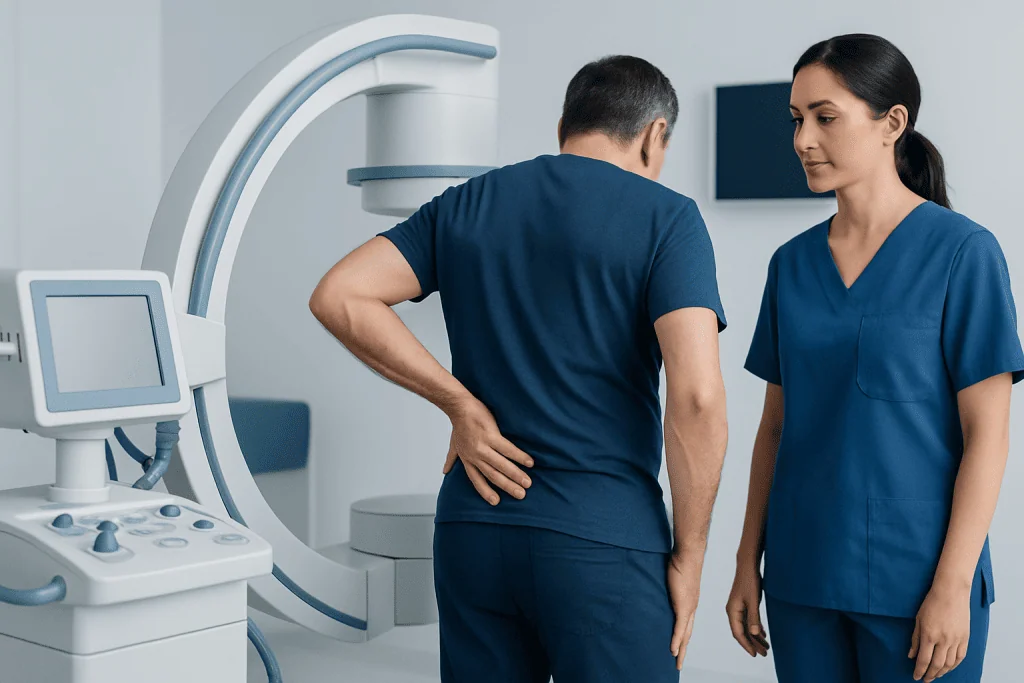
The exact pattern of lower back and hip pain can offer useful clues. Pain from the hip joint is often felt in the groin, front of the thigh, or deep in the buttock, and it may worsen with walking, climbing stairs, or getting in and out of a car. Pain from the lower spine more often centers in the back and may spread into the buttock or down the leg.
Some people notice morning stiffness that eases after movement, while others have pain that increases after long periods of sitting or standing. Sharp shooting pain, tingling, burning, or numbness can suggest nerve involvement. A dull ache after physical activity may be more consistent with overuse of muscles, tendons, or joints.
Other symptoms may include reduced range of motion, limping, trouble bending forward, pain when rotating the hip, or tenderness over the outer hip. Symptoms sometimes overlap, which is why a symptom description alone cannot always distinguish between a spine problem and a hip problem.
- Lower back pain with buttock pain may come from the lumbar spine or sacroiliac joint.
- Groin pain with stiffness may suggest a hip joint condition.
- Pain radiating below the knee may point more strongly to nerve irritation.
- Outer hip tenderness can occur with tendon irritation or bursitis-like conditions.
Common triggers and underlying causes

One of the most frequent triggers is mechanical strain. Lifting, twisting, a sudden increase in exercise, prolonged sitting, poor movement patterns, or deconditioned core and hip muscles can irritate the lower back and surrounding soft tissues. These problems are usually painful but often improve with relative rest and guided exercise.
Age-related joint changes are another common cause. Osteoarthritis can affect the hip joint or the small joints in the lower spine, leading to stiffness, aching, and reduced mobility. In some people, degeneration of the spinal discs or narrowing around spinal nerves may also contribute to pain that extends toward the hip. Relevant conditions can include lumbar disc herniation or osteoarthritis.
Nerve-related pain may result from compression or irritation in the lower back. This can cause pain traveling from the back into the buttock and leg, sometimes with numbness or weakness. Joint dysfunction in the sacroiliac area, inflammation around tendons, and hip labral or cartilage problems can also create mixed pain patterns.
Less common but important causes include inflammatory arthritis, fractures, bone infection, kidney stones, gynecologic conditions, or pain referred from abdominal or pelvic organs. A doctor considers these possibilities when symptoms do not fit a typical musculoskeletal pattern or when red flags are present.
Risk factors that can make symptoms more likely
Lower back and hip pain can affect adults of any age, but some factors increase the chance of developing it. These include repetitive lifting, physically demanding work, long periods of driving or desk sitting, reduced physical conditioning, and previous injuries involving the back, pelvis, or hip.
Body weight, posture, muscle weakness, limited flexibility, and gait problems may increase strain on the lower back and hips over time. Athletes can be affected as well, especially runners, golfers, tennis players, and people who do sports with repeated twisting or sudden changes in direction.
Older age raises the likelihood of osteoarthritis, spinal wear, and reduced muscle mass. Pregnancy may temporarily change posture and pelvic mechanics, leading to back and hip discomfort. Conditions such as osteoporosis, inflammatory joint disease, or diabetes can also influence pain risk and recovery.
How doctors diagnose the cause
Diagnosis starts with a detailed medical history. A doctor will ask where the pain began, whether it started suddenly or gradually, what movements aggravate it, and whether symptoms spread into the leg or groin. Questions about fever, trauma, unexplained weight loss, night pain, and bowel or bladder changes help identify more serious causes.
The physical examination usually includes posture assessment, walking evaluation, range of motion testing, and specific maneuvers for the lumbar spine, sacroiliac joint, and hip. Strength, reflexes, and sensation in the legs may be checked if nerve involvement is suspected.
Imaging is not always needed right away, especially when symptoms are recent and there are no red flags. However, X-rays can be useful for arthritis or fractures, while MRI may help evaluate discs, nerves, soft tissues, or more complex hip problems. In selected cases, blood tests or ultrasound may be used to look for inflammation, infection, or tendon-related conditions.
If pain is ongoing or diagnosis is uncertain, a specialist may recommend further evaluation with MRI, physical therapy and rehabilitation, or targeted assessment by orthopedics, spine, or rehabilitation teams.
Treatment options and what recovery may involve
Treatment depends on the cause, symptom severity, and how long the pain has been present. For many people, early care focuses on staying gently active, avoiding movements that sharply worsen pain, and using short-term symptom relief measures recommended by a doctor. Bed rest is usually not advised for routine mechanical pain because it can increase stiffness and slow recovery.
Exercise-based treatment is often central to recovery. A rehabilitation program may work on core stability, hip strength, flexibility, walking mechanics, and posture. When the hip joint itself is involved, treatment may also aim to improve range of motion and reduce the load placed on painful structures during daily activities.
Medication options can include pain relievers or anti-inflammatory medicines when appropriate, but they should be chosen with medical guidance, especially for people with stomach, kidney, heart, or bleeding risks. Some patients benefit from image-guided injections or specialist procedures if conservative care does not help enough.
When structural problems are severe or symptoms persist despite non-surgical care, doctors may discuss procedures tailored to the diagnosis. Depending on the source, this can include hip replacement for advanced joint damage or spine surgery in carefully selected cases of nerve compression or spinal instability. Near the end of the care pathway, Acibadem International’s multidisciplinary specialists in JCI-accredited hospitals also evaluate and treat lower back and hip pain for international patients when specialist assessment is needed.
Self-care, prevention, and daily habits that help
Simple daily habits can reduce strain on the lower back and hips. Regular movement is important, especially for people who sit for long periods. Changing position often, taking short walking breaks, and using safe lifting technique can help prevent symptom flare-ups.
Strength and flexibility matter as well. Balanced exercise that includes walking, swimming, cycling, gentle stretching, and muscle strengthening can improve joint support and movement control. A physical therapist can show individualized exercises for the back, buttocks, abdomen, and hips.
Supportive footwear, sleep positions that keep the spine neutral, and an ergonomic workstation may also ease recurring discomfort. Maintaining a healthy weight can reduce the load on both the spine and hip joints. For athletes, gradual training progression and proper warm-up are important.
- Avoid sudden increases in lifting or high-impact activity.
- Break up long periods of sitting.
- Strengthen core and hip muscles consistently.
- Use proper form when bending and carrying.
- Seek advice early if pain keeps returning.
When to seek medical care
Medical care is appropriate if lower back and hip pain lasts more than a few weeks, keeps returning, interferes with walking or sleep, or limits work and daily activities. A doctor should also assess pain that follows a fall, sports injury, or other trauma, especially in older adults or anyone with osteoporosis risk.
Urgent assessment is important if pain occurs with fever, unexplained weight loss, severe night pain, a history of cancer, or signs of infection. Immediate medical attention is needed for new loss of bladder or bowel control, numbness around the groin or inner thighs, or rapidly worsening leg weakness, as these can signal a serious nerve problem.
Although these warning signs are less common, they should not be ignored. Early evaluation helps rule out serious causes and guides the right treatment plan, whether the problem is in the hip, the spine, or another nearby structure.
Frequently asked questions
Can lower back and hip pain come from the same problem?
Yes. The lower back, pelvis, and hips are closely connected, so one condition can cause pain in more than one area. For example, spinal nerve irritation, sacroiliac joint dysfunction, or hip arthritis may all be felt as both back and hip pain.
How can someone tell if pain is coming from the hip or the lower back?
Pain in the groin or front of the thigh often suggests the hip joint, while pain centered in the lower back with spread into the buttock or leg may suggest the spine. However, symptoms often overlap, so a physical examination is usually needed for a reliable diagnosis.
Is lower back and hip pain usually serious?
Most cases are due to mechanical or degenerative causes and are not emergencies. Still, pain can be serious if it comes with fever, major injury, unexplained weight loss, severe weakness, or bowel or bladder changes.
What helps lower back and hip pain at home?
Gentle activity, avoiding movements that sharply worsen pain, and gradually returning to normal movement often help. Many people also benefit from guided exercises, posture changes, and short-term symptom relief measures recommended by a clinician.
When is imaging needed for lower back and hip pain?
Imaging is usually considered when symptoms are severe, persist, follow trauma, or include red flags. X-rays may show arthritis or fractures, while MRI is often more useful for discs, nerves, and soft tissues.
Can sciatica cause hip pain?
Yes. Sciatica can cause pain that starts in the lower back or buttock and travels toward the hip and down the leg. It may also cause tingling, numbness, or weakness if a nerve root is irritated.
References
- National Institute of Arthritis and Musculoskeletal and Skin Diseases
- American Academy of Orthopaedic Surgeons
- National Institute of Neurological Disorders and Stroke
- American College of Rheumatology
- MedlinePlus
This article is for general information only and is not a substitute for professional medical advice. Please consult a qualified doctor about your individual situation.
Joint and spine care in Turkey — expert assessment & treatment
JCI-accredited · board-certified surgeons · reply within 24h
Add us as a Preferred Source to see more of our trusted health content across Google Search, AI Overviews and Discover.

More from the Health Library



Related Specialists

Dr. Serhat Konar
Anesthesiology
Prof. Dr. Funda Vesile Çorapcıoğlu
Pediatric Hematology & Oncology
Assoc. Prof. Dr. Meltem Güner Can
Anesthesiology
Dr. Yunus Çelik
Anesthesiology