Pimple on Lip Line: What Patients Need to Know

Most pimples on the lip line are caused by clogged pores, irritation, or inflamed hair follicles. Not every bump on the lip border is acne; cold sores, dermatitis, and cysts can look similar.
Key Takeaways
- Most pimples on the lip line are caused by clogged pores, irritation, or inflamed hair follicles.
- Not every bump on the lip border is acne; cold sores, dermatitis, and cysts can look similar.
- Picking, squeezing, or using harsh products can worsen swelling and delay healing.
- Gentle cleansing, avoiding triggers, and using suitable acne care may help simple cases improve.
- Medical review is important if the bump is severe, keeps returning, spreads, or is associated with fever or significant pain.
A pimple on lip line is usually a minor skin problem such as acne, irritation, or a blocked pore, and it often improves with gentle skin care. Because the lip border can also develop cold sores, inflamed follicles, or other look-alike conditions, persistent, painful, or recurring bumps should be evaluated by a qualified doctor.
Overview: What a pimple on lip line usually means
A pimple on lip line is a small bump that appears where facial skin meets the edge of the lips. In many cases, it is related to a clogged pore, excess oil, friction, or mild inflammation around a hair follicle. These bumps may look red, white-tipped, tender, or slightly swollen and often settle with time and gentle skin care.
The lip line is a delicate area because the skin is thinner and is exposed to saliva, cosmetics, toothpaste, shaving, and frequent touching. This means ordinary acne is not the only possible explanation. A bump in this location may also be caused by irritation, folliculitis, a cyst, or a viral blister such as a cold sore. Distinguishing between these possibilities helps guide the safest next step.
For patients, the most important message is that a single small bump is usually not an emergency. However, repeated episodes, clusters of painful blisters, drainage of pus, marked swelling, or sores that do not heal deserve a professional assessment. Looking at the pattern, timing, and accompanying symptoms often provides useful clues.
How to tell if it is acne or something else
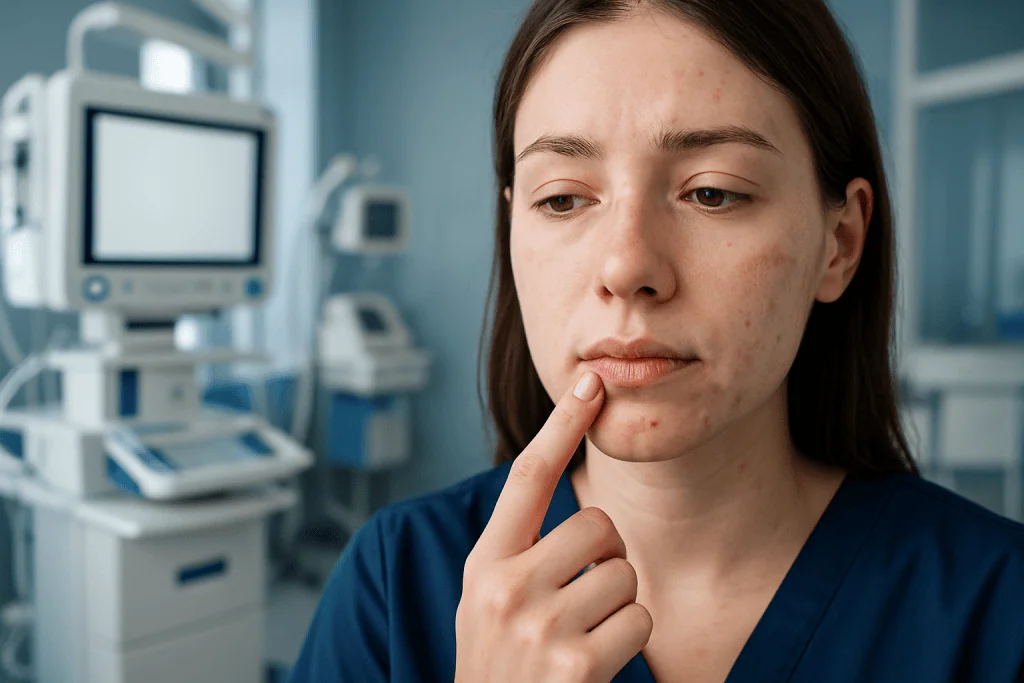
Acne-related bumps on the lip line often develop gradually and may start as a clogged pore or a small red papule. Some form a visible white or yellow center, while others remain deeper and sore. They may occur with other acne on the chin, cheeks, or jawline and can be linked to oily products, hormonal changes, or friction from masks or shaving.
Other conditions can mimic a pimple. A cold sore often begins with tingling, burning, or itching before small fluid-filled blisters appear, usually in a cluster. Irritant or allergic reactions may cause redness, scaling, or multiple tiny bumps after using a new lip balm, lipstick, toothpaste, or skin product. Folliculitis can resemble acne but is centered around a hair follicle and may follow shaving or bacterial irritation.
Less commonly, a lip-line bump may be a blocked gland, a mucous cyst inside the lip, or a lesion related to inflammation or infection. If the bump keeps returning in exactly the same spot, crusts over repeatedly, or has an unusual appearance, a doctor may consider other skin conditions including skin cancer or chronic inflammatory disorders. This does not mean cancer is likely, but nonhealing lesions should not be ignored.
Common causes and triggers

The most common cause of a pimple on lip line is blockage of a pore by oil, dead skin cells, and debris. When bacteria and inflammation are added, the area can become more swollen and painful. The skin near the mouth may be especially reactive because it comes into contact with food residue, saliva, and frequent wiping.
Everyday triggers can contribute. Heavy lip products, occlusive creams, certain sunscreens, and makeup that migrates onto the lip border may block pores. Shaving, waxing, or friction from face masks can irritate the area. Toothpaste ingredients, flavorings, or whitening agents sometimes trigger perioral irritation in sensitive skin. Habitual touching, lip licking, or picking can also worsen inflammation.
Hormonal shifts may play a role, especially when bumps are part of broader acne flares around the chin and jaw. Stress can contribute indirectly by increasing picking, disrupting skin routines, or worsening acne in some people. In other cases, the problem is not true acne at all but an infection such as a herpes cold sore, which has a different cause and treatment approach.
- Clogged pores and excess oil
- Shaving-related irritation or folliculitis
- Cosmetics, lip balms, or sunscreens
- Toothpaste or skin-care irritation
- Hormonal acne patterns
- Cold sores or other infections
Symptoms to watch and signs it may need attention
A simple acne bump on the lip line may be mildly sore, red, or white-tipped and should gradually improve. It may feel tender when eating or talking because the area moves frequently. Some pimples remain small, while others become inflamed nodules under the skin.
Certain features suggest the bump may not be routine acne. Tingling or burning before the bump appears can point toward a cold sore. Crusting, oozing, or a grouped blister-like appearance are also important clues. Widespread redness, significant warmth, pus, or increasing swelling may suggest infection or marked inflammation.
Patients should also note how long the bump lasts and whether it returns. A lesion that persists for several weeks, recurs in the same place, bleeds easily, or does not behave like ordinary acne should be checked. If there is severe pain, fever, trouble opening the mouth, or swelling that spreads toward the face, prompt medical evaluation is advisable.
Diagnosis: how doctors evaluate a bump on the lip line
Diagnosis usually begins with a medical history and close examination of the skin. A doctor will ask when the bump started, whether there was tingling or pain first, whether similar lesions have happened before, and what products are used around the mouth. Questions about shaving, cosmetic use, dental products, and acne elsewhere on the face can be helpful.
In many cases, the diagnosis is clinical, meaning it is based on the appearance and pattern of the lesion. The doctor may look for signs that favor acne, folliculitis, contact dermatitis, perioral dermatitis, or a viral cause. If there are many acne lesions elsewhere, the lip-line bump may be part of broader acne rather than an isolated problem.
Testing is not always needed, but it may be considered if the lesion is unusual, severe, or recurrent. A swab may be taken if infection is suspected. Rarely, if a lesion is persistent or atypical, a dermatologist may recommend a biopsy to rule out less common causes. This is especially relevant for sores or bumps that do not heal in a typical timeframe.
Treatment options and what to avoid
Treatment depends on the cause. For a simple acne-type pimple on lip line, the main goals are to reduce irritation, limit further blockage, and allow the skin to heal. Gentle cleansing, avoiding heavy products on the lip border, and not squeezing the area are often the first steps. Because the skin close to the lips is sensitive, strong acne products should be used carefully and kept away from the inside of the mouth.
If the doctor confirms acne or inflamed pores, treatment may include topical acne therapies or broader acne treatment when breakouts are frequent. If the lesion is actually a cold sore, antiviral management rather than acne care may be recommended. Folliculitis or bacterial infection may need different treatment, and contact dermatitis improves by identifying and avoiding the trigger.
It is best to avoid picking, popping, or aggressively scrubbing a bump on the lip line. This can push inflammation deeper, increase pain, and raise the risk of scarring or infection. Patients should also be cautious with home remedies such as toothpaste, alcohol-based products, or concentrated essential oils, which may further irritate the skin.
- Cleanse gently with a mild, non-irritating product
- Avoid lip products and makeup that seem to trigger bumps
- Do not squeeze or scratch the area
- Use targeted treatment only as advised for the likely cause
- Seek review if bumps are frequent, painful, or unclear in diagnosis
Prevention, self-care, and when to seek medical care
Preventing a pimple on lip line often comes down to reducing friction and avoiding pore-clogging or irritating products. Choosing non-comedogenic skin care, keeping lip products off the surrounding skin when possible, and rinsing the mouth area after eating can help. Patients who shave may benefit from gentle technique, clean tools, and less friction on the skin.
Consistency matters more than using many products. A simple routine with mild cleansing and suitable moisturization is often better tolerated than frequent switching. If a patient notices bumps after a certain lipstick, balm, sunscreen, or toothpaste, stopping that product and discussing alternatives with a clinician may be useful. For recurring facial breakouts, broader care from a skin specialist may help prevent future lesions.
Medical care should be sought if the bump is very painful, rapidly enlarging, associated with fever, or causes marked swelling. It is also wise to arrange an appointment if lesions keep returning, come in blister-like clusters, last longer than expected, or do not improve with basic care. Near the end of a care journey, some patients may benefit from specialist evaluation in dermatology or oral and maxillofacial care; Acibadem International’s multidisciplinary specialists in JCI-accredited hospitals diagnose and treat skin and lip-area conditions for international patients, including dermatology assessment when needed.
For persistent uncertainty, especially if a lesion is on the lip itself rather than the surrounding skin, assessment by the right specialty is important. In selected cases involving deeper lesions, cysts, or concerns inside the mouth, doctors may coordinate with services such as oral and dental health to clarify the cause and recommend appropriate management.
Frequently asked questions
Can a pimple really form on the lip line?
Yes. A pimple can form on the skin right next to the lips where pores and hair follicles are present. The lip itself has different tissue, so bumps on the moist inner lip may have other causes.
How can someone tell the difference between a pimple and a cold sore?
A pimple often appears as a single red or white-tipped bump and may develop gradually. A cold sore more often starts with tingling or burning and then forms grouped small blisters that may crust.
Is it safe to pop a pimple on the lip line?
It is generally not recommended. Squeezing can worsen inflammation, delay healing, increase infection risk, and sometimes lead to scarring or more swelling in this sensitive area.
What home care may help a simple pimple on the lip line?
Gentle cleansing, avoiding irritating or heavy products, and keeping hands away from the area are reasonable first steps. If an acne treatment is used, it should be applied carefully and kept away from the inside of the mouth unless a doctor advises otherwise.
When should a patient see a doctor about a bump near the lips?
A doctor should assess bumps that are very painful, keep returning, spread, ooze, or do not heal as expected. Medical advice is also important if there is fever, major swelling, or a blistering rash that may represent a cold sore or another infection.
Can lip balm or toothpaste cause bumps around the mouth?
Yes. Some products can irritate sensitive skin or contribute to blocked pores near the lip border. If bumps begin after starting a new product, it may help to stop it and discuss alternatives with a clinician.
References
- American Academy of Dermatology
- National Health Service
- Mayo Clinic
- Merck Manual Consumer Version
- Cleveland Clinic
This article is for general information only and is not a substitute for professional medical advice. Please consult a qualified doctor about your individual situation.
Hair transplant in Turkey — costs, graft counts & a free assessment
JCI-accredited · board-certified surgeons · reply within 24h
Add us as a Preferred Source to see more of our trusted health content across Google Search, AI Overviews and Discover.