Baby Tick: A Complete Medical Overview

A baby tick is usually a larval or nymph-stage tick, and nymphs can be especially hard to see. Even a very small tick can attach to the skin and may spread tick-borne illness in some regions.
Key Takeaways
- A baby tick is usually a larval or nymph-stage tick, and nymphs can be especially hard to see.
- Even a very small tick can attach to the skin and may spread tick-borne illness in some regions.
- The safest removal method is with fine-tipped tweezers, pulling straight upward without twisting or crushing the tick.
- Most tick bites cause only mild local irritation, but fever, rash, body aches, or worsening redness should be medically assessed.
- Checking the skin after outdoor activity is one of the best ways to prevent problems from tick bites.
A baby tick is an immature tick, often very small and easy to miss, but it can still bite and sometimes transmit infection. Prompt, proper removal and watching for symptoms are the most important steps after finding a baby tick on the skin.
What is a baby tick?
A baby tick is an immature tick. The term may refer to a larva, which has six legs, or more commonly to a nymph, which has eight legs and looks more like an adult but is much smaller. Because these early life stages are tiny, they can be difficult to notice on the skin, in hair, or on clothing.
A baby tick can still bite and feed on blood. Although not every tick carries infection, some immature ticks can transmit diseases just as adult ticks can. This is why a very small attached tick should not be ignored, especially if a person has been in grassy, wooded, brushy, or leaf-covered areas.
People often mistake a baby tick for a freckle, seed, speck of dirt, or tiny scab. It may appear as a dark brown, reddish-brown, or pale dot depending on the species and whether it has fed. If the tick has been attached for some time, it may become more swollen and easier to recognize.
How a baby tick bite looks and feels
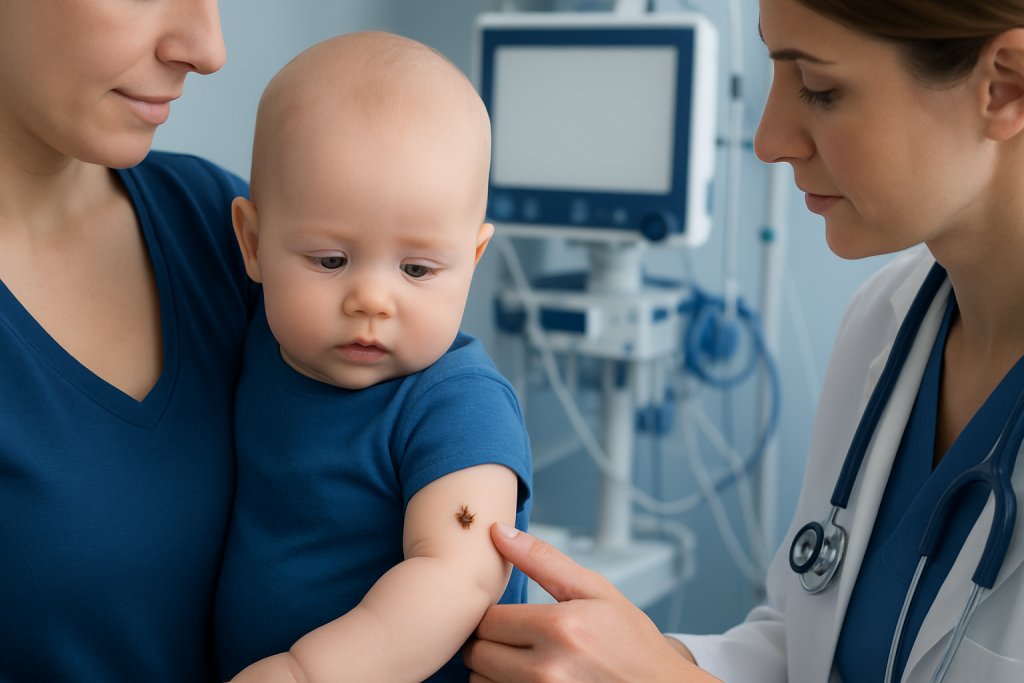
Many baby tick bites do not cause immediate pain. A person may only notice the tick during bathing, dressing, or a skin check after being outdoors. When symptoms do occur, the bite area may look like a small red bump or cause mild itching, tenderness, or irritation.
Local skin changes alone do not confirm infection. A small red mark at the attachment site can be a simple reaction to the bite itself. In many cases, this mild reaction settles over a few days after the tick is removed.
What matters most is whether broader symptoms develop later. Depending on the region and the type of tick, tick-borne illness may cause fever, headache, fatigue, muscle aches, joint pain, swollen lymph nodes, or an expanding rash. Some people may also develop skin infections from scratching or from incomplete tick removal.
- A tiny dark or pale speck attached to the skin
- Mild redness or itching at the bite site
- A small firm bump after removal
- Less commonly, an enlarging rash or flu-like symptoms in the following days or weeks
Why baby ticks matter: risks and possible diseases

Baby ticks matter because their small size makes them easy to miss, allowing them to stay attached longer. The chance of disease transmission depends on several factors, including the tick species, where the bite happened, how long the tick was attached, and whether the tick carries an infectious organism.
In some areas, ticks may spread infections such as Lyme disease, ehrlichiosis, anaplasmosis, babesiosis, Rocky Mountain spotted fever, and other regional illnesses. Not every tick species spreads the same diseases, and not every bite leads to illness. Still, a person who becomes unwell after a tick bite should tell a doctor when and where the exposure occurred.
If a person develops an expanding rash, fever, or unexplained flu-like symptoms after a bite, doctors may consider evaluation for Lyme disease or other tick-borne conditions. In some cases, skin reactions from a bite can also resemble other causes of redness or irritation, so clinical assessment can be helpful.
Common causes and risk factors for tick bites
Ticks are commonly found in wooded areas, tall grass, shrubs, leaf litter, and on animals such as deer, rodents, dogs, and birds. People are more likely to get a baby tick bite during warmer months, but the timing varies by climate and by tick species. Nymphs are often active in spring and summer, when people also spend more time outdoors.
Outdoor work and recreation increase exposure. Gardening, hiking, camping, hunting, picnicking, and walking through overgrown vegetation can all bring ticks into contact with skin or clothing. Pets may also carry ticks into the home, where they can later attach to a person.
Risk is higher when protective clothing is not used or when the body is not checked after outdoor activity. Ticks often attach to warm, hidden places such as the scalp, behind the ears, under the arms, around the waist, behind the knees, in the groin, and around the ankles.
How to remove a baby tick safely
The safest way to remove a baby tick is with fine-tipped tweezers. The tweezers should grasp the tick as close to the skin surface as possible, aiming for the mouthparts rather than the swollen body. Then the tick should be pulled upward with steady, even pressure.
Twisting, jerking, crushing, burning, or covering the tick with petroleum jelly, nail polish, or other substances is not recommended. These methods can make removal more difficult and may increase skin irritation. If small mouthparts remain in the skin, they often come out on their own as the skin heals, but persistent irritation should be checked by a doctor.
After removal, the area should be cleaned with soap and water or an appropriate skin antiseptic. Washing hands is also important. If possible, the date of the bite can be noted and the person can monitor for symptoms for the next several weeks.
- Use fine-tipped tweezers
- Grasp close to the skin
- Pull straight up with steady pressure
- Clean the skin and hands afterward
- Watch for rash, fever, or other new symptoms
Diagnosis and treatment after a baby tick bite
Most people do not need extensive testing after every tick bite. Diagnosis is usually based on the history of exposure, the appearance of the bite or any rash, the type of symptoms, and the geographic area where the bite occurred. If illness develops, a doctor may decide whether blood tests or other evaluations are appropriate.
Treatment depends on the clinical picture. A simple bite with mild irritation may only need cleansing, observation, and symptom relief such as a cool compress or doctor-approved anti-itch care. If there are signs of bacterial skin infection, the bite may need separate treatment. If a tick-borne disease is suspected, medical treatment may include prescription medication based on the likely infection and the patient’s overall health.
Some patients may need more focused evaluation if symptoms affect the skin, joints, heart, or nervous system. Depending on the findings, doctors may involve specialists in dermatology, infectious diseases, or neurology. Acibadem International’s multidisciplinary specialists in JCI-accredited hospitals diagnose and treat tick-borne conditions for international patients when this is needed.
Prevention and self-care
Prevention starts before going outdoors. Long sleeves, long trousers tucked into socks, and light-colored clothing can make ticks easier to spot. Insect repellents and tick-treated outdoor gear may also reduce risk when used as directed.
After spending time in grassy or wooded areas, a full body check is one of the most effective steps. Showering soon after coming indoors may help remove unattached ticks. Clothing should be changed and washed, and pets should also be checked because they can bring ticks into living areas.
At home, yard care can help reduce exposure. Keeping grass cut short, clearing leaf litter, creating separation between lawns and wooded edges, and discouraging animal hosts can lower tick presence around the house. These measures do not remove all risk, but they can make bites less likely.
- Wear protective clothing outdoors
- Use insect repellent as directed
- Check the scalp, skin folds, and hidden areas carefully
- Shower and change clothes after outdoor activity
- Inspect pets regularly for ticks
When to seek medical care
Medical advice is appropriate if a tick cannot be removed fully, if the bite site becomes increasingly painful, warm, swollen, or drains pus, or if symptoms develop after the bite. A person should also seek care if they are unsure whether the insect was a tick or if the bite occurred in an area known for tick-borne disease.
Prompt medical evaluation is especially important if there is fever, chills, headache, unusual tiredness, muscle aches, joint pain, facial weakness, shortness of breath, palpitations, or a spreading rash. An expanding ring-shaped rash deserves assessment, but other tick-borne illnesses may occur without this classic pattern.
Parents should seek medical care for infants and children if a baby tick is attached in a sensitive area such as the eyelid, ear canal, or genitals, or if the child seems unwell after a bite. People with weakened immune systems, older adults, and pregnant individuals may also benefit from earlier medical guidance.
Frequently asked questions
Can a baby tick carry disease?
Yes. Even an immature tick can sometimes carry and transmit infection, although the risk depends on the species, the region, and how long it was attached. Not every baby tick bite leads to illness, but monitoring for symptoms is important.
How do you tell if it is a baby tick or a scab?
A baby tick may look like a tiny dark dot, but it is usually attached firmly and may have visible legs if examined closely. A scab is part of the skin surface and does not have a distinct body. If there is uncertainty, a doctor can help identify it.
Should a baby tick be removed right away?
Yes. A tick should be removed as soon as it is noticed because prompt removal may lower the chance of disease transmission. Fine-tipped tweezers are the preferred method.
What should be done after removing a baby tick?
The area should be cleaned with soap and water or an appropriate antiseptic, and hands should be washed. It is helpful to note the date of the bite and watch for rash, fever, or flu-like symptoms over the next several weeks.
Is redness after a baby tick bite always a sign of Lyme disease?
No. A small red bump or mild irritation can be a normal local reaction to the bite. Lyme disease is more concerning when there is an expanding rash or when symptoms such as fever, fatigue, and body aches develop.
Can a baby tick bite a child or infant?
Yes. Children and infants can get tick bites, especially after outdoor play or contact with pets. Because baby ticks are so small, careful skin checks are important, and medical advice is recommended if a child becomes unwell after a bite.
References
- Centers for Disease Control and Prevention
- World Health Organization
- American Academy of Dermatology
- Mayo Clinic
- National Institute of Allergy and Infectious Diseases
This article is for general information only and is not a substitute for professional medical advice. Please consult a qualified doctor about your individual situation.
Hair transplant in Turkey — costs, graft counts & a free assessment
JCI-accredited · board-certified surgeons · reply within 24h
Add us as a Preferred Source to see more of our trusted health content across Google Search, AI Overviews and Discover.

More from the Health Library



Related Specialists

Dr. Mehmet Kantarcı
Ophthalmology
Prof. Dr. Hasan M. Tanyeri
Ear Nose & Throat
Dr. Vildan Alev Sönmez
Anesthesiology
Prof. Dr. Alper Fındıkcioğlu
Thoracic Surgery