Ear Acupuncture: What Patients Need to Know

Ear acupuncture targets points on the external ear, not the ear canal or eardrum. It is commonly used as a complementary approach for symptoms such as pain, anxiety, nausea and sleep difficulties.
Key Takeaways
- Ear acupuncture targets points on the external ear, not the ear canal or eardrum.
- It is commonly used as a complementary approach for symptoms such as pain, anxiety, nausea and sleep difficulties.
- Research suggests possible benefit in some settings, but evidence is mixed and effects may be modest or short-term.
- A qualified, licensed practitioner should use sterile, single-use needles and review relevant health conditions first.
- People should seek medical assessment for persistent, severe or unexplained symptoms rather than relying on ear acupuncture alone.
Ear acupuncture, also called auricular acupuncture or auriculotherapy, is a complementary practice in which fine needles or small pressure devices are placed on selected points of the outer ear. Some people use it for pain, stress, nausea or addiction support, but research results vary and it should not replace diagnosis or standard medical treatment.
What Is Ear Acupuncture?
Ear acupuncture is a form of acupuncture in which a trained practitioner stimulates specific areas of the outer ear, also called the auricle. In traditional acupuncture systems, the ear is viewed as having points related to different parts of the body. Modern approaches may use ear stimulation as a complementary method for symptom management, often alongside conventional medical care.
During a session, the practitioner may use very thin needles, small adhesive seeds or beads, gentle electrical stimulation, or manual pressure. Needles are placed in the skin of the external ear; they do not enter the ear canal and do not affect the eardrum. Sessions are usually brief, although seeds or beads may be left in place for a limited time so the person can apply light pressure between appointments.
Ear acupuncture is sometimes called auricular acupuncture or auriculotherapy. It is important to distinguish it from medical treatment for hearing loss, ear infection, tinnitus, vertigo, or other ear conditions. While some people seek it for these concerns, a medical evaluation remains important because symptoms may have treatable underlying causes.
Why Do People Use Ear Acupuncture?
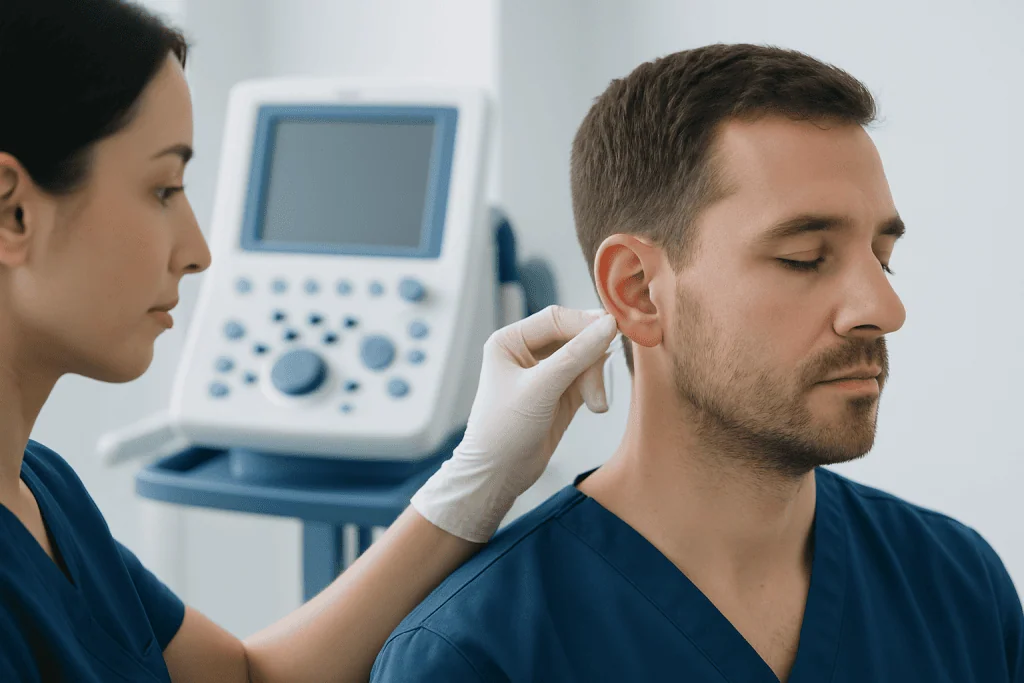
People may choose ear acupuncture for a range of symptoms and wellbeing goals. Common reasons include chronic or short-term pain, tension, stress, sleep problems, nausea, headache, and support during smoking cessation or substance-use treatment. In healthcare settings, it may be offered as part of an integrative care plan rather than as a stand-alone treatment.
The technique is also used by some people during recovery from procedures or illness, particularly when they want non-drug strategies to complement clinician-recommended care. It may be combined with exercise, physiotherapy, psychological support, sleep measures, nutrition guidance, and medicines where appropriate.
Its role should be realistic and individualized. Ear acupuncture does not diagnose disease, remove a serious cause of pain, cure addiction, or substitute for prescribed treatment. For ongoing pain or recurrent headaches, assessment can help identify appropriate options, including physical therapy when movement, posture, injury or musculoskeletal function contributes to symptoms.
What Does the Evidence Say?

Research on ear acupuncture has produced varied results. Some studies suggest it may offer short-term symptom relief for certain types of pain, anxiety, nausea, or sleep disturbance. However, studies differ in the points used, treatment schedules, comparison treatments and outcome measures. This makes it difficult to determine exactly who is most likely to benefit and how large the benefit may be.
For pain, ear acupuncture may help some people feel more comfortable as part of a broader plan, but it is not a replacement for investigating new, severe or persistent pain. For nausea, some forms of acupuncture-point stimulation have been studied in postoperative and treatment-related settings, yet care should still follow the advice of the surgical, oncology or medical team.
Evidence for ear acupuncture in smoking cessation, weight management, mental health conditions and substance-use disorders remains limited or inconsistent. It may provide a supportive routine for some individuals, but established treatments such as behavioral therapy, clinician-guided medicines and structured support programs have stronger evidence for many of these concerns.
Expectations can influence how any symptom-focused therapy feels. A balanced discussion with a doctor and a qualified practitioner can help a person decide whether ear acupuncture is a reasonable complementary option for their situation.
What Happens During a Session?
A safe session begins with a discussion of the person’s symptoms, medical history, current medicines, allergies, pregnancy status and previous experiences with acupuncture. The practitioner examines the outer ear and selects points based on the treatment goal. The skin should be clean, and sterile, single-use needles should be used.
Needle insertion is usually shallow. People may feel a brief pinch, pressure, warmth or tingling, although experiences vary. A practitioner may leave needles in place for several minutes before removing them. If ear seeds or small beads are used, they are typically secured with tape and may remain for a few days, with instructions on keeping the area clean and when to remove them.
A person should feel able to ask questions, decline any part of the treatment and report discomfort at any time. It is reasonable to ask about the practitioner’s qualifications, infection-control procedures, experience with the health concern, and how treatment will be coordinated with medical care.
Safety, Side Effects and Who Should Take Extra Care
When performed by a properly trained professional using sterile equipment, ear acupuncture is generally considered low risk. Mild, temporary effects can include tenderness, slight bleeding, bruising, redness, dizziness, fatigue or a short-lived increase in symptoms. Some people may faint during needling, particularly if they are anxious, have not eaten, or are prone to lightheadedness.
Infection is uncommon when single-use sterile needles and good skin hygiene are used, but it can occur. People should avoid treatment over broken, inflamed, infected or severely irritated skin on the ear. They should contact a clinician promptly if they develop increasing redness, warmth, swelling, pus, fever or significant pain after a session.
People who take blood-thinning medicines, have a bleeding disorder, have a weakened immune system, have a history of fainting, or are pregnant should discuss acupuncture with a qualified clinician first. A practitioner should also be told about implanted electrical devices if electrical stimulation is being considered. Ear seeds may irritate sensitive skin or trigger adhesive allergy in some people.
- Choose a licensed or appropriately regulated acupuncture professional where possible.
- Confirm that sterile, disposable needles are used for every treatment.
- Do not stop prescribed medicines or delay recommended tests because of acupuncture.
- Remove ear seeds and seek advice if there is rash, marked soreness or skin breakdown.
How Ear Acupuncture Fits Into a Care Plan
Ear acupuncture is best considered one possible supportive tool, not a universal solution. A person may decide to try it for symptom relief while continuing care from their doctor. Clear goals can be helpful, such as improving sleep quality, reducing pain interference with daily activities, or managing nausea during a defined period of treatment.
Before starting, it is useful to record symptoms, triggers, sleep, activity and any medicines being used. This creates a practical way to judge whether the approach is helping. If there is no meaningful benefit after an agreed trial, the person can reconsider the plan with their healthcare team rather than continuing indefinitely.
For stress, anxiety or persistent low mood, supportive approaches such as relaxation techniques and healthy routines may be useful, but they are not substitutes for professional assessment. Psychotherapy and clinician-directed care can address underlying emotional and mental health needs. For long-lasting or complex pain, multidisciplinary management may include medical evaluation, rehabilitation and psychological support.
Acibadem International’s multidisciplinary specialists and JCI-accredited hospitals can assess symptoms and coordinate evidence-based treatment plans for international patients when further investigation or care is needed.
When to Seek Medical Care
Medical care should be sought promptly for sudden hearing loss, severe ear pain, drainage or bleeding from the ear, facial weakness, a severe headache, chest pain, trouble breathing, fainting, confusion, or new weakness or numbness. Ear acupuncture should not be used to manage these symptoms at home or to postpone urgent assessment.
A doctor should also assess persistent tinnitus, recurrent dizziness, balance problems, hearing changes, unexplained weight loss, fever, or pain that continues, worsens or disrupts sleep and daily life. These symptoms can have many causes, and determining the cause is important before pursuing complementary therapies.
People with ringing in the ears should especially seek assessment if it is one-sided, pulsating with the heartbeat, begins suddenly, or occurs with hearing loss or dizziness. For ongoing symptoms, medical evaluation can clarify whether an ear, neurological, circulatory, medication-related or other condition is involved.
Frequently asked questions
Does ear acupuncture hurt?
Most people describe a brief pinch, pressure or tingling rather than significant pain. Mild tenderness can occur afterward, particularly if ear seeds are pressed frequently. The person should tell the practitioner if discomfort is strong or continues.
Is ear acupuncture the same as regular acupuncture?
It uses the same broad principle of stimulating selected points, but focuses specifically on the outer ear. Traditional body acupuncture uses points across many areas of the body. A practitioner may use ear acupuncture alone or alongside body acupuncture, depending on the care plan.
Can ear acupuncture help with anxiety?
Some people report feeling calmer after treatment, and limited research suggests it may help anxiety symptoms in certain settings. However, evidence is not conclusive, and it should not replace assessment or treatment for an anxiety disorder. Ongoing anxiety, panic symptoms or low mood should be discussed with a healthcare professional.
Can ear acupuncture help people stop smoking?
Ear acupuncture is sometimes used as supportive care for smoking cessation, but evidence of a reliable benefit is limited. Treatments with stronger evidence include behavioral counseling, nicotine replacement therapy and other clinician-recommended medicines. A person can ask a doctor about a personalized quit plan.
How many ear acupuncture sessions are needed?
There is no single schedule that suits everyone because treatment protocols vary by symptom and practitioner. Some people try a short, defined course and review whether it is producing a meaningful benefit. It is sensible to avoid long-term treatment without periodically reassessing goals and results.
Can ear acupuncture treat tinnitus or hearing loss?
Ear acupuncture should not be considered a proven treatment for tinnitus or hearing loss. New, sudden or one-sided hearing symptoms require medical evaluation, as early treatment may matter for some conditions. A clinician can identify possible causes and discuss appropriate management.
References
- World Health Organization
- National Center for Complementary and Integrative Health
- National Institutes of Health
- Cochrane
- U.S. Food and Drug Administration
This article is for general information only and is not a substitute for professional medical advice. Please consult a qualified doctor about your individual situation.
Persistent digestive symptoms? Get evaluated in Turkey
JCI-accredited · board-certified surgeons · reply within 24h