Meniscus Repair: Procedure, Recovery and Results

Meniscus repair aims to preserve the meniscus, a cartilage structure that cushions and stabilizes the knee. Not every meniscus tear can be repaired; tear location, pattern, tissue quality and knee stability all affect suitability.
Key Takeaways
- Meniscus repair aims to preserve the meniscus, a cartilage structure that cushions and stabilizes the knee.
- Not every meniscus tear can be repaired; tear location, pattern, tissue quality and knee stability all affect suitability.
- Most people use crutches for a period after surgery and return to everyday walking gradually, often over weeks to months.
- Rehabilitation is essential for restoring motion, strength, balance and confidence in the knee.
- Healing takes time, and return to running, pivoting sports or heavy work should follow the surgeon and physiotherapist’s plan.
Meniscus repair is a knee-preserving operation that reconnects a repairable torn meniscus rather than removing the damaged tissue. It is usually performed arthroscopically, followed by protected weight-bearing and structured rehabilitation to allow the meniscus to heal.
Overview: what is meniscus repair?
Meniscus repair is an operation to treat certain tears in the meniscus, the C-shaped pads of cartilage inside the knee. During the procedure, a surgeon places sutures or small fixation devices across the tear so the tissue can heal. The goal is to preserve as much functioning meniscus as possible, helping maintain knee cushioning, load distribution and stability over the long term.
It is commonly done using arthroscopy, a minimally invasive technique in which a small camera and fine instruments are passed through small skin openings around the knee. Meniscus repair is different from partial meniscectomy, which removes the unstable torn portion. Removal may be appropriate for some tears, but repair is considered when the tear has a reasonable chance of healing.
A meniscus tear may occur suddenly during a twist, pivot or sporting injury, or develop gradually as tissue becomes less resilient with age. It can occur alone or alongside injuries to knee ligaments, particularly the anterior cruciate ligament (ACL). A specialist assessment helps determine whether symptoms are due to a meniscal injury or another knee condition.
How meniscus repair works and who may be a candidate
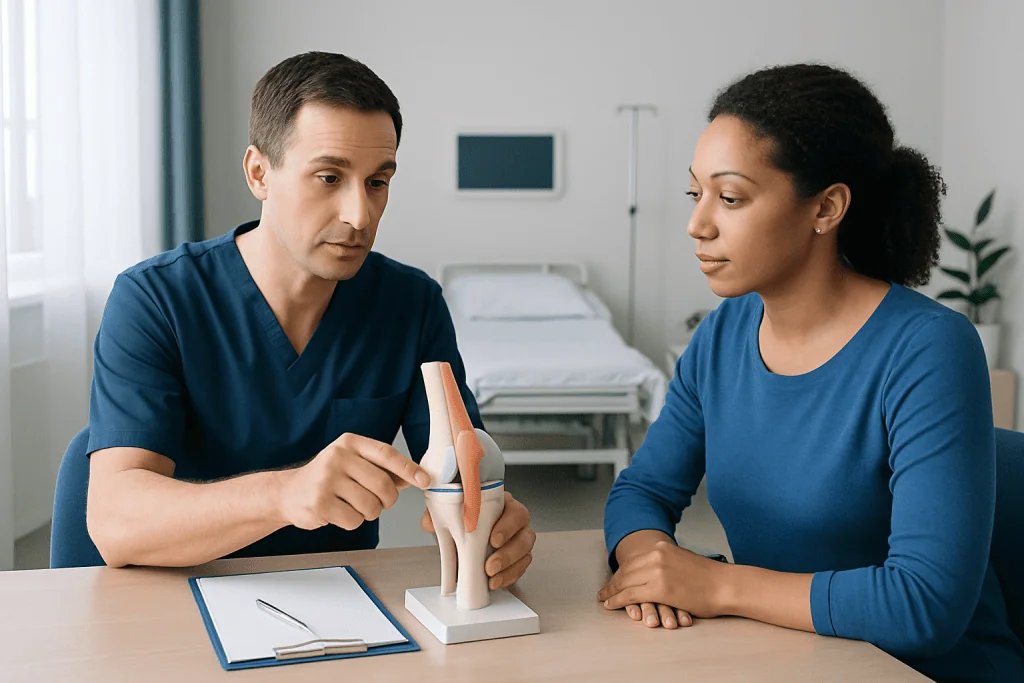
The meniscus has a limited blood supply. Its outer edge, often called the peripheral or red zone, receives more blood than the inner portion. Tears closer to this outer region generally have better healing potential. Surgeons also consider the shape and size of the tear, how long it has been present, the quality of the tissue, the person’s activity needs and whether the knee is stable.
Repair may be suitable for a recent, traumatic tear that causes pain, swelling, catching or locking, particularly in younger or active adults. Vertical longitudinal tears, including bucket-handle tears, and some radial or root tears may be repairable. Some tears associated with ACL injury are repaired during the same operation because restoring ligament stability can support meniscal healing.
Degenerative tears, complex tears in fragile tissue, and tears in the inner avascular area may be less likely to heal after stitching. In these situations, non-surgical care, selective trimming of unstable tissue, or another approach may be discussed. The decision is individualized; age alone does not determine whether repair is possible.
Evaluation often begins with a history and physical examination. X-rays can assess bone alignment and arthritis, while magnetic resonance imaging (MRI) may show a tear and associated ligament or cartilage injury. The final assessment of repairability is sometimes made during arthroscopy, when the surgeon can inspect the tissue directly.
Meniscus repair procedure: step by step
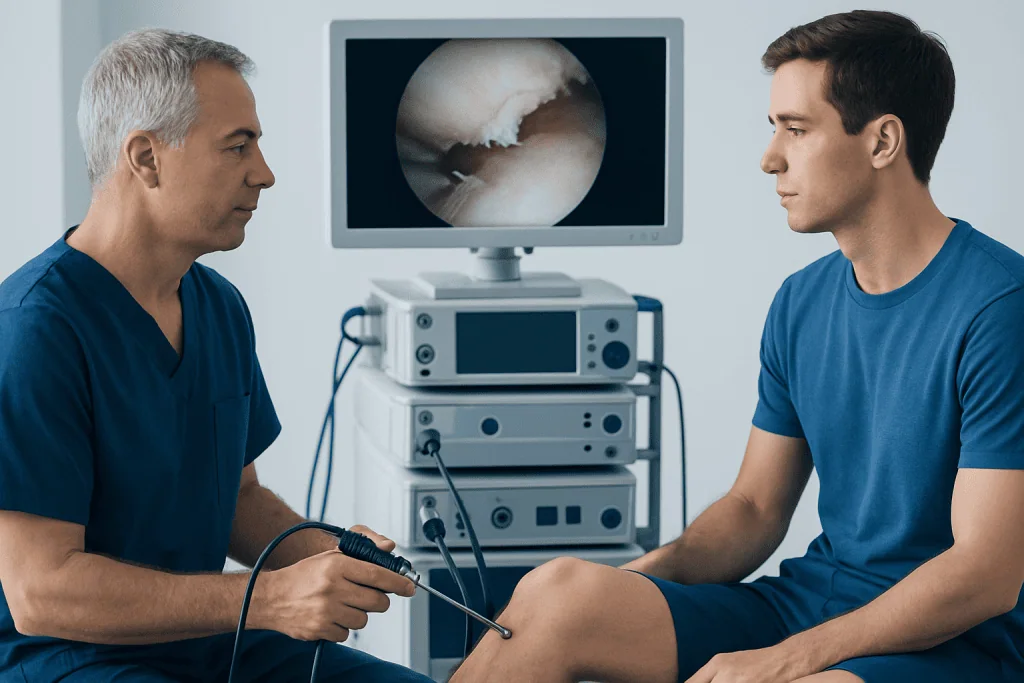
Before surgery, the orthopedic surgeon reviews imaging, medications, medical history and the rehabilitation plan. Meniscus repair is usually performed under general anesthesia, sometimes with regional anesthesia or a nerve block for early pain control. It is often a day procedure, although discharge arrangements depend on the individual operation and overall health.
First, the surgeon makes small incisions and inserts an arthroscope, which transmits images from inside the knee to a monitor. Sterile fluid is used to expand the joint and improve visibility. The surgeon examines the meniscus, cartilage surfaces, ligaments and other structures, then gently prepares the torn edges to encourage healing when appropriate.
The tear is brought back into its correct position and secured using sutures, anchors or other repair devices. Techniques may be described as inside-out, outside-in or all-inside, referring to how the stitches are placed. The chosen method depends on the tear’s location and pattern and on the need to protect nearby nerves and blood vessels.
After the repair is checked for stability, the small incisions are closed and dressed. A brace may be fitted, and crutches are typically provided. The surgeon gives individualized instructions about weight-bearing, knee bending, wound care, medicines and physiotherapy. These instructions are important because different tear types and repair methods require different protection plans.
Recovery timeline and rehabilitation after meniscus repair
Recovery after meniscus repair is gradual because the repaired tissue needs time to knit together. In the first days, swelling, stiffness and discomfort are common. Elevation, ice used as advised, prescribed or recommended pain medicines, and gentle exercises can help. Keeping the wound clean and dry as instructed and attending follow-up appointments supports safe recovery.
Many people use crutches for several weeks. Depending on the repair, the surgeon may recommend no weight through the leg at first, partial weight-bearing, or weight-bearing with the brace locked in a particular position. Knee bending may also be limited early on. These restrictions are intended to reduce stress on the healing meniscus, not to delay progress unnecessarily.
Physiotherapy usually progresses from reducing swelling and restoring safe knee movement to rebuilding quadriceps, hip and core strength, balance and movement control. Low-impact activities may be introduced before running, jumping and pivoting. Return to physically demanding work, sport or deep squatting depends on healing, strength, movement quality and the original injury; it often takes several months.
Rehabilitation plans should be followed closely, but recovery is not identical for everyone. A repair performed with ACL reconstruction, a meniscus root repair, or treatment of additional cartilage injury may require a more cautious protocol. Patients should ask their surgical team which milestones apply to their own repair.
How long does it take to walk normally after meniscus repair?
Many patients begin walking more naturally after they have progressed off crutches and regained enough knee movement and quadriceps control, often around 4 to 8 weeks after surgery. However, the exact timing varies considerably. Some repairs require longer protection, especially root repairs, complex tears or procedures done alongside ligament reconstruction.
Walking normally means more than being able to put weight on the leg. The knee should have minimal swelling, adequate extension, improving bend, good muscle control and no significant limp. Advancing too quickly can place unnecessary strain on the repair, while avoiding movement for too long can contribute to stiffness and weakness.
A physiotherapist can assess gait and guide the transition from crutches to independent walking. If pain, swelling or limping increases after activity, the rehabilitation plan may need adjustment. Running and sports require substantially more recovery time than everyday walking.
How painful is meniscus repair recovery?
Pain after meniscus repair is usually most noticeable in the first several days and tends to improve steadily over the following weeks. The intensity varies with the extent of surgery, associated injuries, individual pain sensitivity and the rehabilitation phase. Swelling and stiffness can be as limiting as pain during early recovery.
The care team may recommend a combination of methods for comfort, such as prescribed medicines, ice, elevation, activity pacing and early exercises. Taking medication only as directed is important, particularly for people with kidney disease, stomach ulcers, blood-thinning medication use or other health conditions that may affect pain-relief choices.
Short-lived soreness after physiotherapy or increased activity can occur, but sharp worsening pain, rapidly increasing swelling, fever, wound drainage, calf pain or shortness of breath should be assessed promptly. Patients should contact their surgical team rather than trying to push through severe or unexpected symptoms.
Benefits, risks and what to expect from results
The main potential benefit of meniscus repair is preservation of meniscal tissue. A healthy meniscus helps spread forces across the knee and may reduce the likelihood of overload on joint cartilage compared with removal of a substantial amount of meniscus. Repair can also improve mechanical symptoms when an unstable tear is responsible for catching or locking.
Healing is not guaranteed. A repaired meniscus can fail to heal fully or may tear again, sometimes requiring further treatment. Other potential complications include infection, blood clots, bleeding, stiffness, persistent pain, nerve or blood-vessel injury and anesthesia-related problems. These are uncommon but should be discussed before surgery.
Results depend on tear characteristics, repair technique, knee stability, cartilage health, adherence to rehabilitation and return-to-activity choices. Even with successful healing, some people may continue to have symptoms due to other knee changes, such as cartilage wear. Follow-up reviews allow the team to monitor progress and respond to concerns.
For patients who need specialist evaluation, meniscus repair treatment may be planned as part of comprehensive orthopedic care. Acibadem International’s multidisciplinary specialists and JCI-accredited hospitals diagnose and treat knee conditions for international patients.
What I wish I knew before meniscus surgery?
Before surgery, it is helpful to understand that the aim of repair is tissue preservation, but it usually involves a longer and more structured recovery than simply removing a small unstable fragment. Patients benefit from asking whether their tear is repairable, what technique is planned, what restrictions will apply and what might change if the tissue looks different during arthroscopy.
Practical preparation can make the first weeks easier. This may include arranging transport home, preparing a clear walking path, setting up a place to elevate the leg, planning help with shopping or childcare, and discussing work requirements in advance. It is also useful to learn how to use crutches and a brace before the operation.
Rehabilitation is a central part of treatment, not an optional add-on. Progress can feel uneven: swelling may increase after a busy day, and strength takes longer to return than pain relief. Keeping follow-up appointments and communicating honestly about symptoms, goals and activity demands helps the team tailor recovery safely.
What's the best sleep position after meniscus surgery?
Sleeping on the back with the operated leg supported in the position recommended by the surgeon is often the simplest option after meniscus repair. Some people are also comfortable on the non-operated side with pillows between the knees and legs to prevent the surgical knee from twisting or falling inward.
The brace should be worn during sleep if the surgeon has instructed this, especially in the early recovery period. Pillows can support the leg, but patients should avoid placing a pillow directly behind the knee for prolonged periods unless their care team specifically advises it, as this may make it harder to regain full knee straightening.
Comfort measures such as taking prescribed pain medicine at the advised time, using ice safely before bed and keeping essentials nearby may improve sleep. If pain repeatedly prevents sleep despite the recommended plan, or if there is new numbness, severe swelling or concerning wound symptoms, the surgical team should be contacted.
When to seek medical care
Medical assessment is appropriate for knee pain after a twist or injury that does not settle, recurrent swelling, joint-line tenderness, reduced movement, catching or a feeling that the knee is giving way. Urgent assessment is particularly important if the knee becomes locked and cannot be fully straightened, if weight-bearing is not possible after an injury, or if the knee is markedly swollen or deformed.
After meniscus repair, patients should seek prompt advice for fever, increasing redness or warmth around the wounds, pus-like drainage, worsening pain that is not controlled by the recommended plan, or new calf swelling and pain. Emergency care is needed for chest pain, shortness of breath or coughing blood, as these can be warning signs of a serious blood clot complication.
Early assessment can clarify whether symptoms relate to a meniscal injury, ligament damage, fracture, infection or another cause. A qualified orthopedic clinician can recommend the most appropriate examination, imaging and treatment plan.
Frequently asked questions
Can every meniscus tear be repaired?
No. Repairability depends mainly on the tear’s location, pattern, size, tissue quality and blood supply, as well as knee stability and other injuries. Tears near the outer edge of the meniscus often have better healing potential than tears in the inner portion.
How long does meniscus repair take to heal?
The repaired tissue needs several months to heal, while rehabilitation continues to restore strength and movement. Many people resume higher-impact or pivoting activities only after a clinician confirms that healing and functional recovery are progressing appropriately.
Will I need a brace and crutches after meniscus repair?
Many patients use both a brace and crutches early after surgery, but the duration and restrictions vary by repair type and surgeon protocol. Some repairs require no or limited weight-bearing for longer than others.
Can I drive after meniscus repair?
Driving should wait until the person can safely control the vehicle, react quickly, and is no longer taking medicines that impair alertness. The timing also depends on which knee was operated on, use of a brace and the type of vehicle; the surgeon should provide individualized advice.
Can a repaired meniscus tear again?
Yes. A repaired tear may not heal completely or can re-tear, particularly if the knee is exposed to excessive twisting, impact or early return to demanding activity. Following the rehabilitation plan and returning to sport in stages may help reduce avoidable stress on the repair.
Is physiotherapy necessary after meniscus repair?
Physiotherapy is generally an important part of recovery. It helps restore knee motion, muscle strength, balance and safe movement patterns while respecting the restrictions needed for healing.
References
- American Academy of Orthopaedic Surgeons
- OrthoInfo – American Academy of Orthopaedic Surgeons
- National Institute of Arthritis and Musculoskeletal and Skin Diseases
- American Orthopaedic Society for Sports Medicine
This article is for general information only and is not a substitute for professional medical advice. Please consult a qualified doctor about your individual situation.
Joint and spine care in Turkey — expert assessment & treatment
JCI-accredited · board-certified surgeons · reply within 24h