

VNS Therapy: How It Works, Results and What to Expect
VNS therapy is an add-on treatment, not usually a replacement for antiseizure medicine or mental health care. A small pulse generator is placed under the skin of the chest and connected to the left vagus nerve.
Key Takeaways
- VNS therapy is an add-on treatment, not usually a replacement for antiseizure medicine or mental health care.
- A small pulse generator is placed under the skin of the chest and connected to the left vagus nerve.
- Benefits usually build gradually over months, and results vary from person to person.
- The device settings can be adjusted during follow-up visits to balance benefit and side effects.
- Hoarseness, throat sensations and coughing during stimulation are common and are often manageable through programming changes.
VNS therapy, or vagus nerve stimulation therapy, is an implanted neuromodulation treatment that sends small electrical pulses to the left vagus nerve in the neck. It is most often used alongside medicines for drug-resistant epilepsy and may also be considered for carefully selected people with treatment-resistant depression.
Overview: what is VNS therapy?
VNS therapy is a form of neuromodulation that delivers programmed, low-level electrical stimulation to the vagus nerve. The vagus nerve is a large nerve that carries signals between the brain and many parts of the body. In this treatment, a surgeon implants a small battery-powered pulse generator beneath the skin in the upper chest and connects it to the left vagus nerve through a thin lead in the neck.
For people with drug-resistant epilepsy, VNS therapy may reduce seizure frequency, lessen seizure severity, or improve recovery after seizures. It is also approved or used in selected settings as an additional treatment for severe, long-standing depression that has not improved sufficiently with standard treatments. It does not remove the underlying cause of epilepsy or depression, and its effects are usually gradual rather than immediate.
Understanding vns therapy how it works can help set realistic expectations. The device delivers stimulation automatically according to an individually programmed schedule. Some systems also allow a person or caregiver to use a magnet for an extra stimulation cycle in certain situations, such as at the start of a seizure or when a warning symptom is noticed.
How VNS therapy works in the nervous system
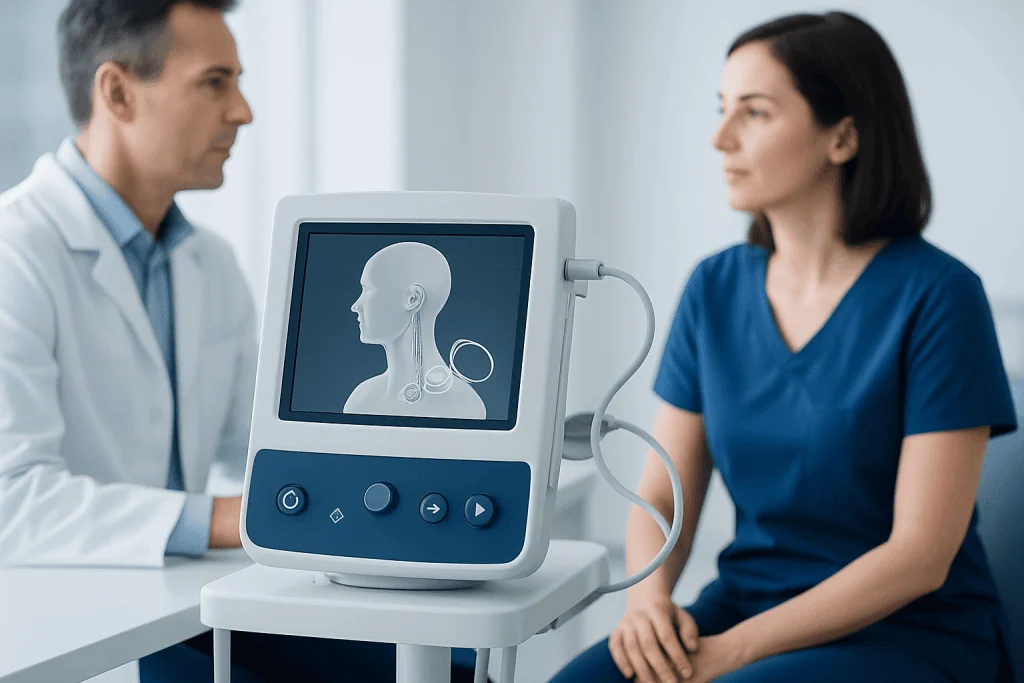
The vagus nerve sends sensory information from the body to areas of the brain involved in alertness, mood, autonomic functions and seizure networks. Electrical stimulation of this pathway is thought to influence brain circuits that regulate abnormal electrical activity and emotional processing. Researchers continue to study the precise mechanisms, but the treatment has been used clinically for decades.
The device is programmed to turn on and off at intervals throughout the day and night. During an “on” cycle, many people notice a temporary change in voice, a mild throat tickle, coughing or a sensation of tightness in the throat. These effects typically stop when the stimulation cycle ends and may improve as the body adapts or settings are adjusted.
A VNS therapy session may refer to a programming appointment rather than a treatment session like an infusion or therapy visit. At follow-up appointments, a clinician uses a handheld programmer over the chest to check the device, review its settings and make gradual adjustments. The implanted device provides stimulation continuously between visits according to the chosen program.
Who may be a candidate?
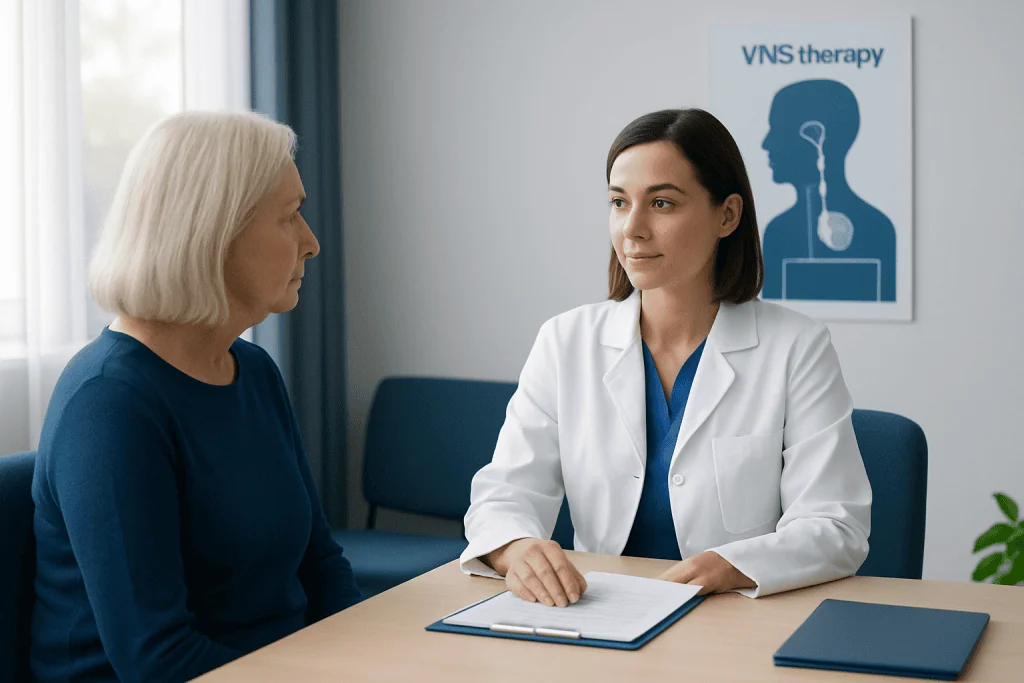
VNS therapy treatment is most commonly considered for people with focal or generalized seizures that continue despite appropriately selected antiseizure medicines. It may be an option when epilepsy surgery is not suitable, has not controlled seizures sufficiently, or is not preferred. The decision is individualized and usually involves an epilepsy specialist, neurosurgeon and the person receiving care.
For depression, candidacy is more selective. A mental health specialist reviews the diagnosis, symptom history, previous treatments, current medicines, psychotherapy and safety needs. VNS is not a first-line depression treatment, and it is generally considered only after several evidence-based treatments have not provided adequate benefit.
Before implantation, clinicians consider medical history, seizure type or mental health diagnosis, previous treatment response and the person’s goals. They may also assess heart rhythm conditions, breathing disorders during sleep, swallowing difficulties, voice concerns, prior surgery in the neck or chest, and the ability to attend programming follow-up. People with epilepsy may benefit from learning more about epilepsy and its treatment options as part of this evaluation.
- VNS may be considered when standard treatments have not achieved adequate control.
- It requires a minor surgical procedure and ongoing follow-up for programming and battery monitoring.
- It is generally used alongside, rather than instead of, medicines and other recommended care.
The procedure: step by step
The implantation procedure is performed in an operating room, usually under general anesthesia. The surgical team makes a small incision in the lower neck to identify the left vagus nerve and gently places the electrode around it. A second small incision is made in the upper chest, where the pulse generator is positioned under the skin.
The lead is tunneled under the skin from the neck to the chest and connected to the generator. The surgeon checks the system before closing the incisions. The procedure is commonly completed in a single operation, although the exact duration and hospital arrangements depend on the person’s health needs and the surgical plan.
The device is often activated after the incisions have begun to heal, rather than at the time of surgery. Initial stimulation settings are usually low. The clinician then increases or modifies settings over time based on seizure control, mood symptoms, side effects and device data. People considering implantation can discuss the process through vagus nerve stimulation treatment.
Recovery timeline and using the device
After implantation, many people go home the same day or after a short hospital stay, depending on their recovery and other medical conditions. Soreness, bruising or tightness around the neck and chest incisions can occur in the first days. The care team provides instructions for wound care, bathing, lifting, activity and when it is safe to return to work, school or exercise.
Healing of the skin incisions commonly takes a few weeks, while the schedule for activation and programming is tailored to the individual. It is important to attend all planned appointments because settings are usually adjusted in small steps. Seizure diaries, mood tracking and reports from family members or caregivers can help the team understand response over time.
For those asking about vns therapy how to use, the main day-to-day role is to follow the clinical plan and understand any magnet instructions. If a magnet is provided, the team explains when and how to swipe it over the generator. It should not be used as a substitute for emergency care, prescribed medicines or an individualized seizure action plan. The device manufacturer and care team can also explain precautions involving medical procedures, security systems and imaging.
Expected benefits, limitations and possible risks
VNS can provide meaningful improvement for some people, but the degree of benefit is variable. In epilepsy, the goal may be fewer seizures, shorter or less severe seizures, better recovery, or improved quality of life. Some people notice benefits within months, while others experience a more gradual response over a longer period. Antiseizure medicine changes should only be made with the treating clinician.
In treatment-resistant depression, improvement may involve a gradual reduction in depressive symptoms and better day-to-day functioning. VNS is used as part of a broader care plan that may include medication, psychotherapy, sleep support and regular psychiatric review. It does not replace urgent assessment when someone has thoughts of self-harm or suicide.
Common stimulation-related effects include hoarseness or voice changes, coughing, throat discomfort, shortness of breath during the stimulation cycle, tingling or neck sensations. Surgical risks can include pain, bleeding, infection, scarring, temporary or persistent voice changes, and rarely injury to nearby structures. Battery replacement requires another procedure after several years, depending on device settings and use. Programming changes can often reduce stimulation-related symptoms without removing the device.
When to seek medical care
Contact the treating team promptly for increasing redness, warmth, swelling, drainage, fever, worsening pain around an incision, or concerns that the wound is not healing. Medical advice is also important if stimulation-related symptoms become troublesome, new swallowing problems occur, or seizures, mood symptoms or medication side effects change.
Emergency care is needed for severe breathing difficulty, chest pain, signs of a serious allergic reaction, a prolonged seizure, repeated seizures without recovery between them, or an injury during a seizure. People with depression should seek urgent local emergency or crisis support if they feel unable to stay safe or have thoughts of harming themselves.
Follow-up is central to safe treatment because VNS settings, medicines and overall health may need review over time. Acibadem International’s multidisciplinary specialists and JCI-accredited hospitals assess and treat neurological conditions for international patients, including people being evaluated for implantable neuromodulation therapies.
Frequently asked questions
Is VNS therapy a cure for epilepsy?
No. VNS therapy does not cure epilepsy, but it may reduce seizures or make them less severe for some people with drug-resistant epilepsy. It is usually used alongside antiseizure medicines and ongoing specialist care.
How long does it take for VNS therapy to work?
Response varies widely. Some people notice changes in the first months, while for others benefits develop gradually as settings are adjusted over many months. Regular follow-up helps the clinician tailor stimulation to the person’s response and side effects.
Can a person feel VNS stimulation?
Many people can feel stimulation during an active cycle. Temporary hoarseness, throat tingling, cough or a change in voice are common sensations. If these effects are uncomfortable, the care team may be able to adjust the settings.
Will VNS therapy allow a person to stop epilepsy medication?
Not usually at the beginning. VNS is generally an additional treatment, and medicines should not be reduced or stopped without advice from the epilepsy specialist. Any medication changes are considered cautiously based on seizure control and individual circumstances.
What happens when the VNS battery runs low?
The device is checked during follow-up visits, and the team can estimate when battery replacement may be needed. Replacing the generator involves a procedure in the chest area, while the lead in the neck often remains in place if it is functioning well.
Can people with a VNS device have MRI scans?
Some MRI examinations may be possible with specific VNS devices and carefully followed safety conditions. The imaging center and treating team must know about the implant before any scan is scheduled. They can confirm whether the planned scan, body area and device settings meet current safety guidance.
References
- National Institute of Neurological Disorders and Stroke
- Epilepsy Foundation
- American Academy of Neurology
- U.S. Food and Drug Administration
- National Institute of Mental Health
This article is for general information only and is not a substitute for professional medical advice. Please consult a qualified doctor about your individual situation.
Explore treatments in Turkey — costs, top hospitals & a free quote
JCI-accredited · board-certified surgeons · reply within 24h

More from the Health Library
Related Specialists
Dr. Melike Erdener Çalışkan
Anesthesiology
Prof. Dr. Hüsnü Görgen
Gynecology & Obstetrics
Prof. Dr. Muhsin Eraslan
Ophthalmology
Prof. Dr. Banu Lebe
Pathology