Is Laser Eye Surgery Covered by Insurance: Procedure, Recovery and Results

Most insurance plans classify LASIK and other refractive laser procedures as elective, so routine coverage is uncommon. Medical necessity, plan exclusions, deductibles and whether a provider is in-network can affect coverage decisions.
Key Takeaways
- Most insurance plans classify LASIK and other refractive laser procedures as elective, so routine coverage is uncommon.
- Medical necessity, plan exclusions, deductibles and whether a provider is in-network can affect coverage decisions.
- A detailed eye examination determines whether laser vision correction is safe and appropriate for an individual.
- Recovery is usually rapid, but vision may fluctuate during healing and follow-up care is essential.
- Dry eye symptoms, glare, halos and the possible need for further correction are among the risks to discuss before surgery.
Is laser eye surgery covered by insurance? In most cases, standard health insurance does not cover LASIK or similar refractive procedures because they are considered elective alternatives to glasses or contact lenses. Coverage may be possible when a procedure is medically necessary, and some vision plans or employers offer negotiated discounts or health-account options.
Overview: insurance coverage and laser eye surgery
Laser eye surgery uses a laser to reshape the cornea, the clear front surface of the eye, so that light focuses more accurately on the retina. It is most often used to correct short-sightedness (myopia), long-sightedness (hyperopia) and astigmatism. LASIK, PRK and SMILE are examples of refractive laser procedures.
For people asking, “is laser eye surgery covered by insurance?”, the usual answer is no. Many health insurers consider refractive surgery elective because glasses and contact lenses can correct the same refractive error. However, the precise answer depends on the individual policy, local rules and the clinical reason for treatment.
There can be exceptions. A plan may cover an eye procedure when it is needed to treat a medical condition, such as corneal disease or an injury, rather than to reduce dependence on spectacles. Some vision-benefit plans also provide a discount, a fixed allowance or access to participating clinics; these benefits are not the same as full medical-insurance coverage.
How to check insurance and plan for treatment
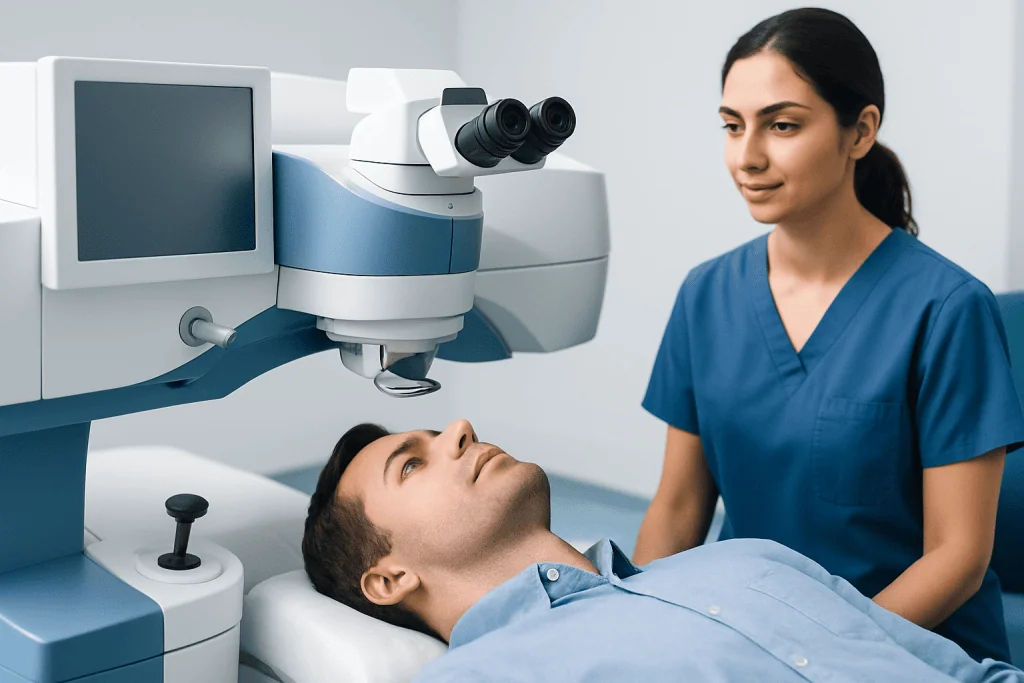
Before arranging surgery, patients can contact their insurer or benefits administrator and ask whether refractive surgery, LASIK, PRK or SMILE is excluded, discounted or covered under specific medical-necessity criteria. It is helpful to request the answer in writing and to ask about prior authorization, referrals, deductibles, co-payments and out-of-network rules.
An eye clinic can provide clinical documentation, procedure details and billing information when needed, but it cannot determine an insurer’s final coverage decision. People should also ask whether the consultation, preoperative tests, postoperative visits, prescribed eye drops or an enhancement procedure are handled separately under their plan.
Health savings accounts or flexible spending arrangements may sometimes be used for eligible medical expenses, depending on national tax rules and the terms of the account. A benefits professional or qualified financial adviser can clarify how these arrangements apply to the individual.
How laser vision correction works and who may be a candidate
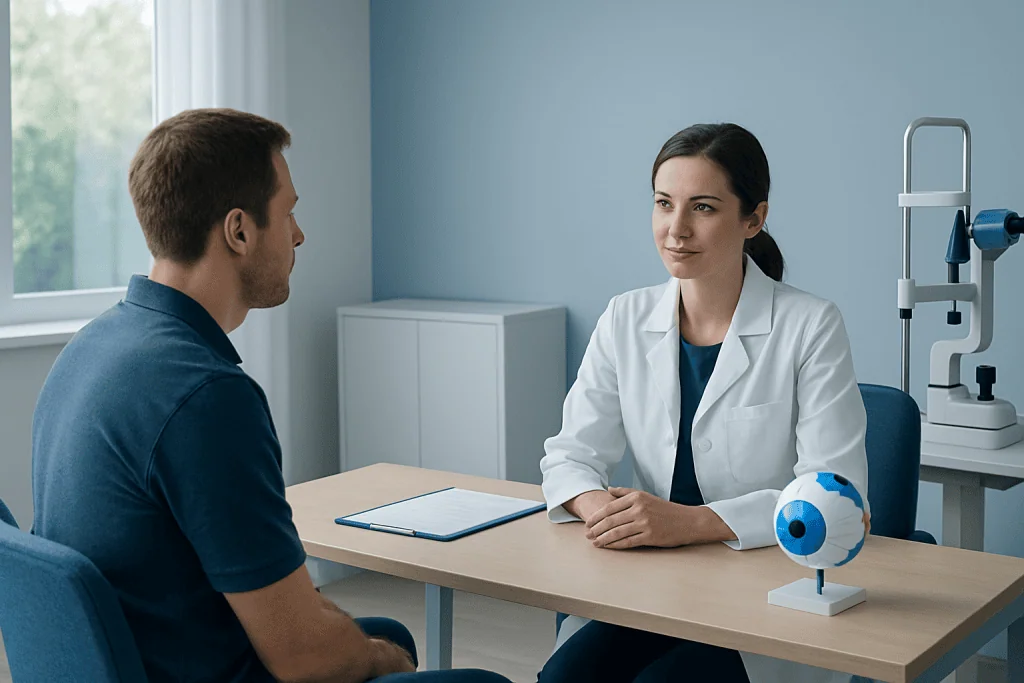
Laser vision correction changes the curvature of the cornea. In LASIK, a thin corneal flap is created and laser energy reshapes the underlying tissue before the flap is repositioned. In PRK, the surface layer of the cornea is removed before laser reshaping; it grows back during recovery. SMILE uses a laser to create and remove a small disc of corneal tissue through a small incision.
Suitability is based on much more than a glasses prescription. An ophthalmologist assesses prescription stability, corneal thickness and shape, tear-film health, pupil size, general eye health and expectations. A person generally needs a stable prescription and healthy corneas, but the exact requirements vary by procedure and by clinical assessment.
Laser surgery may not be suitable for everyone. Important considerations include uncontrolled dry eye, irregular corneal shape, keratoconus, active eye infection, certain autoimmune conditions, pregnancy or breastfeeding, and changes in vision caused by cataracts. People with keratoconus require specialist evaluation because corneal laser reshaping can be unsafe in some cases.
What happens during the procedure
Before surgery, the ophthalmology team performs a comprehensive eye examination and corneal measurements. Contact lens wear may need to be paused beforehand because lenses can temporarily alter corneal shape. The clinician explains the recommended technique, expected visual outcome, alternatives and possible complications before informed consent is obtained.
On the day of treatment, numbing eye drops are used. The patient remains awake and is asked to look toward a fixation light while the laser treatment is performed. A device may gently hold the eyelids open, and modern laser systems track small eye movements. The laser portion is usually brief, although preparation and safety checks take longer.
Following treatment, vision can initially feel blurred and the eyes may be watery, sensitive to light or mildly uncomfortable. LASIK often produces functional vision relatively quickly, while PRK commonly has a slower early recovery because the corneal surface must heal. A clinician can help patients explore the appropriate laser eye surgery options after a full assessment.
Recovery timeline and expected results
Recovery differs according to the procedure, prescription and individual healing response. After LASIK, many people notice improved vision within a day or two, although fluctuations can occur for several weeks. After PRK, discomfort and blurred vision are more common in the first few days, and visual clarity may improve gradually over weeks to months.
Patients are usually advised to use prescribed drops, avoid rubbing the eyes and attend scheduled follow-up appointments. For a short period, clinicians may recommend avoiding swimming, hot tubs, dusty environments, eye makeup or contact sports. Driving, screen use and return to work should be guided by comfort, vision and the treating clinician’s advice.
The goal is to reduce reliance on glasses or contact lenses, not to promise perfect vision in every situation. Some people may still need glasses for night driving, detailed tasks or age-related near-vision changes. Presbyopia, the gradual loss of near focus that commonly develops with age, can occur even after successful distance vision correction.
Benefits, risks and alternatives
Potential benefits of laser vision correction include greater freedom from glasses or contact lenses and improved convenience for daily activities. Results can be long-lasting when the prescription is stable, but eyes can continue to change over time. A small number of patients may need additional correction or may return to glasses or contact lenses for some tasks.
Known risks include temporary dry eye, glare, halos, starbursts around lights, fluctuating vision, undercorrection or overcorrection, and infection or inflammation. Serious complications are uncommon but can affect vision, which is why careful screening and follow-up are important. Existing dry eye should be assessed and treated before considering surgery; learn more about dry eye syndrome and its potential effect on visual comfort.
Alternatives include updated glasses, contact lenses, specialty contact lenses, or other lens-based procedures in selected patients. For people whose vision changes are related to a cloudy natural lens, cataract surgery may be more appropriate than corneal laser surgery. The best option depends on age, eye anatomy, refractive error and overall eye health.
When to seek medical care
Anyone considering laser eye surgery should arrange a comprehensive consultation with an ophthalmologist rather than relying on a prescription alone. Prompt assessment is especially important for sudden vision changes, eye pain, marked redness, flashes of light, new floaters, a curtain-like shadow in vision, or an eye injury. These symptoms are not expected effects to manage without medical advice.
After laser surgery, patients should contact their treating clinic urgently if they have worsening pain, a sudden reduction in vision, increasing redness, discharge, severe light sensitivity or concerns about an injury to the eye. Attending every scheduled follow-up appointment supports safe healing and allows early treatment if a problem develops.
Acibadem International’s multidisciplinary specialists and JCI-accredited hospitals assess and treat eye conditions for international patients, including evaluation for refractive procedures. A consultation can clarify candidacy, likely recovery, alternatives and the documentation that may be needed for insurance or benefit-plan review.
Frequently asked questions
Is laser eye surgery covered by insurance?
Usually, no. Standard health insurance commonly treats LASIK and other refractive laser procedures as elective because glasses and contact lenses are available alternatives. Individual policies may offer discounts or may cover eye surgery only when there is a documented medical indication.
Will a vision insurance plan pay for LASIK?
Some vision plans include a LASIK discount, preferred-provider network or limited benefit. This may lower the patient’s cost but does not necessarily mean the procedure is covered by medical insurance. The plan administrator can explain the exact benefit and any eligibility requirements.
What should patients ask their insurer before laser eye surgery?
Patients can ask whether the procedure is excluded, covered for medical necessity, or available at a discount through a vision plan. They should also ask about prior authorization, referral requirements, in-network rules, follow-up visits and any separate charges for testing or medications.
How long does it take to recover from laser eye surgery?
Recovery depends on the technique used and the individual’s healing. Many people recover functional vision quickly after LASIK, while PRK usually has a slower early healing period and vision may stabilize more gradually. The ophthalmologist provides procedure-specific activity and follow-up guidance.
Is laser eye surgery permanent?
The corneal reshaping performed during surgery is permanent, but vision can still change with age or due to other eye conditions. Near-vision difficulty from presbyopia can develop later, and some people may need glasses or further correction over time.
Who should not have laser eye surgery?
People with unstable prescriptions, certain corneal disorders, significant dry eye, active eye disease or some health conditions may not be suitable candidates. Pregnancy and breastfeeding can also temporarily affect vision and refractive measurements. A detailed ophthalmology examination is needed to make an individual recommendation.
References
- American Academy of Ophthalmology
- U.S. Food and Drug Administration
- National Eye Institute
- Royal College of Ophthalmologists
This article is for general information only and is not a substitute for professional medical advice. Please consult a qualified doctor about your individual situation.
Eye Surgery in Turkey — costs, top hospitals & a free quote
JCI-accredited · board-certified surgeons · reply within 24h

Ophthalmology
Comprehensive eye care from laser vision correction to retina, cornea and cataract surgery.
75 specialists in this unit