Benign Breast Lump Treatment and Outcome: How It Works, Results and What to Expect

Most breast lumps are benign, but every new or changing lump should be assessed by a qualified clinician. Observation with follow-up imaging is appropriate for many confirmed benign lumps.
Key Takeaways
- Most breast lumps are benign, but every new or changing lump should be assessed by a qualified clinician.
- Observation with follow-up imaging is appropriate for many confirmed benign lumps.
- Surgical or minimally invasive removal may be advised for a growing, large, painful or diagnostically uncertain lump.
- Recovery after a simple benign lump removal is often measured in days to a few weeks, although healing varies.
- A benign lump does not turn into breast cancer in most cases, but regular follow-up should follow the care team's advice.
Benign breast lump treatment and outcome are usually reassuring: many noncancerous lumps can be safely observed, while removal may be considered when a lump grows, causes symptoms, looks uncertain on testing or is personally distressing. A clinical breast examination, imaging and sometimes a biopsy help determine the safest next step.
Overview: benign breast lump treatment and outcome
Benign breast lump treatment and outcome depend on what the lump is, how it behaves over time and whether it causes symptoms. Once testing confirms that a lump is noncancerous, many people only need reassurance and planned follow-up. Others may benefit from removal because the lump is enlarging, uncomfortable, cosmetically noticeable or difficult to classify with confidence.
Common benign breast lumps include fibroadenomas, cysts, lipomas, papillomas and areas of fibrocystic change. These conditions are not the same as breast cancer. However, it is not possible to identify the cause of a lump by touch alone, so a new breast change should be examined rather than assumed to be harmless.
The overall outlook is generally very good. A removed benign lump can usually be fully assessed in a laboratory, and most procedures preserve the breast. Some lump types can recur or new benign lumps can develop later, which is why ongoing breast awareness and recommended screening remain important.
How benign breast lump treatment works
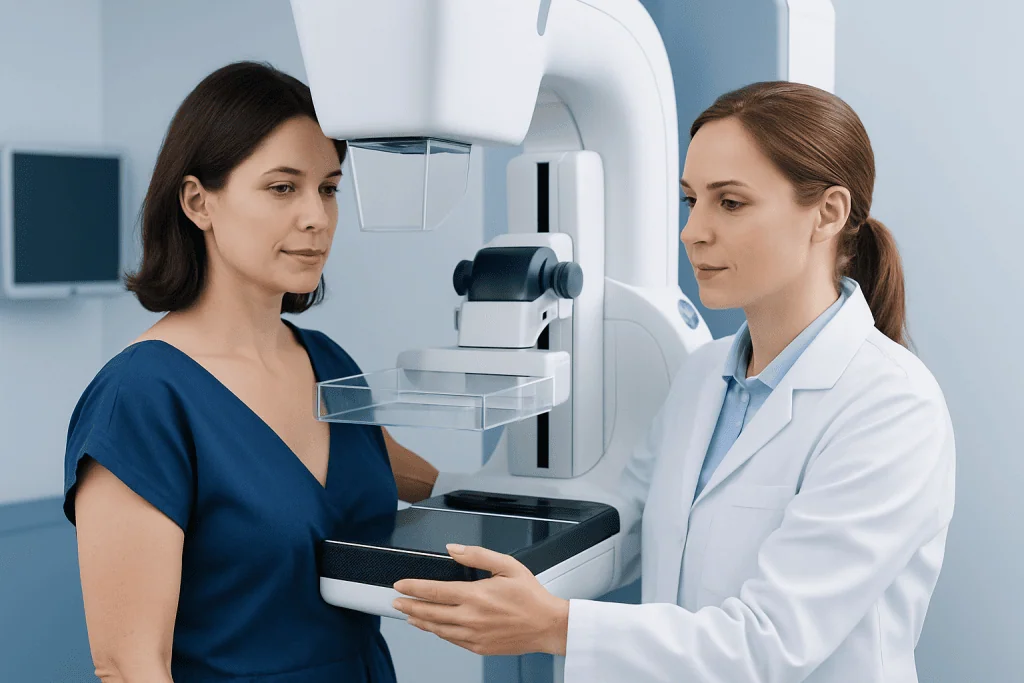
Care begins by confirming the diagnosis. Depending on age, symptoms and examination findings, a clinician may recommend ultrasound, mammography or both. If imaging does not clearly show a harmless finding, or if a tissue diagnosis is needed, a needle biopsy can collect a small sample for laboratory analysis.
When a benign diagnosis is secure and the lump is small and stable, active surveillance may be the best treatment. This means checking for changes with a follow-up examination and, when appropriate, repeat imaging. Monitoring avoids an unnecessary procedure while still allowing changes to be identified promptly.
For a simple fluid-filled cyst that is painful or large, aspiration may relieve symptoms by draining fluid through a fine needle. Solid lumps may be removed with a small surgical procedure called excisional biopsy or lumpectomy. In selected cases, image-guided vacuum-assisted removal may be an option; the suitable approach depends on the lesion, imaging findings and local clinical practice.
- Observation: often used for stable, biopsy-confirmed benign lumps.
- Needle aspiration: may be used for symptomatic breast cysts.
- Core needle biopsy: clarifies the nature of an uncertain lump.
- Excisional surgery: removes the lump and allows complete pathology assessment.
Who may be a candidate for lump removal?

Removal is not automatically necessary simply because a lump is benign. A breast surgeon may discuss removal when a lump is increasing in size, is large relative to the breast, causes pain or pressure, affects comfort or appearance, or creates persistent worry despite reassuring results. Removal may also be recommended if the pathology result is not fully definitive or if imaging and biopsy findings do not match.
Fibroadenomas are a frequent reason for this conversation, especially when they grow or have features that require a more complete assessment. A rapidly growing fibroepithelial lesion may need excision to distinguish a fibroadenoma from a less common phyllodes tumor. The decision is individual and should balance expected benefit against scarring, anesthesia considerations and recovery.
Before a procedure, the team reviews medical history, medicines, allergies, pregnancy status where relevant and any bleeding risks. People taking anticoagulant or antiplatelet medicines should not stop them independently; the prescribing clinician and surgical team can provide a safe plan.
What happens during benign breast lump removal?
The exact steps depend on whether the lesion can be felt and on its location. If it is not palpable, imaging guidance may be used before surgery to mark the area. The procedure is commonly performed as day surgery, meaning the person usually returns home the same day.
After the area is prepared, the surgeon makes a carefully planned incision and removes the lump with a small amount of surrounding tissue when needed. The specimen is sent to pathology, where specialists examine it under a microscope. The incision is then closed with stitches, adhesive strips or skin glue, and a dressing is applied.
Local anesthesia with sedation or general anesthesia may be used depending on the size and location of the lump, the planned technique and individual needs. The care team explains preparation instructions, fasting requirements if applicable, transport arrangements and the expected plan for pain relief before the procedure.
The pathology report is an important part of the outcome. It confirms the exact diagnosis and guides whether any further follow-up is needed. For a confirmed benign result, additional cancer treatment is not required.
Benefits, risks and expected outcomes
The main benefit of removal is diagnostic certainty and relief from symptoms caused by the lump. Some people also feel more comfortable once a noticeable lump has been removed. When a benign lesion is completely excised, the result is usually definitive for that particular lump.
As with any procedure, there are potential risks. These include bruising, bleeding, infection, fluid collection, temporary numbness, pain, delayed wound healing and a scar. Less commonly, the breast shape or nipple sensation may change, particularly when a larger lump is removed. The surgeon can discuss risks in relation to the individual procedure and breast anatomy.
It is important to distinguish a benign breast lump from breast cancer. A typical benign lump does not gradually transform into cancer. However, new symptoms, a new mass or a change in an existing lump should still be assessed, because a person can develop a separate breast condition at another time.
Recovery timeline and self-care
Recovery after a simple excision is commonly straightforward. Mild soreness, swelling and bruising are expected in the first several days, and most people can manage with the pain-relief plan provided by their clinician. A supportive bra may improve comfort and reduce movement during early healing.
Many people return to light daily activities within a few days, although timing varies with the procedure, anesthesia, work demands and individual healing. Strenuous exercise, heavy lifting and swimming are usually postponed until the incision is healing well and the surgical team says it is safe. The wound should be kept clean and dry according to the specific instructions provided.
A follow-up visit or phone review is arranged to check healing and discuss pathology. Contact the care team sooner for increasing redness, warmth, swelling, drainage, fever, worsening pain, significant bleeding or a rapidly enlarging breast swelling. These symptoms do not always indicate a serious problem, but they should be checked promptly.
When to seek medical care
A person should arrange a medical assessment for any new breast lump, even if it is painless. Medical care is also appropriate for a lump that becomes larger, feels firm or fixed, persists after a menstrual cycle, or is accompanied by changes in the skin, nipple or breast shape.
Prompt assessment is especially important for nipple discharge that is bloody or spontaneous, new nipple inversion, dimpling of the skin, persistent focal breast pain, swollen lymph nodes near the armpit or collarbone, or an area of redness and warmth with fever. These signs have several possible causes, including infection and benign conditions, but they require professional evaluation.
People who have had a benign result should continue age- and risk-appropriate breast screening. A clinician can explain whether personal or family history, genetic risk or previous biopsy findings call for an individualized surveillance plan.
Acibadem International’s multidisciplinary breast specialists at JCI-accredited hospitals assess breast lumps and discuss monitoring, biopsy and removal options for international patients.
Common questions about size, duration and cancer progression
What is the average size of a benign breast tumor? There is no single average size because benign breast lumps include several different conditions. Fibroadenomas are often around 1 to 3 centimeters, but they can be smaller or larger. Size alone cannot confirm whether a lump is benign, so imaging and, when needed, biopsy remain more informative than measurement alone.
How much time does breast cancer take from stage 1 to 4? There is no reliable fixed timeline. Breast cancers differ greatly in biology, growth rate and response to the immune system, and some may remain localized for a long time while others progress more quickly. Staging is determined by the extent of disease at diagnosis, not by a predictable calendar; screening and timely assessment of new breast changes support earlier detection.
How long does it take to recover from a benign breast lump removal surgery? Many people resume gentle daily activity within several days after an uncomplicated outpatient procedure. Bruising and tenderness can take one to two weeks to settle, while deeper healing and scar maturation continue for several weeks to months. The surgeon’s advice should guide return to exercise, lifting and work.
How long can a benign breast lump last? A benign lump may last for months or years. Some cysts change with hormonal cycles or disappear, while fibroadenomas may remain stable, grow slowly or shrink over time, particularly after menopause. A previously assessed lump should be rechecked if it changes in size, feel or symptoms.
Frequently asked questions
Can a benign breast lump become cancerous?
Most benign breast lumps do not become cancerous. Certain biopsy findings may be associated with a higher future breast cancer risk, but that is different from a benign lump changing into cancer. A clinician can explain the meaning of a specific pathology result and the appropriate follow-up plan.
Is surgery always needed for a fibroadenoma?
No. Many fibroadenomas can be monitored when imaging or biopsy confirms the diagnosis and the lump is stable. Removal may be considered if it grows, causes symptoms, is large, has uncertain features or is a source of ongoing concern.
Does a benign breast lump removal leave a scar?
Any incision can leave a scar, although surgeons usually place incisions as discreetly as possible. Scars are often more noticeable early on and generally soften and fade over time. The final appearance depends on incision location, wound healing and individual skin characteristics.
Can a breast cyst come back after drainage?
Yes. Draining a cyst can relieve symptoms, but fluid can sometimes collect again. A recurrent cyst may need repeat assessment, particularly if it is persistent, contains blood-stained fluid or leaves a lump after aspiration.
Will removing a benign lump change breast shape?
Removing a small lump often causes little or no visible change. A larger lump or one near the nipple may have a greater effect on contour, and this can be discussed before surgery. The surgeon can explain the likely cosmetic considerations for the planned procedure.
What should a person do while waiting for a breast assessment?
It can be helpful to note when the lump was first noticed and whether it changes with the menstrual cycle. Avoid repeatedly pressing or checking the area, as this can increase tenderness and worry. Seek earlier care if rapid growth, skin changes, fever or bloody nipple discharge develops.
References
- American Cancer Society
- American College of Radiology
- National Cancer Institute
- Mayo Clinic
- Breast Cancer Now
This article is for general information only and is not a substitute for professional medical advice. Please consult a qualified doctor about your individual situation.
Oncology care in Turkey — second opinion and treatment plan
JCI-accredited · board-certified surgeons · reply within 24h

More from the Health Library


Related Specialists

Assoc. Prof. Dr. Murat Urkan
General Surgery
Dr. Özge İdem Karadağ
Gynecology & Obstetrics
Dr. Eda Balanlı Güngörmüş
Pediatrics
Dr. Hülya Yıldız Bayar
Neurology