Does Colon Cancer Show on CT Scan: Preparation, Procedure and Results

A standard CT scan may identify a colon mass, bowel-wall thickening, blockage, enlarged lymph nodes, or cancer spread. CT is helpful for assessing the extent of suspected or confirmed colon cancer, but it is not the most reliable test for small polyps or early lining changes.
Key Takeaways
- A standard CT scan may identify a colon mass, bowel-wall thickening, blockage, enlarged lymph nodes, or cancer spread.
- CT is helpful for assessing the extent of suspected or confirmed colon cancer, but it is not the most reliable test for small polyps or early lining changes.
- Colonoscopy allows direct inspection of the colon and enables tissue biopsy or polyp removal during the same procedure.
- Preparation depends on the type of CT scan; CT colonography usually requires bowel cleansing, while routine abdominal CT often does not.
- New rectal bleeding, persistent bowel-habit changes, unexplained iron-deficiency anemia, or ongoing abdominal symptoms should be assessed by a clinician.
Colon cancer can show on a CT scan, particularly when a tumor is large enough to thicken the bowel wall, narrow the colon, or spread beyond the bowel. However, a normal CT scan does not fully rule out early colon cancer or small polyps, and colonoscopy with biopsy is generally needed to confirm the diagnosis.
Does Colon Cancer Show on a CT Scan?
Yes, colon cancer can show on a CT scan, especially if it has formed a visible mass, caused thickening of the colon wall, narrowed the bowel, or spread to nearby lymph nodes or other organs. CT images can also help doctors identify complications such as bowel obstruction or perforation. However, CT is not perfect for finding small polyps, subtle early cancers, or flat changes on the inner lining of the colon.
A routine CT scan of the abdomen and pelvis is commonly used when symptoms suggest an abdominal problem or after cancer is diagnosed to assess its extent. If colon cancer is suspected, colonoscopy is usually the key next test because it examines the inside of the bowel directly and allows a doctor to take a biopsy. A tissue sample is necessary to confirm whether abnormal cells are cancer.
CT colonography, sometimes called virtual colonoscopy, is a specialized CT examination designed to evaluate the colon. It can be an option for selected people who cannot complete a conventional colonoscopy, but an abnormal result still usually requires colonoscopy for biopsy or removal of a polyp.
How CT Imaging Works for the Colon
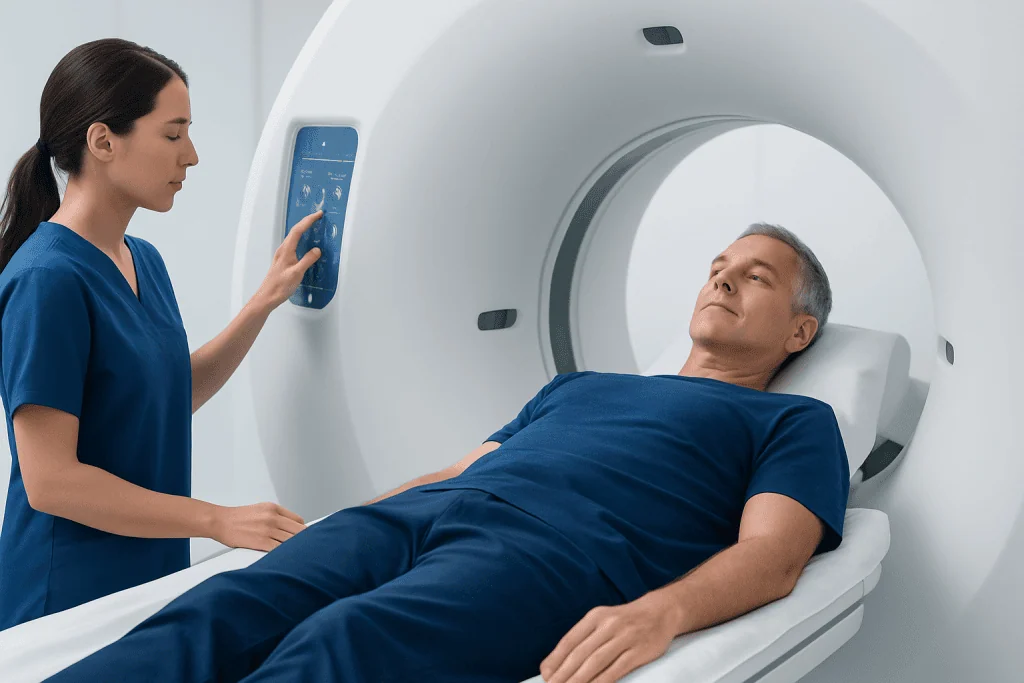
Computed tomography (CT) uses X-rays and computer processing to create detailed cross-sectional images of the body. For suspected colon cancer, a radiologist reviews the colon and surrounding tissues for a mass, irregular wall thickening, enlarged lymph nodes, liver lesions, fluid, or other signs that may need further evaluation.
Many abdominal and pelvic CT examinations use intravenous contrast material to make blood vessels and organs easier to distinguish. Contrast can improve assessment of a suspected tumor and help show whether there are changes outside the bowel. The scan itself is quick, usually taking only a few minutes, although the complete appointment may take longer because of preparation and contrast administration.
CT findings must always be interpreted in context. Inflammation from conditions such as diverticulitis, infection, or inflammatory bowel disease can sometimes resemble cancer on imaging. Conversely, a small or early cancer may not be clearly visible. This is why imaging results, symptoms, blood tests, colonoscopy, and pathology are considered together.
Does Colon Cancer Usually Show Up on a CT Scan?

Colon cancer often shows up on CT when it is large enough to alter the shape or thickness of the bowel, but it does not always appear clearly. Standard CT scans are more likely to detect advanced or obstructing tumors than small cancers confined to the inner bowel lining. They may also reveal indirect signs, such as unexplained bowel dilation, anemia-related concerns prompting investigation, or suspicious lymph nodes.
CT is especially valuable after a cancer diagnosis has been established. It helps the care team determine whether there is evidence of spread to organs such as the liver or lungs and supports treatment planning. This staging information can guide decisions about surgery, systemic treatment, radiation therapy in selected rectal cancers, and follow-up testing.
For a suspicious finding in the colon, colonoscopy remains the usual diagnostic standard. During colonoscopy, the doctor can view the lining in real time, remove many polyps, and obtain tissue samples from abnormal areas. People with symptoms or imaging findings should discuss the most appropriate next step with a gastroenterologist or colorectal specialist.
How Often Is Colon Cancer Missed on a CT Scan?
There is no single missed-rate figure that applies to every CT scan because accuracy depends on the type of CT examination, bowel preparation, use of contrast, tumor size and location, image quality, and the clinical question. A routine CT abdomen and pelvis is not designed as a dedicated colon cancer screening test, so small polyps and early cancers may be missed even when the scan is otherwise normal.
CT colonography is specifically designed to evaluate the colon and is generally more effective than routine CT for identifying larger polyps and cancers. Even so, it can be limited by retained stool, inadequate bowel expansion, folds of the colon, and very small or flat lesions. It also cannot provide a biopsy or remove a lesion during the examination.
A negative CT result should not override concerning symptoms. Persistent rectal bleeding, iron-deficiency anemia, unexplained weight loss, a lasting change in bowel habits, or ongoing abdominal pain may still warrant colonoscopy or other evaluation. The clinician will consider personal and family history alongside the imaging report.
What Is the First Hint of Colon Cancer?
Colon cancer may not cause symptoms in its early stages, which is why screening is important for eligible adults. When symptoms occur, the first hint can vary. Some people notice blood in or on the stool, a new persistent change in bowel habits, narrower stools, abdominal cramping, or a feeling that the bowel does not empty completely.
In other people, slow blood loss from the bowel is not visible. It may first be found through iron-deficiency anemia on a blood test, causing tiredness, weakness, shortness of breath with activity, or light-headedness. These symptoms have many possible causes and do not automatically mean cancer, but they should be assessed rather than self-diagnosed.
Risk can be higher with increasing age, a personal history of polyps or inflammatory bowel disease, and a family history of colorectal cancer or inherited cancer syndromes. Screening recommendations vary by country and individual risk. A healthcare professional can advise when screening should begin and which test is most suitable.
How Should I Prepare for a CT Scan of the Colon?
Preparation depends on whether the examination is a routine CT scan or CT colonography. For a standard abdominal and pelvic CT, patients may be asked not to eat for several hours before the scan, particularly if contrast will be used. The imaging center will provide specific instructions about food, drinks, regular medicines, and arrival time.
CT colonography generally requires more extensive preparation because the colon needs to be as empty as possible. This commonly includes a prescribed bowel-cleansing regimen, a temporary low-residue or clear-liquid diet, and sometimes oral contrast material that helps distinguish stool from abnormalities. The bowel is gently filled with air or carbon dioxide during the examination to improve visibility.
Before either test, patients should tell the medical team about pregnancy or a possibility of pregnancy, previous reactions to contrast material, kidney disease, diabetes, thyroid conditions, asthma, and all medicines or supplements. The team may arrange blood tests or adjust instructions when appropriate. Following the exact preparation plan is important because it improves image quality and reduces the chance that repeat testing will be needed.
Procedure, Recovery, Benefits and Risks
At the appointment, the patient changes into a gown and removes metal objects that could affect the images. For a contrast-enhanced CT, a small intravenous line may be placed. During the scan, the patient lies on a moving table and may be asked to briefly hold their breath. CT colonography may involve scanning while lying in more than one position after the colon has been gently inflated.
Most people can return to normal activities immediately after a routine CT scan. Drinking fluids may be advised after intravenous contrast unless a clinician has provided different guidance. Following CT colonography, temporary bloating, gas, or mild cramping can occur and usually settles soon after the examination. Sedation is not typically used, so patients can generally travel home independently unless another medical reason applies.
The benefits of CT include speed, broad evaluation of the abdomen and pelvis, and useful information about possible tumor spread or complications. Risks are generally low but include exposure to a small amount of ionizing radiation and, rarely, an allergic-like or kidney-related reaction to contrast. CT colonography also carries a very small risk of bowel injury from inflation. If a scan suggests cancer, further evaluation with colonoscopy and biopsy is needed before treatment decisions are made.
For people diagnosed with colorectal cancer, care may involve coordinated assessment by gastroenterology, radiology, pathology, colorectal surgery, and oncology teams. Acibadem International’s multidisciplinary specialists at JCI-accredited hospitals diagnose and treat colorectal conditions for international patients, with care plans based on individual clinical findings.
When to Seek Medical Care
Medical assessment is appropriate for rectal bleeding that is new, recurrent, or unexplained; black or dark stools; a bowel-habit change lasting more than a few weeks; persistent abdominal pain or bloating; unexplained weight loss; or new fatigue that could be related to anemia. Although these symptoms often have non-cancer causes, timely assessment can clarify the reason and help guide appropriate testing.
Urgent medical care is important for severe or worsening abdominal pain, repeated vomiting, inability to pass stool or gas with marked swelling, fainting, heavy bleeding, or signs of dehydration. These symptoms can indicate a bowel obstruction, significant bleeding, or another condition requiring prompt evaluation.
People who have had a CT scan but continue to experience symptoms should discuss the result with their doctor rather than assuming a normal scan rules out all bowel conditions. Depending on the symptoms and risk factors, the clinician may recommend colonoscopy, stool testing, blood tests, repeat imaging, or referral to a specialist.
Frequently asked questions
Can a CT scan diagnose colon cancer by itself?
A CT scan can strongly suggest colon cancer when it shows a suspicious mass, bowel-wall thickening, obstruction, or possible spread. However, it cannot confirm the diagnosis by itself. Confirmation generally requires a colonoscopy and biopsy, followed by laboratory examination of the tissue.
Is CT colonography the same as a regular CT scan?
No. CT colonography is a specialized CT examination that uses bowel preparation and gentle colon inflation to evaluate the inside of the large bowel more closely. A routine abdominal CT views many abdominal structures but is not optimized to find small colon polyps or early lining abnormalities.
Can a CT scan find colon polyps?
CT colonography can identify many larger polyps, but very small or flat polyps can be harder to detect. A routine CT scan is less reliable for polyps. Colonoscopy remains useful because it can both detect and remove many polyps during the same procedure.
Why might a doctor order a CT scan before colonoscopy?
A doctor may order CT first when symptoms could be caused by several abdominal conditions, when there is concern about obstruction or complications, or when a person cannot safely undergo colonoscopy immediately. CT may also help assess the extent of disease after a diagnosis is suspected or confirmed.
Do I need contrast for a CT scan if colon cancer is suspected?
Many CT scans performed for suspected cancer use intravenous contrast because it can improve visibility of organs, blood vessels, lymph nodes, and possible spread. Not every person can receive contrast, such as some people with significant kidney impairment or a prior serious reaction. The radiology and medical teams decide based on the individual's health needs.
What happens if a CT scan shows a colon mass?
A colon mass on CT generally requires prompt follow-up with the clinician who ordered the scan. Colonoscopy and biopsy are commonly arranged to determine the cause and confirm whether cancer is present. Additional imaging or blood tests may be used to support diagnosis and treatment planning.
References
- American Cancer Society
- National Cancer Institute
- American College of Radiology
- National Institute of Diabetes and Digestive and Kidney Diseases
- World Health Organization
This article is for general information only and is not a substitute for professional medical advice. Please consult a qualified doctor about your individual situation.
Colon Cancer in Turkey — costs, top hospitals & a free quote
JCI-accredited · board-certified surgeons · reply within 24h