Fusion of Lumbar: Procedure, Recovery and Results
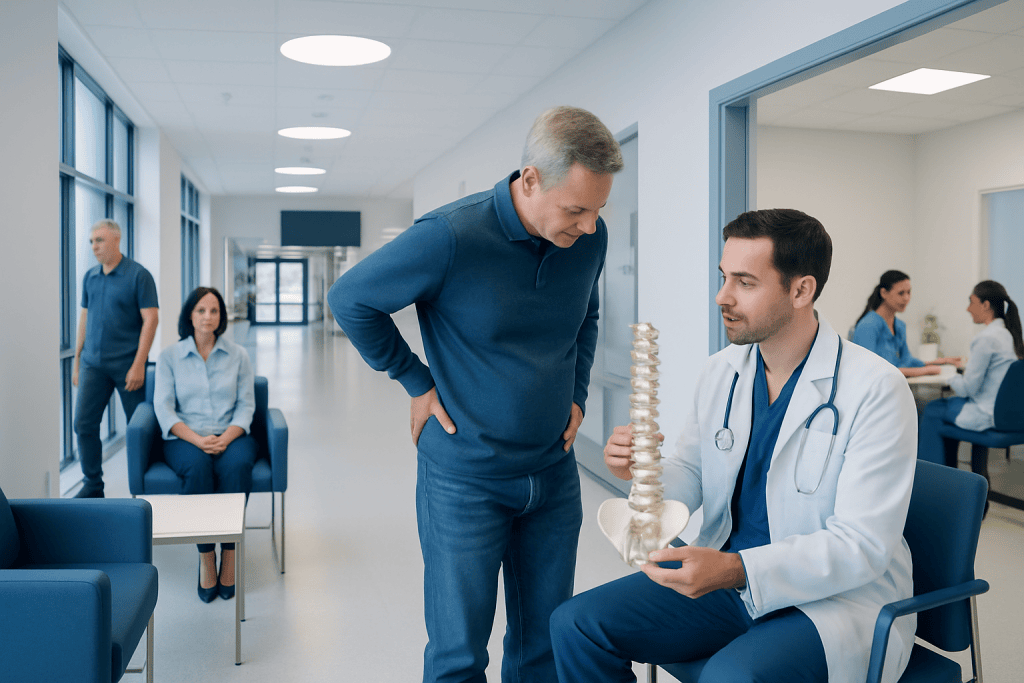
Lumbar fusion is intended to stabilize a painful or unstable spinal segment; it does not treat every type of low back pain. The operation commonly combines bone graft with screws, rods, cages, or plates to support healing.
Key Takeaways
- Lumbar fusion is intended to stabilize a painful or unstable spinal segment; it does not treat every type of low back pain.
- The operation commonly combines bone graft with screws, rods, cages, or plates to support healing.
- Walking usually begins soon after surgery, while comfortable, more normal walking often improves gradually over weeks to months.
- Recovery varies with the number of levels fused, surgical approach, overall health, and whether nerves were affected before surgery.
- Pain, infection, blood clots, non-union, and persistent symptoms are possible risks that should be discussed with the surgical team.
Fusion of lumbar, also called lumbar spinal fusion, is a procedure that joins two or more lower-back vertebrae so they heal into one stable bone. It may help selected people with painful spinal instability, deformity, or nerve compression when appropriate non-surgical treatment has not provided relief.
Overview: what is fusion of lumbar?
Fusion of lumbar is an operation that permanently joins, or fuses, two or more bones in the lower spine called vertebrae. The aim is to stop painful movement at a specific spinal level and create a more stable foundation for the back. It is generally considered only after a careful assessment shows a structural problem that is likely to benefit from stabilization.
During the procedure, a surgeon places bone graft between or around the affected vertebrae. The body gradually grows new bone across the area, much like healing a fracture. Metal implants such as screws and rods, and sometimes a spacer called a cage, may hold the spine in the desired position while this process occurs.
Lumbar fusion is often performed alongside decompression surgery, in which pressure is removed from a spinal nerve. It may be used for selected cases of spondylolisthesis, spinal instability, certain deformities, recurrent disc problems, fractures, infection, or tumors. Symptoms caused by lumbar spinal stenosis may sometimes require decompression, with fusion added only when instability is present or expected.
How lumbar fusion works and who may be a candidate

The lower spine normally allows controlled movement. When a motion segment is unstable, severely worn, misaligned, or damaged, that movement can contribute to mechanical back pain or narrow the space for spinal nerves. A fusion removes movement at that one segment while seeking to preserve as much healthy motion as possible elsewhere in the spine.
A person may be considered for lumbar fusion when symptoms, physical examination findings, and imaging all point to the same treatable spinal level. Typical concerns include persistent back pain with instability, leg pain or weakness from nerve compression, progressive slippage of a vertebra, or pain after a previous operation when a repeat procedure is appropriate.
Before recommending surgery, clinicians usually review non-surgical options such as activity modification, structured physiotherapy, pain-management strategies, and treatment of contributing conditions. Not all back pain has a clear surgical target, and fusion is not routinely recommended solely because an MRI shows age-related disc changes. Smoking or nicotine use, poorly controlled diabetes, osteoporosis, poor nutrition, and certain medicines can affect healing and should be addressed in advance where possible.
- Potential candidates have symptoms that meaningfully affect daily life and match imaging findings.
- Non-surgical treatment has been adequate but has not provided sufficient relief, or there is progressive neurological risk.
- The person understands that surgery aims to improve stability and function, but cannot promise complete pain relief.
Step by step: what happens during the procedure
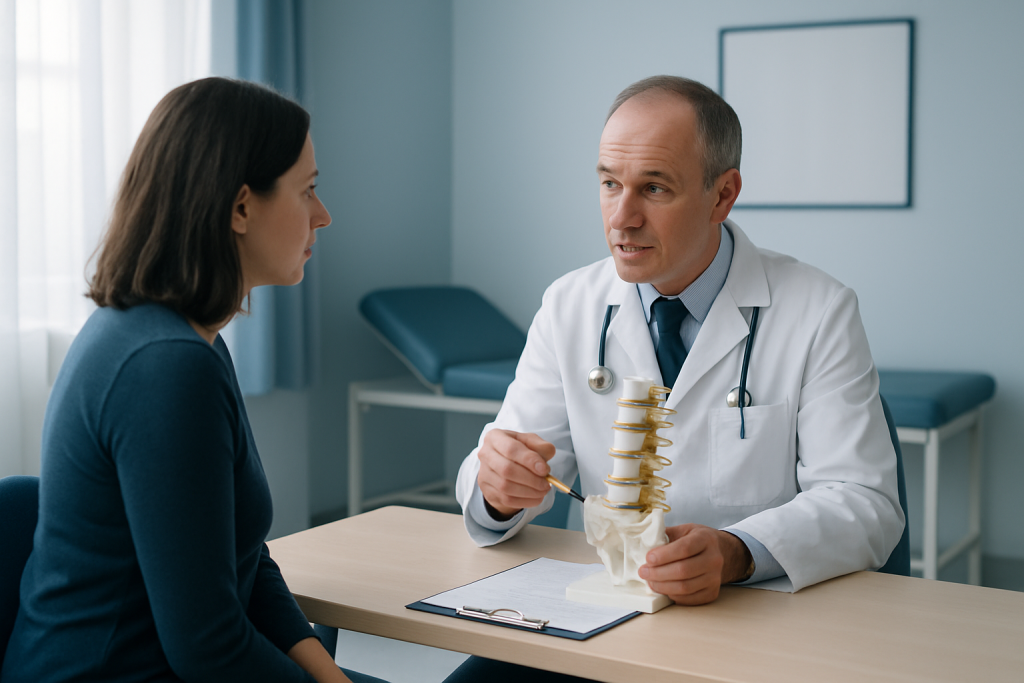
Planning begins with a review of medical history, examination, and imaging such as X-rays, MRI, or CT scans. The surgeon determines which level or levels require treatment and selects an approach that suits the condition. Lumbar fusion can be performed from the back, front, side, or through a combined approach; some operations use minimally invasive techniques, while others require a more open incision.
On the day of surgery, the patient receives general anesthesia and is asleep throughout the procedure. If nerves are compressed, the surgeon may first remove part of a bone, ligament, or disc material to create more room. The damaged disc may be removed and replaced with a cage containing bone graft, depending on the chosen technique.
Bone graft may come from the patient, a donor source, or a bone-graft substitute selected by the surgical team. Screws and rods are often placed to maintain alignment and reduce motion during healing. The incision is then closed, and the patient is monitored as anesthesia wears off. The length of surgery and hospital stay varies according to the number of levels treated, the approach, overall health, and whether additional procedures are needed.
Patients considering surgery can discuss the planned approach, expected recovery, and alternatives through a specialist consultation for spinal fusion surgery.
Recovery timeline and expected results
Recovery after lumbar fusion happens in stages. Many people are encouraged to stand and take short walks with support on the day of surgery or the following day, when medically safe. Early movement helps circulation, supports lung function, and gradually rebuilds confidence. A physiotherapist may teach safe ways to get out of bed, walk, and protect the spine during daily activities.
In the first several weeks, pain and fatigue are common and activity is increased gradually. Follow-up appointments may include X-rays to check alignment and the position of implants. The initial wound healing period is much shorter than bone healing: the fusion itself develops over months, and the surgical team will advise when bending, lifting, driving, work, exercise, and other activities can safely resume.
Many patients experience reduced leg pain when a compressed nerve has been effectively treated, although numbness or weakness may recover more slowly. Back pain and function can also improve, but results differ among individuals. Long-standing nerve injury, additional painful spinal conditions, poor bone healing, and smoking can affect the outcome. Continued rehabilitation and realistic goals are important parts of recovery.
For people travelling for care, Acibadem International’s multidisciplinary spine specialists and JCI-accredited hospitals can assess and treat lumbar spine conditions, while coordinating appropriate follow-up planning for international patients.
How long does it take to walk normally after lumbar fusion?
Most patients begin short, assisted walks within one or two days of lumbar fusion if their medical condition allows. Walking distance and comfort then increase gradually. Some people walk around their home relatively comfortably within a few weeks, while others need a walker, cane, or more time because of pre-existing weakness, balance problems, pain, or a more extensive fusion.
There is no single definition of walking “normally.” A more natural gait, greater endurance, and confidence on longer distances may take several weeks to a few months to return. If a nerve was significantly compressed before surgery, numbness or weakness can take longer to improve and may not fully resolve.
Regular short walks are often preferable to a single long walk early in recovery. The surgical and rehabilitation teams should provide individualized restrictions and progression goals. A sudden decline in walking ability, new weakness, or new bowel or bladder changes requires urgent medical assessment.
How painful is recovery from lumbar fusion? Is spinal fusion the hardest surgery to recover from?
Recovery from lumbar fusion can be painful, particularly in the first days and weeks, because the operation affects deep back tissues and bone. Pain is expected to be managed with a personalized plan that may include prescribed medicines, ice or other comfort measures when advised, movement guidance, and gradual rehabilitation. Pain should become more manageable over time rather than steadily worsening.
Whether spinal fusion is the “hardest” surgery to recover from is subjective and cannot be answered the same way for everyone. It is a major procedure with a meaningful recovery period, but difficulty depends on the number of levels fused, surgical approach, baseline fitness, other health conditions, support at home, and the reason for surgery. Many patients progress steadily with appropriate pain control and rehabilitation.
It is helpful to discuss pain expectations before surgery, including how to contact the team after discharge and what symptoms may signal a complication. Severe uncontrolled pain, fever, wound drainage, worsening leg symptoms, chest pain, or shortness of breath should not be managed at home without prompt medical advice.
What not to do after lumbar fusion
After lumbar fusion, patients should not return immediately to heavy lifting, repeated bending, twisting, high-impact exercise, or strenuous housework. These activities can strain healing tissues and may increase pain. The exact limits and timeframe differ by operation, so the surgeon’s written instructions should take priority over general advice.
Nicotine should be avoided, including cigarettes, vaping products, and other tobacco products, because it can interfere with bone healing. Patients should also avoid driving while taking sedating pain medicines or before they can safely control a vehicle, and they should not stop prescribed medicines without speaking to their clinician.
Bed rest for long periods is usually not recommended unless specifically ordered. Gentle, frequent walking and prescribed exercises are commonly part of recovery. Patients should use careful body mechanics, ask for help with tasks that involve lifting, and attend scheduled follow-up visits so the team can monitor wound healing and fusion progress.
- Do not lift, bend, or twist beyond the restrictions provided by the surgeon.
- Do not smoke or use nicotine products during the healing period.
- Do not resume sports, gym training, or physically demanding work until cleared.
- Do not ignore new neurological symptoms, wound concerns, or signs of infection.
Benefits, risks, and when to seek medical care
The potential benefit of lumbar fusion is improved stability at a painful spinal level, often combined with relief of pressure on nerves. This may reduce pain, improve walking tolerance, and support daily activities for appropriately selected patients. However, fusion reduces movement at the treated level, and it may not eliminate all back pain or reverse established nerve damage.
Possible risks include bleeding, infection, blood clots, reactions to anesthesia, injury to nerves or nearby structures, spinal fluid leak, continued pain, and a failure of the bones to unite fully, called non-union or pseudarthrosis. Hardware can rarely loosen or break, and spinal levels next to a fusion can develop symptoms over time. The surgical team can explain how individual health factors influence these risks.
Medical care should be sought urgently after surgery for new or worsening leg weakness, loss of bowel or bladder control, numbness around the groin or buttocks, chest pain, shortness of breath, or signs of a blood clot such as sudden leg swelling. Prompt contact with the surgical team is also appropriate for fever, increasing redness or drainage from the incision, a wound that opens, or pain that becomes progressively worse rather than gradually improving.
Before surgery, medical review is important for severe or progressive weakness, difficulty walking, persistent pain that limits daily life despite treatment, or symptoms suggesting nerve compression. A spine specialist can determine whether continued non-surgical care, decompression, or lumbar fusion is most appropriate.
Frequently asked questions
What is the success rate of fusion of lumbar?
Results depend on why the fusion is performed, the number of levels treated, the presence of nerve damage, bone health, smoking status, and rehabilitation. Fusion may improve stability and reduce symptoms when there is a clearly identified surgical problem, but it cannot guarantee complete pain relief. The surgeon can explain the expected outcome for the individual diagnosis.
How long does it take for a lumbar fusion to heal completely?
Skin and soft tissues usually heal in the first weeks, but the bone fusion develops much more slowly. It commonly takes several months for bone to consolidate, and some patients require longer. Follow-up imaging and clinical assessments help the surgical team judge progress.
Can a person bend after lumbar fusion?
Bending restrictions are usually strictest during the early healing period, particularly when bending is combined with lifting or twisting. As healing progresses, the care team may gradually allow more movement based on the operation and recovery. The patient should follow the specific instructions given by the surgeon and physiotherapist.
Will lumbar fusion relieve leg pain?
Leg pain caused by pressure on a spinal nerve may improve after effective decompression, sometimes performed with fusion. Recovery of numbness or weakness can be slower because irritated nerves need time to heal. If nerve damage was long-standing, some symptoms may remain.
Can adjacent levels wear out after lumbar fusion?
The spine continues to age naturally after fusion, and levels next to the fused area may experience additional stress. Some people later develop symptoms at an adjacent level, while many do not need further treatment. Maintaining a healthy weight, avoiding nicotine, and following rehabilitation advice may support overall spine health.
When can a person return to work after lumbar fusion?
Return-to-work timing depends on the job, the surgical approach, symptoms, and recovery progress. Desk-based work may be possible earlier than work involving lifting, prolonged driving, climbing, or repetitive bending. The treating team should provide individualized guidance and any needed work restrictions.
References
- American Academy of Orthopaedic Surgeons
- North American Spine Society
- National Institute of Neurological Disorders and Stroke
- National Health Service
- Mayo Clinic
This article is for general information only and is not a substitute for professional medical advice. Please consult a qualified doctor about your individual situation.
Joint and spine care in Turkey — expert assessment & treatment
JCI-accredited · board-certified surgeons · reply within 24h