Strabismus Eye Surgery for Adults: Procedure, Recovery and Results

Adult strabismus surgery changes the tension or position of eye muscles; it does not operate inside the eye. Adults may benefit when misalignment causes double vision, eye strain, head turning or concerns about eye appearance.
Key Takeaways
- Adult strabismus surgery changes the tension or position of eye muscles; it does not operate inside the eye.
- Adults may benefit when misalignment causes double vision, eye strain, head turning or concerns about eye appearance.
- Most people go home the same day and return gradually to usual activities over days to weeks, depending on their work and recovery.
- Redness, soreness, tearing and a scratchy sensation are common early effects; serious complications are uncommon but possible.
- Alignment can remain stable for years, although some people need further treatment or another operation later.
Strabismus eye surgery for adults adjusts the muscles on the outside of the eye to improve alignment. It can reduce bothersome double vision and abnormal head posture while also improving the appearance of eye position; recovery is usually outpatient, with redness and irritation gradually settling over several weeks.
Overview: What adult strabismus surgery can do
Strabismus eye surgery for adults is a procedure that realigns eyes that point in different directions. The surgeon works on one or more of the six muscles attached to the outside of each eye, changing how strongly a muscle pulls or where it attaches. The aim is to bring the eyes into a more comfortable and coordinated position.
Adults may develop strabismus in childhood and continue to have it later in life, or it may appear after an eye, nerve, thyroid, brain or muscle condition. Surgery is not solely cosmetic. Depending on the cause and the person’s visual potential, it may reduce double vision, improve head posture, lessen eye strain and support better day-to-day visual comfort.
Eye alignment surgery does not correct all forms of reduced vision and does not replace glasses, prism lenses or treatment for an underlying disease when these are needed. A specialist assessment helps clarify what surgery can realistically improve, particularly when strabismus is longstanding or associated with other eye conditions.
Who may be a candidate for surgery?
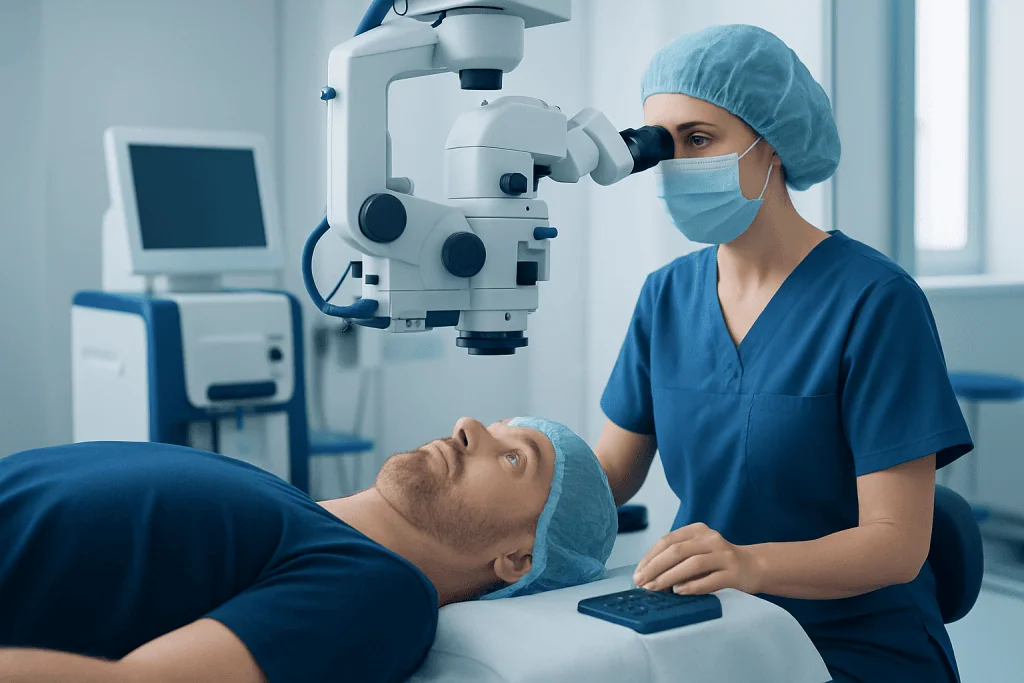
A person may be considered for surgery when eye misalignment is stable or sufficiently understood and causes symptoms or practical concerns. Common reasons include persistent double vision, a compensatory head turn, difficulty maintaining comfortable visual focus, social discomfort related to eye position, or a deviation that is not adequately managed with glasses or prisms.
An ophthalmologist, often a strabismus specialist, measures the direction and size of the deviation at different viewing distances. The assessment also checks vision in each eye, eye movement, eyelid position, binocular vision, refractive error and the health of the front and back of the eye. Previous eye surgery, injury and medical conditions are important to discuss.
Adults with new-onset eye turning or double vision should not assume that it is simply a long-standing alignment issue. The clinician may recommend blood tests, imaging or input from neurology, endocrinology or other specialties when the pattern suggests an underlying cause such as thyroid eye disease, a nerve palsy or another neurological problem.
How the procedure works: step by step

Before surgery, the surgeon develops a personalized plan from repeated alignment measurements and the person’s symptoms. They explain which eye muscles may be adjusted and whether one or both eyes may be treated. In selected adults, adjustable sutures may be used so that alignment can be fine-tuned shortly after surgery while the person is awake and able to report what they see.
The operation is commonly performed as day surgery, usually under general anesthesia. After the eye is prepared, the surgeon makes a small opening in the clear covering over the white of the eye, called the conjunctiva. The eye is not removed. The relevant muscle may be recessed to weaken its pull, resected or advanced to strengthen its effect, or repositioned in another way to improve alignment.
The muscle is secured with fine dissolvable sutures, and the conjunctiva is closed or allowed to heal with sutures. Surgery duration varies according to the number of muscles treated and the complexity of the case. The eye is usually not patched for long, and most people return home after a period of observation with instructions for drops, pain relief and follow-up.
For patients seeking specialist evaluation and treatment, strabismus surgery may include detailed orthoptic testing, surgical planning and post-operative monitoring. The most appropriate technique depends on the type of deviation, prior operations and the individual’s visual goals.
Recovery timeline and everyday care
In the first few days, it is normal to have redness, watering, mild swelling, light sensitivity, blurred vision and a gritty or scratchy feeling. Some people notice temporary double vision as the brain adapts to the new eye position. Prescribed eye drops and simple pain relief recommended by the treating team can help manage discomfort.
Many adults can do gentle activities within a day or two, but driving should wait until vision is clear and comfortable and the clinician confirms it is safe. Work return varies: desk-based work may be possible within several days for some people, while physically demanding work, dusty environments and heavy lifting may require more time. Swimming and contact sports are usually restricted until the eye surface has healed.
Redness often improves gradually over several weeks, though a small amount can last longer. Follow-up visits are important because alignment can change during healing. The surgical team may adjust treatment, review double vision, check for infection or inflammation, and advise when normal exercise, eye makeup and other routines can resume.
How painful is strabismus surgery recovery?
Strabismus surgery recovery is usually uncomfortable rather than severely painful. Adults commonly describe a scratchy, burning or bruised sensation, along with tearing and sensitivity to light during the first few days. Discomfort commonly improves steadily and is often manageable with the medicines recommended by the surgeon.
Pain levels vary with the number of muscles treated, previous surgery and individual sensitivity. It is important to use drops and pain medicine exactly as advised, avoid rubbing the eyes and attend planned follow-up appointments. Severe or worsening pain is not expected and should be reported promptly.
Double vision may be present temporarily after the procedure, especially while the visual system adjusts. The surgeon can explain whether this is anticipated in the individual case and how long it may reasonably last.
Is strabismus surgery worth it in adults? Benefits, limits and risks
Whether surgery is worthwhile depends on the person’s symptoms, the cause of strabismus and their goals. For many adults, improved eye position can reduce double vision, reduce the need to turn or tilt the head, improve comfort during daily tasks and address concerns about appearance. Adults can benefit from treatment even when their eye turn began in childhood.
Results cannot be guaranteed. Surgery may not restore normal binocular vision in an eye that has had reduced vision for many years, and some types of double vision may persist or require prisms, further adjustment or other treatment. Glasses may still be necessary after surgery for focusing or refractive needs.
Potential risks include undercorrection or overcorrection of alignment, temporary or persistent double vision, infection, bleeding, scarring, a reaction to anesthesia and the need for another procedure. Rarely, more serious complications can affect vision. A specialist explains these risks in relation to the person’s eye health, prior surgery and planned technique before informed consent is given.
Acibadem International’s multidisciplinary specialists and JCI-accredited hospitals diagnose and treat strabismus for international patients, coordinating care when an underlying neurological, endocrine or eye condition also needs assessment.
What is the success rate of strabismus surgery in adults?
There is no single success rate that applies to every adult because studies use different definitions of successful alignment and include different causes of strabismus. Results depend on the size and direction of the deviation, whether it is stable, previous operations, eye movement limitations, visual potential and the presence of conditions such as thyroid eye disease or nerve palsy.
In clinical practice, many adults achieve a meaningful improvement in alignment and symptoms after one operation. However, a small residual deviation can remain, and some people have an alignment that changes over time. The surgeon’s goal may be comfortable single vision in a useful range of gaze rather than perfectly straight eyes in every direction.
A pre-operative consultation should include individualized expectations. Asking how the surgeon defines a successful result, whether adjustable sutures are appropriate and how likely additional treatment may be can help a person make an informed decision.
How long do strabismus surgery results last? When to seek medical care
Strabismus surgery results can last for many years, and some people do not need further treatment. However, eye alignment can change with healing, aging, changes in vision, progression of an underlying condition or recurrence of the original muscle imbalance. Some patients therefore benefit from prism glasses, monitoring or repeat surgery at a later stage.
Medical review is important if a new eye turn or double vision develops, particularly when it begins suddenly. Urgent assessment is needed for double vision with severe headache, weakness, numbness, facial drooping, speech difficulty, loss of vision, significant eye pain, or after a head injury. These symptoms can have causes that need prompt care.
After surgery, the treating team should be contacted promptly for increasing pain, worsening redness or swelling, pus-like discharge, fever, a marked decline in vision, persistent nausea or vomiting, or a sudden change in eye position. Early review can help identify and manage complications safely.
Frequently asked questions
Can adults have strabismus surgery?
Yes. Adult strabismus surgery is performed for people with childhood-onset or acquired eye misalignment. It may be considered to improve eye position, double vision, head posture or visual comfort, depending on the cause and the person’s visual function.
Is strabismus surgery performed on the eyeball itself?
No. The surgery is performed on muscles attached to the outside of the eye and on the thin tissue covering the white of the eye. The surgeon does not remove the eye or operate inside the eyeball during standard strabismus surgery.
Will I need glasses after adult strabismus surgery?
Possibly. Surgery changes eye alignment but does not usually eliminate refractive errors such as short-sightedness, long-sightedness or astigmatism. Some people may also continue to use prism lenses if they have residual double vision.
Can strabismus surgery cure double vision?
It can reduce or resolve double vision for some adults when misalignment is the main cause. The outcome depends on why the double vision developed, how long it has been present and whether the brain can combine images from both eyes. A specialist can assess the likely benefit before surgery.
How soon can an adult return to work after strabismus surgery?
Return timing varies with symptoms, the type of work and the individual recovery. Some people return to desk work within a few days, while others need one to two weeks or longer. The surgeon should provide advice based on vision, discomfort and any activity restrictions.
Can strabismus come back after surgery?
Eye alignment can change after surgery, sometimes months or years later. This does not necessarily mean the original operation failed, as healing, changes in vision and underlying conditions can influence alignment. Follow-up allows the care team to discuss observation, glasses or prism treatment, or further surgery if needed.
References
- American Academy of Ophthalmology
- American Association for Pediatric Ophthalmology and Strabismus
- National Eye Institute
- Royal College of Ophthalmologists
This article is for general information only and is not a substitute for professional medical advice. Please consult a qualified doctor about your individual situation.
Eye Surgery in Turkey — costs, top hospitals & a free quote
JCI-accredited · board-certified surgeons · reply within 24h

Ophthalmology
Comprehensive eye care from laser vision correction to retina, cornea and cataract surgery.
75 specialists in this unit