Skin Cancer Cream Treatment: How It Works, Results and What to Expect

Prescription creams can treat certain superficial skin cancers and precancerous sun-damaged lesions, but they are not suitable for every type of skin cancer. Fluorouracil and imiquimod are among the topical medicines that may be used, depending on the diagnosis, location, and treatment goal.
Key Takeaways
- Prescription creams can treat certain superficial skin cancers and precancerous sun-damaged lesions, but they are not suitable for every type of skin cancer.
- Fluorouracil and imiquimod are among the topical medicines that may be used, depending on the diagnosis, location, and treatment goal.
- Redness, inflammation, scaling, crusting, and temporary discomfort can indicate that the medicine is affecting abnormal cells, but severe reactions should be reviewed promptly.
- Treatment and healing timelines vary; the treated skin may look worse before it improves.
- A biopsy, examination, or both are often needed before a cream is chosen, and follow-up is necessary to confirm clearance and monitor for recurrence.
Skin cancer cream treatment is a prescription-based option for selected superficial skin cancers and precancerous lesions. It works gradually at the treatment site and commonly causes redness, crusting, or soreness before the skin heals, so close follow-up with a dermatologist is important.
Overview: What Is Skin Cancer Cream Treatment?
Skin cancer cream treatment refers to prescription topical medicines applied directly to a defined area of skin to treat certain precancerous lesions or very superficial skin cancers. It is not an over-the-counter remedy and should only be used after assessment by a qualified clinician. The most commonly used medicines include fluorouracil, also called 5-FU, and imiquimod.
These creams are generally considered for conditions limited to the outer layers of the skin, such as actinic keratoses and selected superficial basal cell carcinomas. They do not replace surgery for all skin cancers. In particular, thicker, invasive, recurrent, high-risk, or uncertain lesions often need a different approach, such as excision or another procedure.
Topical treatment can be helpful when an area contains multiple sun-damaged lesions, sometimes called field change, because it treats both visible and early abnormal cells in the surrounding skin. A clinician will explain the diagnosis, expected reaction, application plan, and review schedule before treatment begins.
How Skin Cancer Cream Treatment Works
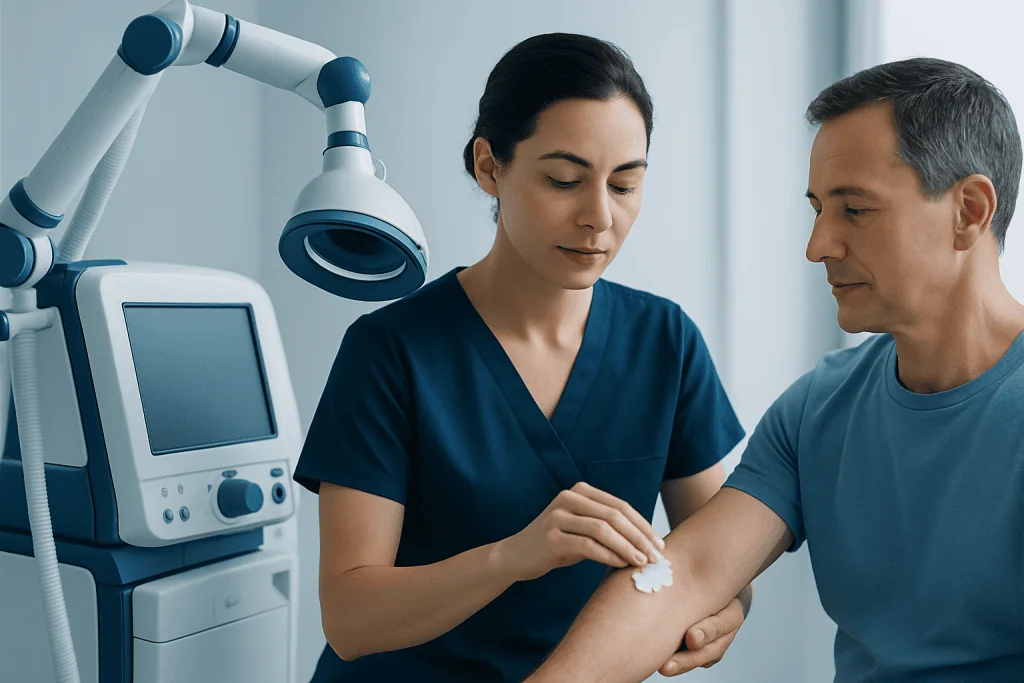
Fluorouracil is a topical chemotherapy medicine. It interferes with the way rapidly growing abnormal cells make genetic material, leading those cells to break down over time. Because sun-damaged and precancerous cells may be more vulnerable than normal skin cells, the reaction is often strongest where abnormal cells are present.
Imiquimod works differently. It stimulates local immune activity, helping the body recognize and clear selected abnormal skin cells. It may be prescribed for some superficial basal cell carcinomas and actinic keratoses, depending on the person and the lesion.
The purpose is controlled local treatment rather than whole-body chemotherapy. Only a small amount is generally absorbed through intact skin when used as directed. However, these medicines can cause a significant visible skin reaction, and patients should follow the prescribed instructions exactly rather than changing the schedule themselves.
Other treatments may be more suitable for some lesions. These can include freezing, light-based therapy, curettage, or surgical removal. The choice depends on the cancer type, depth, size, body site, previous treatments, immune status, and a person’s overall health.
Who May Be a Candidate?
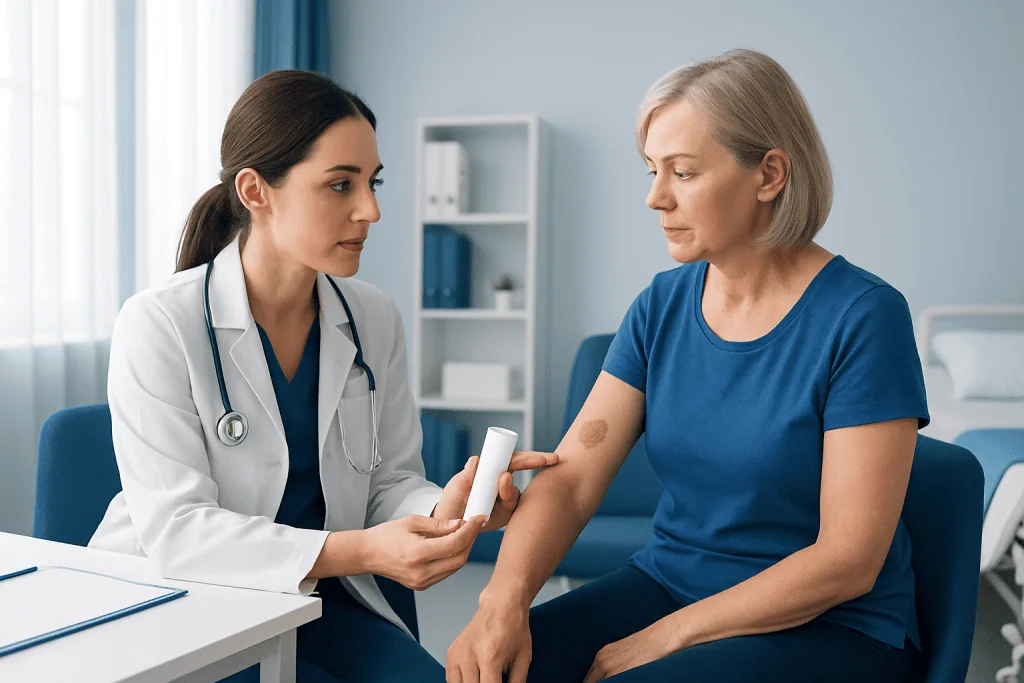
A dermatologist may consider skin cancer cream treatment after confirming that a lesion is appropriate for topical therapy. This usually means the abnormality is superficial, low risk, and located in an area where cream treatment can be applied reliably. A biopsy may be needed when the diagnosis is uncertain or when skin cancer is suspected.
Topical medicines are commonly used for actinic keratoses, which are rough, scaly sun-damage spots that can occasionally progress to squamous cell carcinoma. They may also be used for carefully selected superficial basal cell carcinomas. Learn more about skin cancer and why identifying the exact type matters before treatment.
These creams are usually not appropriate for melanoma, nodular or infiltrative basal cell carcinoma, invasive squamous cell carcinoma, or lesions in high-risk locations unless a specialist has specifically advised otherwise. A changing mole, a dark irregular mark, a non-healing sore, or a lesion that bleeds should not be self-treated with a cream.
Pregnancy, breastfeeding, immune suppression, allergies, medications, and the location of the treatment area may affect whether a topical medicine is suitable. The prescriber should be told about all health conditions and medicines, including non-prescription products and supplements.
What Happens During Treatment and Recovery?
Before treatment, the clinician identifies the treatment field or lesion and gives specific instructions on when and how to apply the cream. Hands should usually be washed before and after application. The medicine is generally placed in a thin layer on the prescribed skin only, avoiding the eyes, lips, nostrils, and other mucous membranes unless a specialist has provided different directions.
In the first stage, the skin may appear mildly pink or dry. As treatment continues, redness, tenderness, scaling, crusting, and sometimes shallow erosions can develop. This planned inflammatory response can be uncomfortable, but it does not necessarily mean an infection or allergy is present. The clinical team may adjust treatment if the reaction becomes excessive.
After the prescribed course ends, the skin needs time to repair. Crusting and redness can persist while new skin forms, and the final color may take longer to settle. Gentle cleansing, simple protective skin care approved by the clinician, and strict sun protection are usually important during this period.
Follow-up is a central part of treatment. The clinician checks whether the area has healed as expected and whether any lesion needs biopsy, additional topical treatment, or a procedure. For patients who need an alternative to topical therapy, skin cancer treatment options can be discussed with a dermatology or oncology team.
Common Questions About Fluorouracil Cream
How long does it take for skin cancer cream to start working? With fluorouracil, early changes such as dryness or mild redness may begin within the first one to two weeks, although timing varies by the area treated and the prescribed regimen. The response usually becomes more noticeable as treatment continues. Healing continues after the cream is stopped, so the final result cannot be judged immediately.
What to avoid when using fluorouracil cream? Patients should avoid applying it to skin that was not prescribed for treatment and should keep it away from the eyes, mouth, and inside of the nose. Sun exposure and tanning can intensify irritation, so protective clothing, shade, and sunscreen as advised by the clinician are important. Abrasive scrubs, waxing, strong exfoliants, and unapproved creams or cosmetics on the treatment area should also be avoided unless the prescriber says they are safe.
What will skin look like after using fluorouracil cream? The treated area commonly becomes red, inflamed, dry, scaly, crusted, and sometimes sore. It may look more noticeable before it heals, particularly in areas with substantial sun damage. After treatment, fresh skin gradually forms; temporary pinkness or color change may remain for a while.
How do I know if fluorouracil cream is working? A localized inflammatory reaction in the prescribed area is often expected and may suggest that abnormal cells are responding. However, the degree of visible reaction does not by itself prove that every abnormal cell has cleared. Only clinical follow-up can confirm whether the outcome is satisfactory and whether further treatment is needed.
Benefits, Risks and Safe Self-Care
The main benefit of topical treatment is that it can address a defined lesion or broader area of sun-damaged skin without an incision. It may be particularly useful where there are multiple actinic keratoses. It can also be performed at home under medical guidance, although this requires careful adherence and attendance at follow-up appointments.
Expected side effects include burning, itching, pain, swelling, redness, peeling, crusting, and sensitivity at the application site. Less commonly, severe inflammation, ulceration, infection, allergic reaction, or more widespread symptoms may occur. A clinician should be contacted if pain is severe, swelling is marked, the skin develops pus or spreading redness, or the person feels unwell.
During recovery, the area should be treated gently. Patients should not pick crusts or attempt to remove peeling skin. They should use only the cleanser, moisturizer, dressing, or pain-relief plan recommended by their clinician. Sun protection remains important after healing because ultraviolet exposure contributes to further skin damage and new skin cancers.
Regular skin checks can help identify new or changing lesions early. People with a history of significant sun damage may benefit from a personalized surveillance plan, including education about examining areas that are difficult to see, such as the scalp, back, and ears.
When to Seek Medical Care
Medical assessment should be arranged promptly for a new or changing skin lesion, especially one that grows, changes color or shape, repeatedly bleeds, forms a persistent scab, does not heal, or becomes painful. It is especially important not to assume that every rough or red area is suitable for cream treatment.
During prescribed topical treatment, patients should contact their care team if they develop intense pain, severe swelling, extensive blistering, signs of infection, fever, or a reaction outside the intended treatment area. They should also seek advice if they are unsure whether they have applied the medicine correctly or have missed multiple applications.
After treatment, an area that remains suspicious, returns after apparent healing, or fails to heal should be reassessed. A specialist may recommend biopsy or another treatment option rather than repeating a cream without review.
Acibadem International’s multidisciplinary specialists and JCI-accredited hospitals can assess and treat skin cancer for international patients, including helping determine whether topical therapy or another approach is appropriate.
Frequently asked questions
Can skin cancer be treated with cream?
Some precancerous lesions and selected very superficial skin cancers can be treated with prescription topical medicines. Creams are not appropriate for all skin cancers, and a clinician must first confirm the diagnosis and determine whether the lesion is low risk and superficial.
Is fluorouracil cream chemotherapy?
Fluorouracil is a chemotherapy medicine, but when used as a cream it acts mainly at the skin surface where it is applied. This differs from systemic chemotherapy, which circulates through the body. The local skin reaction can still be substantial and should be monitored by the prescribing clinician.
Does a strong fluorouracil reaction mean the treatment is successful?
Redness, scaling, crusting, and soreness are often expected signs that the medication is affecting treated skin. However, a stronger reaction does not automatically mean a better result. Follow-up examination is needed to assess whether the lesion or treatment field has cleared.
How long does skin take to heal after fluorouracil cream?
Healing begins after the prescribed treatment course is completed, but the exact timeframe varies according to the body area, treatment duration, and degree of inflammation. Redness and sensitivity may persist while new skin forms. The treating clinician can advise when the skin is healing normally and when it needs review.
Can I wear makeup while using skin cancer cream treatment?
Cosmetics and other skincare products may irritate treated skin or interfere with application, particularly when the area is red, peeling, or open. It is best to ask the prescriber before using makeup, sunscreen, moisturizers, or medicated products on the treatment site. Gentle, approved products may sometimes be used during recovery.
What happens if skin cancer cream does not work?
If the treated area does not clear, returns, or remains clinically suspicious, the clinician may recommend a biopsy or a different treatment. Options may include surgery, freezing, curettage, photodynamic therapy, or another targeted approach. Reassessment is safer than continuing or repeating treatment without medical advice.
References
- American Academy of Dermatology
- National Cancer Institute
- American Cancer Society
- National Comprehensive Cancer Network
- British Association of Dermatologists
This article is for general information only and is not a substitute for professional medical advice. Please consult a qualified doctor about your individual situation.
Skin Cancer in Turkey — costs, top hospitals & a free quote
JCI-accredited · board-certified surgeons · reply within 24h
Add us as a Preferred Source to see more of our trusted health content across Google Search, AI Overviews and Discover.