

How to Send Medical Records Before Treatment in Turkey

To send medical records before treatment in Turkey, patients usually share recent reports, imaging, pathology results, medication lists, and a brief medical history through secure digital channels for an initial specialist review. At Acibadem International, these documents are organized for the relevant team to assess the case, request any missing information, and outline suitable next steps before travel.
Before you travel for care in Turkey, your medical records help the hospital understand your history, assess suitability and plan your appointments. This guide explains what to gather, how to organize it and how to share it safely with Acibadem International or your chosen care team.
At a glance
- Best time to send records: As early as possible, ideally before booking flights
- Most useful files: Recent reports, imaging, lab results, discharge summaries and medication lists
- Preferred format: Clear PDFs, JPEGs or original DICOM imaging files when available
- Language: English is helpful; Acibadem International can advise on translation needs
- Main purpose: Preliminary review, appointment planning and safer continuity of care
Why sending records before you travel matters
When you are planning treatment in another country, your medical records become your first introduction to the care team. They help doctors understand your diagnosis, previous tests, current medicines, allergies, surgeries and any risks that may affect travel or treatment planning. Sending them early can reduce uncertainty and may help the hospital schedule the right specialists, tests and consultations for your arrival.
This is especially important if your condition is complex, if you have had several previous treatments, or if you are seeking a second opinion. A preliminary review does not replace an in-person examination, and doctors may still request new tests after you arrive. However, it gives the team a safer and more organized starting point.
At Acibadem International, patient coordinators help international patients understand which documents are useful and how to share them for review by relevant departments. The goal is practical: to avoid missing information, reduce repeated back-and-forth and make your travel planning more confident.
What medical documents you should collect
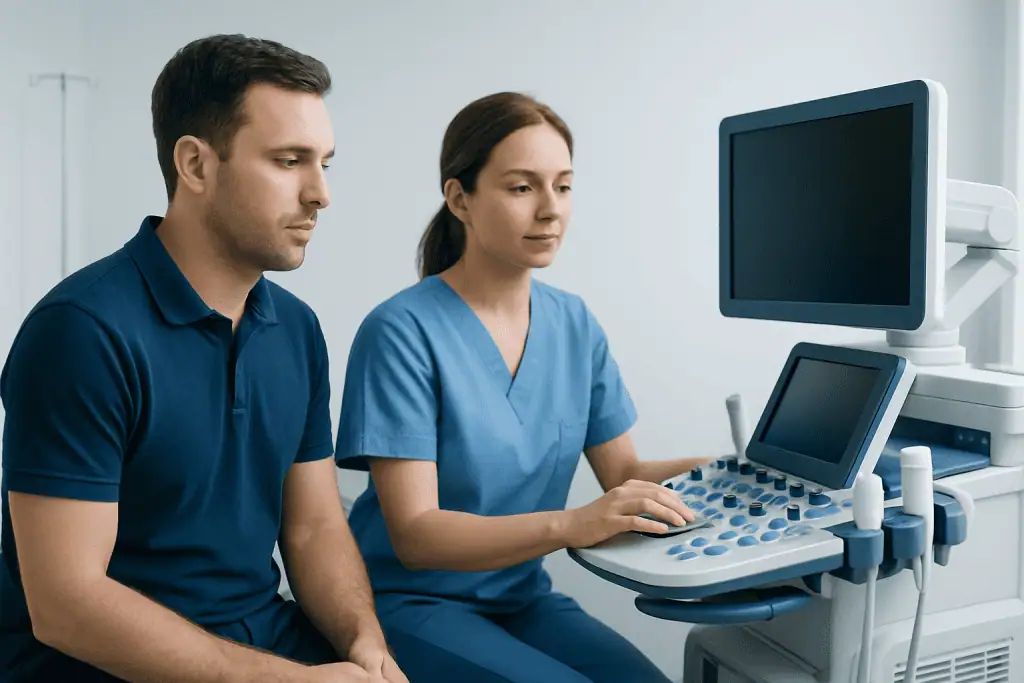
Start with the documents that explain your current condition most clearly. Recent specialist reports, diagnosis letters, test results and hospital discharge summaries are usually more helpful than a large folder of unrelated paperwork. If you are unsure, include the most recent and most important documents first, then ask your patient coordinator whether more detail is needed.
For imaging, written radiology reports are useful, but the actual image files may be essential for some cases. If you have CT, MRI, PET-CT, ultrasound, mammography or X-ray studies, ask the imaging center for the images on a CD, USB or secure download link, preferably in DICOM format. Photos of printed films are often not enough for accurate review.
Useful records commonly include:
- Diagnosis reports, biopsy or pathology results if relevant
- Recent blood tests and laboratory panels
- Radiology reports and original imaging files
- Operation notes and discharge summaries from previous hospital stays
- Current medication list, including dose and frequency
- Allergy list and information about implants, devices or chronic conditions
- Previous treatment plans, chemotherapy or radiotherapy summaries if applicable
How to organize your files so doctors can review them faster

A well-organized file set can make a significant difference. Doctors and coordinators may receive many pages, sometimes in different languages and formats. If your records are labeled clearly, the team can identify the latest diagnosis, compare test dates and find the most relevant information without delays.
Create a simple folder structure on your computer or phone before sending anything. You might use folders such as “01 Diagnosis,” “02 Imaging,” “03 Lab Tests,” “04 Surgery Reports,” “05 Medications” and “06 Passport and Travel Documents.” Use file names that include the date, document type and body area or condition, such as “2026-02-10_MRI_Brain_Report.pdf.”
If you are sending records for a family member, keep each patient’s documents separate. For children, elderly parents or patients who need assistance, it is also helpful to include the name and contact details of the main caregiver or companion. This helps the international patient team know who is authorized to communicate and coordinate.
Translation, language and summaries
English-language records are usually the easiest for international coordination. If your documents are in another language, do not panic. Many hospitals that support international patients, including Acibadem International, work with interpreters and multilingual patient service teams who can guide you on what needs translation before review.
You do not always need to translate every historical document. In many cases, the most important items are the diagnosis, recent imaging reports, pathology results, discharge summaries and medication list. If translation is needed, a clear medical translation is preferable to an informal summary, especially for pathology, operative notes and complex diagnoses.
A one-page personal medical summary can also be very helpful. Include your main diagnosis, date symptoms began, previous treatments, current symptoms, medicines, allergies, other health conditions and what you are seeking in Turkey. This does not replace official reports, but it gives the doctor context and helps coordinators route your case correctly.
How to send records securely
Medical records contain sensitive personal information, so you should send them through a secure method whenever possible. Avoid posting private health documents publicly or using open links that anyone can access. If a coordinator provides a hospital-approved upload portal, secure email instruction or encrypted transfer method, follow that guidance carefully.
Before sending, check that each file opens correctly and that scans are readable. Blurry photos, cut-off pages and password-locked files can slow down the review. If you must password-protect a document, send the password separately through a different channel and let your coordinator know.
For large imaging files, you may need a secure cloud link or original disk transfer. Make sure the link has enough access time for the team to download it and avoid deleting files too soon. Keep your own backup copy of everything you share, including a copy on your phone or laptop for travel.
What happens after you send your records
After your documents are received, the international patient team usually checks whether the file set is complete enough to forward to the relevant medical department. If something important is missing, you may be asked for additional reports, images or a clearer copy. This is a normal part of preparation and does not necessarily mean your case is delayed significantly.
The medical team may provide a preliminary opinion, suggest which specialist should see you, or recommend that certain tests be repeated after arrival. Any pre-travel feedback should be understood as guidance based on available documents, not a final diagnosis or guaranteed treatment plan. Final decisions are usually made after in-person examination and updated testing.
For international patients coming to Acibadem’s JCI-accredited hospitals, coordination may also include appointment scheduling, interpreter planning, estimated length of stay guidance and support with travel or accommodation logistics. These services are designed to connect the medical review with the practical details of your visit.
Common mistakes to avoid
One common mistake is sending only a short message such as “I need surgery” without attaching medical evidence. Another is sending hundreds of mixed photos with no dates or labels. Either situation can make it harder for the care team to understand your case and may lead to extra requests before your appointment can be planned.
Try not to rely only on verbal explanations, especially if your diagnosis is complex. Official reports, lab values and imaging are more reliable than memory, and they help doctors compare your medical history accurately. If you have had treatment in several countries or hospitals, include a timeline so the sequence is clear.
Also avoid booking non-refundable travel before you know whether your records are adequate for an initial review and whether the right specialist availability can be arranged. Your patient coordinator can help you understand the likely next steps, but medical travel is smoother when the record review comes before the flight purchase.
Step by step
- Create a simple medical timeline. Write down the key dates: when symptoms began, when you were diagnosed, major tests, hospital stays and treatments. Keep it short and factual so the medical team can quickly understand the sequence of events.
- Collect the most recent and relevant records. Prioritize recent reports, imaging, pathology, lab tests, discharge summaries and your current medication list. If you are unsure whether something matters, include it in a separate folder rather than leaving it out completely.
- Request original imaging files. Ask your radiology center for CT, MRI, PET-CT, X-ray or ultrasound files in DICOM format if available. Written reports are helpful, but the images themselves may be needed for specialist review.
- Scan or photograph documents clearly. Use PDF scans where possible, with every page visible and in the correct order. If you use your phone, place documents on a flat surface with good light and check that the text is readable before sending.
- Name and group your files. Use dates and document types in the file names, such as “2026-03-12_Blood_Tests.pdf.” Organizing files by category helps coordinators and doctors review your case more efficiently.
- Ask about translation needs. If your records are not in English or Turkish, ask your international patient coordinator which documents should be translated. Focus first on diagnosis, pathology, imaging reports and discharge summaries.
- Send through the recommended secure channel. Use the upload method or secure email instructions provided by the hospital or patient services team. Confirm receipt and keep your own backup copy of every file you send.
- Wait for review before finalizing travel. Allow time for the team to check your documents and request missing information if needed. Whenever possible, wait for appointment guidance before booking flights, accommodation or a long stay abroad.
Your checklist
- Passport copy or patient identification details, if requested by the hospital
- One-page medical summary and timeline
- Recent specialist consultation reports
- Radiology reports plus original imaging files when available
- Laboratory results and pathology or biopsy reports
- Operation notes and hospital discharge summaries
- Current medication list with doses and allergies
- Details of chronic conditions, implants, devices or previous complications
- Contact details for the patient and main companion or caregiver
- Clear translations of key documents if advised
Key takeaways
- Your medical records help the Turkish care team understand your case before you arrive, but final decisions usually require in-person assessment.
- Recent, relevant and clearly labeled documents are more useful than a large unorganized file set.
- Original imaging files, not only written reports, may be important for many specialist reviews.
- Translation is not always needed for every page; ask which key documents should be translated first.
- Use secure sharing methods and keep backup copies with you during travel.
Frequently asked questions
How early should I send my medical records before treatment in Turkey?
Send them as early as you can, ideally before booking flights or accommodation. This gives the hospital time to review your case, ask for missing information and schedule the appropriate specialist. Complex cases may need more time, especially if multiple departments are involved.
Can I send photos of my medical reports from my phone?
Yes, if the photos are clear, complete and easy to read, but PDF scans are usually better. Make sure all pages are visible, not shadowed and not cut off. For imaging such as MRI or CT, phone photos of films are usually not enough; ask for the original digital files if possible.
Do my records need to be translated into Turkish?
Not always. English records are commonly used for international coordination, and Acibadem International can advise you if Turkish or certified translation is needed for specific documents. The most important items to translate, if requested, are diagnosis reports, pathology, imaging reports and discharge summaries.
Will doctors give me a final treatment plan before I travel?
Doctors may provide preliminary guidance based on the documents you send, but a final plan usually requires an in-person consultation and possibly updated tests. Medical conditions can change, and doctors need to confirm details directly. You should treat pre-travel feedback as preparation, not a guarantee.
What if I do not have all my records?
Send what you have and explain what is missing. Your coordinator may tell you which documents are essential and which can be replaced by new tests after arrival. If possible, contact your previous hospital or clinic to request missing discharge summaries, imaging or pathology reports.
Is it safe to email my medical records?
Medical records are sensitive, so it is best to use the secure method recommended by the hospital. If email is used, follow the coordinator’s instructions and avoid sending documents to unverified addresses. For password-protected files, share the password separately.
Should I bring paper copies to Turkey as well?
Yes, it is wise to bring printed copies of your most important documents, especially diagnosis reports, medication lists and recent test results. Also keep digital copies on your phone, laptop or secure cloud storage. Having both versions can be helpful during appointments, admission or travel disruptions.
Can a companion send records on my behalf?
Usually yes, especially if you authorize that person to coordinate your care. Provide the companion’s full name, relationship to you and contact details. For privacy reasons, the hospital may ask for patient consent before discussing medical information with a family member or caregiver.

More Patient Guides

How to Choose Recovery-Friendly Accommodation in Turkey After Treatment
Recovery-friendly accommodation in Turkey means a quiet, accessible, well-located stay with support for transport, meals, and follow-up visits in Istanbul or beyond.
9 min read
How to Prepare a Carry-On Bag for Treatment Travel to Turkey
Carry-on bag for treatment travel to Turkey: pack medicines, documents, comfort items, chargers, and one change of clothes for a smoother trip.
9 min read
How to Pack Medical Devices and Supplies for Treatment Travel to Turkey
How to pack medical devices for treatment travel to Turkey: carry essentials in hand luggage, bring documents, chargers, and backup supplies.
9 min read