

How to Pack Medical Devices and Supplies for Treatment Travel to Turkey

Keep every essential device, charger, consumable and medicine in your carry-on, never in checked luggage. Carry a doctor's letter, prescription list and device details in print and on your phone. Confirm your airline's battery and medical-baggage rules before you fly, pack a buffer of two to three days of supplies, and prepare a small arrival kit for your first 24 hours in Turkey.
Wondering whether your device will survive the flight, or what happens if your suitcase lands a day after you do? If you are travelling to Turkey for treatment, how you pack matters more than how much you pack. The principle is simple: anything your health depends on stays with you in the cabin, travels with the paperwork that explains it, and comes with enough spare supplies to absorb a delay. This guide walks through how to pack medical devices and supplies for treatment travel to Turkey — from customs rules on medicines to battery limits, airline baggage allowances and what to keep within reach for your first 48 hours.
At a glance
- Best place for essentials: Carry-on bag, never checked luggage
- What to bring: Device, accessories, chargers, plug adaptor, prescriptions and a 2–3 day buffer of consumables
- Key documents: Doctor’s letter, prescription list, device model and serial details
- Batteries: Spare lithium batteries go in the cabin only, terminals protected
- Power in Turkey: 230 V, 50 Hz, type C and F sockets — check your charger and bring an adaptor
- Airlines: Many carry medical equipment in addition to your normal allowance, but rules vary — confirm in writing before you fly
- Restricted medicines: Controlled substances need extra documentation; carry originals, not loose pills
Start with what you cannot safely be without
Before you think about suitcases, make a list. Write down every device, accessory, cable, charger, battery, consumable and medicine you use in a normal week. When you pack medical devices and supplies for treatment travel to Turkey, the test for each item is not “will I use it?” but “how quickly could I replace it if it went missing?” A phone charger can be bought in any airport. A specific CPAP mask size, a glucose sensor, a stoma product in your fitting or a spare part for a hearing processor cannot. If an item is hard to replace within a day, treat it as essential.
The most important rule follows from that: essential medical devices and supplies travel in your carry-on, not in checked luggage. Checked bags can be delayed, rerouted or handled roughly — an inconvenience for clothes, a genuine problem for equipment you rely on. If you would need an item during the flight, on arrival day or the following morning, it belongs in the bag that stays with you.
Then sort everything into three groups. First, in-flight essentials: what you may need at your seat during the journey. Second, first-24-hour essentials: what gets you from the arrivals hall through your first night without unpacking. Third, backup stock: extra consumables and spares that can sit deeper in your luggage. This three-tier system makes airport screening faster, hotel arrival calmer and hospital admission simpler, because you always know which bag holds what. It pairs well with a broader practical packing list for hospital and recovery, which covers clothing and comfort items beyond your medical kit.
Pack documents so airport and hospital teams can help you faster
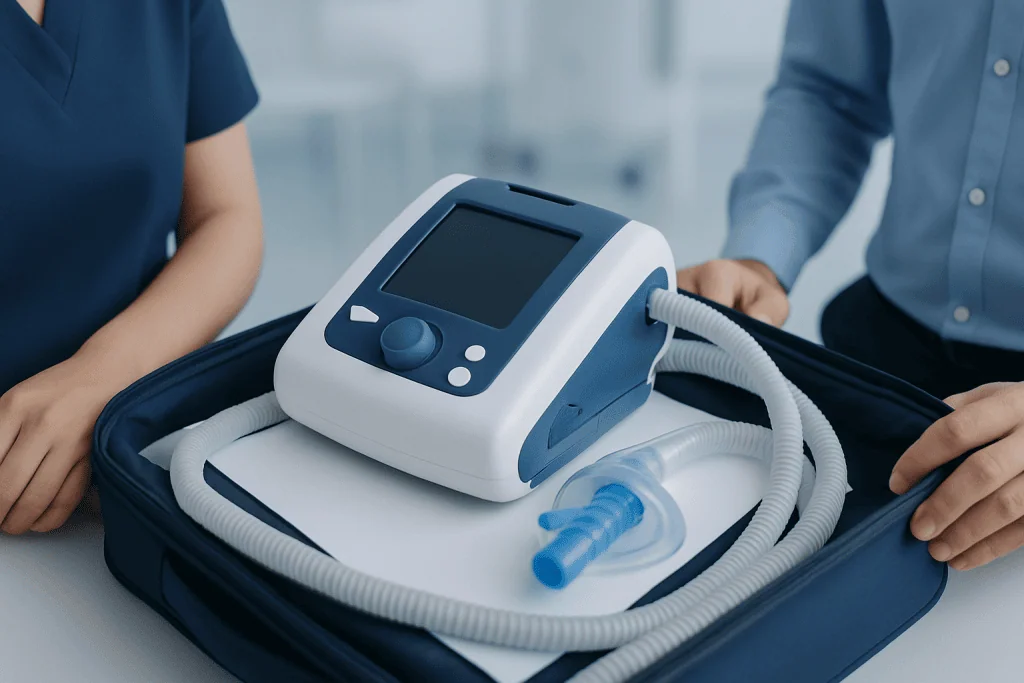
Good paperwork removes friction at every stage: the security lane, the departure gate, Turkish customs and your first hospital review. Carry printed and digital copies of a short doctor’s letter naming your condition and the devices you need, a complete prescription and medication list using generic drug names, and the instruction sheet or original packaging for equipment where practical. If a device has a model or serial number, note it — it speeds up any conversation about compatibility or replacement.
If you are travelling for planned care, add recent medical summaries, test results, imaging reports and details of any implanted device, such as a pacemaker card or implant passport. Keep everything in one clearly labelled folder in your hand luggage. For a fuller breakdown of what to print versus what to keep digitally, see the guide to travelling to Turkey with medical records.
Digital and paper copies do different jobs. Digital copies are easy to resend if a file goes astray; printed copies work when your phone battery dies, roaming fails or airport Wi-Fi refuses to connect. Carry both, and photograph every important page before you leave home.
- Doctor’s letter explaining each device or supply and why you need it
- Prescription and full medication list, with generic names
- Recent medical reports, test results and imaging summaries
- Device manuals or quick-start sheets, plus model and serial numbers
- Implant card or device passport, if you have one
- Emergency contacts, insurer details and your hospital contact information
Know what medicines and items are restricted at the Turkish border
Turkey allows travellers to bring medicines for personal use, but not without limits. Like most countries, it applies stricter rules to controlled substances — a category that typically includes strong opioid painkillers, certain sedatives and sleeping tablets, some ADHD medicines and certain psychiatric medications. There is no single public list that covers every product name in every country’s formulary, so the safe approach is structural: carry all medicines in their original packaging with the pharmacy label intact, bring the prescription and a doctor’s letter confirming the medicine is for your personal treatment, and limit quantities to what your trip genuinely requires plus a sensible buffer. Loose pills in unmarked containers invite questions; labelled originals with matching paperwork rarely do.
If any of your regular medicines fall into a controlled category, check the current position with the Turkish embassy or consulate in your country before you book, because rules and permitted quantities change. Do not adjust, pause or swap any medicine to simplify travel — that decision belongs solely to your treating doctor. The companion guide on travelling to Turkey with prescription medicines covers documentation, declarations and dose timing in more depth.
Beyond medicines, Turkey’s general customs rules restrict the categories most countries restrict: narcotics, weapons, counterfeit goods and certain items requiring licences. Standard medical equipment for personal use — CPAP machines, glucose monitors, nebulisers, mobility aids, dressings, syringes with supporting prescriptions — is routinely carried by travellers. The paperwork described above is what turns “routine” into “quick”.
Protect devices from damage, power issues and lost accessories
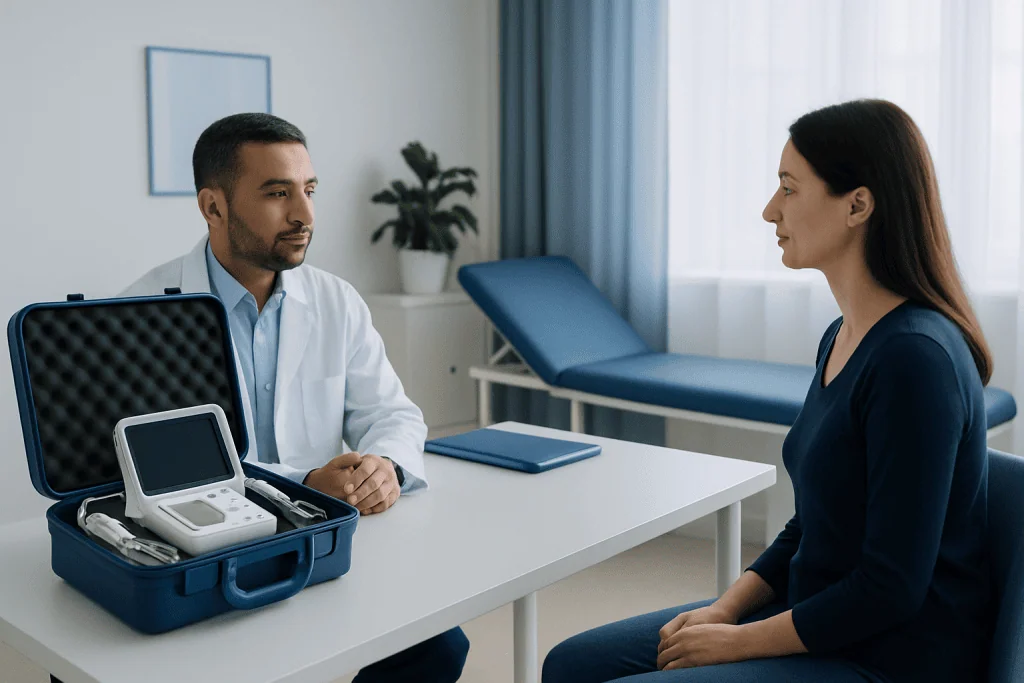
Medical equipment is easiest to manage when every part has a place. Use the manufacturer’s case where you have one; otherwise use padded pouches, hard-shell boxes and zip bags with cable organisers so small essential pieces do not vanish into the bottom of a bag. Label chargers, leads, masks, tubing, remotes and attachments — especially where a device has several accessories that look alike. A strip of coloured tape on each cable saves real time in a dim hotel room.
Power planning matters more than most travellers expect. Turkey uses 230 volts at 50 hertz, with type C and type F round-pin sockets. Most modern device chargers accept a range of voltages — check the small print on the charger itself — but you will almost certainly need a plug adaptor, and it is worth carrying two in case one fails or stays behind in a wall socket. Charge everything fully before departure and keep all charging equipment in your hand luggage.
Batteries follow aviation safety rules, not preference. Spare lithium batteries and power banks must travel in the cabin, never in checked baggage, with terminals taped or kept in original packaging. Batteries up to 100 watt-hours are generally accepted without approval; larger batteries between 100 and 160 watt-hours usually need the airline’s advance permission; and portable oxygen concentrators must typically be airline-approved models notified ahead of travel. The details vary by carrier, so read the full guide to using battery-powered medical devices during travel to Turkey before you confirm your booking.
Finally, plan for temperature and pressure. Medicines that need cooling, such as insulin, travel best in an insulated pouch in the cabin, not in the hold, where temperatures are uncontrolled. Fragile items should never sit against a suitcase wall where another bag can press on them.
Check airline rules — including whether medical baggage counts against your allowance
Many airlines carry medical equipment in addition to your standard baggage allowance, meaning a CPAP machine, mobility aid or bag of medical supplies may not count towards your cabin or checked limits. But this is a policy, not a universal right, and conditions differ: some carriers require a doctor’s letter, some cap the size or number of medical items, and some ask for notification 48 hours or more before departure. Never assume — check your specific airline’s medical baggage policy when you book, and get any confirmation in writing or by email so you can show it at check-in.
Advance notice matters most for equipment you plan to use in flight. A CPAP machine or portable oxygen concentrator used on board usually needs pre-approval, and seat power is not available on every aircraft, so a fully charged battery plan is safer than relying on an in-seat socket. If you have an implanted device such as a pacemaker, the preparation is different again — the guide to flying to Turkey with medical devices or implants covers what to arrange before departure.
If you will be moving through the airport with several medical items, limited mobility or on your own, request assistance from the airline in advance rather than at the desk. It costs nothing, and a smoother airport experience conserves energy you will want for arrival day.
Prepare for airport screening and the journey itself
Security staff see medical equipment every day, and clear preparation keeps the process short. Pack your device and its paperwork where you can reach them without emptying the whole bag. Tell staff calmly, before screening begins, if an item should not go through certain scanners or needs hand inspection — and carry the manufacturer’s written guidance if such a restriction applies to your device. Sharps such as injection needles and lancets are permitted in the cabin when they are for medical use; keep them capped, in original packaging, with the prescription that explains them, and use a proper sharps travel case for used needles.
On board, store items you may actually need under the seat in front of you rather than in the overhead locker. That is easier if you use supplies mid-flight, and safer if standing and reaching overhead is difficult for you. Keep fragile equipment away from crush points and never wedge it under heavier bags.
Think through your first days in Turkey, not just the flight
Packing well means planning past the aircraft door. Ask yourself what you will need in the transfer vehicle, at the hotel, during your first night and on the morning you go to the hospital. Set aside a small arrival kit — one pouch or day bag with your most-used items — so you can get through the first 24 hours without unpacking everything. Include chargers and adaptor, the day’s medicines, essential consumables, wipes and your document folder.
If your schedule includes consultations, tests or admission soon after landing, keep your device routine as simple as possible and hold the first few days of supplies in one easy-access bag. Arrival days are tiring; the fewer decisions your kit forces on you, the better. Hospitals that treat international patients, including Acibadem facilities, typically have international patient teams that coordinate interpreters, appointments and transfers, which reduces the logistical load — but your own checklist is still what keeps the first 48 hours calm, because nobody else knows your equipment the way you do.
Build in backup plans for delays, replacements and communication
Even when you pack medical devices and supplies for treatment travel to Turkey carefully, a trip can include surprises: a changed return date, a delayed connection, a misplaced pouch. Pack extra consumables — a buffer of two to three days beyond your planned stay is a reasonable starting point, adjusted to what your clinician advises for your specific treatment. If your device has parts that commonly wear out or go missing, carry spares where your clinician or the manufacturer recommends it.
Photograph everything before you travel: the device, each accessory, packaging labels, prescriptions. Photos let you show a pharmacist or hospital team exactly what you use when brand names differ between countries, and they help you reorder a compatible item quickly. Save important contacts — airline, accommodation, transfer service, travel companion, hospital coordinator and your insurer — in more than one place, including on paper. If you have not yet arranged cover, the guide to travel insurance for medical treatment in Turkey explains what a policy should address, including lost or damaged medical equipment.
Step by step
- List every device, accessory and consumable you use. Include cables, chargers, batteries and medicines. Sort the list into in-flight essentials, first-24-hour essentials and backup stock, then pack by priority.
- Get a travel letter from your doctor. A short letter naming your condition, your devices and any handling needs smooths security screening, airline questions and border checks.
- Check restricted-medicine rules for Turkey. If any of your medicines are controlled substances, confirm current requirements with the Turkish embassy or consulate before booking, and keep everything in original labelled packaging.
- Confirm airline policies in writing. Check medical baggage allowances, battery watt-hour limits, sharps rules and whether in-flight device use needs pre-approval. Keep the confirmation email accessible.
- Pack all essentials in your carry-on. Devices, key accessories, documents, cooled medicines and a short backup supply stay with you. Checked luggage carries only what you could live without for several days.
- Verify power compatibility. Check your chargers accept 230 V / 50 Hz, pack two type C/F plug adaptors, and charge every battery fully before departure.
- Build a first-24-hour arrival kit. One easy-access bag with chargers, that day’s medicines, essential consumables, wipes and your document folder.
- Duplicate your records. Printed copies in your hand luggage, digital copies on your phone and in secure email, photos of every device and label as a fallback.
Your checklist
- Essential medical devices packed in carry-on luggage
- Chargers, cables, two plug adaptors and spare batteries (cabin only, terminals protected)
- Doctor’s letter and prescription list, printed and saved digitally
- Medicines in original labelled packaging, with cooling pouch if needed
- Extra consumables covering the trip plus a 2–3 day buffer
- Accessories labelled and stored in protective cases or pouches
- Recent medical reports, implant card and device serial numbers organised in one folder
- Airline medical baggage and battery policies confirmed in writing
- Airport assistance requested in advance if needed
- Emergency and hospital contacts saved on phone and on paper
- Arrival kit prepared for the first 24–48 hours
Key takeaways
- Carry essential medical devices and supplies in the cabin, never in checked baggage.
- Travel with a doctor’s letter, prescription list and device details, in print and on your phone.
- Medicines cross the Turkish border most easily in original packaging with matching paperwork; controlled substances need extra checks in advance.
- Spare lithium batteries go in the cabin only, and larger batteries usually need airline approval.
- Many airlines carry medical equipment outside your normal allowance — but confirm your carrier’s rules before you fly.
- Pack an arrival kit and a supply buffer so a delay stays an inconvenience, not a problem.
Frequently asked questions
What medication is not allowed into Turkey?
Turkey permits medicines for personal use but applies stricter rules to controlled substances, which typically include strong opioid painkillers, certain sedatives and sleeping tablets, some ADHD medicines and certain psychiatric medications. These usually require a prescription and doctor’s letter, and quantities may be limited to your treatment period. Because rules change, confirm the current position for your specific medicines with the Turkish embassy or consulate in your country before travelling, and always carry originals with pharmacy labels.
What is not allowed to bring into Turkey?
Turkish customs restricts the categories most countries restrict: narcotics, weapons, counterfeit goods and items requiring special licences. Personal medical equipment — CPAP machines, glucose monitors, nebulisers, mobility aids, dressings and prescribed sharps — is routinely carried by travellers when accompanied by a prescription or doctor’s letter. The key is documentation and personal-use quantities rather than the equipment itself.
What should I include in my medical kit for traveling abroad?
Beyond your specific devices and prescribed medicines, a sensible travel medical kit includes basic wound supplies such as plasters and antiseptic wipes, any over-the-counter items you normally use, hand sanitiser, a digital thermometer, spare batteries and chargers for your equipment, a copy of your prescriptions and doctor’s letter, and your insurer’s contact details. Tailor it to your condition and your clinician’s advice rather than a generic list.
Do airlines allow an extra bag for medical supplies?
Many airlines carry medical equipment in addition to the standard baggage allowance, so a device bag may not count towards your limits. However, policies differ: some carriers require a doctor’s letter, cap the item’s size, or ask for notice 48 hours or more before departure. Check your specific airline’s medical baggage policy when booking and keep the written confirmation with you at check-in.
Should I pack my medical device in checked luggage or hand luggage?
Hand luggage, if the device supports your daily care or might be needed during travel. Checked bags can be delayed or handled roughly, so they should hold only backup items you could manage without for several days. Spare lithium batteries must go in the cabin regardless — aviation rules do not permit them in the hold.
How much extra medical supply should I bring?
Enough for your planned stay plus a buffer for delays or schedule changes — two to three extra days of key consumables is a common starting point, adjusted to your treatment plan and your clinician’s advice. Medical trips can extend at short notice, so the buffer is not overcaution; it is what keeps a changed return flight from becoming a supply problem.
What should be in my first-day arrival kit?
The device or supplies you are most likely to need immediately, plus chargers and a plug adaptor, that day’s medicines, wipes, and your document folder with the doctor’s letter and prescription list. The aim is to get through your first 24 hours comfortably without opening every bag — particularly useful after a long flight when your main luggage is still packed.
Add us as a Preferred Source to see more of our trusted health content across Google Search, AI Overviews and Discover.

Update history
- PublishedAugust 6, 2026
- Medical review approvedSeptember 1, 2026
- Last content updateSeptember 1, 2026
References3
- CDC Travelers' Health — Türkiye (Turkey) Traveler View — wwwnc.cdc.gov
- CDC Travelers' Health — Pack Smart — wwwnc.cdc.gov
- UK Government — Foreign Travel Advice: Turkey — gov.uk
More Patient Guides
GHIC and EHIC in Turkey: Why They Do Not Cover You
The blue card that quietly covers you across Europe stops working at the Turkish border — and every summer, travelers discover this…

Do You Need Vaccinations for Turkey?
Here is the answer travel clinics give every day: no vaccinations are required to enter Turkey from anywhere in the normal course…

Flying With a Broken Leg or Cast: Airline Rules and Comfort
A broken leg does not cancel a flight — airlines carry passengers in casts every single day. What surprises travelers is that…

Travel Insurance After Cancer: What Patients Should Know
A cancer diagnosis changes how insurers read your name — but it does not end your traveling life. Thousands of people with…