

Epilepsy Surgery: Procedure, Recovery and Results

Epilepsy surgery is mainly considered for drug-resistant epilepsy, not as a first treatment for most people. A comprehensive pre-surgical assessment identifies where seizures begin and whether surgery can be performed safely.
Key Takeaways
- Epilepsy surgery is mainly considered for drug-resistant epilepsy, not as a first treatment for most people.
- A comprehensive pre-surgical assessment identifies where seizures begin and whether surgery can be performed safely.
- Procedures range from removal or disconnection surgery to laser treatment and implanted nerve-stimulation devices.
- Recovery varies by procedure, but most people need weeks to months before returning fully to usual activities.
- Many suitable candidates have substantial seizure reduction after surgery, although outcomes depend on the seizure type and brain area involved.
- Anti-seizure medicines are often continued after surgery and should only be changed under specialist guidance.
Epilepsy surgery is a carefully planned treatment for people with seizures that continue despite appropriate anti-seizure medicines. It aims to remove, disconnect, destroy or regulate the brain area involved in seizures while protecting important functions such as speech, memory and movement.
Overview: what epilepsy surgery is and how it works
Epilepsy surgery is a treatment option for people whose seizures continue despite trials of appropriate anti-seizure medicines. It is not one single operation. Depending on the person’s epilepsy, surgery may remove the small area of brain where seizures start, interrupt pathways that allow seizures to spread, destroy a target using heat delivered through a laser, or implant a device that helps regulate seizure activity.
The central goal is meaningful seizure control with the lowest possible risk to everyday abilities. For some people, this means becoming seizure-free; for others, it means fewer, shorter or less severe seizures and a lower risk of seizure-related injury. Surgery is considered only after a detailed evaluation by an epilepsy team, because seizures may arise from different brain networks and treatments must be highly individualised.
Epilepsy surgery is usually discussed in the context of drug-resistant epilepsy, meaning seizures persist after two appropriately selected and tolerated anti-seizure medication schedules have not achieved lasting seizure freedom. An early referral for specialist assessment can be valuable; assessment does not commit a person to having an operation.
Who may be a candidate for epilepsy surgery?
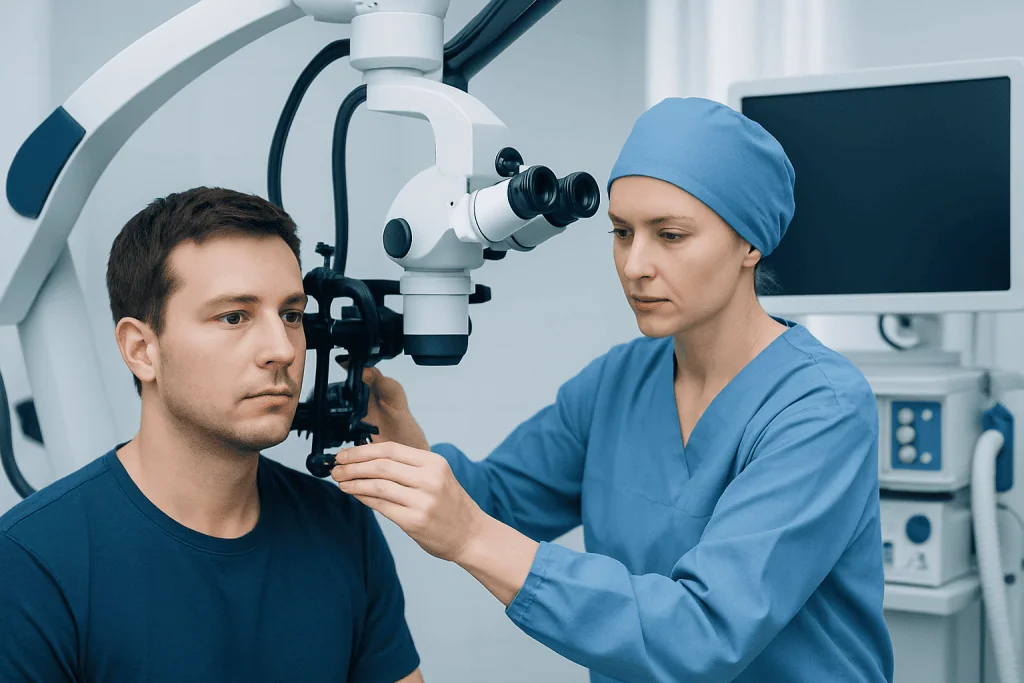
A person may be referred for an epilepsy surgery evaluation when seizures continue to affect safety, independence, education, work or quality of life despite medication. Focal seizures, which begin in one area of the brain, are often the type most likely to be helped by resective surgery. However, some people with more widespread seizure patterns may benefit from disconnection procedures or neuromodulation devices.
Suitability depends on much more than seizure frequency. The team considers the seizure diagnosis, the brain region involved, MRI findings, medical history, memory and language function, mental health, general health, and the person’s goals and preferences. A visible lesion, such as a scar or developmental abnormality, may support surgery planning, but a normal MRI does not automatically rule it out.
Children and adults can both be assessed. In children, recurrent seizures can affect development and learning, so timely specialist review is especially important. Some people are not suitable for surgery that removes brain tissue because the seizure source overlaps with areas needed for language, movement, vision or memory. In these situations, other surgical approaches may still be considered.
- Seizures remain uncontrolled after appropriate medication trials.
- Tests suggest seizures begin in one targetable area or network.
- The expected benefit outweighs the possible effect on brain function.
- The person can take part in informed decision-making, with family support where needed.
Assessment and planning before the procedure

Pre-surgical evaluation is a process rather than a single test. It commonly includes prolonged video-electroencephalography (video-EEG) monitoring, which records brain-wave activity and behaviour during seizures. MRI scans are used to look closely for structural changes in the brain. Depending on the findings, the team may also use PET or SPECT imaging, magnetoencephalography, and detailed neuropsychological testing of memory, language, attention and other thinking skills.
When non-invasive tests do not identify the seizure source with enough certainty, clinicians may recommend intracranial EEG. In this staged approach, electrodes are placed on or within the brain for several days to record seizures more precisely. This helps determine whether a planned treatment can target seizure-producing tissue while avoiding essential areas.
Planning is led by a multidisciplinary epilepsy team, often including epileptologists, neurosurgeons, neuroradiologists, neuropsychologists, specialist nurses, psychiatrists and rehabilitation professionals. The team explains realistic goals, possible alternatives and the uncertainties in an individual case. A careful assessment also helps distinguish epileptic seizures from events that may require different treatment.
Epilepsy surgery procedure: what happens step by step
The exact steps depend on the procedure selected. For resective surgery, such as temporal lobectomy or lesionectomy, the person receives general anaesthesia and the neurosurgeon creates a small opening in the skull to access the target area. Navigation technology, imaging and brain-function mapping may be used to guide the operation. The surgeon removes the seizure-producing tissue only when it can be done with an acceptable safety profile.
Some procedures disconnect brain pathways rather than remove a seizure focus. Corpus callosotomy, for example, can reduce dangerous drop attacks in selected people by limiting seizure spread between the two sides of the brain. Hemispherectomy or hemispherotomy may be considered in rare, severe childhood epilepsies affecting one hemisphere. These are major procedures reserved for carefully selected situations.
Minimally invasive options may be appropriate for some focal epilepsies. Laser interstitial thermal therapy uses a thin laser fibre, guided by MRI, to heat and destroy a small target. Neuromodulation approaches, such as vagus nerve stimulation, responsive neurostimulation or deep brain stimulation, do not remove the seizure source; they send electrical stimulation to help reduce seizure activity over time.
Before surgery, the care team reviews medications, fasting instructions and practical arrangements for hospital discharge. After the procedure, monitoring in a recovery area, high-dependency unit or intensive care unit may be needed depending on the operation. In appropriate cases, Acibadem International’s multidisciplinary specialists and JCI-accredited hospitals provide assessment and treatment planning for international patients with epilepsy.
Benefits, risks and realistic results
The potential benefit of epilepsy surgery is improved seizure control. Successful treatment may reduce seizures, injuries, emergency visits and restrictions on daily activities. Some people also notice improvements in alertness, mood or participation when seizures are better controlled, although these changes vary and may be influenced by medication adjustments, sleep and emotional wellbeing.
Outcomes depend strongly on the type of epilepsy and procedure. People with a clearly identified focal seizure source that can be safely removed generally have the best chance of seizure freedom. Surgery may still be worthwhile when complete seizure freedom is unlikely, particularly if it reduces severe seizure types or frequency. The epilepsy team should explain the expected outcome range for the individual rather than relying on a single general figure.
All brain procedures carry risks. These can include bleeding, infection, stroke, headaches, swelling, temporary confusion, new or changed seizures, and reactions to anaesthesia. Depending on the surgical area, there may also be changes in memory, language, mood, vision, sensation or movement. Some effects improve during recovery, while others can be lasting. The purpose of detailed testing and mapping is to reduce these risks as much as possible.
Most people continue anti-seizure medicine after surgery, at least initially. Medication reduction, if appropriate, is gradual and guided by the treating neurologist. Surgery does not eliminate the need for ongoing follow-up, seizure-safety planning and attention to sleep, medication adherence and general health.
How long does it take to recover from epilepsy surgery?
Recovery from epilepsy surgery varies with the operation, the person’s health and whether any neurological symptoms occur after treatment. Following a craniotomy, a hospital stay of several days is common, while less invasive procedures may involve a shorter stay. Tiredness, headaches, scalp discomfort and reduced concentration can occur in the early weeks and usually improve gradually.
Many people need several weeks away from work, school or strenuous activities after open surgery. A return to usual routines often occurs over one to three months, but full recovery can take longer, particularly after a major operation or if rehabilitation is needed. Recovery after laser treatment or device implantation may be quicker, but still requires follow-up and activity guidance from the surgical team.
Follow-up appointments monitor wound healing, seizures, medicines, mood and thinking skills. Occupational therapy, physiotherapy, speech and language therapy, or neuropsychological support may be recommended when needed. It is important not to drive, swim alone, climb heights or return to other potentially hazardous activities until a clinician confirms it is safe and local regulations are met.
Is living with epilepsy hard?
Living with epilepsy can be challenging, especially when seizures are unpredictable. People may need to plan around medication schedules, sleep, employment, transport, school, pregnancy planning and safety concerns. The impact is not the same for everyone: some people have well-controlled seizures and lead largely unrestricted lives, while others need more support.
Emotional wellbeing is an important part of epilepsy care. Anxiety about having a seizure, low mood, stigma and social isolation can affect a person and their family. Discussing these concerns with a neurologist, epilepsy nurse, mental health professional or support organisation can be helpful. A personalised seizure action plan and education for close contacts may increase confidence and safety.
Reliable routines can support seizure control. These include taking medicines as prescribed, prioritising adequate sleep, avoiding known personal triggers where possible, and attending follow-up care. No one should stop anti-seizure medicine suddenly unless advised by a clinician, as this can increase the risk of serious seizures.
What can people with epilepsy not do, and when to seek medical care
Most people with epilepsy can participate in many daily activities, but some activities may need temporary limits or added safeguards if seizures are not fully controlled. Driving rules differ between countries and usually depend on seizure control and medical assessment. Working at unprotected heights, operating dangerous machinery, bathing alone, swimming without close supervision, and certain high-risk sports may be unsafe for some individuals. The right precautions depend on seizure type, warning symptoms and current control.
People should seek urgent medical help if a seizure lasts five minutes or longer, repeated seizures occur without recovery in between, breathing remains difficult, a serious injury occurs, or a seizure happens in water. Emergency assessment is also appropriate for a first seizure, a seizure during pregnancy, or a major change in usual seizure pattern. Family members should follow the individual’s prescribed seizure action plan where one is available.
A non-urgent epilepsy review should be arranged when seizures continue despite treatment, medication side effects are troublesome, memory or mood changes develop, or pregnancy is being considered. Discussing surgical evaluation does not mean that surgery will be needed, but it can clarify all evidence-based options for seizure control.
Frequently asked questions
How successful is surgery for epilepsy?
Success depends on the epilepsy type, the location of the seizure source and the procedure performed. People with a well-defined focal area that can be safely treated may achieve seizure freedom, while others experience a worthwhile reduction in seizure frequency or severity. The epilepsy team can provide an individual estimate after detailed testing.
Can epilepsy surgery cure epilepsy?
Some people become seizure-free after epilepsy surgery and remain so long term, but surgery cannot guarantee a cure. Seizures can continue or return in some cases, and anti-seizure medicines are commonly continued for a period after surgery. Any medication changes should be supervised by an epilepsy specialist.
Is epilepsy surgery performed while the patient is awake?
Most epilepsy operations are performed under general anaesthesia. In selected cases, an awake phase may be used for brain mapping when the planned treatment is close to areas important for speech, movement or other functions. The care team explains this in advance if it is relevant.
How long does it take to recover from epilepsy surgery?
Recovery may take several weeks after minimally invasive treatment and one to three months or longer after open brain surgery. Hospital stay, fatigue, pain and the need for rehabilitation vary by procedure and individual circumstances. Follow-up care is important throughout recovery.
Will a person need to take medication after epilepsy surgery?
Many people continue anti-seizure medicines after surgery, particularly during the first months or years. If seizures remain controlled, the specialist may later discuss a slow, carefully monitored reduction for some patients. Medicines should never be stopped abruptly without medical advice.
What tests are needed before epilepsy surgery?
Evaluation commonly includes video-EEG monitoring, high-resolution MRI and testing of memory, language and other cognitive functions. Some people also need PET, SPECT, magnetoencephalography or intracranial EEG monitoring. These tests help confirm where seizures begin and assess the safety of treatment.
References
- International League Against Epilepsy
- National Institute for Health and Care Excellence
- Epilepsy Foundation
- National Institute of Neurological Disorders and Stroke
- American Academy of Neurology
This article is for general information only and is not a substitute for professional medical advice. Please consult a qualified doctor about your individual situation.
Epilepsy in Turkey — costs, top hospitals & a free quote
JCI-accredited · board-certified surgeons · reply within 24h
Add us as a Preferred Source to see more of our trusted health content across Google Search, AI Overviews and Discover.

Neurosurgery
Surgical treatment of the brain, spine and nervous system, including minimally invasive and functional procedures.
72 specialists in this unitMore from the Health Library



Related Specialists

Dr. Nazrin Yusifli
Pediatrics
Dr. Mustafa Mutlu
Inpatient Clinic Physicians Clinical Service
Prof. Dr. Ufuk Demirkılıç
Cardiovascular Surgery
Dyt. Bilgesu Pekcan
Nutrition and Diet