

Patient Privacy and Medical Records in Turkey

In Turkey, health information is treated as sensitive personal data under the Personal Data Protection Law (KVKK). Hospitals ask for written consent before treatment, data processing and record release, and they verify identity before handing records over. Request your discharge summary, test results and imaging before you fly home, and put in writing who may receive updates on your behalf.
Who will actually see your test results while you are abroad, and how do you get everything home in a form your own doctor can use? These are fair questions to ask before you book a flight, not after you are packing your bag.
This guide explains how patient privacy and medical records in Turkey work in practice: which law protects your health data, what consent forms actually do, how the national e-Nabız system fits in for foreigners, and how to leave the country with a complete, usable set of documents. It is not legal advice, but it will help you ask the right questions at the right moments.
At a glance
- Privacy framework: Health data is sensitive personal data under Turkey’s Personal Data Protection Law (KVKK), supported by specific health data and patient rights regulations.
- GDPR status: Turkey is not an EU member and does not apply the GDPR; KVKK is a separate, broadly similar framework with its own rules.
- Your consent: Hospitals ask for written consent before treatment, data processing and release of records, and record who may receive updates.
- Records to request: Discharge summary, test results, imaging files and reports, prescriptions, procedure notes and follow-up instructions.
- Best timing: Ask for your records before discharge and agree in writing how any later results will reach you securely.
Patient privacy and medical records in Turkey: the rules that apply to you
Your medical file contains things you would never put on a landing card: diagnoses, medication lists, family history, sometimes genetic or fertility details, plus your passport number and payment information. When you travel for treatment, more people touch that file than at home — coordinators, interpreters, physicians, nurses, insurance contacts and possibly a companion. Understanding patient privacy and medical records in Turkey before you arrive means you decide what is shared, with whom, and in what form.
The core law is the Personal Data Protection Law, known by its Turkish abbreviation KVKK, in force since 2016. Under KVKK, health data belongs to a special category of sensitive personal data, which can generally only be processed with explicit consent or under specific legal exceptions, such as processing by people under a duty of confidentiality for purposes like diagnosis, treatment and care. A separate regulation on personal health data sets out how hospitals should handle, store and share health records, and Turkey’s long-standing Patient Rights Regulation gives patients — including foreign patients — the right to be informed about their condition, to consent to or refuse treatment, to confidentiality and to access their own records.
In day-to-day terms, this means a hospital in Turkey should ask before sharing your information, should limit access to staff involved in your care, and should verify identity before releasing documents. You are entitled to ask how your data is stored, who can see it and how to request copies. Asking these questions is normal, not awkward.
What counts as your medical record in Turkey
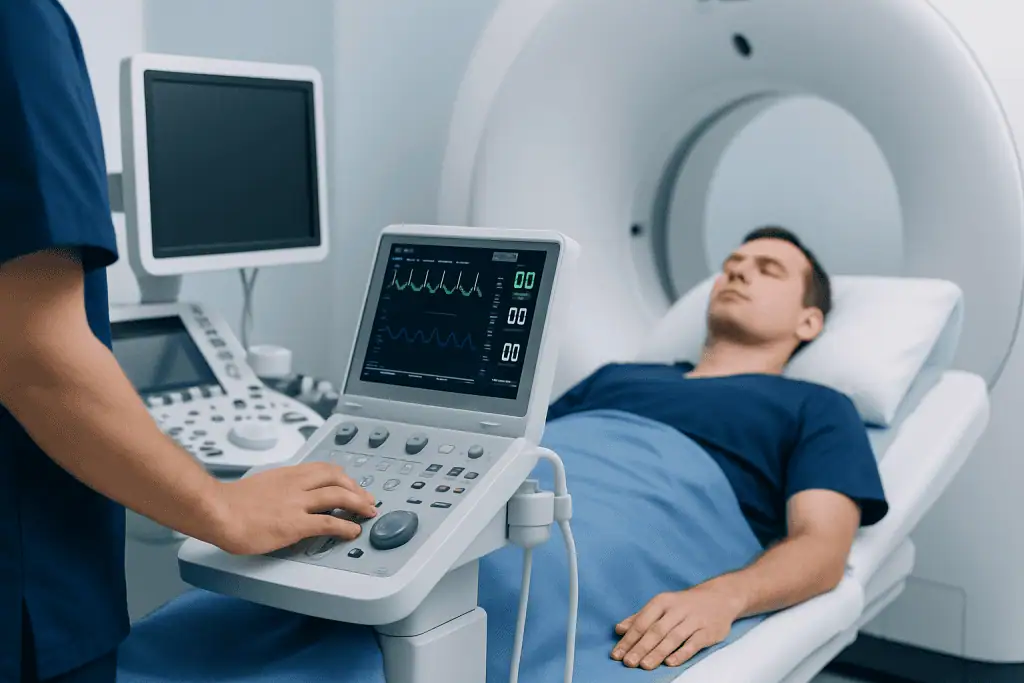
Your medical record is not one document. It typically includes physician notes, signed consent forms, nursing observations, laboratory results, pathology reports, radiology reports, the imaging files themselves, medication lists, prescriptions, operative or procedure notes where relevant, discharge summaries and follow-up recommendations. Administrative paperwork — admission forms, invoices, insurance correspondence — is usually stored separately from the clinical record, which matters when you decide what to send to whom later.
For an international patient, the most valuable documents are the ones your local doctor can read quickly: a final discharge report, a clear diagnosis or assessment, a summary of what was done, medication instructions, warning signs to watch for, and the timing of follow-up. If you had imaging, ask for the digital image files (usually DICOM format on a USB drive, disc or download link) as well as the written radiology report. Reports summarise; the images let your home radiologist compare like for like.
Before you leave the ward, check that your name, date of birth and passport number match across all major documents. A single transliteration difference — common when names move between alphabets — can slow down insurers, embassies and home clinics. If you use two surnames or a preferred name, tell the international patient team early so your details are consistent everywhere. If you are still preparing for travel, our guide on what medical records to bring to Turkey covers the outbound side of the same problem.
Does Turkey comply with GDPR?
This is one of the most searched questions, and the honest answer has two parts. Turkey is not a member of the European Union, so the GDPR does not apply within Turkey as domestic law. However, Turkey has its own data protection framework — KVKK — which was drafted with European data protection law in mind and shares its core ideas: lawful basis for processing, special protection for health data, purpose limitation, security obligations and individual rights to access and correction. KVKK is enforced by a national Personal Data Protection Authority.
KVKK and the GDPR are not identical, and Turkey does not currently hold an EU adequacy decision, which mainly matters to organisations transferring data across borders rather than to you as a patient. What you should take from this: your health data in a Turkish hospital is legally protected as sensitive data, hospitals need a lawful basis and usually your explicit consent to process and share it, and you retain the right to ask what is held about you. If a specific GDPR question matters to you — for example, because your employer or insurer has strict data rules — raise it with them and with the hospital’s international office before treatment.
Consent, confidentiality and who may receive updates
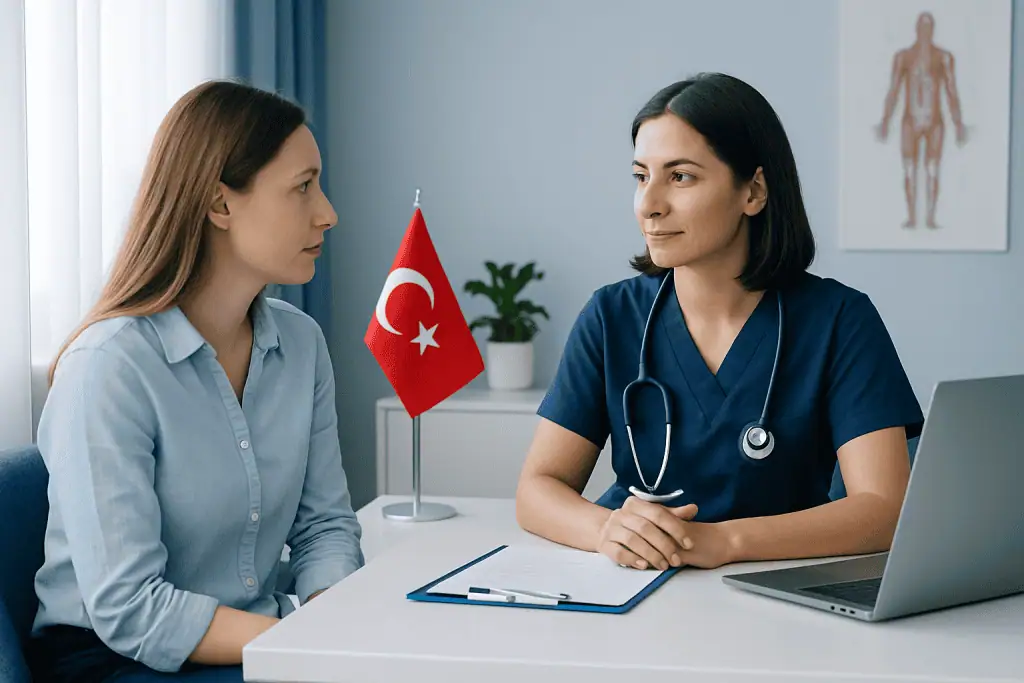
Expect to sign several documents: consent for admission and examination, consent for specific treatments or procedures, consent for anaesthesia where relevant, a KVKK data processing notice, and forms covering record release. These are not formalities. Each one records that you were informed and that you agreed to something specific. Read them, and if a form is not in a language you fully understand, ask for interpretation before signing — not after. You are entitled to that.
You also control who receives updates. If you want a spouse, parent, adult child, friend or coordinator to speak with doctors, collect paperwork or take calls on your behalf, that permission should be written into the hospital record, usually with the person’s full name and relationship to you. Equally, if you do not want a companion informed — and some patients travelling for sensitive care do not — say so clearly at admission. Staff cannot respect a boundary they do not know about. For a deeper look at how consent and sharing decisions work, see our guide to consent, sharing and patient rights for medical records in Turkey.
There are limited situations where information may be shared without asking you each time: notifiable public health matters, legal obligations, insurance processing you have authorised, or continuity of care between clinicians treating you. Even then, the working principle is minimum necessary — share only what the purpose requires. If someone asks for a passport copy or a document and the reason is not obvious, ask how it will be used, who will see it and how it will be stored. A good hospital answers that question without friction.
e-Nabız and digital records: what foreigners can and cannot access
Turkey runs a national personal health record system called e-Nabız, which gathers records from public and private providers into one account that patients can view online. It is genuinely useful — for people who can log in. Access is tied to a Turkish identity number or a foreigner identification number, which is normally issued to residents rather than short-stay medical travellers. If you are visiting for a few weeks of treatment, do not plan around e-Nabız access; some international patients will qualify and many will not.
Hospitals also run their own electronic medical record systems, and some offer patient portals or secure delivery of reports by email. The practical rule: before you leave, confirm exactly how each outstanding result will reach you — portal, secure email, download link or courier — and test that the email address on file is spelt correctly. Do not assume a report will simply appear in an app you can open from abroad.
If you are still at the planning stage and need to send documents to Turkey for review, do it through the hospital’s official channel rather than a chain of personal messages. Our step-by-step guide on sending medical records to Turkey securely explains the safest ways to do this.
How to request copies of your records
The best time to request records is before discharge, not from the airport lounge. Tell your patient coordinator or ward team, ideally a day or two ahead, that you need a complete package for your doctor and insurer at home. Some documents are ready immediately; pathology and certain specialised laboratory reports can take longer and may need to be sent after you leave.
A thorough request covers: discharge summary, medication plan, prescriptions, laboratory results, imaging reports, the digital imaging files, procedure or operative notes if applicable, pathology reports if applicable, follow-up instructions, sick-leave or fitness-to-fly documentation if you need it, and invoices with payment receipts. Not every item applies to every patient, but working from a list prevents gaps you only discover at home. At Acibadem, the discharge process is designed to assemble these documents for international patients — our guide on how discharge papers and medical records are prepared shows what to expect.
Because health data is sensitive, hospitals verify identity before releasing records. Bring your passport, and if someone else will collect documents for you, expect the hospital to ask for your written authorisation and that person’s identification. This step can feel bureaucratic; it is also exactly what protects your file from being handed to the wrong person.
Translation, secure communication and internet use in Turkey
Clinical documents in Turkey are often produced in Turkish, though hospitals with large international programmes commonly issue key documents — particularly discharge summaries — in English, or can coordinate translation support. Ask early which documents can be provided in English and which would need extra time. For official use in another country, such as a court, immigration authority or government agency, you may need a certified or sworn translation and possibly legalisation steps that sit outside routine hospital services; the international office can point you in the right direction but usually cannot do this for you.
A related question people ask is whether the internet is monitored in Turkey. Access to some websites and services has been restricted in Turkey at various times, so a specific tool you rely on at home may not work reliably. For your health documents, the sensible habits are the same ones you should use anywhere: avoid public Wi-Fi and shared hotel computers for anything medical, use a private email account with a strong password and two-factor authentication, prefer the hospital’s official secure channel over ad-hoc messaging, and keep files in encrypted storage. If you receive imaging on a USB drive, disc or download link, make a backup immediately — download links expire and discs get lost.
Once documents start accumulating, keep them in one dated folder rather than scattered across inboxes. Our guide on organising your medical records for a faster review works just as well for the journey home as for the journey out.
Sharing records with insurers, home doctors and family
Different people need different slices of your file. Insurers usually want invoices, medical reports, prescriptions and proof of payment. Your home doctor wants the opposite emphasis: clinical detail, medication changes, results and follow-up dates, with no interest in the billing. An employer may only need a sick-leave note or fitness-to-fly confirmation — not a diagnosis. A family member may need practical care instructions and nothing more.
Before sending your full file to anyone, ask what they actually need and whether a smaller document meets the purpose. Ask insurers to list required documents in writing before you send anything. This is not secrecy; it is the same minimum-necessary principle the law expects of hospitals, applied by you.
If your care involved several specialists, you may come home with reports from multiple departments. A one-page timeline — dates, departments, what happened — at the front of your folder makes it far easier for your home physician to reconstruct the story and reduces the chance of repeated tests.
Step by step
- Prepare a privacy contact list. Before travel, decide who may receive medical updates and documents. Write down full names, relationship to you, phone numbers and email addresses so the hospital can record permissions precisely.
- Bring identification and previous records. Carry your passport and relevant previous records, in digital and paper form. If your name is spelt differently across documents, flag it at check-in.
- Ask for interpretation before signing. If a consent or KVKK form is not fully clear to you, ask for an interpreter or explanation first. You should know exactly what you are agreeing to — treatment, data handling and record release.
- Request your discharge package early. Tell the team in advance that you need records for your home doctor and insurer. Ask which reports will be ready at discharge and which will follow later.
- Confirm secure delivery for late results. Agree the channel — portal, secure email, courier or authorised collection — and check your email address and international phone number are recorded correctly.
- Review documents before leaving. Check names, dates of birth, passport numbers, dates of care and medication instructions while the clinical team and interpreters are still in front of you.
- Store and share carefully at home. Keep encrypted backups, and share the smallest document that meets each purpose rather than your whole file.
Your checklist
- Passport and any ID used for hospital registration
- Previous test results, imaging, prescriptions and allergy list
- Written list of people allowed to receive updates
- Private email with strong password and two-factor authentication
- Insurer’s written list of required claim documents
- Request list: discharge summary, results, imaging files, invoices
- Interpreter request for consent forms and discharge instructions
- Encrypted folder or drive for digital medical files
- Contact details for your home-country doctor or clinic
Key takeaways
- Health data in Turkey is sensitive personal data under KVKK; hospitals need a lawful basis, usually your explicit consent, to process and share it.
- Turkey does not apply the GDPR, but its KVKK framework covers similar ground with its own rules and regulator.
- Written authorisation controls who may receive updates or collect records on your behalf — put it in the hospital record, not just in conversation.
- Request your full discharge package before leaving Turkey, and agree in writing how late results will be delivered.
- e-Nabız access depends on holding a Turkish or foreigner identification number; short-stay patients should not rely on it.
- Share the smallest document that meets each purpose — insurers, employers and family rarely need your whole file.
Frequently asked questions
Does Turkey comply with GDPR?
The GDPR does not apply in Turkey, because Turkey is not an EU member. Turkey has its own data protection law, KVKK, which is broadly similar in structure: health data is specially protected, explicit consent is generally required, and a national authority enforces the rules. The two frameworks are not identical, so raise any specific GDPR requirement with your insurer or employer and the hospital before treatment.
What are the privacy regulations for medical records in Turkey?
The main instruments are the Personal Data Protection Law (KVKK), which classifies health data as sensitive personal data, a dedicated regulation on personal health data covering how providers store and share records, and the Patient Rights Regulation, which gives patients the right to confidentiality, informed consent and access to their own records. These protections apply to foreign patients as well as Turkish citizens.
Can I get a copy of my medical records after treatment in Turkey?
Yes. You can request copies of your records from the hospital where you were treated, and the hospital will verify your identity before releasing them. It is far easier to collect your discharge summary, test results and imaging files before you leave Turkey than to arrange release from abroad, so ask early during your stay.
Can my companion speak to doctors or collect documents for me?
Usually yes, if you give clear permission and the hospital records that authorisation in writing. Your companion may need to show identification, and you may need to sign a form allowing information sharing or document collection. If you do not want information shared with anyone, tell the hospital team at admission.
Will my records be available in English?
Key documents such as discharge summaries are often available in English at hospitals with international patient programmes, and translation support can sometimes be coordinated for others. Ask early which documents can be provided in English and which need extra time. For official use abroad — courts, immigration, government agencies — you may need a certified translation arranged outside the hospital.
Can I use e-Nabız as a foreign patient?
e-Nabız, Turkey’s national personal health record system, requires a Turkish identity number or a foreigner identification number, which is normally issued to residents. Many short-stay international patients will not have one, so plan to receive your records directly from the hospital rather than relying on e-Nabız access from abroad.
Is the internet monitored in Turkey, and is it safe to send health documents?
Access to some websites and online services has been restricted in Turkey at various times, so tools you use at home may not always work. For health documents, apply the same precautions you would anywhere: avoid public Wi-Fi and shared computers, use the hospital’s official secure channels, protect your email with a strong password and two-factor authentication, and keep encrypted backups of anything you receive.
What if some test results are not ready before I fly home?
Ask when each outstanding result is expected and agree a secure delivery method — portal, secure email or courier — before you leave. Confirm your email address and international phone number are recorded correctly, ask whether a translated version is possible, and note who to contact if a report does not arrive by the expected date.
Add us as a Preferred Source to see more of our trusted health content across Google Search, AI Overviews and Discover.

Update history
- PublishedJune 8, 2026
- Medical review approvedSeptember 13, 2026
- Last content updateSeptember 12, 2026
References3
- Personal Health Records (MedlinePlus) — medlineplus.gov
- Medical Tourism: Travel to Another Country for Medical Care (CDC) — wwwnc.cdc.gov
- Foreign travel advice: Turkey (GOV.UK) — gov.uk
More Patient Guides

When to Delay Travel for Treatment in Turkey Because of Cold, Flu, or Fever
Delay travel for treatment in Turkey if you have fever, worsening flu symptoms, or breathing difficulty; contact your care team before flying.

Traveling to Turkey for Treatment While Pregnant: Safety Questions to Ask First
Traveling to Turkey while pregnant can be safe with medical clearance, airline checks and a tailored care plan. Ask these key safety…
When to Seek Urgent Help After Leaving the Hospital in Turkey
When to seek urgent help after leaving the hospital in Turkey: act fast for breathing trouble, chest pain, heavy bleeding, high fever,…

At Acibadem, How We Handle Consent, Privacy, and Patient Decision-Making
Consent, privacy, and patient decision-making at Acibadem in Turkey are handled with clear information, confidentiality, interpreters, and respect for your choices.