

Nodules on the Lung Treatment: How It Works, Results and What to Expect

A lung nodule is a small rounded area seen on chest imaging, not a diagnosis by itself. Most lung nodules are benign, particularly when they are small, stable over time or have features of prior infection.
Key Takeaways
- A lung nodule is a small rounded area seen on chest imaging, not a diagnosis by itself.
- Most lung nodules are benign, particularly when they are small, stable over time or have features of prior infection.
- The most appropriate next step may be CT surveillance, PET-CT, biopsy, surgical removal or treatment of an underlying cause.
- Size matters, but growth, shape, smoking history and imaging characteristics are also important when assessing risk.
- New or worsening breathlessness, coughing blood, persistent chest pain or unexplained weight loss should be assessed promptly.
Nodules on the lung treatment is based on why the nodule developed and how likely it is to be cancerous. Many small lung nodules need careful CT scan monitoring rather than immediate treatment, while suspicious nodules may require further imaging, biopsy, surgery or treatment for an underlying infection or inflammatory condition.
Nodules on the Lung Treatment: How It Works
Nodules on the lung treatment is not the same for every person because a lung nodule is an imaging finding rather than a disease. A nodule is a small, rounded spot in the lung that may be discovered during a chest X-ray or CT scan performed for another reason. It can represent healed inflammation, a current infection, a non-cancerous growth, scar tissue or, less commonly, an early lung cancer.
The first goal is to determine whether the nodule can be safely observed or needs further investigation. Doctors consider its size, shape, density, location and whether it changes on scans over time. They also review age, smoking exposure, previous cancer, family history, workplace exposures and symptoms.
For many people, the safest and most effective management is planned follow-up with low-dose chest CT scans. This approach avoids unnecessary invasive procedures while allowing clinicians to identify meaningful growth early. If tests suggest a significant cancer risk, the care team may recommend imaging, tissue sampling or removal of the nodule.
What Are Lung Nodules and What May Cause Them?
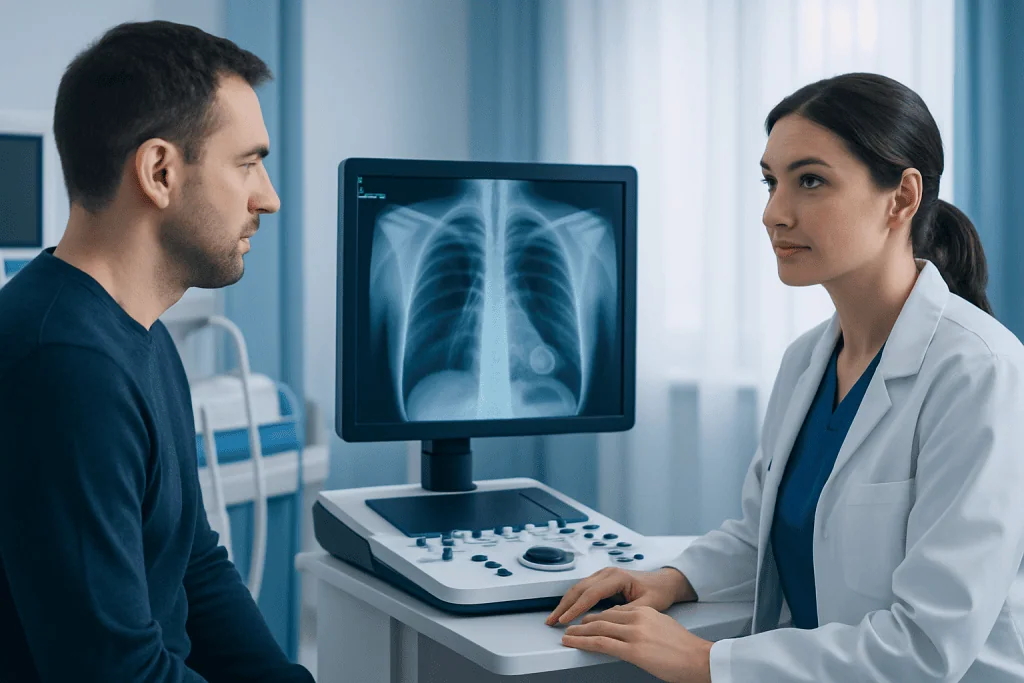
Lung nodules, also called pulmonary nodules, are usually less than 3 centimeters across. Larger abnormalities are generally called lung masses and need prompt medical assessment. Nodules may be described as solid, partly solid or ground-glass on CT imaging; these descriptions help guide the follow-up plan.
Common non-cancerous causes include prior respiratory infections, fungal infections in some regions, tuberculosis, inflammation, granulomas, rheumatoid nodules and benign tumors such as hamartomas. A nodule may also remain after an infection has resolved, leaving a small area of calcification or scar tissue.
Some nodules are cancerous or represent cancer that has spread from another part of the body. This is why doctors do not rely on one feature alone. A respiratory physician, radiologist, thoracic surgeon and, when appropriate, oncologist may work together to interpret the findings and recommend the most suitable next step.
Should I Be Worried if I Have Lung Nodules?
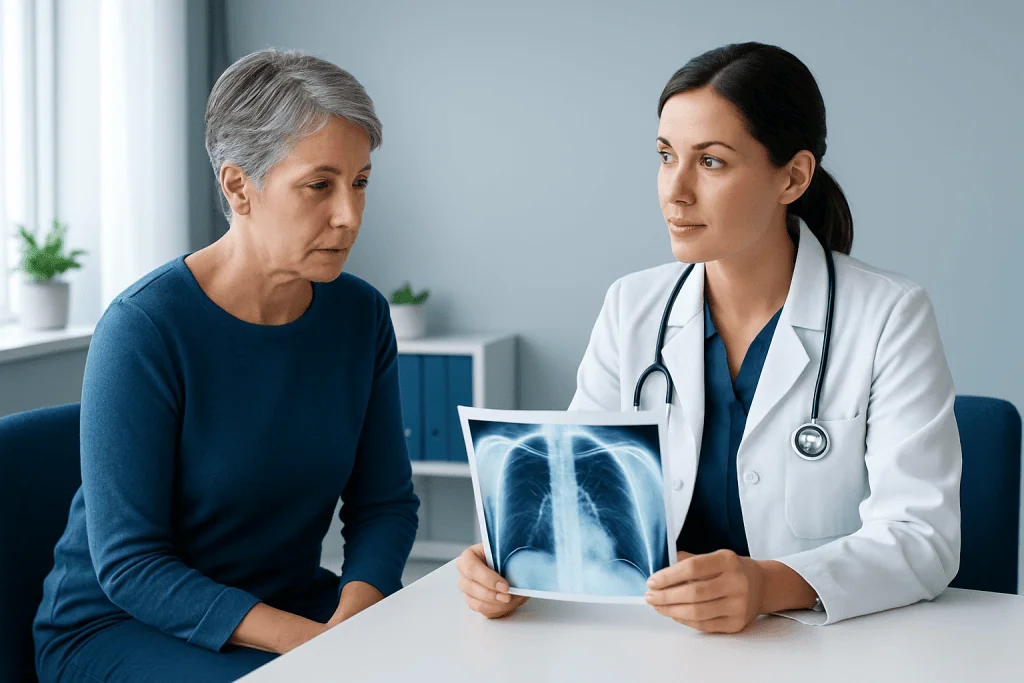
Finding a lung nodule can be worrying, but most nodules are not lung cancer. Small nodules are common on modern CT scans because these scans can detect very small changes in lung tissue. A calm, structured assessment is more useful than assuming the worst.
Risk is generally lower when a nodule is very small, has benign calcification patterns, has remained unchanged on prior scans or appears after a known infection. Risk may be higher when a nodule grows, has irregular or spiculated edges, is located in the upper part of the lung, or occurs in someone with substantial smoking exposure or a history of cancer.
Doctors may compare the new scan with earlier imaging, including scans taken years before. Stability is reassuring, but the appropriate follow-up period differs according to the type of nodule. It is important to attend recommended scan appointments, even when there are no symptoms.
Assessment, Candidacy and the Step-by-Step Care Pathway
Evaluation begins with a clinical history, physical examination and detailed review of the CT scan. The doctor may ask about smoking or vaping, occupational exposures, recent travel, previous infections, immune system conditions and symptoms such as a persistent cough, fever or unintended weight loss. Lung function testing may be needed if surgery is being considered.
For a very small, low-risk nodule, the person may be a candidate for surveillance rather than a procedure. A follow-up low-dose CT is scheduled at an interval based on the nodule’s type and size and the individual’s risk profile. The team looks for growth or changes in density, not simply the presence of the nodule.
If more information is needed, the next step may be a PET-CT scan, which assesses metabolic activity, although inflammation can also cause increased activity. Tissue can be obtained through a needle biopsy guided by CT, bronchoscopy with biopsy, or advanced navigational bronchoscopy for selected nodules. These options are considered when the result is likely to change treatment and the procedure risks are acceptable.
If a nodule is strongly suspicious for early cancer and the person is medically fit, removal may provide both a diagnosis and treatment. Depending on the nodule and lung function, surgery may remove a small wedge of lung, a segment or a lobe. Lung cancer treatment options are planned according to the confirmed diagnosis and stage, not from a scan finding alone.
Treatment Options, Benefits and Possible Risks
There is no medicine that reliably makes every lung nodule disappear. Treatment targets the identified cause. For example, a bacterial infection may be treated with appropriate antibiotics, while certain fungal or inflammatory conditions need specialist-directed care. A healed scar or benign, stable nodule usually needs no treatment once the clinician confirms that it is safe to stop surveillance.
When cancer is confirmed or strongly suspected, surgery is often considered for localized disease when it can be performed safely. Some patients may instead need radiation therapy, including precisely targeted approaches, or systemic cancer treatment. The best plan depends on the stage, type of cancer, overall health, lung function and personal preferences.
Potential benefits of surveillance include avoiding unnecessary biopsy or surgery. The benefit of biopsy is obtaining a diagnosis that guides care, while the benefit of surgery can be complete removal of an early cancer. Risks vary by procedure and may include bleeding, infection, pain, air leakage around the lung, collapsed lung after a needle biopsy, anesthesia-related complications or reduced breathing capacity after larger surgery.
Before recommending an invasive procedure, clinicians balance the likelihood of benefit against these risks. Shared decision-making helps ensure that the plan reflects the person’s medical needs, values and ability to attend follow-up appointments.
Recovery Timeline and Follow-Up After Testing or Treatment
Recovery depends on the type of care received. CT surveillance does not require physical recovery, although waiting for results can cause understandable anxiety. People can ask their clinician when and how results will be communicated and what change would lead to a different management plan.
After a needle biopsy or bronchoscopy, many people return home the same day. They may have mild soreness, cough or fatigue for a short time. The care team provides individual instructions about activity, medicines and symptoms that require urgent contact, particularly increasing shortness of breath, chest pain or coughing blood.
Recovery after lung surgery is longer and varies with the extent of surgery and whether a minimally invasive technique is suitable. Hospital care may include pain control, breathing exercises, early movement and monitoring for air leaks or infection. Follow-up imaging and pathology review help confirm the diagnosis and determine whether any additional care is needed.
Can You Live a Long Life with Lung Nodules?
Yes. Many people live a long, healthy life with lung nodules, especially when the nodules are benign or remain stable on follow-up imaging. A nodule itself does not automatically affect breathing, life expectancy or daily activities.
Even when a nodule is found to be early lung cancer, outcomes can be more favorable when it is detected before it has spread and is treated appropriately. Individual outlook depends on the exact diagnosis, stage, general health and response to treatment. The most helpful step is to follow the recommended assessment plan rather than trying to predict the outcome from nodule size alone.
What Size Is a Stage 1 Lung Cancer Nodule?
A stage 1 lung cancer is limited to the lung and has not spread to lymph nodes or distant organs. Size is part of staging, but it is not the only factor: the precise stage also depends on the tumor’s characteristics and whether there is invasion into nearby structures.
In general, stage IA tumors are up to 3 centimeters, while some stage IB tumors are larger but still limited to the lung and meet other staging criteria. A nodule’s measurement on CT cannot confirm stage 1 cancer because imaging alone may not show all relevant features. Doctors use imaging, pathology and sometimes surgical lymph-node assessment to establish the stage.
What Helps Lung Nodules Go Away?
Whether a lung nodule goes away depends on its cause. Nodules caused by an active infection or temporary inflammation may shrink or resolve after the underlying problem improves, sometimes with specific treatment prescribed by a clinician. Nodules due to old scarring, calcified granulomas or benign growths often remain visible but do not necessarily require removal.
Smoking cessation is one of the most important steps for lung health and lowers the future risk of lung cancer and other respiratory diseases, but it does not make an established nodule disappear immediately. A balanced diet, physical activity within personal ability and avoiding smoke exposure support general health, but they should not replace medical follow-up.
People should not use unproven supplements, cleansing products or alternative remedies to try to shrink a lung nodule. These may delay appropriate evaluation or interact with prescribed medicines. The safest plan is to address the identified cause and complete the follow-up imaging recommended by the clinical team.
When to Seek Medical Care
A person with a newly identified lung nodule should arrange follow-up with the clinician who ordered the scan or with a respiratory specialist. Prompt review is particularly important if the scan report recommends further imaging or if there are risk factors such as current or previous smoking, prior cancer, immune suppression or known exposure to tuberculosis or occupational dusts.
Urgent medical assessment is appropriate for coughing up blood, new or worsening shortness of breath, severe or persistent chest pain, high fever, confusion, or symptoms that are rapidly getting worse. These symptoms have many possible causes and do not necessarily mean a nodule is cancerous, but they should not be ignored.
For complex cases, multidisciplinary review can help coordinate imaging, respiratory assessment, biopsy, surgery and oncology care. Acibadem International’s multidisciplinary specialists and JCI-accredited hospitals diagnose and treat lung conditions for international patients, with care plans tailored to the confirmed diagnosis.
Frequently asked questions
Are lung nodules usually cancerous?
No. Most lung nodules are benign, particularly when they are small, unchanged over time or have imaging features consistent with old infection. However, every nodule should be assessed in the context of its CT appearance, growth pattern and the person’s individual risk factors.
How often should a lung nodule be checked?
The schedule depends on the nodule’s size, whether it is solid or ground-glass, its appearance and the person’s cancer risk. Some nodules need no further scans, while others require one or more CT scans over months or years. The ordering clinician can explain the recommended interval.
Can a CT scan tell if a lung nodule is cancer?
CT can estimate the likelihood of cancer by showing size, shape, density and change over time, but it cannot always provide a definite diagnosis. PET-CT, biopsy or surgery may be considered when imaging findings and individual risk suggest that more certainty is needed.
Does a lung nodule cause symptoms?
Small lung nodules commonly cause no symptoms and are found incidentally. Symptoms such as persistent cough, breathlessness, chest discomfort or fever may be related to another lung condition, though they should be discussed with a doctor if they continue or worsen.
Can a lung nodule shrink on its own?
Some nodules related to temporary inflammation or infection can shrink or disappear as the underlying condition resolves. Nodules caused by scar tissue, prior granulomas or benign tumors may remain unchanged. Imaging follow-up is the reliable way to confirm what is happening.
Is a biopsy always needed for a lung nodule?
No. Biopsy is not always needed and may be avoided when the risk of cancer is low or when serial CT scans can safely provide the needed information. A biopsy is more likely to be recommended when the nodule is growing, has suspicious features or when a tissue diagnosis would change treatment decisions.
References
- American College of Chest Physicians
- Fleischner Society
- American Cancer Society
- National Cancer Institute
- National Health Service
This article is for general information only and is not a substitute for professional medical advice. Please consult a qualified doctor about your individual situation.
Oncology care in Turkey — second opinion and treatment plan
JCI-accredited · board-certified surgeons · reply within 24h
Add us as a Preferred Source to see more of our trusted health content across Google Search, AI Overviews and Discover.

More from the Health Library
Related Specialists

Dr. Ali Demir
Pediatric Rehabilitation
Assoc. Prof. Dr. Semiha Urvay
Medical Oncology
Dr. Mehtap Selçuk
Anesthesiology
Prof. Dr. Funda Vesile Çorapcıoğlu
Pediatric Hematology & Oncology