

What Does an Endoscopy Nurse Do: Preparation, Procedure and Results

Endoscopy nurses assess patients, explain practical steps, monitor vital signs, and assist throughout an endoscopic procedure. They commonly place or help manage IV access, depending on local training, policies, and the planned sedation.
Key Takeaways
- Endoscopy nurses assess patients, explain practical steps, monitor vital signs, and assist throughout an endoscopic procedure.
- They commonly place or help manage IV access, depending on local training, policies, and the planned sedation.
- The work requires strong observation skills, infection-prevention practices, teamwork, and the ability to reassure anxious patients.
- Endoscopy nurses do not usually diagnose conditions independently, but they communicate observations and support the medical team.
- After sedation, patients need monitoring and usually require an adult to take them home if sedating medicines were used.
An endoscopy nurse helps patients prepare for procedures that examine the digestive tract, supports the endoscopist during the examination, and monitors recovery after sedation. Their role combines clinical skills, patient education, safety checks, and calm, compassionate communication.
What Does an Endoscopy Nurse Do?
An endoscopy nurse prepares patients for procedures such as gastroscopy, colonoscopy, bronchoscopy, or other examinations performed with an endoscope. They check safety information, explain what will happen, monitor the patient before and during the procedure, assist the clinician, and provide recovery and discharge support afterward.
Although duties vary by country, hospital, and scope of practice, the nurse is a central part of the endoscopy team. They help ensure that the procedure area is ready, medicines and equipment are used safely, infection-control processes are followed, and patients understand the next steps.
For patients, the nurse is often the main point of contact on procedure day. They can answer practical questions, help reduce uncertainty, and alert the endoscopist or anesthesia team to symptoms, allergies, medical history, or changes in the patient’s condition.
How Endoscopy Works and Who May Need It
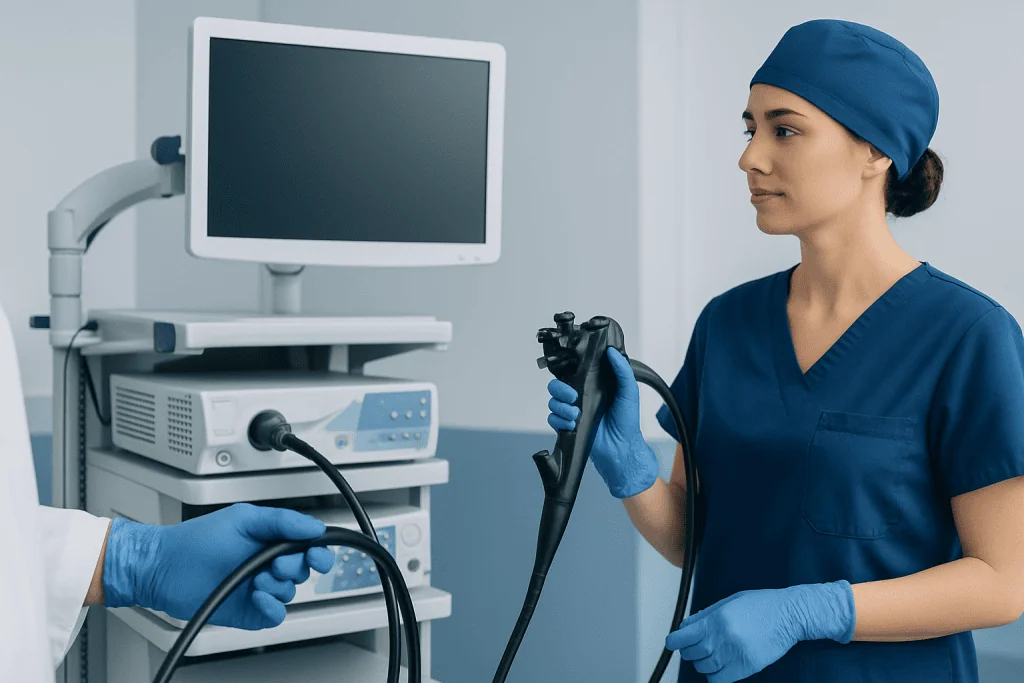
Endoscopy is a broad term for procedures that use a thin, flexible tube with a light and camera to look inside parts of the body. In digestive endoscopy, the camera may be passed through the mouth to examine the esophagus, stomach, and first part of the small intestine, or through the rectum to inspect the large bowel.
A doctor may recommend an endoscopy to investigate symptoms such as persistent swallowing difficulty, ongoing upper abdominal discomfort, unexplained bleeding, anemia, long-lasting bowel changes, or weight loss that needs assessment. It may also be used for screening, surveillance, tissue sampling, or treatment, such as removing certain polyps or controlling bleeding.
Not every person is suitable for every type of procedure without additional planning. The healthcare team considers medical conditions, pregnancy, allergies, use of blood-thinning medicines, diabetes treatment, prior sedation problems, and whether the patient can safely arrange transport home after sedation. Digestive symptoms may also be assessed through services for gastritis or other gastrointestinal conditions when clinically appropriate.
Preparation and the Step-by-Step Procedure

Before the procedure, the endoscopy nurse reviews the patient’s identity, reason for the test, consent process, medical history, allergies, current medicines, and fasting or bowel-preparation instructions. They may measure blood pressure, pulse, oxygen level, temperature, and blood sugar when relevant. Clear communication is especially important if a patient has taken anticoagulants, insulin, weight-loss medication, or medicines that affect sedation.
During preparation, the nurse helps the patient change into appropriate clothing, removes or secures items that could interfere with the procedure, and explains the immediate plan. Depending on the procedure and local protocols, the team may use a throat spray, pain relief, sedating medicine, or anesthesia support. The nurse prepares monitoring equipment and confirms that necessary supplies are available.
During the examination, the nurse assists with patient positioning, observes comfort and vital signs, supports the endoscopist with equipment and specimen handling, and documents key clinical information. If tissue samples are taken or a treatment is performed, the nurse helps ensure they are correctly labeled and sent for laboratory assessment. A digestive endoscopy procedure may be diagnostic, therapeutic, or both.
Afterward, the nurse monitors the patient in recovery until they are alert enough for discharge according to the facility’s criteria. They review written instructions, explain common temporary effects such as bloating or a sore throat, and confirm that a responsible adult is available to accompany the patient home when sedation has been used.
How Hard Is Endoscopy Nursing?
Endoscopy nursing can be demanding because it combines technical knowledge with continuous patient assessment and rapid teamwork. Nurses need to recognize changes in breathing, circulation, pain, alertness, and anxiety while also helping the procedure run efficiently and maintaining strict infection-prevention standards.
The work may involve a busy schedule with different procedures, varying levels of sedation, and patients who are understandably worried or uncomfortable. It also requires familiarity with emergency protocols, safe handling of specimens, reprocessing processes for endoscopic equipment, and clear documentation.
At the same time, many nurses find the role rewarding because they build focused relationships with patients during an important moment in their care. Training, supervised clinical experience, ongoing competency assessment, and collaboration with gastroenterologists, anesthesiology teams, technicians, and recovery staff all support safe practice.
What to Expect as an Endoscopy Nurse
An endoscopy nurse may work in an outpatient endoscopy unit, hospital procedure suite, operating-room environment, or specialized clinic. A typical shift can include pre-procedure assessments, patient teaching, procedural assistance, recovery monitoring, discharge planning, room turnover, equipment checks, and coordination with other clinical teams.
Patient education is a major part of the role. Nurses reinforce instructions about fasting, bowel preparation, medication adjustments directed by the prescriber, and the temporary effects of sedation. They also help patients understand that the endoscopist may share initial findings after the procedure, while biopsy or pathology results can take longer.
Professional responsibilities also include safeguarding privacy, checking informed-consent documentation, escalating concerns promptly, and providing respectful care to people with different language, cultural, and health needs. In international settings, clear interpretation and written follow-up instructions can be particularly important for continuity of care after travel.
Do Endoscopy Nurses Start IVs?
Many endoscopy nurses are trained and authorized to start intravenous (IV) lines, especially where IV access is needed for sedation, fluids, medicines, or emergency readiness. However, this depends on the nurse’s qualifications, the hospital’s policies, local regulations, and the individual patient’s care plan.
In some units, an endoscopy nurse places the IV before the procedure. In others, this may be done by another nurse, an anesthesia professional, or a specialist vascular-access team. The nurse also checks that IV access remains secure and monitors the patient for possible concerns such as discomfort, swelling, or infiltration.
Patients with difficult veins, dehydration, previous access problems, or certain medical conditions may need extra time or a different approach. Letting the team know about previous difficult IV placement can help them plan care more comfortably and safely.
Benefits, Risks, Recovery, and When to Seek Medical Care
Endoscopy can provide direct views of internal tissue, allow biopsies, and enable some treatments during the same procedure. This may help clinicians identify inflammation, ulcers, polyps, bleeding, narrowing, infection, or other changes and decide on appropriate next steps. The nursing team contributes to these benefits by supporting preparation, monitoring, and safe recovery.
Most people recover from routine endoscopy without major problems. After upper endoscopy, a mild sore throat, temporary bloating, or drowsiness may occur. After colonoscopy, gas and abdominal fullness are common for a short time. If sedation is used, patients should not drive, drink alcohol, operate machinery, or make important decisions until the effects have fully worn off and the team’s instructions allow it.
Complications are uncommon but can include reactions to sedating medicines, bleeding after a biopsy or treatment, infection, or rarely a tear in the digestive tract. Patients should seek urgent medical advice after endoscopy if they develop severe or worsening abdominal or chest pain, persistent vomiting, fever, black stools, significant rectal bleeding, shortness of breath, fainting, or difficulty swallowing that does not improve.
People should also seek medical care before a planned endoscopy if they have new serious symptoms, cannot complete the prescribed preparation, or are unsure how to manage essential medicines. Acibadem International’s multidisciplinary specialists and JCI-accredited hospitals can assess digestive concerns and provide endoscopy care for international patients when needed.
What Are Some Common Interview Questions for an Endoscopy Nurse?
Interviews for endoscopy nursing positions often explore clinical judgment, patient safety, communication, and teamwork. Employers may ask candidates to describe their experience with pre-procedure assessment, sedation monitoring, IV care, infection prevention, specimen handling, documentation, and recovery-room observation.
Common questions may include: “How would you respond to a patient who is anxious about a colonoscopy?” “What changes would you report during sedation?” “How do you verify patient identity and procedure details?” “How do you manage competing priorities in a busy procedure unit?” and “What steps help prevent errors in specimen labeling?”
Other questions may focus on emergency readiness, such as recognizing a deteriorating patient, following escalation procedures, and working with anesthesia or medical teams. Strong answers are usually specific, patient-centered, and aligned with local policies, while showing an understanding of professional boundaries and the importance of asking for support when needed.
Frequently asked questions
What does an endoscopy nurse do before a procedure?
Before a procedure, the endoscopy nurse reviews medical history, allergies, medicines, fasting or bowel-preparation instructions, and relevant safety checks. They explain what to expect, record observations such as blood pressure and oxygen level, and prepare the patient and procedure area. They communicate important information to the endoscopist and anesthesia team when involved.
Does an endoscopy nurse perform the endoscopy?
Usually, the endoscopy itself is performed by a qualified physician or another appropriately credentialed endoscopist. The endoscopy nurse assists with patient preparation, monitoring, equipment workflow, documentation, recovery, and discharge education. Exact responsibilities vary by professional scope and local regulations.
Are patients awake during an endoscopy?
This depends on the type of endoscopy and the sedation plan. Some people remain awake with local numbing medicine, while others receive sedation that makes them sleepy and less likely to remember the procedure. The team discusses the expected approach before the examination.
How long does recovery take after endoscopy?
Many people are ready to leave the recovery area within a few hours, but recovery varies with the procedure, sedation, and any treatment performed. Drowsiness may last for the rest of the day after sedating medicines. Patients should follow the discharge instructions provided by their clinical team.
What should a patient tell the endoscopy nurse?
Patients should report allergies, previous problems with anesthesia or sedation, current medicines, pregnancy, diabetes, blood-thinning treatment, heart or lung conditions, and any new symptoms. They should also mention if they have had difficult IV access or have not been able to follow preparation instructions. Honest, complete information helps the team plan safer care.
What happens if a biopsy is taken during endoscopy?
A biopsy is a small tissue sample that may be collected for laboratory examination. The nurse helps label and document the sample correctly and ensures it is sent for testing. Initial visual findings may be discussed after the procedure, but biopsy results generally require additional time and follow-up with the clinician.
References
- American Society for Gastrointestinal Endoscopy
- Society of Gastroenterology Nurses and Associates
- National Institute of Diabetes and Digestive and Kidney Diseases
- National Health Service
- World Health Organization
This article is for general information only and is not a substitute for professional medical advice. Please consult a qualified doctor about your individual situation.
Medical weight-loss options in Turkey — costs & eligibility
JCI-accredited · board-certified surgeons · reply within 24h
Add us as a Preferred Source to see more of our trusted health content across Google Search, AI Overviews and Discover.
Check your numbers in seconds
BMI, calories, due date, blood pressure and 30+ more clinical calculators — free, instant, doctor-reviewed ranges.

More from the Health Library
Related Specialists

Assoc. Prof. Dr. Selen Kanar
Ophthalmology
Dr. Mustafa Şen
Pediatrics
Prof. Dr. Yüksel Ersoy
Physical Medicine & Rehabilitation
Dr. Meliha Kovancı Bayraktaroğlu
Gynecology & Obstetrics