Mibg Therapy: How It Works, Results and What to Expect

MIBG therapy uses radioactive iodine attached to MIBG to target certain neuroendocrine tumor cells. It is most commonly considered for high-risk or relapsed neuroblastoma and may also be used for selected pheochromocytomas and paragangliomas.
Key Takeaways
- MIBG therapy uses radioactive iodine attached to MIBG to target certain neuroendocrine tumor cells.
- It is most commonly considered for high-risk or relapsed neuroblastoma and may also be used for selected pheochromocytomas and paragangliomas.
- A diagnostic MIBG scan helps show whether tumors take up MIBG and whether therapy may be suitable.
- Common MIBG therapy side effects include temporary bone marrow suppression, nausea, tiredness and thyroid-related risks without protective medication.
- The number of treatments varies; some people receive one course, while others may receive repeat courses if it is safe and clinically appropriate.
- Follow-up includes blood tests, imaging and supportive care to monitor response and manage treatment effects.
MIBG therapy is a targeted nuclear medicine treatment that delivers radiation to tumor cells that absorb a substance called metaiodobenzylguanidine (MIBG). It is used most often for selected neuroendocrine tumors, and treatment planning requires careful assessment by an experienced multidisciplinary team.
Overview: What MIBG Therapy Means
MIBG therapy is a form of targeted radionuclide treatment. MIBG, short for metaiodobenzylguanidine, is a compound that can be taken up by some neuroendocrine tumor cells. When MIBG is combined with radioactive iodine, it carries radiation directly into cells that absorb it, helping damage their DNA and slow or shrink tumor growth.
The treatment is most widely used in people with neuroblastoma, a cancer that usually affects children, particularly when the disease is high risk, has returned, or has not responded fully to earlier treatment. In selected adults and children, it may also be considered for pheochromocytoma or paraganglioma that cannot be completely removed with surgery or has spread.
MIBG therapy is not suitable for every person with these tumors. The tumor must generally show sufficient MIBG uptake on imaging, and the care team must also consider blood counts, kidney function, prior treatments, symptoms, and the person’s overall health.
How does MIBG therapy work?
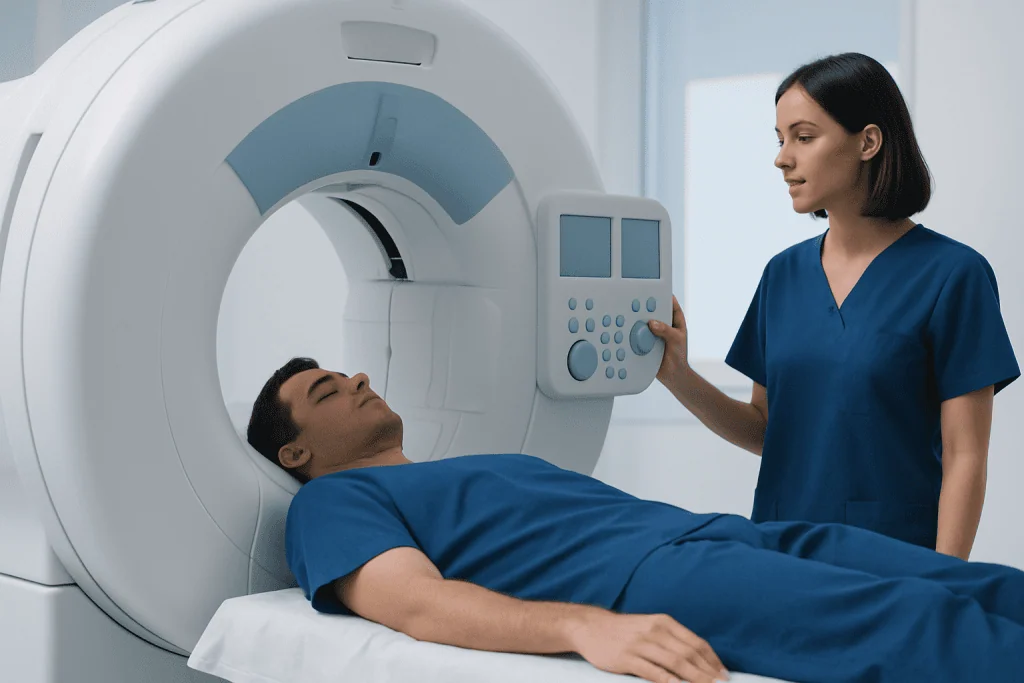
Some neuroendocrine tumor cells have transport systems that take up substances related to adrenaline and noradrenaline. MIBG resembles these substances. After it is given through a vein, MIBG circulates through the bloodstream and may collect in tumor cells that have this uptake mechanism.
For treatment, MIBG is labeled with radioactive iodine, most often iodine-131. The radioactive material emits radiation over a short distance. This allows radiation to affect MIBG-absorbing cancer cells and nearby tumor tissue while limiting exposure to more distant normal tissues. It is a targeted approach, but it is still a systemic treatment because the medicine travels throughout the body.
Before treatment, the team usually performs a diagnostic scan to confirm uptake. They also prescribe thyroid-blocking medication because the thyroid can absorb radioactive iodine. Protecting the thyroid is an important part of preparation and aftercare.
Response is assessed over time rather than immediately. Doctors may use symptom changes, blood and urine markers where appropriate, repeat imaging, and other disease-specific tests to understand whether treatment has controlled or reduced the cancer.
What cancers does a MIBG scan detect?

An MIBG scan is a nuclear medicine imaging test that looks for tissues that absorb MIBG. It is particularly helpful in neuroblastoma, where it can identify the main tumor and areas of spread, including disease in bone or bone marrow. The scan can be used at diagnosis, during treatment planning, and in follow-up.
MIBG imaging can also help detect or assess pheochromocytoma and paraganglioma. These are uncommon neuroendocrine tumors that may produce hormones such as adrenaline or noradrenaline. Not all tumors in these groups take up MIBG, so a negative scan does not always rule out disease.
The test is not a general cancer screening examination. Other scans, such as CT, MRI, PET, or bone imaging, may be needed because they provide different information about tumor location, anatomy, and activity. A specialist interprets the MIBG scan alongside symptoms, laboratory findings, and other imaging results.
A positive MIBG scan can have two roles: it helps map disease, and it may indicate that MIBG therapy could be a treatment option. However, uptake alone does not determine candidacy; safety and likely benefit must be considered individually.
Who May Be a Candidate for MIBG Therapy?
Candidacy begins with evidence that the tumor takes up MIBG on diagnostic imaging. MIBG therapy is most often discussed for high-risk neuroblastoma that is relapsed or resistant to prior treatment. It may be included within a broader treatment plan that can involve chemotherapy, surgery, radiation therapy, stem cell support, immunotherapy, or other targeted treatments.
For metastatic or unresectable pheochromocytoma and paraganglioma, MIBG therapy may be considered when the tumor is MIBG-avid and other approaches are not suitable, have already been used, or need to be combined with systemic treatment. Hormone-related symptoms and blood pressure require careful management in these conditions.
The team reviews complete blood counts because bone marrow is sensitive to radiation. Kidney and liver function, previous radiation or chemotherapy, current medicines, fertility considerations, and pregnancy status are also important. In some situations, stem cells may be collected in advance because high-dose treatment can significantly affect marrow function.
There is no single answer to “MIBG therapy how many times?” Some people have one treatment course, while others may be considered for another course after recovery and reassessment. Receiving MIBG therapy three times is not routine for everyone and depends on prior response, cumulative radiation exposure, blood marrow reserve, and specialist judgment.
The Procedure and Recovery Timeline
Preparation usually starts days before the radioactive treatment. Thyroid-blocking medication is taken as directed, and the team reviews medicines that may interfere with MIBG uptake. Baseline blood tests and, when appropriate, pregnancy testing are completed. Patients and families also receive radiation-safety guidance specific to the treatment center.
On treatment day, radioactive MIBG is infused slowly through an intravenous line or central venous catheter. Because the radioactive material leaves the body gradually, treatment commonly requires a stay in a specially designed radiation-protected hospital room. The length of stay varies with the administered activity, local regulations, and how quickly radiation levels fall.
During the stay, staff monitor vital signs, fluid intake and output, nausea, pain, and other symptoms. Contact with visitors may be limited or adapted to reduce unnecessary radiation exposure. These precautions are temporary and are intended to protect family members and hospital staff.
After discharge, patients follow written instructions about hygiene, toileting, close contact, travel, and contact with children or pregnant people for a defined period. Blood counts may fall over the following weeks, so regular testing is essential. Energy levels and appetite often improve gradually, but recovery differs according to the underlying cancer and other treatments received.
Benefits, Side Effects and Risks
The potential benefit of MIBG therapy is targeted treatment for tumors that absorb MIBG, including disease that may be difficult to remove surgically or has spread to several areas. MIBG therapy success is measured in more than one way: tumors may shrink, remain stable for a period, produce fewer symptoms, or become more manageable alongside other treatments. Outcomes vary substantially with the cancer type, disease extent, biology, prior treatment, and dose used.
MIBG therapy side effects can include nausea, vomiting, tiredness, decreased appetite, dry mouth, and temporary discomfort related to the infusion or hospital isolation. The most significant common delayed effect is bone marrow suppression, which can lower red blood cells, white blood cells, and platelets. This can cause fatigue, increase infection risk, or lead to bruising and bleeding.
Thyroid problems are possible because of radioactive iodine exposure, which is why thyroid blockade and later thyroid monitoring are important. Less commonly, treatment may affect kidney function, liver function, lungs, or fertility, particularly after intensive or repeated treatment. Long-term risks, including a small risk of later blood cancers after substantial prior therapy, are discussed carefully before treatment.
The care team weighs these risks against expected benefit and available alternatives. Prompt reporting of fever, unusual bleeding, severe weakness, breathlessness, persistent vomiting, or new concerning symptoms allows supportive treatment to be provided quickly.
What are the risks of an MIBG scan?
A diagnostic MIBG scan uses a much smaller amount of radioactive material than MIBG therapy. The radiation exposure is generally low and is considered acceptable when the scan is medically necessary. The main purpose is to obtain information that can guide diagnosis, staging, or treatment decisions.
Side effects from the injection are uncommon. There may be brief discomfort, bruising, or irritation at the injection site. Allergic reactions are rare. Patients should tell the imaging team about medicines, allergies, kidney problems, breastfeeding, or possible pregnancy before the scan.
Thyroid-blocking medication may be prescribed before and after an MIBG scan, depending on the tracer used and local protocol. This reduces the chance that radioactive iodine will collect in the thyroid gland. The team will explain whether any medicines need to be paused before imaging.
After the scan, most people can return to usual activities. Drinking fluids, if medically appropriate, and following the department’s hygiene instructions can help the tracer leave the body. The imaging department provides individualized advice for children, pregnant people, and people who are breastfeeding.
When to Seek Medical Care
People being assessed for a possible neuroendocrine tumor should seek timely medical care for persistent or unexplained symptoms such as a growing abdominal mass, ongoing bone pain, unexplained weight loss, frequent sweating or palpitations, episodes of severe headache with high blood pressure, or symptoms that are worsening. These symptoms have many possible causes, but they deserve clinical evaluation when persistent or concerning.
After MIBG therapy, urgent medical advice is needed for a fever, chills, signs of infection, unusual bruising or bleeding, black stools, severe shortness of breath, chest pain, confusion, or inability to keep fluids down. Low blood counts can occur after treatment, and prompt assessment is important if infection or bleeding is suspected.
Follow-up appointments should be kept even when a person feels well. These visits allow clinicians to review blood counts, thyroid function, imaging, symptoms, and the need for further cancer treatment or supportive care. Acibadem International’s multidisciplinary specialists and JCI-accredited hospitals provide diagnostic assessment and treatment planning for international patients with complex neuroendocrine tumors.
Frequently asked questions
What is MIBG therapy used for?
MIBG therapy is mainly used for tumors that absorb MIBG, especially high-risk, relapsed, or treatment-resistant neuroblastoma. It can also be an option for selected pheochromocytomas and paragangliomas that are advanced, unresectable, or metastatic. Suitability depends on scan results and the person’s overall clinical situation.
Is MIBG therapy chemotherapy?
MIBG therapy is not conventional chemotherapy. It is a targeted radionuclide treatment that delivers radioactive iodine into tumor cells that absorb MIBG. It may be used before, after, or alongside other cancer treatments, depending on the treatment plan.
How long does MIBG therapy take?
The infusion itself is usually given over several hours, but treatment often includes a hospital stay in a radiation-protected room. The duration varies by treatment dose, radiation-safety requirements, and how quickly radiation levels decrease. Blood-count recovery and follow-up continue for weeks after discharge.
Can MIBG therapy be given more than once?
In some cases, MIBG therapy can be repeated after a person has recovered and been reassessed. The decision depends on prior benefit, side effects, blood marrow reserve, organ function, and the total radiation exposure already received. Repeat treatment is planned only by a specialist team experienced in radionuclide therapy.
What should patients expect after MIBG therapy?
Tiredness, nausea, appetite changes, and temporary isolation precautions are common parts of the experience. Blood counts can fall in the weeks after treatment, so scheduled blood tests and instructions for reporting fever or bleeding are important. The care team also monitors thyroid function and disease response over time.
Does a positive MIBG scan mean cancer?
A positive scan means that an area of tissue has taken up MIBG, but it does not by itself confirm a cancer diagnosis. Results must be interpreted with medical history, laboratory tests, other imaging, and sometimes biopsy findings. In known neuroendocrine tumors, it can help show where disease is located and whether MIBG therapy may be possible.
References
- National Cancer Institute
- American Cancer Society
- European Association of Nuclear Medicine
- International Atomic Energy Agency
- Children’s Oncology Group
This article is for general information only and is not a substitute for professional medical advice. Please consult a qualified doctor about your individual situation.
Oncology care in Turkey — second opinion and treatment plan
JCI-accredited · board-certified surgeons · reply within 24h
Add us as a Preferred Source to see more of our trusted health content across Google Search, AI Overviews and Discover.
Check your numbers in seconds
BMI, calories, due date, blood pressure and 30+ more clinical calculators — free, instant, doctor-reviewed ranges.

More from the Health Library



Related Specialists

Assoc. Prof. Dr. Mirza Zafer Dağtaş
Orthopedic Surgery & Traumatology
Dt. Sibel Ertekin
Oral and Dental Health
Dt. Aydın Akçakoca
Oral & Dental Health
Assoc. Prof. Dr. Burak Elmas
Vitro Fertilization and Reproductive Medicine Center