Pompe Treatment: How It Works, Results and What to Expect

Enzyme replacement therapy is the main disease-specific Pompe treatment and is given by intravenous infusion. Treatment works best when it is started early and monitored regularly by a neuromuscular care team.
Key Takeaways
- Enzyme replacement therapy is the main disease-specific Pompe treatment and is given by intravenous infusion.
- Treatment works best when it is started early and monitored regularly by a neuromuscular care team.
- Respiratory assessment, rehabilitation, nutrition and heart monitoring may be important parts of care.
- Response to treatment varies with age at onset, severity, existing muscle damage and individual factors.
- New or worsening breathlessness, swallowing difficulty, weakness or reduced exercise tolerance should be assessed promptly.
Pompe treatment centers on replacing the enzyme that is missing or working poorly, alongside respiratory, physical and nutritional care tailored to the person’s symptoms. Although Pompe disease cannot currently be cured, early diagnosis and coordinated long-term management can help preserve function and quality of life.
Pompe Treatment: An Answer-First Overview
Pompe treatment primarily involves enzyme replacement therapy (ERT), an intravenous medicine that supplies a laboratory-made version of the enzyme affected by the condition. This can reduce glycogen buildup in cells and may help stabilize or improve aspects of muscle and breathing function, particularly when treatment begins before substantial damage has occurred.
Pompe disease is a rare inherited metabolic condition caused by reduced activity of acid alpha-glucosidase (GAA). Without enough functioning GAA enzyme, glycogen accumulates mainly in skeletal, breathing and heart muscle. The condition may begin in infancy or later in childhood or adulthood, and its pattern can vary considerably between people.
Care is not limited to infusions. A personalized plan may include monitoring of lung function, heart health, mobility, sleep, swallowing and nutrition. Neuromuscular specialists, metabolic physicians, pulmonologists, cardiologists, rehabilitation professionals, dietitians and genetic counselors can all contribute to care.
How Pompe Treatment Works
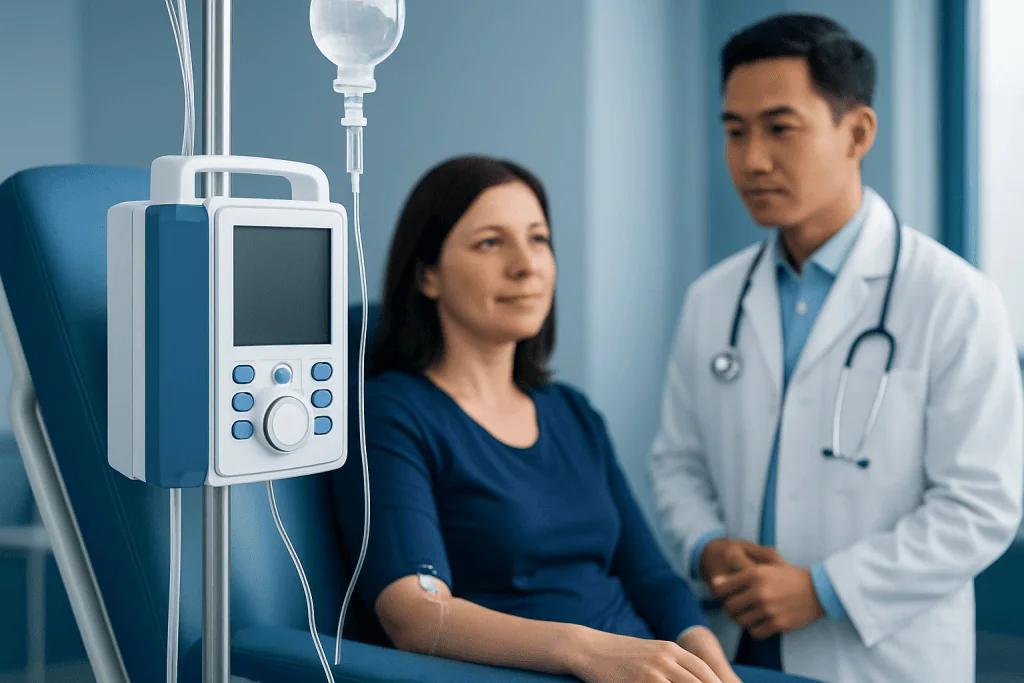
ERT is designed to address the underlying enzyme deficiency. The medicine is delivered into a vein during a planned infusion visit. After entering the bloodstream, it is taken up by cells and directed toward lysosomes, the cell structures where GAA normally helps break down glycogen.
ERT does not change the genetic cause of Pompe disease or completely reverse muscle damage that has already developed. However, it can reduce further glycogen accumulation and may slow decline in muscle and respiratory function. In infantile-onset Pompe disease, early treatment can be especially important because the heart and breathing muscles may be affected quickly.
Several ERT options may be considered depending on the person’s age, disease type, immune response, previous treatment and local availability. A metabolic or neuromuscular specialist reviews the potential benefits, practical schedule and monitoring requirements before recommending a specific medicine.
Researchers are also studying approaches such as improved enzyme therapies, medicines that support enzyme activity, and gene-based treatments. These options are not suitable or available for everyone, so clinical trial eligibility should be discussed with an experienced specialist.
Who May Be a Candidate for Pompe Treatment?

People with a confirmed diagnosis of Pompe disease should be evaluated by a clinician experienced in lysosomal storage disorders or neuromuscular disease. Diagnosis is usually supported by a blood-based enzyme test and confirmed with genetic testing that identifies changes in the GAA gene.
Whether and when to start ERT depends on the form of Pompe disease and evidence of involvement. Infants with classic infantile-onset Pompe disease generally need urgent specialist assessment and treatment planning. In late-onset disease, treatment may be recommended when symptoms, muscle weakness, respiratory impairment or objective testing indicate active disease.
A baseline evaluation helps the team measure change over time. It may include assessments of walking and muscle strength, breathing tests while sitting and lying down, sleep evaluation, swallowing review, heart studies when appropriate, blood tests and imaging. Genetic counseling can help patients and relatives understand inheritance and family testing options.
- Symptoms and day-to-day functional limitations
- Breathing muscle strength and sleep-related breathing
- Age at onset and disease progression
- Heart involvement, especially in infants
- Previous therapy, antibody testing and infusion history
What Happens During Enzyme Replacement Therapy?
ERT is usually provided in an infusion center or hospital setting by a team familiar with monitoring infusion medicines. The treatment schedule varies by product and individual care plan, but infusions are commonly repeated at regular intervals over the long term. The clinical team explains preparation and visit timing in advance.
Before an infusion, staff may check vital signs and ask about recent illness, breathing changes, previous reactions or new medications. A cannula is placed into a vein, and the enzyme medicine is administered slowly through an infusion pump. The rate may be adjusted based on tolerance and the prescribed protocol.
Patients are observed during and after the infusion for possible reactions. Some people receive preventive medicines before treatment if they have had previous infusion-related symptoms or are considered at higher risk. Families should tell the team promptly about itching, rash, fever, chills, headache, chest discomfort, wheezing, dizziness or unusual symptoms.
Follow-up appointments assess whether treatment is helping and whether the plan needs adjustment. Monitoring is ongoing because Pompe disease and treatment response can change over time.
Benefits, Risks and Recovery Timeline
There is no single recovery timeline for Pompe treatment because ERT is a continuing therapy rather than a one-time procedure. Some measures may remain stable or improve over months, while other changes take longer to assess. The aim is often to preserve breathing capacity, strength, mobility and independence, while managing complications early.
Potential benefits include improved survival in infantile-onset disease, better or stabilized heart involvement in affected infants, and stabilization or improvement of muscle and respiratory function in some people with late-onset disease. Results differ between individuals. Existing weakness, degree of respiratory involvement and treatment timing can influence outcomes.
Infusion-associated reactions are among the more common treatment risks. They may include rash, fever, chills, flushing, headache, nausea, changes in blood pressure or breathing symptoms. Serious allergic reactions are uncommon but require immediate clinical care. The treating team can slow or pause an infusion and provide treatment if a reaction occurs.
Some patients develop antibodies against the infused enzyme, which can affect safety or response in certain circumstances. Blood testing and specialist follow-up guide decisions about monitoring or additional immune-focused treatment when needed. Physical therapy should be individualized, as overexertion can worsen fatigue or muscle discomfort in some people.
Living Well With Pompe Disease: Respiratory Care, Activity and Nutrition
Supportive care is an essential part of Pompe treatment. Breathing muscle weakness can develop gradually and may be more noticeable when lying flat or during sleep. Regular lung function testing, evaluation for sleep-disordered breathing and timely use of noninvasive ventilation when indicated can protect comfort, sleep and daytime function.
Physiotherapy and occupational therapy can support safe movement, posture, energy conservation and independence with daily activities. A carefully planned program may include gentle aerobic activity, stretching, mobility work and assistive devices when useful. Exercises should be selected with advice from clinicians familiar with neuromuscular conditions.
What is the recommended diet for people with Pompe disease? There is no universally proven “Pompe diet” that replaces medical treatment. Many people benefit from an individualized eating plan that provides adequate calories, protein, fiber, vitamins and fluids while taking account of swallowing ability, activity level, weight changes and other health conditions. A dietitian with metabolic or neuromuscular experience can help plan practical meals and address concerns such as fatigue while eating, reflux, constipation or unintended weight loss.
People should not begin restrictive diets or high-protein supplements without professional guidance. In infants and in anyone with swallowing or feeding difficulties, prompt assessment is important to ensure safe nutrition and hydration.
Can You Live a Full Life With Pompe Disease?
Can you live a full life with Pompe disease? Many people with Pompe disease continue to work, study, maintain relationships and take part in meaningful activities, particularly with early treatment, symptom monitoring and appropriate support. The condition is variable, so a “full life” will look different for each person and may involve adapting routines, work environments or physical activities over time.
Modern disease-specific treatment and respiratory care have changed the outlook for many patients. Regular follow-up can help identify changes in strength, stamina, sleep, breathing or swallowing before they become more limiting. Emotional wellbeing, peer support and practical planning are also valuable parts of long-term care.
Can you get rid of Pompe disease? Pompe disease cannot currently be removed or cured because it is caused by inherited changes in the GAA gene. ERT and supportive therapies can manage the effects of the disease, reduce complications and help maintain function, but they do not correct the genetic change itself. Research into new treatments continues, and a specialist can discuss whether emerging options or clinical trials may be relevant.
When to Seek Medical Care
People with Pompe disease should contact their clinical team promptly if they develop new or worsening shortness of breath, difficulty lying flat, morning headaches, daytime sleepiness, repeated chest infections, a weaker cough, swallowing problems or a noticeable decline in walking or arm strength. These symptoms may signal changes in respiratory or muscle function that need assessment.
Urgent medical care is needed for severe breathing difficulty, blue or gray lips, confusion, inability to clear secretions, fainting, signs of a serious allergic reaction during or after an infusion, or sudden severe weakness. Infants with poor feeding, breathing effort, unusual sleepiness or reduced alertness also need prompt medical assessment.
For international patients, Acibadem International’s multidisciplinary specialists and JCI-accredited hospitals can assess and manage Pompe disease with coordinated metabolic, neuromuscular, respiratory and rehabilitation care. Ongoing communication with a qualified treating doctor remains essential for decisions about therapy and monitoring.
Frequently asked questions
How often is Pompe enzyme replacement therapy given?
The infusion schedule depends on the specific enzyme replacement product and the person’s treatment plan. It is commonly given at regular intervals, often every one or two weeks, in a supervised clinical setting. The treating specialist confirms the appropriate schedule and monitoring plan.
How quickly does Pompe treatment start working?
Treatment response varies and is evaluated over time rather than after a single infusion. Some people may notice changes in stamina or function over months, while others may mainly experience stabilization of symptoms. Regular strength, mobility and respiratory assessments help show whether the plan is meeting its goals.
Does enzyme replacement therapy cure Pompe disease?
No. Enzyme replacement therapy treats the enzyme deficiency and can reduce glycogen buildup, but it does not correct the inherited genetic cause of Pompe disease. It is generally a long-term treatment combined with supportive care.
Can Pompe disease affect breathing during sleep?
Yes. Weakness of the diaphragm and other breathing muscles may first become apparent during sleep or when lying flat. Symptoms can include unrestful sleep, morning headaches, daytime tiredness and shortness of breath when reclining. A sleep or respiratory assessment can identify whether support is needed.
What is the most common cause of death in patients with Pompe disease?
Respiratory failure or complications related to respiratory muscle weakness have historically been a major cause of death, particularly when breathing support is not available or disease is advanced. In classic infantile-onset Pompe disease, heart involvement was also a major cause before enzyme replacement therapy became available. Today, early treatment and respiratory monitoring have improved outcomes, but close follow-up remains important.
Can exercise help with Pompe disease?
Appropriately selected exercise and rehabilitation may help maintain mobility, flexibility and general wellbeing. However, exercise should be individualized because excessive intensity can lead to prolonged fatigue or muscle symptoms. A physiotherapist familiar with neuromuscular disease can recommend a safe plan.
References
- National Institute of Neurological Disorders and Stroke
- National Organization for Rare Disorders
- GeneReviews
- European Pompe Consortium
- Muscular Dystrophy Association
This article is for general information only and is not a substitute for professional medical advice. Please consult a qualified doctor about your individual situation.
Heart care in Turkey — expert evaluation and treatment
JCI-accredited · board-certified surgeons · reply within 24h
Add us as a Preferred Source to see more of our trusted health content across Google Search, AI Overviews and Discover.