Esotropia Treatment: How It Works, Results and What to Expect

Esotropia is an inward turn of one or both eyes and may occur in children or adults. Early assessment is especially important in children because persistent misalignment can affect visual development.
Key Takeaways
- Esotropia is an inward turn of one or both eyes and may occur in children or adults.
- Early assessment is especially important in children because persistent misalignment can affect visual development.
- Glasses can fully correct some forms of esotropia, while others require additional treatment or eye muscle surgery.
- Esotropia surgery changes the pull of selected eye muscles; it does not involve removing the eye or operating inside the eyeball.
- Recovery after surgery is usually measured in days to weeks, although alignment and vision are monitored over time.
- Sudden-onset esotropia, especially with headache, double vision or neurological symptoms, needs prompt medical assessment.
Esotropia treatment is tailored to the cause, the angle of eye turn, visual development and a person’s age. Options may include corrective glasses, amblyopia treatment, prisms, botulinum toxin in selected cases, or surgery to rebalance the eye muscles.
Overview: What Is Esotropia Treatment?
Esotropia treatment aims to align the eyes as well as possible, improve comfortable single vision when this is achievable, and protect visual development in children. The best approach depends on why the eye turns inward, whether the person needs glasses, whether one eye has reduced vision, and how long the misalignment has been present.
Esotropia is a type of strabismus in which one eye or both eyes turn inward. The turn may be constant or intermittent, may alternate between eyes, or may affect one eye more often. Some people are born with it or develop it in early childhood, while others develop it later because of focusing problems, nerve or muscle conditions, injury, neurological disease, or reduced vision in one eye.
Treatment can be non-surgical, surgical, or a combination of both. An ophthalmologist, ideally one experienced in strabismus and pediatric eye care when a child is affected, considers alignment together with vision, eye health, refraction and the person’s daily symptoms.
How Esotropia Affects Vision
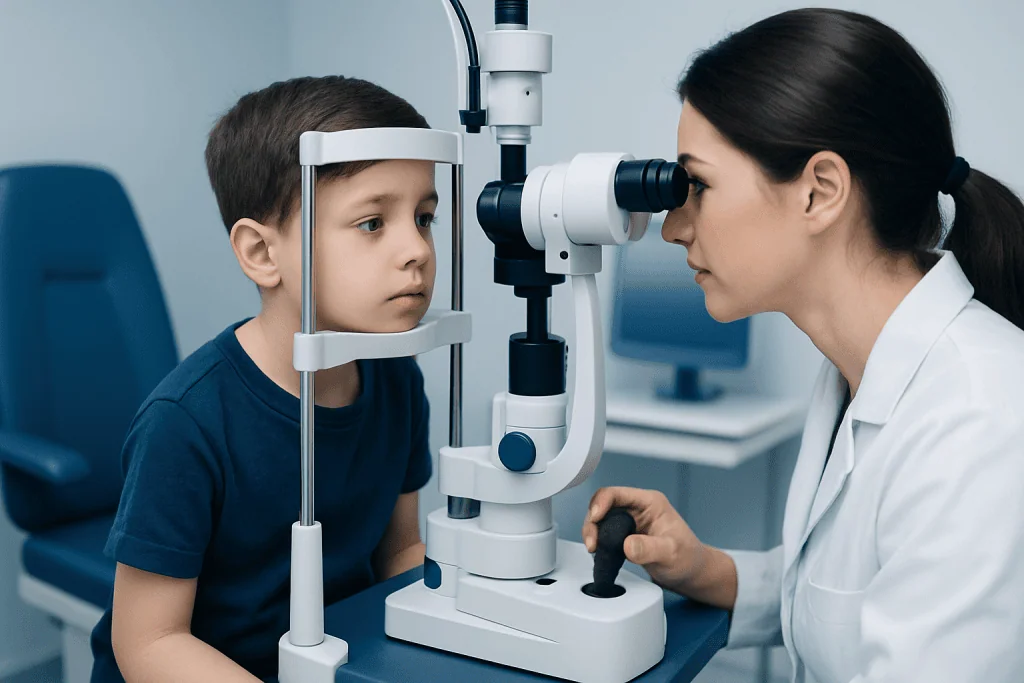
People with esotropia do not all see in the same way. Young children may adapt by suppressing, or ignoring, the image from the turned eye. This can reduce confusion or double vision, but persistent suppression can contribute to amblyopia, commonly called “lazy eye,” when vision is still developing.
Adults who develop esotropia after previously having aligned eyes are more likely to notice double vision. They may also experience eye strain, headaches, difficulty judging distances, problems reading, or a need to close one eye to see more comfortably. Some people retain useful depth perception, while others have reduced stereoscopic vision depending on the cause and timing of the condition.
A careful examination can clarify how someone with esotropia sees and whether the brain is using both eyes together. This information helps guide treatment priorities, including whether the main goals are visual development, relief of double vision, better eye alignment, or all of these.
How Esotropia Treatment Works and Who May Benefit

Corrective glasses are often the first treatment for accommodative esotropia, a common childhood form related to the effort needed to focus. By correcting farsightedness or another refractive error, glasses reduce excessive focusing and may straighten the eyes fully or partly. In some cases, bifocal lenses or prisms may be considered.
If one eye has weaker vision, treatment may include glasses and supervised methods to encourage use of that eye, such as patching the stronger eye or using prescribed blur therapy. These treatments address amblyopia; they do not replace treatment for the eye turn itself when a significant misalignment remains.
Eye muscle surgery may be recommended when glasses do not adequately align the eyes, when esotropia is large or constant, or when a non-accommodative or infantile form is present. It may also be appropriate for selected adults with double vision or cosmetically noticeable misalignment. Strabismus surgery is planned individually after measurements at one or more visits.
Botulinum toxin injection into an eye muscle is another option in selected situations, such as certain recent-onset or residual deviations. It is not suitable for every form of esotropia. The ophthalmologist discusses the expected benefits, limitations and alternatives for the individual situation.
Esotropia Surgery: Step by Step
Esotropia surgery works by changing the balance of pull between the muscles on the outside of the eye. The surgeon may weaken a muscle that pulls the eye inward by moving its attachment backward, called a recession. They may strengthen a muscle that pulls outward by shortening or advancing it, called a resection or advancement. The exact muscles and amounts are based on detailed alignment measurements.
Before surgery, the care team reviews medical history, eye measurements, glasses prescription and vision in each eye. Children commonly receive general anesthesia. Adults may have general anesthesia or another anesthetic approach depending on the procedure, health status and local practice. The surgeon operates on the muscles covering the outside of the eye, not inside the eye itself.
During the procedure, the eyelids are held open and a small incision is made in the thin tissue over the white of the eye. The selected muscle is adjusted and secured with sutures. In some adult cases, adjustable sutures allow the alignment to be refined after the person is awake. The procedure is commonly performed as day surgery, although individual arrangements vary.
Afterward, the eye is not usually patched for long periods. The person returns home with specific instructions about eye drops or ointment, discomfort relief, activity restrictions and follow-up appointments. Glasses, amblyopia treatment or other vision care may still be needed after surgery.
How Successful Is Esotropia Surgery?
Esotropia surgery is often effective at reducing or correcting the eye turn, improving the appearance of alignment and, for many people, easing symptoms such as double vision or abnormal head posture. Success is best understood as achieving a useful and stable alignment rather than promising a perfectly straight result in every case.
Outcomes depend on the type and size of esotropia, the cause, age at onset, visual potential in each eye, previous surgery and the presence of neurological or other eye conditions. A person may have a small remaining inward or outward turn after surgery, or the alignment may change over time as the eyes grow and visual needs change.
Some people require glasses, patching or prism lenses after surgery. A further operation is sometimes needed, especially when the original turn is large, recurrent or associated with a complex condition. Follow-up care is important because surgery treats muscle alignment, while vision development and refractive errors may require separate ongoing management.
Recovery Timeline, Benefits and Possible Risks
How long it takes to recover from esotropia surgery varies, but most people have redness, soreness, watering, light sensitivity or a gritty sensation for several days. The eye may remain visibly red for a few weeks, and dissolvable sutures can cause temporary irritation. Children often resume quiet daily activities quickly, while adults may need a short period away from work depending on their role and comfort.
Vision can be mildly blurred at first because of tears, ointment or surface irritation. Temporary double vision may occur as the brain adapts to the new alignment, particularly in adults. The surgeon may advise avoiding swimming, eye rubbing and activities that could expose the healing eye to dirt or impact for a defined period.
Potential benefits include improved alignment, improved comfort, reduced double vision in suitable cases, easier social interaction and better opportunity for binocular vision in children. Risks are uncommon but include undercorrection or overcorrection, persistent or new double vision, infection, scarring, slipped muscle, anesthesia-related complications and a need for further treatment. Serious vision-threatening complications are rare, but any unusual symptoms should be reported promptly.
Follow-up visits allow the ophthalmologist to assess healing, measure alignment and adjust the wider treatment plan. Attending these appointments is important even when the eye appears straight, because the quality of vision and eye teamwork also need monitoring.
What Happens If Esotropia Goes Untreated?
Untreated esotropia can affect people differently. In young children, a persistent eye turn may lead to amblyopia and reduced development of binocular vision, including depth perception. Because visual pathways are most adaptable during early childhood, prompt assessment gives the best opportunity to protect developing vision.
In adults, untreated esotropia may cause ongoing double vision, eye strain, reading difficulties or reduced confidence in daily activities. Some adults have adapted to a long-standing childhood deviation and may not have double vision, but they can still benefit from an evaluation if the alignment changes or causes functional or emotional concerns.
Not every eye turn requires immediate surgery, and observation may be appropriate for particular situations under specialist guidance. However, a new or worsening inward turn should not be self-managed. A complete eye examination helps identify whether the cause is a refractive problem, an eye condition, a nerve-related issue or another medical concern.
When to Seek Medical Care
An eye turn in a baby or child should be assessed by an eye professional, especially if it is constant, persists beyond early infancy, or is noticed after previously normal alignment. Early review is also important if a child squints, tilts the head, closes one eye in bright light, has difficulty tracking objects, or seems to have reduced vision.
Adults should arrange prompt assessment for new esotropia, particularly if it comes with double vision. Urgent medical care is needed if a sudden eye turn or double vision occurs with severe headache, weakness, facial drooping, speech difficulty, imbalance, a drooping eyelid, unequal pupils, eye pain or loss of vision, as these symptoms can signal a condition requiring immediate evaluation.
Acibadem International’s multidisciplinary specialists and JCI-accredited hospitals assess and treat strabismus and related eye conditions for international patients. A personalized plan should always be based on a full ophthalmic examination and discussion of the person’s visual needs.
Frequently asked questions
How successful is esotropia surgery?
Esotropia surgery is often successful in substantially improving eye alignment and may reduce symptoms such as double vision or an abnormal head posture. Results vary with the cause and severity of the eye turn, visual development, and previous treatments. Some people need glasses, additional vision treatment, or occasionally another operation.
What happens if esotropia goes untreated?
In children, untreated esotropia can contribute to amblyopia and reduced depth perception because the brain may stop using the image from one eye. In adults, it may cause double vision, eye strain or functional difficulties. An eye examination can determine whether observation, glasses, vision treatment or surgery is appropriate.
How does someone with esotropia see?
Vision varies widely. Some children suppress the image from the inward-turning eye and may not report double vision, while adults with newly developed esotropia often experience double vision. Depth perception may be reduced, and some people notice eye strain or difficulty with close work.
How long does it take to recover from esotropia surgery?
Most discomfort improves over several days, and many people return to routine light activities within days to about a week. Redness and irritation may last several weeks, while final alignment assessment continues at follow-up visits. The surgeon provides individualized guidance about school, work, exercise and swimming.
Can glasses correct esotropia without surgery?
Glasses can fully correct some cases, particularly accommodative esotropia related to farsightedness and focusing effort. In other cases, glasses improve but do not fully eliminate the eye turn. Surgery may be considered when a meaningful misalignment remains despite the appropriate prescription.
Is esotropia surgery painful?
The operation is performed with anesthesia, so the person should not feel the procedure itself. After surgery, soreness, scratchiness, tearing and light sensitivity are common for a short time and are usually manageable with the care plan provided by the surgeon. Increasing pain, marked swelling, worsening vision or discharge should be reported promptly.
References
- American Academy of Ophthalmology
- American Association for Pediatric Ophthalmology and Strabismus
- National Eye Institute
- Mayo Clinic
This article is for general information only and is not a substitute for professional medical advice. Please consult a qualified doctor about your individual situation.
Explore treatments in Turkey — costs, top hospitals & a free quote
JCI-accredited · board-certified surgeons · reply within 24h
Add us as a Preferred Source to see more of our trusted health content across Google Search, AI Overviews and Discover.