Stitches and Staples: Care Instructions and Removal Timing

Keep the wound clean and protected, and follow the specific instructions given by the treating doctor or nurse. Most wounds can be gently washed after the first day or two, but soaking should usually be avoided until the skin is fully closed.
Key Takeaways
- Keep the wound clean and protected, and follow the specific instructions given by the treating doctor or nurse.
- Most wounds can be gently washed after the first day or two, but soaking should usually be avoided until the skin is fully closed.
- Removal timing depends on the body area, wound depth, tension on the skin, and the person’s overall healing.
- Stitches or staples should be removed by a trained healthcare professional unless a doctor gives different instructions.
- Increasing redness, swelling, warmth, drainage, worsening pain, fever, or wound opening should be checked promptly.
Stitches and staples help hold a cut or surgical incision together while the skin begins to heal. Good daily care, timely follow-up, and knowing the warning signs of infection can support a smooth recovery.
Overview
Stitches, also called sutures, and skin staples are common ways to close a cut, injury, or surgical incision. They bring the edges of the skin together so the body can rebuild tissue in an organized way. Some wounds are closed with non-dissolving stitches that must be removed, while others use dissolvable stitches placed under or on the skin. Staples are often used for longer incisions or areas where quick, secure closure is helpful.
After a wound is closed, the first days are important. The skin is beginning to seal, small blood vessels are repairing, and a protective scab or thin healing layer may form. Good aftercare does not need to be complicated, but it should be consistent. Keeping the area clean, avoiding unnecessary pulling or rubbing, and attending follow-up appointments all help reduce the risk of infection and scarring.
Removal timing is not the same for every person. A stitch on the face may be removed much sooner than a stitch over a knee, because the face has good blood supply and the knee is under more movement and tension. The doctor considers the location, wound size, type of closure, medical history, and how the wound looks during follow-up before deciding when removal is safest.
How Stitches and Staples Support Healing
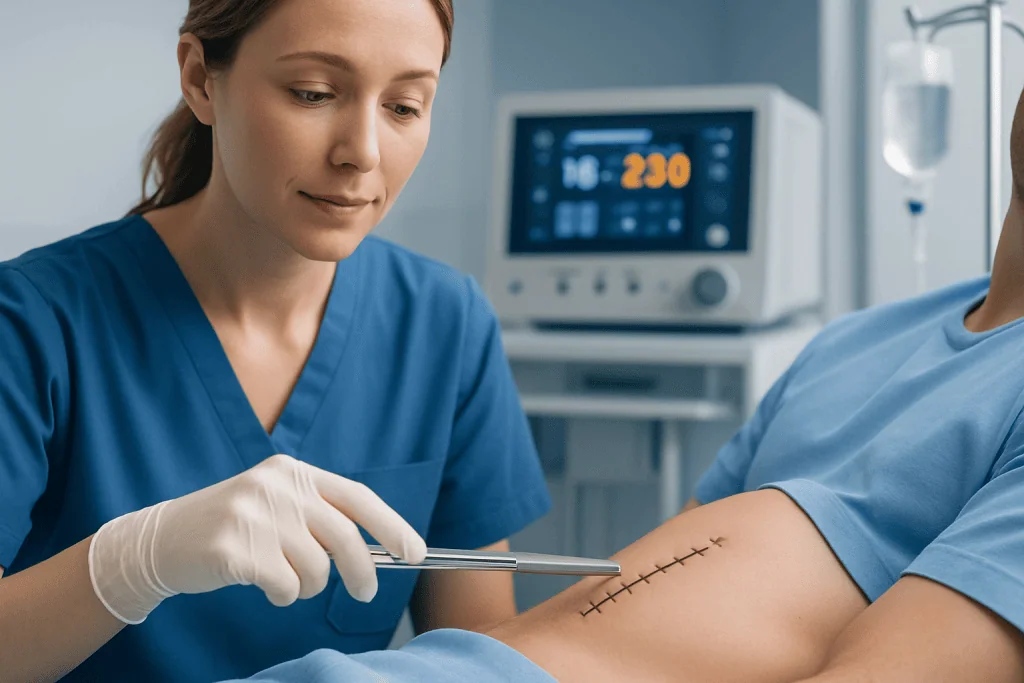
Skin heals in stages. In the early inflammatory stage, the body cleans the area and starts protecting it. Over the next several days, new collagen and small blood vessels develop, helping the wound gain strength. Stitches and staples act like temporary supports while these natural processes take place.
Different closure materials are used for different needs. Non-absorbable stitches are commonly used on the surface of the skin and are removed after enough healing has occurred. Absorbable stitches gradually break down and may be used inside the wound or, in some cases, on the skin surface. Staples are metal clips applied with a special device and removed with a staple remover. Adhesive strips or skin glue may also be used alone or along with stitches or staples.
It is normal for a healing wound to feel mildly tender, tight, itchy, or slightly pink around the edges. A small amount of clear or blood-tinged fluid may occur early on, especially after surgery or an injury. These signs should gradually improve rather than worsen. If symptoms become more intense, spread, or are accompanied by fever or drainage that looks cloudy or foul-smelling, medical advice is needed.
Daily Care Instructions
The healthcare team’s instructions should always come first, because wound care can differ after surgery, trauma, biopsies, and procedures on sensitive areas. In many cases, the wound is kept dry and covered for the first 24 to 48 hours. After that, gentle washing may be allowed, but patients should confirm this with their doctor, especially if there is a drain, a large incision, or special dressing in place.
Hands should be washed before and after touching the dressing or wound. If a dressing is used, it should be changed as directed, or sooner if it becomes wet, dirty, or loose. The wound can often be cleaned with mild soap and water, then patted dry with clean gauze or a clean towel. Scrubbing, picking at scabs, and pulling on stitch knots or staples should be avoided.
Unless specifically advised, it is best not to apply alcohol, hydrogen peroxide, iodine, herbal products, or strong antiseptics directly to a healing wound, because they may irritate tissue and slow healing. Antibiotic ointment, petroleum ointment, or specialized dressings should be used only as recommended by the clinician. If adhesive strips are present, they should usually be left in place until they loosen naturally or the doctor removes them.
- Keep the wound clean and protected from friction.
- Avoid tight clothing or accessories that rub on the stitches or staples.
- Do not cut, pull, or remove stitches or staples at home unless instructed by a qualified clinician.
- Protect the area from direct sun while healing, as new scars can darken easily.
Removal Timing by Body Area
Removal timing is a balance. If stitches or staples are removed too early, the wound edges may separate. If they stay in too long, they may leave more noticeable marks or irritate the skin. The following time frames are general guides only; the treating doctor may choose a shorter or longer interval based on how the wound is healing.
Typical removal timing for non-dissolving skin stitches is often around 3 to 5 days for the face, 7 to 10 days for the scalp, 7 to 14 days for the chest or abdomen, and 10 to 14 days for arms and legs. Areas with more movement or tension, such as hands, feet, elbows, knees, shoulders, or the back, may need 10 to 14 days or sometimes longer. Staples are often removed in a similar range, commonly about 7 to 10 days on the scalp and about 10 to 14 days on the trunk or limbs, depending on the wound.
Some wounds are removed in stages. For example, every other stitch or staple may be removed first, followed by the rest a few days later if the wound remains closed. Adhesive strips may be placed after removal to provide extra support. Patients should avoid assuming that a wound is fully strong once the stitches or staples come out. Healing continues for weeks to months, and the scar slowly matures over time.
Bathing, Activity, and Comfort
Showering is often allowed after the first day or two, but this depends on the procedure and dressing. When showering is permitted, water should run gently over the area rather than striking it with high pressure. The wound should be patted dry afterward. Soaking in a bath, swimming pool, hot tub, lake, or sea is usually avoided until the wound is fully closed and the doctor says it is safe, because soaking can soften tissue and introduce bacteria.
Movement should be guided by the wound location and the doctor’s recommendations. Light daily activity may be fine, but stretching, heavy lifting, bending, or sports can put tension on a healing incision. Wounds over joints need special care because repeated movement can pull on the edges. If a brace, sling, compression garment, or bandage was provided, it should be used as instructed.
Mild discomfort is common after stitches or staples. Pain should generally become less noticeable over time. Over-the-counter pain relievers may be appropriate for some people, but patients should ask a healthcare professional if they have allergies, take blood thinners, have kidney or liver disease, are pregnant, or have been told to avoid certain medicines. Elevating the area, when practical, may help reduce swelling in the first few days.
Possible Problems and Warning Signs
Most stitched or stapled wounds heal without serious problems. However, early attention to changes can prevent small issues from becoming more difficult. Infection is one concern, especially after contaminated injuries, bites, wounds on the feet, or wounds in people with diabetes, poor circulation, or reduced immune function. The risk also varies depending on the type of procedure and the depth of the wound.
Patients should contact a doctor if redness spreads beyond the wound edges, swelling increases, warmth becomes more noticeable, pain worsens instead of improving, or pus-like drainage appears. Fever, chills, red streaks from the wound, a bad smell, or feeling generally unwell should also be assessed. If the wound opens, bleeds heavily, or the stitches or staples break, medical care is needed to decide whether it requires re-closure or extra support.
Other concerns include allergic skin reactions to dressings or ointments, irritation around staple sites, thick scarring, and delayed healing. People who smoke, have diabetes, take corticosteroids or immune-suppressing medicines, or have nutritional deficiencies may heal more slowly. These factors do not mean healing will be poor, but they make follow-up and careful wound care especially important.
Follow-Up, Self-Care, and When to See a Doctor
A follow-up visit is important even if the wound looks good. During this visit, the clinician checks whether the edges are sealed, whether there are signs of infection, and whether removal is appropriate. Patients should bring any questions about bathing, exercise, work, travel, scar care, and return to normal routines. If the wound was caused by an injury, the doctor may also review tetanus vaccination status.
After stitches or staples are removed, the skin may look pink, slightly raised, or tender. This can be normal. Adhesive strips, if applied, should usually be kept dry and allowed to fall off naturally. Sun protection is helpful once the skin is closed, because ultraviolet exposure can make scars darker and more noticeable. Scar massage, silicone gel, or silicone sheets may be recommended for some healed wounds, but these should be started only when the skin surface is fully closed and the clinician agrees.
Patients should seek medical advice sooner than the planned appointment if they notice warning signs, have concerns about the wound opening, or are unsure how to care for the area. Acibadem International’s multidisciplinary specialists and JCI-accredited hospitals diagnose and treat surgical and traumatic wounds for international patients, including follow-up planning when wound closure, removal timing, or recovery needs are more complex.
Frequently asked questions
Can stitches or staples get wet?
Many wounds can get gently wet after the first 24 to 48 hours, but this depends on the procedure and dressing. Patients should follow the instructions given by their healthcare team. Soaking in a bath, pool, hot tub, or natural water should usually be avoided until the wound is fully closed and a doctor says it is safe.
Is it painful to have stitches or staples removed?
Removal is usually quick and may feel like a brief pulling, pinching, or pressure sensation. It should not be severely painful. If the area is very tender, swollen, or draining, the clinician will examine it before deciding whether removal should proceed.
What happens if stitches or staples are left in too long?
If they remain too long, they may irritate the skin or leave more noticeable track marks. In some cases, the skin may begin to grow around the material, making removal less comfortable. This is why attending the planned removal appointment is important.
Can a patient remove stitches or staples at home?
Patients should not remove stitches or staples themselves unless a qualified healthcare professional has specifically instructed them and explained how to do it safely. Removal requires checking that the wound has healed enough and using clean, appropriate tools. Removing them too early can cause the wound to reopen.
Why are some stitches dissolvable and others not?
Dissolvable stitches are designed to break down over time and are often used under the skin or in areas where removal would be difficult. Non-dissolving stitches are used when strong, precise surface support is needed and are removed after the wound has gained enough strength. The choice depends on the wound location, depth, and the surgeon’s or doctor’s judgment.
How can scarring be reduced after stitches or staples?
Good wound care, avoiding tension on the area, and protecting healed skin from the sun can help scars mature as well as possible. Once the skin is fully closed, a doctor may recommend silicone gel, silicone sheets, or other scar-care measures. Scar appearance also depends on genetics, wound location, skin type, and the original injury or surgery.
References
- World Health Organization
- Centers for Disease Control and Prevention
- American Academy of Dermatology Association
- National Health Service
- American College of Surgeons
This article is for general information only and is not a substitute for professional medical advice. Please consult a qualified doctor about your individual situation.
Explore treatments in Turkey — costs, top hospitals & a free quote
JCI-accredited · board-certified surgeons · reply within 24h

More from the Health Library



Related Specialists

Dr. Nihat Cem Çelebi
Pediatrics
Dr. Sema Karaoğlu
Dermatology
Prof. Dr. Bülent Tıraş
Gynecology & Obstetrics
Assoc. Prof. Dr. Burak Özturan
Orthopedic Surgery & Traumatology