

Tai Chi Walking: Why the Slow-Motion Walk Is Everywhere Right Now

Key Takeaways
- Every tai chi walking step trains single-leg standing, one of the strongest measurable predictors of fall risk in adults over 65.
- Randomized trials of tai chi programs have cut falls in older adults by roughly 20 to 45 percent, with one 2018 trial showing about half as many falls as a stretching program.
- Tai chi burns roughly 150–250 calories per hour — dog-walking territory, not jogging — so meaningful weight loss requires added activity or dietary change.
- In a 543-person randomized trial, three tai chi sessions a week reduced waist circumference about as much as brisk walking plus strength training over 12 weeks.
- The trials behind tai chi's reputation used 45–60 minute sessions two to three times weekly, so a 7-minute daily habit is a useful on-ramp, not a studied dose.
- Slowing a step from under one second of single-leg support to three to five seconds is what converts ordinary walking into genuine balance training.
Tai chi walking is a slow, deliberate walking practice drawn from tai chi that trains balance, leg strength, and body awareness by shifting your weight fully from one foot to the other with each step. Research on tai chi supports better balance and fewer falls in older adults; evidence for weight loss is modest, so pair it with brisker activity if calorie burn is the goal.
At 7 a.m. in almost any city park, you can now spot them: people moving down the path as if walking through honey. One foot floats forward, touches down without a sound, and only then does the body follow. It looks like slow-motion footage. It is, in fact, one of the oldest stepping drills in Chinese martial arts, and short-video platforms have made it unexpectedly famous.
The comments under those clips split neatly in two. Half say it changed their knees, their balance, their mornings. The other half ask how walking at the speed of a museum tour could possibly count as exercise.
Both camps deserve a straight answer. The honest one is more interesting than either the hype or the eye-rolling — because the slowness is not a watered-down version of walking. Mechanically, it is the harder version.
What exactly is tai chi walking?
Strip a tai chi form down to its chassis and you get a stepping pattern: sink your weight completely into one leg, reach the other foot forward, set it down empty — carrying no weight at all — and then pour your body weight into it slowly, like filling a glass. Repeat. That drill, practiced on its own, is tai chi walking. Some teachers call it “cat stepping” for the silent, testing quality of each footfall.
It differs from ordinary walking in one decisive way. Normal gait is sometimes described by physiologists as controlled falling: you tip forward, momentum carries you, and the next foot catches you. Tai chi walking removes the momentum. Every step becomes a deliberate weight transfer performed on slightly bent knees with an upright spine, which is why ten minutes of it can leave your thighs humming in a way an hour of strolling never does.
It also differs from meditative walking traditions, which share the slowness but focus mainly on attention. Tai chi walking is attentional too — the NHS describes tai chi as combining deep breathing and relaxation with flowing movement — but its engine is biomechanical: single-leg loading, hip control, and ankle awareness, rehearsed step after step. You need no equipment, no uniform, and about ten feet of floor. A hallway works. So does the stretch of carpet between the couch and the kitchen, which explains a good deal of its current popularity.
Why is a slow-motion walk suddenly everywhere?
Three currents happened to meet. The first is demographic: the population of adults over 65 is growing fast, and this group is actively looking for exercise that respects joints while still doing something measurable for strength and stability. Tai chi has decades of research behind it for exactly that audience.
The second is the indoor-walking boom. Since the pandemic, walking workouts filmed in living rooms have become a genre of their own, and tai chi walking slots neatly into the format — no impact, no noise for downstairs neighbors, no space requirements beyond a rug.
The third is aesthetic. Slow, controlled movement films beautifully, and a sixty-second clip of someone gliding across a floor stands out in a feed full of frantic circuit workouts. Trends built on looks usually collapse under scrutiny. This one is unusual: the substance underneath the aesthetic is real, peer-reviewed, and in some areas — balance and fall prevention — genuinely strong.
What the trend gets wrong, in my view, is the framing. Tai chi walking keeps being sold as a weight-loss hack, which is its weakest use case. Its strongest use case, training the body not to fall, is arguably the most valuable physical skill a person can build after 60 — and the one the algorithm finds hardest to make exciting.
What happens in your body when you walk this slowly?
Slow the walk down and the physics change. At normal pace, each foot spends only a fraction of a second supporting your whole body before the other one lands. Momentum does much of the stabilizing work for free. Stretch that single-support phase to three, four, five seconds and the free ride disappears. Now your quadriceps, gluteal muscles, and the small stabilizers around the hip and ankle must hold you steady, actively, the entire time.
Several systems get recruited at once:
- Muscular endurance. The bent-knee stance keeps thigh and hip muscles under near-continuous tension — closer to a held squat than to a stroll.
- Proprioception. The nerve endings in your feet and ankles that report joint position get an extended workout, because you are constantly sensing and correcting tiny sways rather than outrunning them.
- Motor control. Placing a foot down with zero weight, then loading it gradually, is precisely the skill your nervous system needs when a step surprises you — a curb, an icy patch, a toy on the stairs.
- Attention and breath. The pace forces slow, regular breathing, which is part of why Mayo Clinic discusses tai chi primarily as a stress-management practice.
None of this spikes your heart rate the way a hill climb does. That is the trade. Tai chi walking is light-to-moderate cardio at best, but as balance and leg-control training, it punches far above its apparent effort.
Can tai chi walking really improve balance and prevent falls?
This is where the evidence is strongest — strong enough that fall prevention should be considered the headline benefit, not a side note. According to the CDC, more than one in four adults aged 65 and older falls each year, and falls are the leading cause of injury in that age group. Any inexpensive practice that moves that number matters.
Tai chi moves it. The National Institutes of Health’s center for complementary health reports that tai chi programs improve balance and reduce fall risk in older adults, with multiple randomized trials behind the conclusion. One widely cited 2018 randomized trial in older adults at high fall risk found that a tai chi–based program roughly halved falls compared with a stretching program over six months. Reviews pooling many studies typically land on fall reductions in the range of 20 to 45 percent — remarkable for an intervention with no equipment and almost no injury risk of its own.
Why does it work? Because falling is usually a failure of weight transfer: weight caught on the wrong foot, a shifted load the hips could not control. Tai chi walking rehearses correct weight transfer hundreds of times per session, slowly enough for the nervous system to actually learn it. It is, in effect, fall recovery practiced in advance.
One honest caveat: most trials studied structured tai chi classes, not the simplified walking drill alone. The walking drill contains the core balance mechanics, but if fall prevention is your primary goal, a full class or program is the version the research directly supports.
Can I lose weight with tai chi walking?
Here is the arithmetic nobody puts in the video captions. Tai chi is a light-to-moderate activity, burning very roughly 150 to 250 calories per hour depending on body size and how deeply you sit into the stance — comparable to easy walking, well below jogging. Since a pound of body fat represents roughly 3,500 calories, tai chi walking alone will move the scale slowly, if at all.
The research is more nuanced than a flat no, though. A 2021 randomized trial of 543 adults aged 50 and older with central obesity compared three tai chi sessions per week against a conventional program of brisk walking plus strength training for 12 weeks. Both exercise groups trimmed waist circumference modestly — and by similar amounts — compared with no exercise. Waistline, not weight, was the meaningful change, and it persisted at follow-up.
So the fair summary reads like this:
- Tai chi walking can contribute to modest reductions in waist circumference, on par with conventional moderate exercise, in older adults.
- It will not produce dramatic weight loss on its own; total daily activity and eating patterns dominate that equation.
- Its real contribution to weight management may be indirect: it is gentle enough to do every single day, and consistency beats intensity for people who have abandoned harder programs before.
If weight loss is your primary goal, treat tai chi walking as the daily anchor and add brisker work — hills, cycling, swimming — on top. If moving comfortably into your eighties is the goal, the priorities reverse.
Does the 28-day indoor walking challenge really work?
The viral version — walk indoors daily, often with tai chi–style slow segments, for 28 days — has not itself been tested in any published trial. That is worth saying plainly, because the marketing implies otherwise. What we can evaluate honestly are its ingredients, and those are mostly sound.
Daily moderate movement is exactly what public health guidance asks for: the CDC recommends at least 150 minutes of moderate-intensity aerobic activity per week, and a 30-minute daily indoor walk gets you there with change to spare. Four weeks is also long enough to produce measurable early adaptations — better aerobic endurance, easier stair climbing, improved mood and sleep in many people.
What 28 days will probably not deliver is the transformation the thumbnails promise. Expect perhaps one to three pounds of fat loss if your eating stays steady, not a new silhouette. And the number 28 is a calendar convenience, not a physiological milestone. Habit research suggests new behaviors take about ten weeks on average to feel automatic, so day 29 is precisely when the challenge format tends to fail people.
My verdict: the challenge “works” as an on-ramp — it lowers the barrier to daily movement to essentially zero, which is genuinely valuable for anyone starting from inactivity. It does not work as a finish line. If you finish one, the most evidence-aligned next step is not another challenge; it is folding the walk into an ordinary week and adding two days of strength work, which the guidelines also call for.
Does tai chi 7 minutes a day really work?
It depends entirely on what you expect it to do. The trials behind tai chi’s reputation — for balance, fall reduction, stress, and modest cardiometabolic gains — mostly used sessions of 45 to 60 minutes, two or three times per week, over 12 weeks or longer. Seven minutes a day adds up to 49 minutes a week: below any dose that has been formally studied, and a third of the general activity guideline.
That does not make it worthless. Two points in its favor deserve mention. First, U.S. physical activity guidance dropped its old ten-minute-minimum rule back in 2018 — every bout of movement now counts toward your weekly total, however short. Seven minutes is real minutes. Second, balance skill responds to frequent practice more than marathon sessions; a daily seven-minute weight-transfer drill is plausible, sensible balance maintenance, particularly for someone who already moves in other ways.
Where the seven-minute framing misleads is in borrowing the outcomes of hour-long trial programs — the fall-risk reductions, the waistline changes — and attaching them to a fraction of the dose. No study supports that transfer.
Use seven minutes the way you would use flossing: a small daily act of maintenance with compounding value, not a complete program. If it becomes the gateway that eventually stretches to twenty or thirty minutes, it will have done its most important job.
How to do tai chi walking, step by step
Find ten to fifteen feet of clear floor. Socks off or flat shoes; you want to feel the ground. Then work through the sequence — slowly is the entire point.
- Set the frame. Stand with feet hip-width apart, knees softly bent, spine tall, shoulders heavy. Imagine your head suspended from a string.
- Empty one leg. Shift your full weight onto your right leg — really all of it — until your left foot could lift without any lurch or lean.
- Step out empty. Reach the left foot forward a comfortable half-step and set the heel down carrying no weight. This is the move that separates tai chi walking from regular walking.
- Pour, don’t drop. Roll the foot flat and transfer your weight forward gradually over three to five seconds, letting the back leg empty as the front one fills.
- Repeat and turn. Take 10 to 20 steps down your runway, turn slowly, and come back. Let your arms swing naturally or float at waist height.
- Breathe on purpose. Inhale as you gather onto the standing leg, exhale as you transfer forward. Never hold your breath.
Ten minutes is a complete beginner session. Your thighs should feel worked and your mind noticeably quieter; sharp joint pain means your stance is too deep or your steps too long. If steadiness is a concern, practice alongside a countertop or hallway wall for the first week — fingertip contact is enough to remove the wobble while your ankles learn the job.
The mistakes almost every beginner makes
Watch a first-timer and you will usually see the same five errors, all of which quietly delete the benefit.
Rushing the transfer. The instinct to let momentum help is deep. If your step takes less than about three seconds, you are walking slowly, not tai chi walking. The load-bearing pause on one leg is the exercise.
Overreaching the step. Long strides force you to fall onto the front foot. Shorten the step until you can place the heel down with genuinely zero weight — for most people that is barely half their normal stride.
Locking the standing knee. A locked knee outsources the work to the joint instead of the muscles and makes balance corrections jerky. Keep a soft bend throughout, and keep the bent knee tracking over the foot, not collapsing inward.
Staring at the floor. Dropping the gaze rounds the spine and, counterintuitively, worsens balance by taking your visual horizon away. Eyes level, a few feet ahead.
Breath-holding. Concentration makes beginners freeze their ribs. Since slow, deep breathing drives much of the practice’s stress-reduction value — the component Mayo Clinic emphasizes most — a held breath wastes half the session.
One meta-mistake sits above all of these: treating the drill as a warm-up to “real” exercise and hurrying through it. Done properly, ten minutes is legitimately demanding. If it feels effortless, the problem is almost always speed, not the method.
Tai chi walking vs. brisk walking vs. a full tai chi class
These three get lumped together online, but they serve different jobs. A rough comparison for a 155-pound adult:
| Activity | Intensity | Approx. calories / 30 min | Balance demand | Best-supported benefit |
|---|---|---|---|---|
| Tai chi walking | Light–moderate | ~100–130 | High | Balance, leg control, stress relief |
| Brisk walking | Moderate | ~130–175 | Low–moderate | Heart health, weight management |
| Full tai chi class | Light–moderate | ~100–150 | High | Fall prevention, balance, stress, joint-friendly conditioning |
The pattern is clear: brisk walking wins on calorie burn and cardiovascular stimulus; the tai chi options win decisively on balance training. Neither substitutes for the other, which is why the most defensible answer to “which should I do?” is both — brisk walking for the heart, tai chi walking for the nervous system and legs.
Where does the full class beat the simplified walk? Structure and dose. Classes run 45 to 60 minutes, add upper-body and turning patterns, and match the programs actually used in fall-prevention trials. The walking drill is the most portable slice of that curriculum, ideal for daily home practice between classes — or as a standalone for people who will realistically never attend one. An imperfect practice done daily outperforms an ideal one done never.
Who stands to gain the most from tai chi walking?
Not everyone gets equal value from the same exercise, and tai chi walking has a clear list of best customers.
Adults over 60 top it. Balance declines measurably with age — single-leg stance time is one of the more telling markers of fall risk — and this is the rare activity that trains it directly, daily, at home, for free.
People returning from long inactivity come next. After illness, surgery recovery, or simply years on the couch, most exercise programs demand too much too soon. Tai chi walking’s entry cost is a hallway and ten minutes, with essentially no impact on knees, hips, or spine.
People with joint pain often tolerate it well precisely because the loading is slow and controlled; NIH-supported research suggests tai chi can help with knee osteoarthritis symptoms, though most of that evidence comes from full programs rather than the walking drill alone.
Desk-bound workers get a different benefit: a movement break that doubles as a nervous-system downshift. The forced slow breathing does in ten minutes what many people attempt with a meditation app and abandon.
People with neurological balance challenges, including Parkinson’s disease, appear in the tai chi literature too, with some trials showing improved balance — but this group should treat tai chi as a complement to their medical care and discuss it with their clinician first, not as a replacement for prescribed therapy.
How to build tai chi walking into a week you'll actually keep
The guideline math is friendlier than people expect. The CDC’s target for adults is 150 minutes of moderate aerobic activity per week plus two days of muscle-strengthening work. Here is one realistic way tai chi walking fits without taking over your life:
- Daily: 10 minutes of tai chi walking, ideally at a consistent trigger point — after morning coffee, before dinner. This is your balance and stress line item, 70 minutes a week.
- Five days a week: a 20–30 minute brisk walk, outdoors or indoors. This carries the cardiovascular load and pushes your weekly total past 150 minutes.
- Two days a week: simple strength work — sit-to-stands from a chair, wall push-ups, step-ups, carrying groceries with intent all count toward the guideline.
Two design principles make the plan stick. First, attach the tai chi walk to something you already do daily rather than to a mood or a free hour; habits ride on cues, not motivation. Second, make the minimum laughably small. On a terrible day, two lengths of the hallway still counts as done — and unbroken streaks, even tiny ones, are what carry people past the ten-week mark where new routines start to feel automatic.
Progress by depth before duration: sink an inch lower into the stance and slow each step by a second before you add minutes. The exercise gets harder without getting longer.
Is it safe — and when should you see a doctor first?
Tai chi walking sits near the very bottom of the exercise risk ladder. There is no impact, no equipment, and the pace makes accidents rare; the NIH’s complementary health center describes tai chi as safe for most people, including older adults with chronic conditions. Mild thigh and hip soreness in the first week is normal and a sign the muscles are actually working.
Certain situations do warrant a conversation with a doctor or physical therapist before you begin, or a prompt visit if they appear along the way:
- New or worsening dizziness, lightheadedness, or vertigo — especially if standing on one leg triggers it.
- Unexplained loss of balance, recent falls, or numbness in the feet, which can signal neuropathy or other conditions that deserve evaluation before balance training.
- Chest pain, unusual shortness of breath, or palpitations during even light activity — stop and seek medical advice; these are never a normal training response.
- Sharp joint pain that persists after adjusting your stance depth and stride length, rather than ordinary muscle soreness.
- Recent surgery, a joint replacement, or osteoporosis with fracture history — clearance first, and possibly a supervised class rather than solo practice.
If steadiness is already limited, start next to a wall or counter, and consider a structured, instructor-led fall-prevention program, since those are what the strongest trials actually tested. The practice is gentle; the decision to start it, for higher-risk adults, still deserves professional eyes.
Frequently asked questions
What exactly is tai chi walking?
Tai chi walking is the foundational stepping drill of tai chi practiced on its own: you shift your full weight onto one leg, place the other foot down carrying no weight, then transfer your weight forward gradually over several seconds. Unlike ordinary walking, it removes momentum, forcing leg muscles and balance systems to do the stabilizing work. It requires no equipment and can be done in a hallway.
Can I lose weight with tai chi walking?
On its own, only modestly. Tai chi burns roughly 150–250 calories per hour, similar to easy walking. A 2021 randomized trial of 543 older adults found tai chi reduced waist circumference about as much as conventional exercise, but overall weight change was small. For meaningful weight loss, use tai chi walking as a daily consistency anchor and add brisker activity plus attention to eating patterns.
Does the 28-day indoor walking challenge really work?
Its ingredients work; its promises are oversold. Daily indoor walking easily meets the CDC’s 150-minute weekly activity guideline and produces real four-week gains in endurance, mood, and sleep for previously inactive people. Expect perhaps one to three pounds of fat loss with steady eating, not a transformation. The 28-day format has no published trials behind it, and the bigger challenge is continuing on day 29.
Does tai chi 7 minutes a day really work?
It works as maintenance, not as a complete program. The trials behind tai chi’s benefits used 45–60 minute sessions two to three times weekly, so seven daily minutes — 49 minutes a week — is below any studied dose. That said, every bout of activity counts toward weekly guidelines, and frequent short balance practice is physiologically sensible. Treat it as a daily floor you build on, not a ceiling.
Is tai chi walking good for seniors?
Yes — older adults are its best-supported audience. NIH reviews report that tai chi improves balance and reduces fall risk in older adults, and the CDC notes more than one in four adults over 65 falls each year, making balance training genuinely high-stakes. The practice is low-impact and joint-friendly. Seniors with recent falls, dizziness, or neuropathy should check with a clinician and start near a wall or counter.
How long should a tai chi walking session be?
Ten minutes is a complete beginner session, and done properly it should leave your thighs noticeably worked. Progress by sinking slightly deeper into the stance and slowing each step before adding time; twenty to thirty minutes is plenty for most people. Frequency matters more than length for balance skill, so a short daily session beats one long weekly one. Pair it with brisker cardio to cover heart health.
Can I do tai chi walking indoors?
Yes — indoors is arguably where it works best. You need only ten to fifteen feet of clear floor, bare feet or flat shoes, and no equipment, which is exactly why it anchors so many indoor walking workouts. A hallway, living room, or office corridor all work. Walk your runway, turn slowly, and return. Practicing beside a countertop also gives beginners instant fingertip support if steadiness is a concern.
Do I need to learn full tai chi before trying tai chi walking?
No. The walking drill is where many tai chi classes begin, so it stands perfectly well on its own as an entry point. You can learn the core pattern — empty the leg, step without weight, transfer slowly — in one session. That said, the strongest fall-prevention evidence comes from full structured programs, so if reducing fall risk is your main goal, an instructor-led class is worth adding later.
Does tai chi walking count toward the 150-minute weekly exercise guideline?
Yes, though at the lighter end of moderate intensity. U.S. guidance since 2018 counts all bouts of activity regardless of length, so even five-minute tai chi walking sessions accumulate. Because the practice is light-to-moderate, it is smart to pair it with brisker activity — a faster walk, cycling, swimming — rather than relying on it alone to hit 150 minutes. It contributes uniquely to balance, which brisk cardio barely trains.
Is tai chi walking safe if I have knee or hip problems?
Usually, yes — it is low-impact, and NIH-supported research suggests tai chi can ease knee osteoarthritis symptoms. The slow, controlled loading tends to be gentler on joints than jogging or stair work. Protect yourself by keeping the stance shallow, steps short, and the bent knee tracking over the foot. Sharp or persistent joint pain, recent joint replacement, or planned surgery all warrant a conversation with your doctor or physical therapist first.
References
- Tai Chi: What You Need To Know — NIH National Center for Complementary and Integrative Health
- Adult Activity: An Overview — CDC Physical Activity Basics
This article is for general information only and is not a substitute for professional medical advice. Please consult a qualified doctor about your individual situation.

More from the Blog
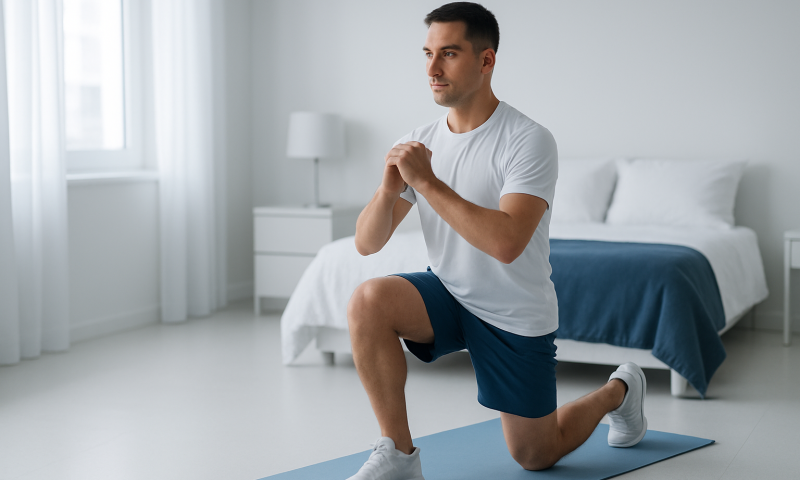
Best Exercises for Bone Health: Load-Bearing Moves Your Skeleton Responds To
The best exercises for bone health pair impact work—jumping, jogging, stair climbing, dance—with progressive resistance training such as squats, lunges, rows, and overhead presses,…
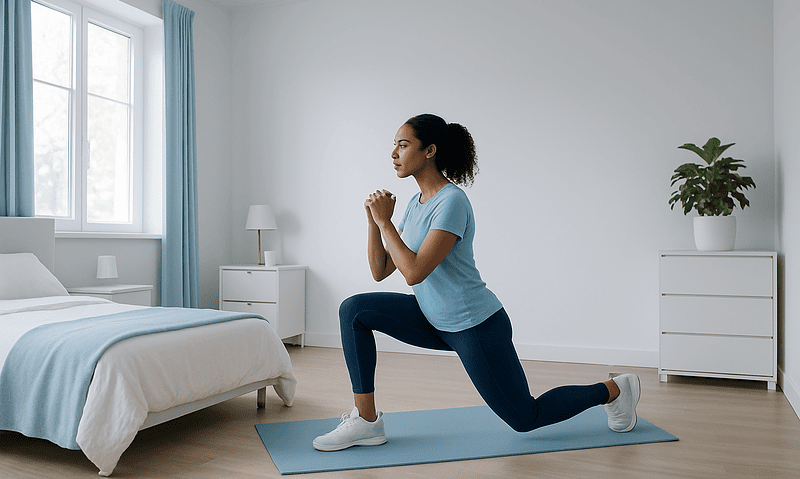
Somatic Exercises: Gentle Movement for a Nervous System on Edge
Somatic exercises are slow, low-intensity practices—body scans, extended-exhale breathing, gentle shaking, grounding—that direct attention to internal body sensations rather than reps or calories. Practiced…
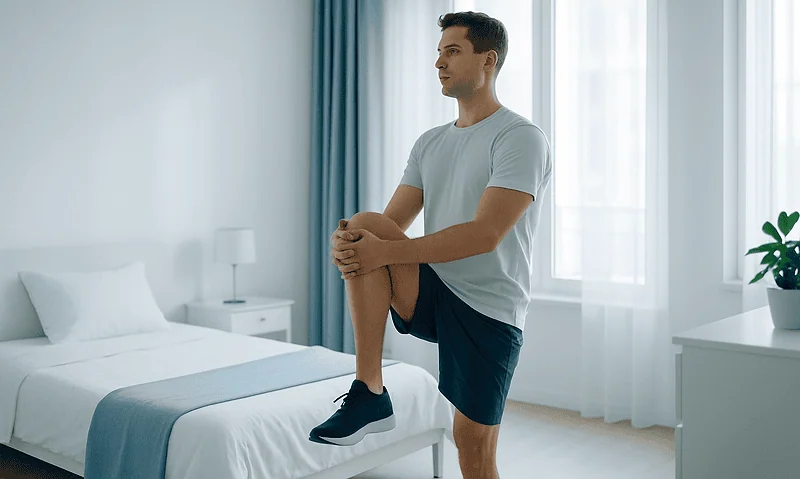
Best Exercises for Metabolism: What Training Really Does to Your Burn
The best exercises for metabolism combine strength training—which builds calorie-burning muscle—with regular aerobic activity and plenty of everyday movement. Resistance work two or more…

How to Do a Push-Up: Form, Progressions and Why It Is the Perfect Test
To do a push-up, start in a straight-arm plank with hands slightly wider than your shoulders and your body in one rigid line from…

Cat-Cow Stretch: Why Physios Keep Prescribing This Simple Flow
The cat-cow stretch is a gentle spinal mobility exercise done on hands and knees, alternating between arching and rounding the back with each breath.…

How Many Steps a Day? What the Research Actually Landed On
For most adults, the health benefits of walking rise steeply up to about 8,000–10,000 steps a day, then level off; for adults 60 and…