

How to Prepare a Caregiver Handover Before Returning Home from Turkey

Caregiver handover before returning home from Turkey means leaving with clear medicines, appointments, warning signs and contact details for safe recovery.
Before you fly home, a simple caregiver handover can make recovery smoother and less stressful for everyone involved. This guide helps you organize medicines, follow-up plans, warning signs, practical travel details and the information your family member or local carer will need once you leave Turkey.
At a glance
- Best time to prepare: Start 24-72 hours before discharge or travel
- Who needs it: You, your companion, family caregiver and local doctor if relevant
- What to include: Medicines, wound care, mobility limits, red flags and follow-up contacts
- Helpful format: One printed summary plus digital copies on your phone
- Language tip: Ask for plain-English instructions and translated summaries if needed
Why a caregiver handover matters before you leave Turkey
When you have been focused on treatment, test results and travel planning, it is easy to underestimate what happens next. The first days at home can feel busy: you may be tired, your routine may change, and the person helping you may not have been present for every hospital conversation. A caregiver handover brings all the important information into one place so that recovery feels more manageable.
Your handover is not just a medical summary. It is a practical guide for daily life after discharge: when to take medicines, how to move safely, when to rest, what symptoms are expected, and which warning signs mean you should seek help. It also helps avoid misunderstandings between you, your companion and your healthcare team once you are no longer in Turkey.
If you received care at Acibadem International, your international patient services team can often help you organize discharge papers, explain next steps, and make sure key instructions are clear before you travel. This is especially useful if your caregiver at home speaks a different language or was not physically with you during your stay.
What your handover pack should contain

Your handover pack should be simple, easy to scan and complete enough that another person can step in and help without guessing. Aim for one main summary page, then keep supporting documents behind it. If you can, prepare both a paper version and a digital folder on your phone or email so it is easy to share after landing.
The most useful pack usually includes your discharge summary, diagnosis or treatment overview, medicine list, dosing schedule, allergy information, mobility restrictions, diet advice, wound care instructions, follow-up appointments, and emergency contact details. Add practical travel information too, such as your fit-to-fly note if one was provided, transfer details, and any instructions about compression stockings, hydration, walking breaks or airport assistance.
You should also include copies of key reports that a doctor in your home country may ask for. These may include imaging reports, laboratory results, operative notes if relevant, pathology reports if relevant, and any implant or device information. At JCI-accredited Acibadem hospitals, discharge and records processes are structured, but it still helps to check that the documents you personally need are gathered before you leave.
- Discharge summary and treatment notes
- Full medicine list with exact times and duration
- Wound or dressing instructions if relevant
- Red-flag symptoms and what to do
- Follow-up dates and contact names
- Copies of reports for your doctor at home
How to explain medicines, wound care and daily routines
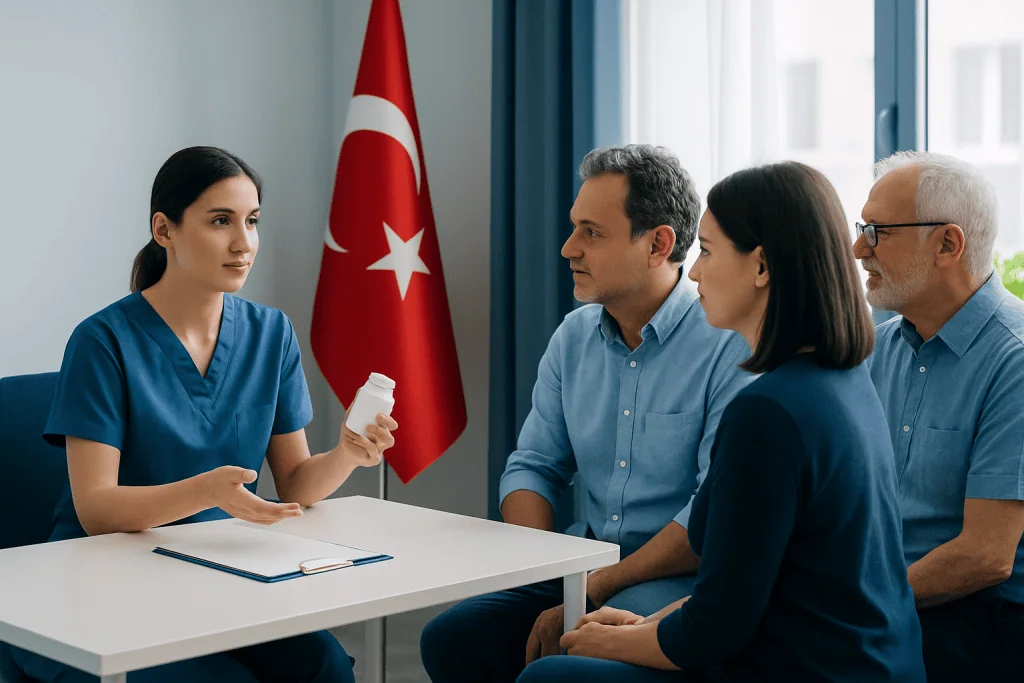
Medicines are often the area where the most confusion happens after travel. Do not rely on memory alone. Ask your care team to write each medicine clearly, including the generic name if possible, what it is for, how much to take, what time to take it, whether it should be taken with food, and when to stop. If your caregiver will be helping, they should be able to look at the list and understand it immediately.
If you have a wound, dressing, drain or special equipment, ask for a simple demonstration before discharge. It is completely reasonable to ask the nurse or coordinator to repeat the steps, show you what is normal, and point out what would not be normal. If your companion is with you in Turkey, have them watch the demonstration as well and take notes.
Daily routines matter as much as the medical details. Write down how much walking is advised, what movements to avoid, how to sleep or sit more comfortably, any lifting restrictions, bathing instructions, dietary suggestions, and whether constipation prevention, hydration or breathing exercises are important for you. These small details are often what a caregiver needs most once you are back home and tired from travel.
Planning the trip home and the first 48 hours after arrival
Your handover should include a plan for the journey itself, because travel day can be the most tiring part of recovery. Note when you need to leave for the airport, whether you should arrange wheelchair assistance, how often you should stand or move if advised, what snacks or water you should carry, and where your medicines should be packed. Keep essential medicines in your hand luggage unless you are told otherwise.
It also helps to write a short arrival plan for the first 24 to 48 hours at home. Decide who will pick you up, whether you need help with stairs, where you will rest, how meals will be managed, and who will stay with you for the first night if needed. If you are likely to be jet-lagged, in pain, or sleepy from medicines, your caregiver should know this in advance rather than figuring it out at the door.
Acibadem International teams can often support practical coordination such as airport timing, interpreters, accommodation guidance and transfer planning during your stay. Before you leave, ask whether there are any travel-specific restrictions you should repeat in your home plan, such as activity limits, hydration advice or timing of follow-up calls after arrival.
Making follow-up easy for your caregiver and local doctor
One of the best handover steps is to prepare a short contact map. Write down who to contact for which issue: your hospital team in Turkey for post-discharge questions, your local doctor for routine review, your pharmacy for prescription support, and emergency services if urgent symptoms appear. This reduces panic and helps your caregiver act quickly and appropriately.
If you expect follow-up by phone, video or secure messaging, note the likely time frame and how the appointment will be arranged. Keep in mind time zone differences between Turkey and your home country. If you will need to send photos of a wound, updated test results or blood pressure readings, explain this to your caregiver so they can help you prepare them correctly.
It is also wise to share your records with your doctor at home as soon as possible rather than waiting until a problem arises. A concise summary from your treating team, along with major reports and medication changes, helps continuity of care. Multidisciplinary teams at Acibadem International commonly coordinate across specialties, and that information can be especially helpful when your local clinician is reviewing your next steps.
How to keep the handover clear, calm and realistic
Your handover does not need to be perfect. It needs to be usable. Try to avoid long, complicated notes that bury the essentials. A one-page overview with headings such as medicines, daily care, warning signs, appointments and contacts is often the easiest format for a tired caregiver to use. Then keep all the detailed reports attached behind it.
Be honest about the kind of help you may need. Some patients prefer to sound independent and later find themselves struggling with stairs, showering, meals or remembering medicine times. It is much better to say, “I may need help with bathing for a few days” or “Please remind me to walk every few hours,” than to leave your caregiver guessing.
Finally, ask questions before discharge until you feel comfortable. If something sounds too technical, ask for a plain-language explanation. If English is not your first language, request interpreter support where available. Acibadem International’s international patient services and interpreter support can help make sure both you and your caregiver leave with instructions you truly understand, not just paperwork you carry.
Step by step
- Start your handover list before discharge day. Begin 1 to 3 days before you travel, when there is still time to fill gaps. Open a note on your phone or a printed checklist and collect questions as they come up, instead of trying to remember everything at the last minute.
- Ask for one clear summary in plain language. Request a concise explanation of what treatment you had, what recovery should look like, and what your restrictions are. If anything sounds too technical, ask the team to rewrite or explain it in everyday terms so your caregiver can use it confidently.
- Review medicines line by line with your caregiver or companion. Go through each medicine together and confirm the name, reason, dose, timing and duration. If substitutions may be needed at home, ask whether the generic name can be noted to help your local doctor or pharmacy.
- Create a first-48-hours home plan. Write down transport from the airport, meals, rest arrangements, bathroom access, sleeping setup and who will stay with you if necessary. This prevents avoidable stress when you are tired and just want to get home safely.
- Write down red flags and emergency actions. Ask your care team which symptoms are expected and which are not. Put urgent warning signs in bold or at the top of the page, with simple instructions on whether to call your doctor, contact the hospital team or seek emergency care locally.
- Prepare a digital folder and share it. Take photos or scans of your discharge papers, prescriptions and reports, then store them in one folder on your phone or cloud service. Share it with the person caring for you and, if appropriate, with your doctor at home so no one is relying on a paper copy alone.
- Confirm your follow-up route before leaving Turkey. Check how post-treatment questions will be handled after you return home, including phone numbers, email addresses, messaging channels and expected response times. If Acibadem International arranged your care, confirm whether your international patient coordinator remains your first point of contact.
Your checklist
- Printed discharge summary and digital backup
- Full medication schedule with doses, timing and duration
- Allergy list and current medical conditions
- Wound, dressing or device care instructions if relevant
- Travel-day advice, including airport assistance needs
- Urgent warning signs written in plain language
- Contact details for hospital team, coordinator and local doctor
- Copies of imaging, test results and other key reports
- Home arrival plan for the first 24-48 hours
Key takeaways
- A caregiver handover turns discharge information into a practical home recovery plan.
- The most important items are medicines, daily care instructions, warning signs and follow-up contacts.
- Prepare both paper and digital copies so information is easy to share after travel.
- Include travel-day logistics and a first-48-hours home plan, not just medical notes.
- Ask for plain-language instructions and interpreter support if anything is unclear.
Frequently asked questions
When should I prepare a caregiver handover before returning home from Turkey?
Ideally, start 24 to 72 hours before discharge or your flight home. That gives you time to ask questions, collect documents and make sure your caregiver understands the plan without feeling rushed.
Who should receive my handover information?
Share it with the person who will help you most in the first days at home, such as a partner, relative, friend or professional caregiver. It is also useful to send key documents to your local doctor, especially if medication changes or follow-up tests may be needed.
What if my caregiver was not with me in Turkey?
That is common, and it makes a written handover even more important. Ask for a clear discharge summary, keep digital copies, and if possible arrange a brief call or video explanation so your caregiver can hear the main instructions directly.
Do I need translated documents?
If you or your caregiver are not fully comfortable reading the discharge language, translated or plain-English summaries can be very helpful. International patient teams, including those at Acibadem International, may be able to assist with interpreters or clearer documentation depending on your situation.
What are the most important warning signs to include?
This depends on your treatment, so always follow the advice given specifically to you. In general, your handover should clearly separate expected recovery symptoms from urgent problems such as worsening pain, fever, breathing difficulty, unusual bleeding, confusion or signs of infection, along with what action to take.
How detailed should the medicine list be?
Detailed enough that another person can safely help you without guessing. Include the medicine name, why you take it, dose, exact timing, whether it should be taken with food, how long to continue, and any special instructions such as avoiding alcohol or driving.
Can Acibadem International help with discharge and follow-up coordination?
International patient services can often help you organize practical next steps, such as clarifying documents, interpreter support, contacts and follow-up arrangements. It is still a good idea to ask directly what is included in your individual plan before you leave the hospital or hotel.
Add us as a Preferred Source to see more of our trusted health content across Google Search, AI Overviews and Discover.

More Patient Guides

What to Expect After Day Surgery in Turkey
What to expect after day surgery in Turkey: same-day discharge, recovery tips, travel timing, and follow-up planning in Istanbul.
9 min read
After Discharge in Turkey: How to Manage Wound Care, Medicines, and Rest
After discharge in Turkey, protect your wound, take medicines exactly as prescribed, rest well, and know when to contact your care team…
9 min read
After Surgery in Turkey: When Pain, Swelling, or Fever Means You Should Call the Hospital
After surgery in Turkey, call the hospital urgently for worsening pain, swelling, fever, bleeding, breathing trouble, or wound changes.
9 min read