

When You May Need Pre-Travel Tests Before Treatment in Turkey

Pre-travel tests before treatment in Turkey may include blood work, imaging, heart checks, and infection screening, depending on your treatment plan.
If you are traveling for medical care, you may be asked to complete some tests before you leave home. Knowing what might be needed can help you avoid delays, arrive better prepared, and make your treatment journey in Turkey feel calmer and more predictable.
At a glance
- Who this guide is for: International patients planning treatment in Turkey
- Main goal: Help you understand which tests may be needed before travel
- Common test types: Blood tests, imaging, heart checks, infection screening, medication review
- Why timing matters: Some results expire quickly or may need repeating on arrival
- Who coordinates this: Your treating team and international patient services
- What to bring: Reports, images, medication list, passport, and translated records if available
Why pre-travel tests may be needed
Before you travel for treatment, your medical team may need a clear, up-to-date picture of your health. Pre-travel tests help confirm that your treatment plan is suitable, identify any issues that should be managed first, and reduce the chance of delays after you arrive in Turkey. They can also help your doctors plan anesthesia, hospital stay, and follow-up more safely.
Not every patient needs the same tests. What you may be asked to do depends on your age, medical history, current symptoms, medications, and the type of treatment you are planning. A minor outpatient procedure may require very little in advance, while surgery or complex treatment may call for more detailed evaluation.
It is also common for hospitals to review tests done in your home country and then decide whether they are recent enough to use. In some cases, you may complete part of the testing before travel and part after arrival. At Acibadem International, international patient teams commonly help coordinate this process so you know what to arrange at home and what can be done in the hospital once you reach Turkey.
The types of tests you may be asked to complete
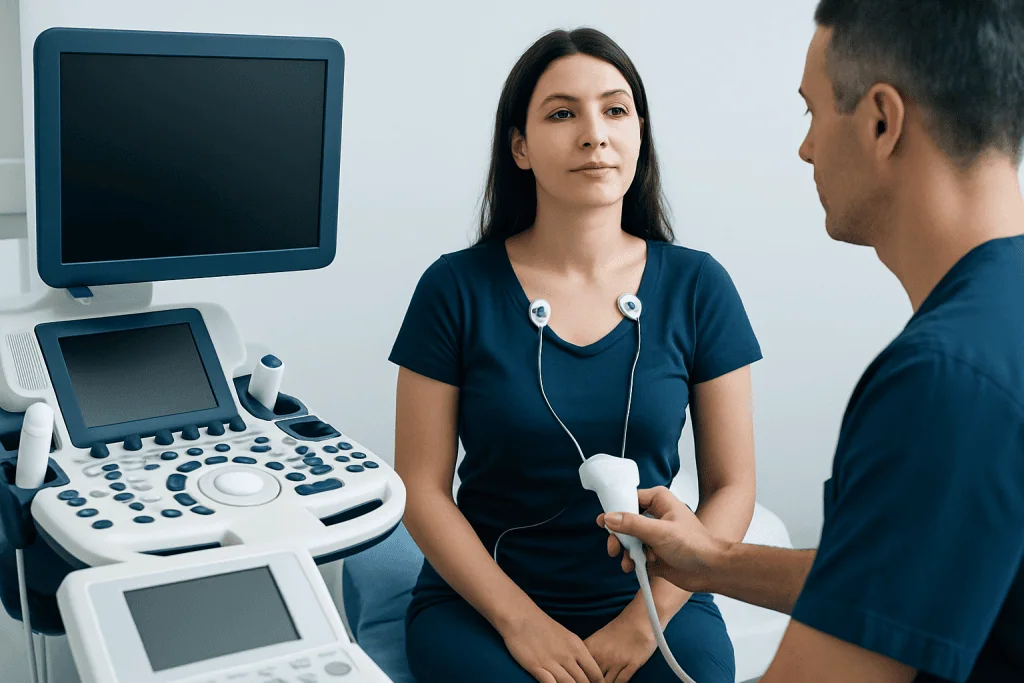
Many pre-travel checks are routine. These often include basic blood tests, such as a complete blood count, kidney and liver function tests, clotting profile, blood sugar, and sometimes blood group information. Depending on your planned treatment, you may also be asked for urine tests, pregnancy testing where relevant, or screening for infection.
Imaging is another common part of preparation. This may include X-rays, ultrasound, CT, MRI, mammography, or other scans if they are needed to confirm diagnosis or guide treatment planning. If you already have recent images, ask whether the original files are needed in addition to the written report, since many specialists prefer to review both.
Heart and lung assessment may be important, especially before surgery or if you have existing medical conditions. Examples include an ECG, echocardiogram, chest imaging, or respiratory function testing. Your team may also request specialist clearance from a cardiologist, pulmonologist, endocrinologist, or another doctor if you have a condition that needs careful control before treatment.
- Basic blood work
- Urine testing
- Imaging and scan review
- ECG or other cardiac checks
- Infection screening
- Condition-specific specialist assessments
How your treatment type and health history affect what is required

The more complex your treatment, the more likely it is that your doctors will want updated information before you travel. For example, major surgery, cancer care, fertility treatment, bariatric procedures, and treatments involving anesthesia often require more formal testing than a consultation or small day-case procedure. Timing matters too: some results remain useful for weeks or months, while others need to be very recent.
Your personal health history is equally important. If you have diabetes, high blood pressure, heart disease, asthma, sleep apnea, kidney problems, autoimmune disease, or a history of blood clots, you may need extra review before your trip. If you have had previous operations or hospitalizations, those records may also help the team understand any special risks or planning needs.
Medications can change the testing plan as well. Blood thinners, insulin, steroids, immunosuppressants, and some supplements may affect bleeding, blood sugar, infection risk, or anesthesia planning. Let your care team know everything you take, including over-the-counter medicines and herbal products, so they can tell you what to continue, what to stop, and what should be checked before travel.
When to do the tests and how to share them
Try not to schedule tests too early without checking with your treatment team. Some reports may no longer be considered current by the time you travel, which can lead to repeated testing after arrival. A practical approach is to ask for a written list of exactly what is needed, when each test should be done, and how recent the results must be.
When you receive your results, keep them organized in both digital and printed form. Bring official reports, image discs or secure digital files where possible, and any specialist letters. If your documents are not in English, ask whether translation is required before travel or whether the hospital can review them as they are.
Acibadem International can be especially helpful here because international patient services often coordinate medical record review in advance. This may help you avoid unnecessary repeat appointments and can make your arrival smoother. Even so, it is wise to expect that some tests may still be repeated in Turkey if the medical team needs confirmation, a local baseline, or updated safety checks.
What may still happen after you arrive in Turkey
Even if you complete several tests at home, it is normal to have some repeat checks once you arrive. Hospitals may need to verify key results, complete facility-specific protocols, or update anything that has changed since your last report. This is especially common if there has been a gap between testing and treatment, or if your symptoms have changed.
Repeat testing should not automatically worry you. It is usually part of careful planning rather than a sign that something is wrong. A local team may also need to perform imaging using their own equipment so your treating specialists can make decisions using the most current and directly reviewed information.
If you are traveling to Istanbul or another city in Turkey for care, build some flexibility into your itinerary. Arriving too close to your planned treatment date can feel stressful if extra checks are needed. Giving yourself a little time before admission can make the process calmer and allow space for consultation, testing, and any last-minute adjustments.
Practical tips to make the process easier
Good preparation can save time and reduce stress. Keep a simple folder with your passport, travel itinerary, medication list, allergy details, prior diagnoses, operation history, and recent test reports. If you use glasses, hearing aids, CPAP, mobility devices, or medical wearables, note that too, as these details may affect your hospital planning.
Ask one clear question early: which tests are essential before I travel, and which can be done after arrival? This helps you avoid spending time and money on investigations that may not be needed. It also helps you understand whether a normal result is enough on its own or whether a specialist review letter is required as well.
If you feel unsure, use the support available. International patient coordinators at Acibadem International can help with document sharing, timing questions, interpreter support, and practical travel planning. Their role is not just administrative; it is to help you move through the process with fewer surprises and more confidence.
Step by step
- Ask for a personalized pre-travel test list. Once your treatment plan is being discussed, ask your coordinator or doctor for a specific list of required tests. Request timing guidance too, so you know which results must be recent and which older reports are still acceptable.
- Arrange tests in your home country if advised. If the team confirms that some tests can be done before travel, book them with enough time to receive the reports. Use accredited facilities when possible and make sure your name, date, and identifying details are clearly shown on every result.
- Send reports for review before booking final travel. Share your reports, scan images, and medication list securely with the hospital for review. This can help the team decide whether anything else is needed before you fly and may reduce the chance of unexpected delays on arrival.
- Check whether any results may need repeating in Turkey. Even if your home-country results are accepted, some tests may still be repeated for safety or updated assessment. Plan your travel dates with a buffer so any extra checks do not create unnecessary pressure.
- Prepare your medical file for the journey. Carry both digital and printed copies of important records, especially reports, image files, prescriptions, and specialist letters. Keep them easily accessible in your hand luggage rather than packed away in checked baggage.
- Review medications and special instructions. Before you travel, confirm whether you should continue or pause any medicines, supplements, or injections. Do not stop prescribed medication on your own unless your treating team has clearly advised you to do so.
Your checklist
- Written list of required pre-travel tests
- Recent blood test reports
- Imaging reports plus original image files if available
- ECG or specialist clearance if requested
- Full medication and supplement list
- Allergy information
- Previous operation or hospital discharge summaries
- Passport and travel itinerary
- Printed and digital copies of all records
Key takeaways
- Pre-travel tests before treatment in Turkey depend on your procedure, health history, and medications.
- Common requests include blood work, imaging, heart checks, and infection screening.
- Timing is important because some test results expire quickly and may need updating.
- You should send reports in advance whenever possible and carry copies when you travel.
- A small buffer before treatment can make room for repeat tests or extra consultations if needed.
Frequently asked questions
Will I definitely need tests before traveling to Turkey for treatment?
Not always. Some patients only need a consultation and a review of existing records, while others need blood tests, imaging, or specialist clearance before they travel. The exact requirement depends on your planned treatment and overall health.
Can I use tests done in my own country?
Often yes, especially if the results are recent and come from reliable medical facilities. However, the treating team may still ask to repeat certain tests in Turkey for safety, updated assessment, or because the original results are no longer current.
How recent do my pre-travel test results need to be?
There is no single rule for every test. Some results may be accepted if they are a few weeks or months old, while others need to be much more recent, especially before surgery or anesthesia. Always confirm the acceptable timeframe with your care team.
What if my reports are not in English?
Hospitals can sometimes review reports in other languages, but this is not always possible or practical. It is best to ask in advance whether translation is needed so your records can be reviewed without delays.
Could missing a test delay my treatment?
Yes, it can. If an essential test has not been completed, or if a result raises a question that needs clarification, your consultation, admission, or procedure date may need to change. This is one reason early document review is so helpful.
Do I need to bring the scan images or is the written report enough?
Bring both if you can. Specialists often want the original image files as well as the report so they can review the study directly and compare it with any new imaging done in Turkey.
How can Acibadem International help with pre-travel testing?
Acibadem International can help coordinate record sharing, explain what documents are needed, and support communication between you and the treating team. International patient services may also assist with interpreter arrangements and practical travel planning so the process feels more organized.
Add us as a Preferred Source to see more of our trusted health content across Google Search, AI Overviews and Discover.

More Patient Guides

When Is an In-Person Evaluation Needed Before Treatment in Turkey?
In-person evaluation before treatment in Turkey is needed when exams, imaging, or specialist review must confirm the safest plan.
9 min read
How to Organize Your Medical Records for a Faster Review in Turkey
Medical records for treatment in Turkey should be clear, complete, and translated where needed to speed review in Istanbul or across Turkey.
9 min read
How to Prepare Your Home Before Traveling to Turkey for Treatment
Prepare your home before traveling to Turkey for treatment with a simple plan for safety, bills, pets, food, and post-return recovery.
9 min read