Blepharospasm: Involuntary Eye Spasms and Treatment Options

Blepharospasm causes repeated eyelid spasms that a person cannot control. Symptoms may begin as increased blinking, eye irritation, or sensitivity to light.
Key Takeaways
- Blepharospasm causes repeated eyelid spasms that a person cannot control.
- Symptoms may begin as increased blinking, eye irritation, or sensitivity to light.
- Diagnosis is mainly based on medical history and a careful neurological and eye examination.
- Botulinum toxin injections are a common and effective treatment for many people.
- Managing triggers such as stress, bright light, and eye surface irritation can help reduce symptoms.
Blepharospasm is a movement disorder that causes repeated, involuntary blinking or forceful eyelid closure. While it is not usually dangerous, it can interfere with daily activities and often improves with specialist care and targeted treatment.
Overview of Blepharospasm
Blepharospasm is a neurological movement disorder in which the muscles around the eyes contract involuntarily. These spasms typically affect both eyelids and can cause frequent blinking, squeezing of the eyes, or temporary difficulty keeping the eyes open. The condition is often called benign essential blepharospasm, although the word “benign” can be misleading because symptoms may still have a major effect on comfort, reading, driving, and social interaction.
In many people, blepharospasm begins gradually. What first seems like occasional eyelid twitching or increased blinking may become more persistent over time. Spasms can range from mild to severe, and in some cases they become strong enough to close the eyes for seconds or longer. Even though vision itself may be normal, repeated eyelid closure can make it functionally difficult to see.
Blepharospasm is different from the common, temporary eyelid twitch that many people experience after fatigue, stress, or too much caffeine. Brief eyelid twitching usually affects a small part of one eyelid and goes away on its own. Blepharospasm is more sustained, often affects both eyes, and reflects abnormal signaling in the brain networks that control movement.
Symptoms and How They Affect Daily Life
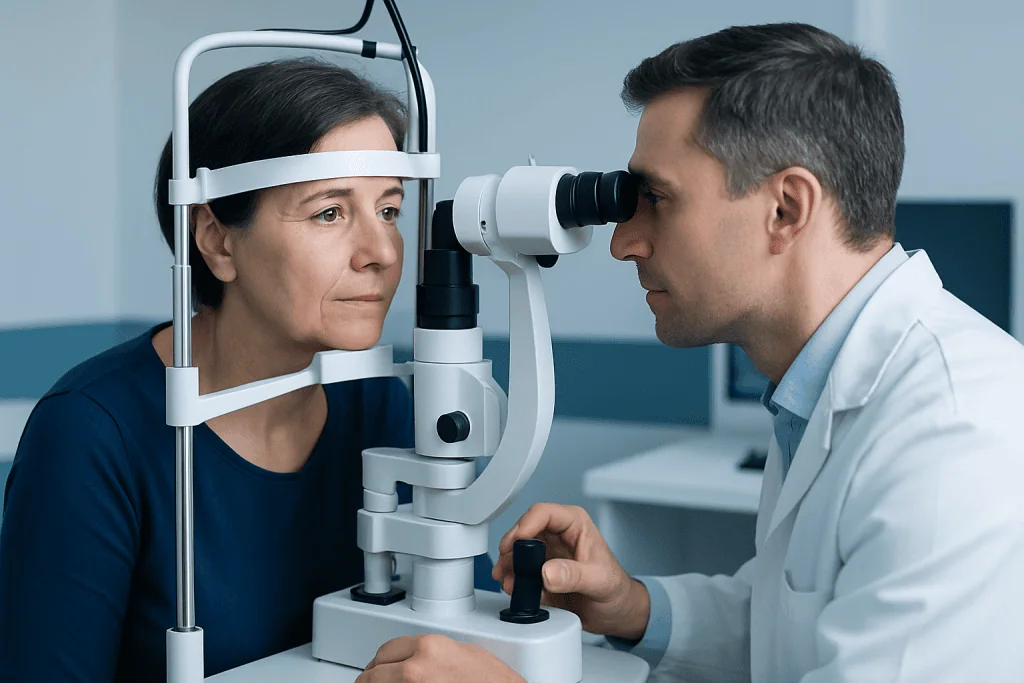
The main symptom of blepharospasm is involuntary blinking or eyelid closure that cannot be fully controlled. Early symptoms may include eye strain, irritation, a feeling of dryness, increased blinking, or trouble tolerating bright light. Some people notice that symptoms are worse while reading, driving, watching screens, or being outdoors in sunlight or wind.
As the condition progresses, the eyelid spasms may become more frequent or forceful. Some people develop episodes in which the eyelids shut tightly and reopen only after a short delay. This can interfere with work, walking safely, or tasks that require clear, steady vision. Symptoms often improve during sleep and may temporarily lessen when a person talks, sings, yawns, or touches the face in a certain way.
Blepharospasm can also affect emotional well-being. Because the spasms are visible to others and may interrupt eye contact or facial expression, some people feel self-conscious or frustrated. Common symptom-related effects include:
- Frequent blinking or eye squeezing
- Sensitivity to light
- Eye discomfort, dryness, or watering
- Difficulty reading, driving, or using screens
- Worsening with stress, fatigue, or bright environments
Causes and Risk Factors

The exact cause of blepharospasm is not always clear. Specialists believe it involves abnormal activity in parts of the brain that help regulate movement, especially networks involving the basal ganglia. In many cases, there is no single trigger that explains why the condition starts. It is considered a type of dystonia, which means a disorder of involuntary muscle contractions.
Blepharospasm may occur on its own or alongside other movement disorders. It can sometimes overlap with facial muscle spasms or other forms of dystonia. It is different from hemifacial spasm, which usually affects one side of the face and has a different underlying mechanism. Eye surface problems such as dryness, inflammation, or irritation may not cause blepharospasm directly, but they can trigger or worsen symptoms in someone who is prone to it.
Several factors may increase the likelihood of developing blepharospasm or make symptoms more noticeable:
- Middle or later adult age
- Female sex
- A personal or family history of dystonia or movement disorders
- Stress and fatigue
- Bright light, wind, or prolonged screen use
- Eye conditions that irritate the surface of the eye
- Certain medications that affect movement control, in some cases
A doctor will also consider other possible explanations for eyelid spasm, such as dry eye disease, medication effects, tics, or neurological conditions. This is one reason why careful assessment is important.
How Blepharospasm Is Diagnosed
There is no single blood test or scan that confirms blepharospasm. Diagnosis is usually made by a specialist based on the pattern of symptoms and a physical examination. A neurologist, ophthalmologist, or neuro-ophthalmology specialist may evaluate how often the spasms occur, whether both eyes are involved, what triggers them, and how much they interfere with daily life.
The examination often includes checking the eyelids, eye surface, blink pattern, facial movements, and vision. Because eye irritation can worsen spasms, doctors may look for dry eye, inflammation, or other treatable problems on the surface of the eye. They also assess whether symptoms fit blepharospasm or another condition such as apraxia of eyelid opening, tics, or facial nerve disorders.
Additional testing is not always necessary, but it may be recommended if symptoms are unusual or if another disorder is suspected. Depending on the situation, this may include neurological evaluation, imaging, or referral to specialists in movement disorders or neuro-ophthalmology assessment. A clear diagnosis helps guide the most suitable treatment plan.
Treatment Options for Blepharospasm
Treatment aims to reduce spasms, improve comfort, and restore daily function. For many people, the first-line treatment is botulinum toxin injection into the muscles around the eyes. This treatment weakens the overactive muscles for a limited period and often decreases blinking and forceful closure. Injections are usually repeated at regular intervals because the effect wears off over time.
Doctors may also address factors that worsen symptoms, such as dry eye, eye inflammation, poor sleep, stress, or light sensitivity. Lubricating eye drops, protective eyewear, tinted lenses, and practical changes to work or screen habits can be helpful additions. In selected cases, oral medications may be considered, although they are often less effective than injections and may cause side effects such as drowsiness.
If symptoms are severe and do not respond well enough to standard treatment, surgery may be considered in carefully selected patients. Procedures to remove or weaken some of the eyelid muscles can help in certain situations, but this approach is usually reserved for persistent, disabling symptoms. A multidisciplinary team may coordinate care through neurology care and, when relevant, ophthalmology evaluation to tailor treatment to the person’s needs.
In some patients, doctors may also assess for related movement disorders such as dystonia, because identifying a broader pattern can improve long-term management. Treatment plans are individualized, and follow-up is important to adjust timing, technique, and supportive measures.
Self-care, Trigger Management, and Living Well
Although self-care does not replace medical treatment, it can make a meaningful difference. Many people notice that symptoms become worse in bright light, windy conditions, stress, or fatigue. Learning personal triggers and reducing exposure where possible can help decrease the intensity or frequency of spasms.
Simple strategies may include wearing sunglasses outdoors, taking regular breaks from screens, using artificial tears if recommended by a doctor, and protecting the eyes from drying environments. Good sleep habits and stress management techniques, such as paced breathing or relaxation exercises, may also support symptom control. Some people benefit from keeping a symptom diary to track what makes spasms better or worse.
Living with blepharospasm can require practical adjustments, especially if symptoms affect reading, driving, or work tasks. Helpful measures may include:
- Using larger text or audio tools for reading
- Adjusting indoor lighting to reduce glare
- Scheduling visually demanding tasks at times when symptoms are milder
- Discussing driving safety with a doctor if eyelid closure interferes with vision
- Seeking support if the condition is affecting confidence or daily independence
Near the end of the care pathway, some international patients may choose centers with coordinated neurological and eye care. Acibadem International’s multidisciplinary specialists and JCI-accredited hospitals diagnose and treat blepharospasm for international patients when comprehensive evaluation is needed.
When to See a Doctor
A person should seek medical advice if eyelid spasms are frequent, last for weeks, involve both eyes, or interfere with vision or daily activities. Early evaluation is especially helpful when blinking becomes forceful, reading becomes difficult, or the eyes close unexpectedly. Prompt assessment can also identify treatable contributors such as dry eye or light sensitivity.
Medical review is also important if eyelid twitching is accompanied by other facial movements, one-sided facial pulling, double vision, weakness, or other neurological symptoms. These features do not always mean a serious problem, but they do require proper assessment. A clinician can determine whether symptoms fit blepharospasm or suggest another condition.
Urgent care should be sought if there is sudden vision loss, severe eye pain, significant eye injury, or signs of infection such as marked redness and discharge. For most people, blepharospasm develops gradually rather than as an emergency, but persistent symptoms deserve professional evaluation and a clear treatment plan.
Frequently asked questions
Is blepharospasm the same as a common eyelid twitch?
No. A common eyelid twitch is usually brief, mild, and often linked to stress, fatigue, or caffeine. Blepharospasm is a more persistent movement disorder that causes repeated, involuntary blinking or forceful eyelid closure.
Can blepharospasm affect vision?
Blepharospasm does not usually damage the eyes or the visual system itself. However, repeated eyelid closure can make it hard to keep the eyes open, which may interfere with reading, driving, or walking safely.
What is the most common treatment for blepharospasm?
Botulinum toxin injections are commonly used and are often the main treatment. They help relax the overactive eyelid muscles for a temporary period, so treatment usually needs to be repeated at intervals recommended by a doctor.
Does stress make blepharospasm worse?
Yes, many people find that stress, fatigue, and poor sleep can make symptoms more noticeable. Managing these triggers does not cure the condition, but it may help reduce the frequency or severity of spasms.
Can dry eyes cause blepharospasm?
Dry eyes do not always directly cause blepharospasm, but eye surface irritation can trigger or worsen symptoms. This is why doctors often check for dryness, inflammation, or other eye surface problems during assessment.
Is surgery needed for blepharospasm?
Most people are treated without surgery. Surgery is usually considered only when symptoms are severe and have not improved enough with standard treatments such as botulinum toxin and supportive care.
References
- National Institute of Neurological Disorders and Stroke
- American Academy of Ophthalmology
- National Eye Institute
- Dystonia Medical Research Foundation
This article is for general information only and is not a substitute for professional medical advice. Please consult a qualified doctor about your individual situation.
Explore treatments in Turkey — costs, top hospitals & a free quote
JCI-accredited · board-certified surgeons · reply within 24h
Add us as a Preferred Source to see more of our trusted health content across Google Search, AI Overviews and Discover.

Neurology
Diagnosis and treatment of disorders of the brain, spinal cord, nerves and muscles.
51 specialists in this unit