Crepey Skin and Neck Lines: The Collagen Story and the Options From Creams to Devices
Crepey skin is thin, finely wrinkled skin that looks like crepe paper, caused mainly by sun damage, aging and the gradual loss of collagen…
Read article

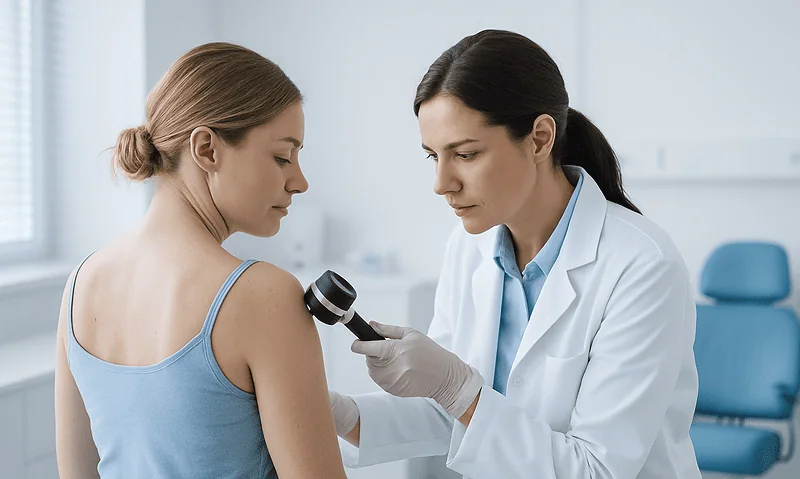
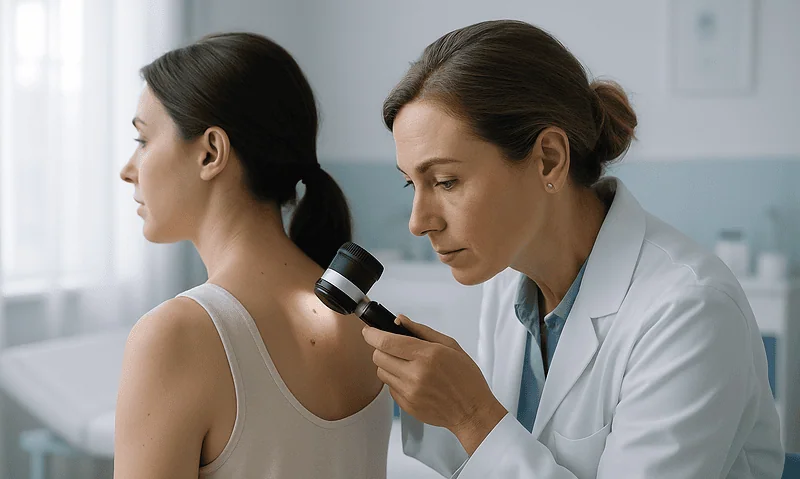
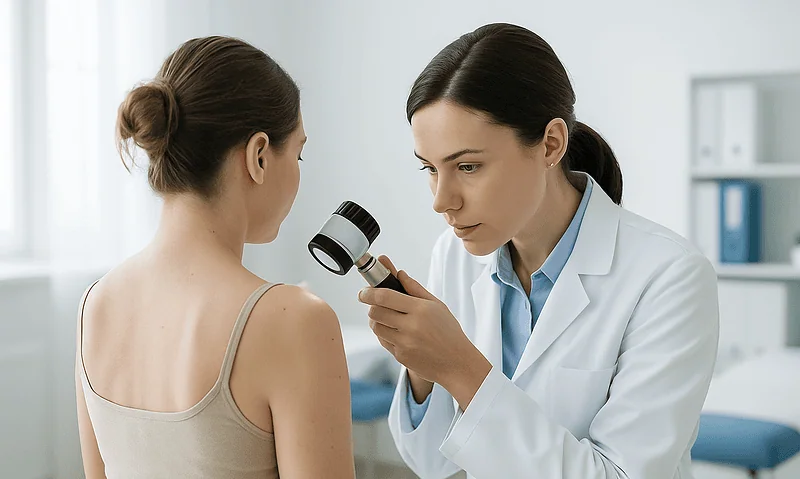
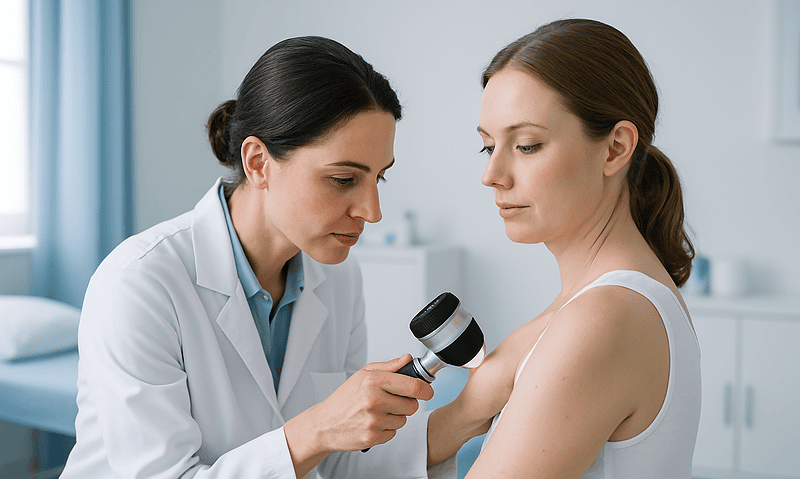
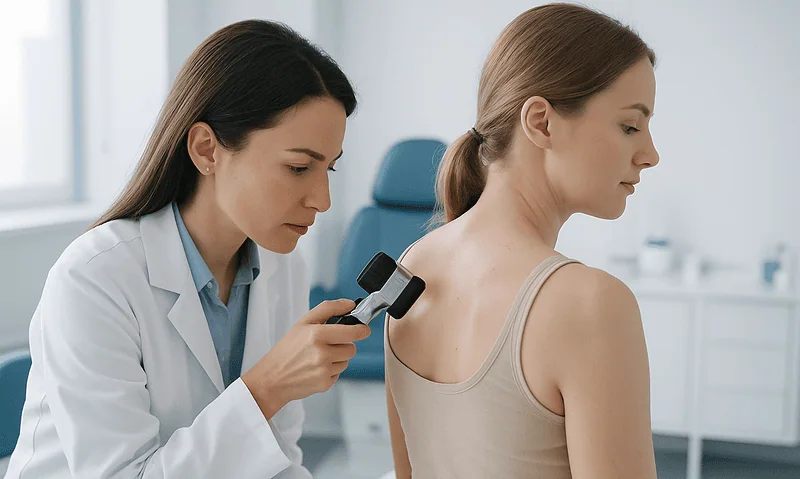
Articles on skin and hair: acne, eczema, moles, hair thinning and the treatments in use. A mole that changes, bleeds or looks different from the rest should be checked by a dermatologist.
Crepey skin is thin, finely wrinkled skin that looks like crepe paper, caused mainly by sun damage, aging and the gradual loss of collagen…
Under eye filler, usually a hyaluronic acid gel placed in the tear trough, can soften a hollow groove between the lower eyelid and cheek…
A congenital nevus needs removal only when a specific reason outweighs the scar and anesthesia involved: a suspicious change on examination, a lesion too…
Narrowband UVB phototherapy for vitiligo exposes depigmented patches to a narrow band of ultraviolet B light, usually two to three times a week in…
Living with chronic hives means managing welts that recur for six weeks or longer, often without a single clear cause. Heat, cold, pressure, friction,…
At an eczema consultation, the most useful questions cover four areas: what type of eczema you have and what may be driving it, which…
Double cleansing means washing the face twice in a row: first with an oil or balm that dissolves sunscreen, makeup and sebum, then with…
Puffy eyes come from one of three things: fluid pooling in the thin eyelid tissue, orbital fat pushing forward as the tissue holding it…
To exfoliate safely, match the method to your skin type: a soft washcloth or gentle chemical exfoliant for dry or sensitive skin, and an…
Acute urticaria is hives that settle within six weeks; chronic urticaria is hives that keep appearing, on most days, for longer than six weeks.…
Cradle cap and adult seborrheic dermatitis are the same inflammatory skin condition seen at two different ages. In babies it shows as greasy, yellowish…
Seborrheic keratosis and cherry angiomas are two of the most common benign skin growths in adults, and neither is cancer nor a sign of…
Glycolic, lactic and salicylic acid all loosen the glue between dead skin cells, but they suit different skin. Glycolic acid, the smallest alpha-hydroxy acid,…
Microneedling at home typically uses needles 0.25–0.5 mm long that reach only the outer skin layers, while clinic devices reach 1–2.5 mm into the…
Folliculitis is inflammation of hair follicles, and the main types are bacterial (usually staphylococcal, or Pseudomonas after hot tubs), fungal (a yeast called Malassezia),…
Milia are tiny, firm, white or yellowish cysts, usually 1 to 2 millimeters wide, that form when the skin protein keratin gets trapped just…
Hormonal acne is adult acne driven by the skin's response to androgens, typically appearing as deep, tender bumps along the jawline, chin and neck…
For most people, acne treatment starts with topical options such as a retinoid, benzoyl peroxide or azelaic acid, used for at least six to…
Choose which cookies you allow. Essential cookies are always on because the site cannot work without them.