

What Long-Term Rosacea Control Looks Like: Why Flushing Can Return and How Maintenance Works

Key Takeaways
- Rosacea is classed as a long-term relapsing condition, and Mayo Clinic describes flares lasting weeks to months that settle and then return, so a quiet stretch is a good sign rather than an end point.
- Most treatments act on inflammation, while most relapses begin with over-reactive facial blood vessels and nerves, which is why flushing often returns even after bumps have cleared.
- Topical anti-inflammatory agents typically take several weeks to show visible improvement and work only while they are being used, which is why they form the backbone of maintenance for bumps and pustules.
- Vessel-constricting topicals can reduce redness within hours, but the effect is temporary and reapplication is needed; they change appearance, not the underlying reactivity.
- Laser and intense pulsed light can close existing visible vessels, but Mayo Clinic notes repeat sessions are usually needed over time because new vessels form.
- There is no good evidence that vitamin B12 deficiency causes rosacea; the reported link runs the other way, with high-dose supplementation occasionally worsening facial eruptions.
Rosacea long term control means keeping a chronic, relapsing skin condition quiet rather than ending it. Flushing returns because the facial blood vessels and nerves stay over-reactive even when bumps clear, so maintenance usually combines daily sun protection, gentle skin care, trigger awareness and, when prescribed, ongoing topical therapy. Procedures can fade fixed redness, but effects fade over time. Plans are set and adjusted by the treating clinician.
The bumps were gone. After weeks of twice-daily cream and a short course of tablets, her cheeks looked calm for the first time in two years, so she did what most people do: she stopped. Six weeks later, a hot commuter train and one glass of red wine brought the familiar heat climbing up her neck, and the small red spots crept back along her jaw.
That loop, improvement, relaxation, relapse, is the single most common story in rosacea clinics, and it is not a failure of willpower or of medicine. It is the natural behavior of a condition that is managed, not switched off. Understanding why is the first real step toward rosacea long term control.
This article explains what is happening under the skin, why flushing in particular is so stubborn, what maintenance treatment actually involves, and how to tell an ordinary flare from a sign that needs a prompt call to your doctor.
Why rosacea long term control is the realistic goal, not a one-off fix
Rosacea is classed by the NHS and by the National Institute of Arthritis and Musculoskeletal and Skin Diseases as a long-term inflammatory skin condition. The phrase matters. It places rosacea alongside eczema and psoriasis rather than alongside a single infection that a course of treatment clears for good.
Mayo Clinic describes the typical pattern plainly: symptoms flare for weeks to months, settle, and then return. Clinicians call this a relapsing and remitting course. Between flares the skin can look entirely normal, which is exactly what tempts people to assume the problem has resolved.
Two features drive the pattern. First, the inflammation in rosacea is not caused by a single organism that can be eradicated. Second, the facial blood vessels in people with rosacea respond more strongly and for longer to ordinary stimuli such as heat, alcohol or emotion. Treatments calm the inflammatory part well; they do far less to reset that vascular reactivity.
So what does control look like in practice? Dermatology guidelines frame success as fewer flares, milder flares, and shorter recovery when a flare does happen, plus protection against slow structural changes such as skin thickening or eye involvement. Many people reach a point where rosacea rarely interrupts their week. That is a genuine and achievable outcome.
The honest caveat is that control is maintained by continuing to do the things that produced it. Mayo Clinic notes that because rosacea tends to recur, ongoing treatment is often needed, and that laser results require periodic repeat sessions. Nobody should feel they did something wrong when a flare arrives after a quiet year. It is the condition behaving as described in every major patient resource, not evidence that the plan was wrong.
What actually happens in rosacea-prone skin
Picture the skin of the central face as a neighborhood with three systems running slightly hot at once: the blood vessels, the nerves that control them, and the immune cells that patrol the surface.

The blood vessels sit close to the surface and dilate readily. Dilation is the widening of a vessel so more blood flows through it; in rosacea it happens faster and lasts longer than in unaffected skin, which produces flushing and the background redness that can become fixed over years. Repeated dilation is thought to stretch small vessels until some stay visibly open as fine red lines, the telangiectasia described on the NIAMS and Mayo Clinic pages.
The nerves matter because many flushing triggers are not chemical irritants at all. Heat, spicy food, exercise and emotion act through nerve endings that signal the vessels to open. This is why a stressful meeting can redden a face as effectively as a hot shower.
The immune system contributes the bumps and pustules. Research summarized by NIAMS points to an exaggerated innate immune response in the skin, with higher activity of antimicrobial peptides called cathelicidins, which are small proteins that normally defend against microbes but also provoke inflammation and vessel growth when overproduced. Demodex mites, microscopic organisms that live harmlessly in most people’s hair follicles, are found in greater numbers in rosacea skin and may add to that immune stimulation. Whether they cause rosacea or simply flourish in it remains unsettled.
Finally, the skin barrier, the outer layer that holds water in and irritants out, is often weaker in rosacea, so products that most people tolerate can sting and inflame. Each of these systems is a target for maintenance, and no single treatment covers all four.
Why does rosacea flare up again after treatment works?
The short version: most treatments act on inflammation, while most relapses begin with the vessels and nerves. Clear skin after a course of treatment reflects quieter immune activity. It does not mean the vascular over-reactivity has gone, so the next hot room or glass of wine still produces a flush, and repeated flushing appears to restart the inflammatory cycle.
Several practical factors then stack on top:
- Stopping maintenance therapy. Mayo Clinic notes that rosacea tends to recur and that treatment often needs to continue; topical agents that reduce bumps work only while the skin is exposed to them.
- Seasonal exposure. Sunlight and wind are among the most frequently reported triggers listed by the NHS and NIAMS, so spring and summer often bring a return even when nothing else changes.
- Barrier damage. New cosmetics, exfoliating acids, or vigorous scrubbing can inflame skin that was previously calm.
- Life events. Stress, poor sleep and illness are commonly reported precipitants in patient surveys, though the strength of the evidence varies.
There is also a subtler reason. Early rosacea often begins as flushing alone; bumps come later. Treating the bumps and declaring victory leaves the earliest and most persistent feature untouched, and that feature is also the one most likely to be noticed by others.
None of this means flares are random. People who keep a simple record for a few months usually see that their relapses cluster around identifiable circumstances. The pattern is personal: the NHS lists heat, alcohol, spicy food, caffeine, exercise, cold, sunlight and stress as common triggers, but few people react to all of them. Identifying your own two or three is worth more than avoiding the entire list.
The main patterns of rosacea, and why 'stage 4 rosacea' is not a real diagnosis
People searching for stage 4 rosacea usually fear that their condition is marching toward an inevitable end point. Current classification does not work that way. Dermatology moved away from numbered stages because rosacea does not progress in a fixed sequence; a person can have severe flushing for decades without ever developing a single bump, and someone else can have pustules with little flushing.
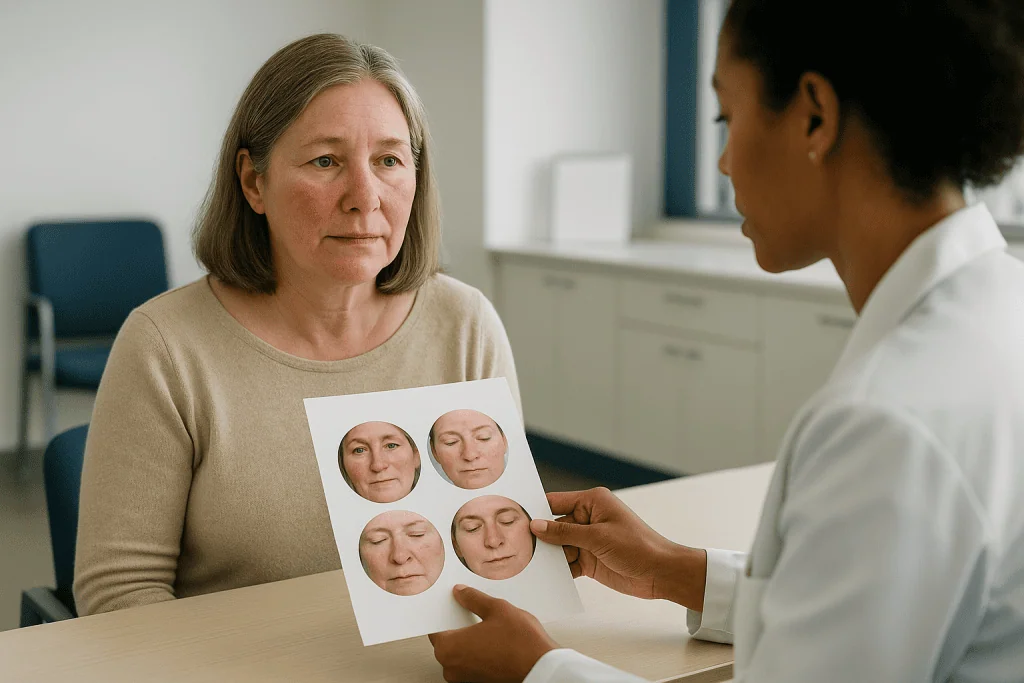
The patterns commonly described in patient resources from Mayo Clinic, Cleveland Clinic and NIAMS are summarized below.
| Pattern | What it looks like | Maintenance usually leans on |
|---|---|---|
| Erythematotelangiectatic (redness and visible vessels) | Flushing, persistent central redness, fine visible vessels, stinging | Trigger management, sun protection, barrier care, vessel-targeting options discussed with a clinician |
| Papulopustular (bumps and pus-filled spots) | Red bumps and pustules without blackheads | Ongoing topical anti-inflammatory therapy; oral options for more extensive disease |
| Phymatous (skin thickening) | Thickened, bumpy skin, most often on the nose | Early control of inflammation; procedural reshaping if established |
| Ocular (eye involvement) | Gritty, red, watery eyes; swollen lids; recurrent styes | Lid hygiene; assessment by an eye specialist when symptoms persist |
These patterns overlap, and modern guidance describes individual features rather than slotting a person into one box. The term rhinophyma, the thickened nose sometimes mistaken for a late stage, is actually uncommon, occurs mainly in men, and is not the destination of ordinary rosacea. Mayo Clinic notes it develops over years in a minority of people.
Why does this matter for long-term control? Because maintenance is built around the features you actually have. Someone with flushing alone will gain little from a plan designed for pustules, and someone with eye symptoms needs them addressed directly rather than hoping skin treatment will reach the eyelids.
Who maintenance treatment is usually for, and who is usually asked to wait
Rosacea most often appears after age 30 and is diagnosed more frequently in women, although men more often develop the thickened-skin form, according to NIAMS and Mayo Clinic. People with fair skin that burns easily are affected more often, but rosacea occurs in all skin tones and is probably under-recognized in darker skin, where redness is less visible and the diagnosis may rest on warmth, swelling and bumps instead.
Ongoing maintenance is generally considered for people whose rosacea returns quickly when treatment stops, whose flares affect daily life or work, who have bumps and pustules rather than flushing alone, or who show early signs of skin thickening or eye involvement. In these situations the aim of continuing therapy is to prevent the slow cumulative changes that are harder to reverse later.
Some people are usually asked to pause or wait rather than start a long-term plan:
- Those with very mild, infrequent flushing that responds to trigger management alone; adding daily medication may offer little benefit.
- People who are pregnant, planning pregnancy or breastfeeding, because several rosacea medicines carry restrictions in those situations and the prescribing clinician will weigh each one individually.
- Anyone whose diagnosis is uncertain. Facial redness has many look-alikes, including seborrheic dermatitis, lupus, contact allergy and medication side effects, and treating the wrong condition with rosacea therapy can delay the right answer.
- People whose flares began right after a new skin product, where removing the product may be the only step needed.
Children are rarely diagnosed with rosacea, and persistent facial redness in a child warrants a separate assessment. For adults, the decision to move from treating flares to continuous maintenance belongs to the treating clinician, made with the person in front of them, after weighing how much the condition is costing them against the commitment of daily therapy.
How rosacea maintenance treatment works, by mechanism
Think of maintenance as several layers, each targeting one of the hot systems described earlier. What follows describes mechanisms and typical timelines summarized in Mayo Clinic and NHS resources; which layers a particular person needs, and for how long, is a prescribing decision.
The foundation layer is non-prescription: broad-spectrum sun protection every day, a bland fragrance-free moisturizer to support the barrier, and avoidance of personal triggers. For many people with flushing-predominant rosacea this layer does most of the work.
The anti-inflammatory layer uses topical agents applied to the skin. Metronidazole and azelaic acid are long-established options that dampen inflammation through several pathways, including effects on reactive oxygen species. Ivermectin reduces Demodex mite numbers and also has direct anti-inflammatory effects. Mayo Clinic notes that noticeable improvement with these agents usually takes several weeks, and that benefit persists only while use continues, which is why they form the backbone of long-term maintenance for bumps and pustules.
The vessel layer uses topical agents such as brimonidine or oxymetazoline that temporarily constrict facial blood vessels. Redness can lessen within hours, but Mayo Clinic is explicit that the effect is temporary and the product must be reapplied regularly. These agents reduce the appearance of redness; they do not change the underlying reactivity, and some people report rebound redness as the effect wears off.
The oral layer is used for more extensive or stubborn disease. Tetracycline-class antibiotics such as doxycycline are used primarily for their anti-inflammatory rather than antibacterial action, often at anti-inflammatory rather than infection-treating levels. For severe cases that do not respond, an oral retinoid, isotretinoin, may be considered under specialist supervision, with significant safety requirements.
Each layer is added, continued or withdrawn by the treating team based on response, tolerance and life circumstances.
What the first weeks and months of a maintenance plan usually look like
The most common disappointment in rosacea care is judging a plan too early. Here is a realistic arc, drawn from the timelines Mayo Clinic and the NHS describe, and offered as typical ranges rather than promises.
Weeks 1–2. Skin care changes bite first. Stinging from products tends to settle once harsh ingredients are removed and the barrier recovers. If a vessel-constricting topical has been prescribed, visible redness may drop within hours of each application, then return as it wears off. Anti-inflammatory topicals are unlikely to show much yet, and mild irritation when starting them is common.
Weeks 3–8. This is when topical anti-inflammatory agents and oral tetracycline-class treatment typically begin to reduce bumps and pustules; Mayo Clinic describes noticeable improvement over several weeks. Flushing episodes may still occur, which can feel discouraging even as the bumps shrink. Many people find trigger diaries most useful during this window, because the baseline is quieter and individual flares stand out.
Months 2–4. If an oral course was used, this is often when the clinician considers tapering it while continuing topical therapy, since the goal is to hold the improvement with the least medication. People who stop everything at this point are the ones most likely to be back in clinic within a season.
Beyond 6 months. Maintenance settles into routine. Reviews typically focus on whether flares have become rarer and shorter, whether any eye symptoms have appeared, and whether sun protection is holding up through summer. Some people are able to step down to the foundation layer alone; others find they need continuous topical therapy to stay clear. Neither outcome is a verdict on how well they followed the plan.
Trigger tracking: what the evidence actually supports
Trigger lists are everywhere, and they are both useful and oversold. The NHS and NIAMS list sunlight, heat, wind, cold, hot drinks, alcohol, spicy food, caffeine, exercise, stress and certain skin products as common precipitants. These lists come largely from patient surveys rather than controlled experiments, which means they describe what people notice, not what has been proven to cause flares in everyone.
The honest reading is this: triggers are real but individual. Sunlight is the most consistently reported across surveys and the one with the clearest biological rationale, since ultraviolet light damages small vessels and provokes inflammation. Heat in any form, including hot baths, saunas and warm rooms, acts through the nerve pathways that open facial vessels. Alcohol, especially red wine, is widely reported, though some of the effect may relate to the warmth and setting in which it is consumed rather than the drink alone.
Food triggers deserve particular skepticism. Spicy food has a plausible mechanism through nerve receptors that sense heat, but blanket elimination diets have no supporting trial evidence and can make life needlessly small. The better approach is a short structured experiment: suspect one trigger, remove it for two to three weeks, note what happens, then reintroduce it. If nothing changes, it was never your trigger.
A simple daily log that records a flush score, weather, alcohol, exercise, stress and new products is enough. Phone notes work. After a few months most people can name two or three reliable precipitants and discard the rest of the list.
Two things trigger management cannot do: it cannot replace anti-inflammatory treatment when bumps and pustules are present, and it cannot prevent every flare. Its job is to lower the frequency, which over years is what protects the vessels.
Skin care and sun protection as the backbone of long-term control
If a dermatologist could change only one habit in a person with rosacea, most would choose daily sun protection. Mayo Clinic, the NHS and NIAMS all place it at the center of self-care, and the logic is cumulative: each unprotected exposure nudges vessels and inflammation, and years of nudging produce fixed redness.
A few specifics help. Mineral sunscreens based on zinc oxide or titanium dioxide are often better tolerated by reactive skin than chemical filters, though this is a tolerance observation rather than a rule. Broad-spectrum protection with a high sun protection factor, applied every morning including cloudy days, is the recommendation in mainstream resources. Hats and shade matter as much as the bottle.
The second pillar is barrier care. Rosacea skin typically loses water faster and reacts to ingredients that others shrug off. Resources consistently advise:
- A gentle, soap-free, fragrance-free cleanser used with lukewarm water, never hot.
- Patting rather than rubbing dry.
- A bland moisturizer applied daily, which has been shown to reduce stinging and improve tolerance of prescription topicals.
- Avoiding alcohol-based toners, astringents, menthol, witch hazel, exfoliating scrubs and strong acids unless a clinician has specifically advised otherwise.
New products are best introduced one at a time with a patch test on the jawline for several days. Mineral-based green-tinted cosmetics can neutralize redness visually and are widely used; they are camouflage rather than treatment, but there is nothing wrong with camouflage.
What about the growing market of rosacea-specific serums and supplements? Many contain ingredients such as niacinamide with plausible barrier benefits, but trial evidence for most proprietary formulas is thin. The reliable advice is unglamorous: protect, moisturize, avoid irritants, repeat for years.
Can procedures make the redness go away for good?
Vascular lasers and intense pulsed light, which deliver pulses of light absorbed by the red pigment in blood so that targeted small vessels heat and close, are the main options for persistent background redness and visible vessels. Mayo Clinic lists them among standard treatments, with a clear qualifier: repeat treatments may be needed periodically to maintain the improved appearance.
That qualifier is the whole story for long-term control. Light-based treatment can remove vessels that already exist. It does not stop the skin from forming new ones, and it does not alter the nerve-driven tendency to flush. People who have had successful treatment commonly notice gradual return of redness over one to several years as new vessels develop, and many choose periodic maintenance sessions.
Typical considerations clinicians discuss include:
- Multiple sessions are usually needed for an initial course, spaced weeks apart.
- Temporary redness, swelling and occasionally bruising follow treatment; blistering and pigment change are less common risks, and the risk of pigment change is higher in darker skin, which affects device choice.
- Active pustular disease is usually settled with medication first, since inflamed skin responds less predictably.
- Sun protection before and after sessions is essential, both for safety and to protect the result.
For established skin thickening on the nose, surgical or laser reshaping can remove excess tissue. This is a different kind of procedure with its own recovery and is considered only once inflammation is controlled.
No procedure is a substitute for the maintenance layers described earlier. The best candidates for light-based treatment are usually those whose inflammatory disease is already quiet and who understand they are buying time, not a permanent reset. Suitability, device selection and timing rest with the treating clinician.
Is rosacea autoimmune? Can vitamin B12 deficiency trigger rosacea? What the evidence shows
Two questions dominate online searches, and both deserve a precise answer rather than a reassuring wave.
Is rosacea an autoimmune disease? Not in the way the term is usually meant. Autoimmune diseases involve the adaptive immune system producing antibodies or T cells against the body’s own tissue, as in lupus or type 1 diabetes. Rosacea involves an over-active innate immune response, the fast, non-specific defense system, together with vascular and nerve dysfunction. NIAMS describes this as immune system involvement without classifying rosacea as autoimmune. Some population studies have reported that people with rosacea are slightly more likely to also have certain autoimmune conditions, but association is not mechanism, and the finding does not change how rosacea is treated. If facial redness comes with joint pain, mouth ulcers, marked fatigue or a rash that worsens sharply with sun, a clinician will consider lupus and other conditions separately.
Can vitamin B12 deficiency trigger rosacea? There is no good evidence that deficiency causes rosacea. The association that does appear in the medical literature runs the other way: high-dose vitamin B12 supplementation or injections have been reported to provoke acne-like eruptions and worsen rosacea in some people. The NIH Office of Dietary Supplements notes that B12 is generally considered low in toxicity, so this is an uncommon skin reaction rather than a reason to avoid treating a genuine deficiency. Anyone who notices a flare after starting a supplement should mention it to the prescriber rather than stop or start anything on their own.
What about gut health, helicobacter, or small intestinal bacterial overgrowth? Studies exist, results conflict, and no mainstream guideline recommends testing or treating these to control rosacea. The accurate statement is that the link is unproven.
What people often get wrong about rosacea
Myths cost people years. Here are the ones clinicians correct most often, each paired with what the evidence actually supports.
Rosacea is adult acne. It is not. Acne involves blocked oil glands and blackheads; rosacea does not produce blackheads, and acne treatments built around drying and exfoliating skin often make rosacea worse. The two can coexist, which is one reason an accurate diagnosis matters.
Flushing means poor hygiene or heavy drinking. Rosacea has nothing to do with cleanliness, and while alcohol can trigger flushing, most people with rosacea drink moderately or not at all. The old caricature has caused real stigma and has no basis.
Clear skin means it is gone. Mayo Clinic’s description of flares lasting weeks to months before settling, then returning, is the normal course. A quiet stretch is a good sign, not a discharge.
Stronger is better. More aggressive cleansing, more products and higher-strength actives tend to damage the barrier and inflame reactive skin. Gentle and consistent wins.
Steroid creams calm it. Topical corticosteroids can briefly reduce redness and then produce a well-recognized rebound that resembles severe rosacea. Mainstream resources advise against using them on the face for rosacea unless a clinician directs otherwise.
Diet alone can control it. Trigger awareness helps, but no diet has been shown in trials to treat the inflammatory features, and restrictive eating carries its own costs.
If you have rosacea you cannot exercise. Overheating is the issue, not movement. Cooler environments, water, fans and shorter intense intervals let most people stay active.
A face wash can reach the eyes. Ocular rosacea needs its own attention, typically lid hygiene and sometimes eye-specific treatment, and persistent symptoms warrant an eye examination.
Questions to ask your care team about rosacea long term control
A good consultation leaves you knowing not just what to use but why, for how long, and what would prompt a change. These questions help structure that conversation; write down the answers, since plans evolve over years.
- Which features of rosacea do I have, and which is driving most of my symptoms: flushing, fixed redness, bumps, skin thickening or eye involvement?
- Of the treatments you are suggesting, which are meant to be short courses and which are intended as ongoing maintenance?
- How long should I give each treatment before we judge whether it is working, and what would count as working?
- If the bumps clear, what is the plan for stepping down medication, and what signs mean I should not step down yet?
- Which of my current skin care and cosmetic products would you stop, and what should I look for when choosing replacements?
- Are there triggers you think are worth testing for me specifically, based on what I have described?
- Do I have any signs of eye involvement, and should I be seen by an eye specialist?
- Would light-based treatment help my type of redness, and if so, when in the plan would it make sense?
- Are any of the treatments affected by other medicines I take, by pregnancy plans, or by sun exposure in my job or hobbies?
- What symptoms should prompt me to contact you before my next scheduled review?
- How often should we review the plan once things are stable?
It is also reasonable to ask how your clinician distinguishes rosacea from conditions that mimic it, especially if treatment has not helped after a fair trial. A diagnosis that does not respond as expected should be revisited rather than simply escalated.
Finally, tell your team honestly what you are willing to do every day. A plan that fits a real morning routine will beat an ideal plan that is abandoned by the second month.
When to call your doctor
Most rosacea flares are uncomfortable rather than dangerous, and a known flare that follows a known trigger can usually wait for a routine review. Some situations should not wait.
Seek prompt medical attention if you notice:
- Eye pain, marked light sensitivity, blurred vision, or a red eye that does not settle. Ocular rosacea can affect the cornea, the clear front window of the eye, and the NHS advises seeing a clinician for persistent eye symptoms.
- Rapidly spreading facial redness that is hot, swollen and tender, especially with fever or feeling unwell. This can indicate a skin infection such as cellulitis rather than rosacea.
- Flushing accompanied by wheezing, throat tightness, lip or tongue swelling, dizziness or a racing heart. These suggest an allergic or systemic cause and need emergency care.
- Flushing that comes with body-wide symptoms such as persistent diarrhea, palpitations, sweats or unexplained weight loss, since other causes of flushing need to be excluded.
- A new rash, blistering, severe stinging or swelling after starting any prescribed or over-the-counter product, which may indicate a reaction to the treatment.
- Facial redness alongside joint pain, mouth ulcers, hair loss or a rash that worsens dramatically with sun, which a clinician will want to assess for lupus and related conditions.
- Thickening of the skin on the nose or elsewhere that is progressing, since earlier assessment widens the options.
- Severe flares that are not responding after the timeframe your clinician set, or symptoms that are affecting your mood, sleep or willingness to leave the house.
Rosacea is also linked to lower mood and social anxiety in many surveys, and that burden is a legitimate reason to ask for help. Any change to prescribed treatment, including stopping something that seems to be causing a problem, should be made with the prescribing clinician, who can weigh the alternatives safely.
Frequently asked questions
Is it possible to permanently get rid of rosacea?
Current evidence says no: rosacea is a long-term condition that is controlled rather than ended. The NHS and Mayo Clinic describe a relapsing course in which symptoms settle and later return. Many people reach a stage where flares are rare and mild, but that state is maintained by continuing sun protection, skin care, trigger awareness and, when prescribed, ongoing therapy, not by a single course that finishes the job.
Can rosacea go away on its own?
Individual flares often settle on their own over weeks to months, which is why rosacea can seem to disappear for a while. The underlying tendency to flush and inflame generally persists, and symptoms usually return with the next trigger or season. Spontaneous long remissions are reported but cannot be predicted, so most clinicians plan for a condition that will need attention over years.
Why does rosacea flare up again after treatment?
Because the treatments that clear bumps calm inflammation without resetting the over-reactive blood vessels and nerves in the face. When maintenance therapy stops, or when heat, sun, alcohol, stress or a new skin product arrives, the vessels dilate, flushing returns and the inflammatory cycle restarts. Seasonal sun exposure and stopping topical therapy are the two most common reasons people describe when they come back to clinic.
What is rosacea maintenance treatment and how long does it continue?
Maintenance means continuing the measures that produced improvement: daily broad-spectrum sun protection, a gentle barrier-supporting routine, trigger management and, if prescribed, ongoing topical anti-inflammatory therapy. Mayo Clinic notes that rosacea tends to recur, so treatment often needs to continue long term. How long, and whether oral medication is tapered while topicals continue, is decided by the prescribing clinician based on how the skin responds.
Is rosacea autoimmune?
Rosacea is not classified as an autoimmune disease. It involves an over-active innate immune response in the skin together with vascular and nerve dysfunction, rather than antibodies attacking the body’s own tissue. Some studies report that people with rosacea are slightly more likely to have certain autoimmune conditions, but this association does not change diagnosis or treatment. Facial redness with joint pain or mouth ulcers should be assessed separately.
Can vitamin B12 deficiency trigger rosacea?
There is no good evidence that B12 deficiency causes or triggers rosacea. The link reported in medical literature runs in the opposite direction: high-dose B12 supplementation or injections have occasionally been associated with acne-like eruptions and worsening facial redness. This is an uncommon reaction, and a genuine deficiency still needs treating. Anyone who notices a flare after starting a supplement should discuss it with the prescriber.
What is stage 4 rosacea?
Stage 4 rosacea is not a recognized diagnosis. Dermatology moved away from numbered stages because rosacea does not progress in a fixed sequence; people can have severe flushing for decades without developing bumps or thickened skin. The term is sometimes used informally for rhinophyma, the thickened nose that develops over years in a minority of people, mostly men. It is uncommon and is not the natural end point of ordinary rosacea.
Does laser treatment stop rosacea coming back?
No. Vascular lasers and intense pulsed light close small visible vessels that already exist and can noticeably reduce fixed redness, but they do not stop new vessels forming or alter the tendency to flush. Mayo Clinic notes that repeat treatments may be needed periodically to maintain results. Sun protection and ongoing maintenance remain necessary, and suitability for light-based treatment is assessed by the treating clinician.
Can I still exercise and drink coffee with rosacea?
Usually yes, with adjustments. Overheating rather than exercise itself provokes flushing, so cooler environments, fans, water and shorter intense intervals help most people stay active. Hot drinks appear on common trigger lists mainly because of their temperature; the caffeine link is less consistent. Triggers are individual, so a short personal trial of removing and reintroducing a suspect is more informative than avoiding everything on a list.
How do I know if rosacea is affecting my eyes?
Ocular rosacea commonly causes gritty, burning, watery or red eyes, swollen or crusted eyelids and recurrent styes, and it can occur with little visible skin involvement. Lid hygiene is often advised, but persistent symptoms, eye pain, light sensitivity or blurred vision need assessment by a clinician or eye specialist, because the cornea can be affected. The NHS advises seeking care for eye symptoms that do not settle.
References
- Rosacea – NHS
- Rosacea – National Institute of Arthritis and Musculoskeletal and Skin Diseases (NIH)
- Rosacea – MedlinePlus
This article is for general information only and is not a substitute for professional medical advice. Please consult a qualified doctor about your individual situation.

More from the Blog

What Melanoma Looks Like (and Does It Itch?)
Melanoma most often appears as a new spot or a changing mole that stands out from the others: asymmetrical, with ragged or blurred edges,…
Does Creatine Cause Hair Loss? The Single Study Behind the Myth
Current evidence does not show that creatine causes hair loss. The concern traces to a single 2009 study of 20 rugby players in which…

Retinol Purge and Retinol Side Effects: What Is Normal, What Is Irritation and When to Stop
A retinol purge is a temporary flare of small pimples that can appear in the first weeks after starting retinol or tretinoin, because faster…
Photoaging: How Sun Damage Ages Skin and What Can Be Reversed
Photoaging is the premature aging of skin caused by cumulative ultraviolet light, producing wrinkles, leathery texture, brown spots and broken vessels on top of…

Botox Alternatives: Microcurrent, Peptides and Other Options: What the Evidence Grades
Botox alternatives fall into three evidence tiers. Daily sunscreen and prescription retinoids have the strongest trial evidence for softening fine lines, but they work…

How Long Does Shingles Last? The Rash Stages From Tingling to Blisters to Crusting
Shingles usually lasts two to four weeks from the first blisters to full crusting, according to CDC and NHS guidance. Burning, tingling or itching…